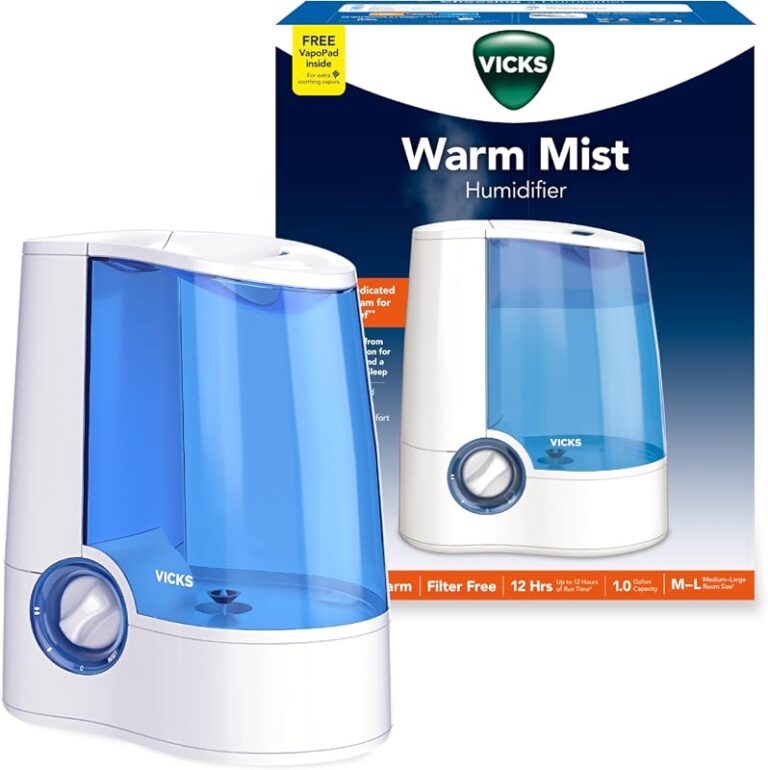
Warm Mist Humidifier for Cough
A warm mist humidifier can help ease cough discomfort caused by dry air and throat irritation. It works best when you choose the right room size, use it safely, and keep it clean.
If you’re asking whether a warm mist humidifier for cough is worth it, the short answer is yes for some people—especially when dry air, congestion, or a scratchy throat is making coughing worse. It is not a cure, but it can make breathing and sleep more comfortable when used correctly and safely.
- Best use case: Dry air, scratchy throat, and nighttime coughing in a bedroom.
- Main trade-off: Warm mist feels soothing, but it adds heat and requires extra safety care.
- Buying priority: Match the unit to room size and verify auto shutoff, cleaning access, and warranty.
- Maintenance matters: Regular cleaning and descaling help prevent odor, buildup, and reduced output.
Warm Mist Humidifier for Cough: Does It Help and Who Should Use One?

A warm mist humidifier adds moisture to indoor air by heating water into steam and releasing that steam into a room. For cough relief, the main benefit is that added humidity can reduce throat dryness, loosen the feeling of mucus, and make nighttime coughing less irritating.
It tends to make the most sense for people dealing with dry indoor air, seasonal colds, stuffy bedrooms, or winter heating that dries out the room. If your cough is tied to irritation rather than something that needs medical treatment, humidity can be a simple comfort measure.
How a Warm Mist Humidifier Works to Ease Cough Symptoms
Warm mist models heat water inside the unit until it becomes steam, then send that moisture into the air. The result is a warmer, more humid room environment that can feel soothing when your throat is dry or irritated.
Steam generation, moisture output, and how warm mist differs from cool mist
Warm mist humidifiers boil or heat water to create visible steam, while cool mist models release room-temperature moisture. In practical terms, warm mist can feel more comforting in a cold bedroom, but cool mist is usually safer around kids and pets because it does not involve heated water or a hot reservoir.
Moisture output varies by model, room size, and run setting, so two humidifiers with similar names may perform very differently. Always check the manufacturer’s room coverage guidance rather than assuming a bigger tank automatically means better humidification.
Indoor air that is too dry can make your throat feel scratchier, which may make coughing seem more frequent even when the underlying illness is improving.
Why added humidity may help dry throat irritation and nighttime coughing
When the air is dry, the lining of your throat can feel irritated, especially at night when you are breathing through your mouth or sleeping in heated air. Extra humidity may reduce that dryness, which can make coughing less persistent and help you fall asleep more easily.
That said, a humidifier works best as part of a comfort routine, not as a replacement for medical care. If coughing is severe, lasts a long time, or comes with breathing trouble, fever, chest pain, or wheezing, it’s important to contact a healthcare professional.
Key Benefits, Limits, and When a Warm Mist Model Makes Sense
Warm mist humidifiers are appealing because they are straightforward: fill the tank, let it heat, and let the moisture spread through the room. They can be especially useful in winter, in dry apartments, or in bedrooms where nighttime coughing is the biggest issue.
Best-fit users: dry indoor air, seasonal colds, congestion, and nighttime comfort
If your home feels dry from heating, or you wake up with a sore throat and a cough that seems worse overnight, a warm mist unit may help. It can also be a good fit for students, remote workers, and travelers staying in dry hotel rooms when they need simple overnight comfort.
People who mainly want a soothing bedroom environment often appreciate the warm steam feel. The benefit is usually greatest when the room is closed, the humidity is moderate, and the unit is sized appropriately for the space.
Limitations: asthma triggers, over-humidifying, and when to choose another option
Warm mist is not automatically the best choice for everyone. Some people with asthma or sensitivity to humidity changes may prefer cool mist or a different approach, especially if warm air feels uncomfortable.
Over-humidifying can also create problems. If the room becomes too damp, it may feel stuffy and can encourage condensation on windows or other surfaces. That is why placement, runtime, and room size matter as much as the humidifier itself.
Warm mist units contain hot water and heated parts. Keep them away from children, pets, bedding, curtains, and any surface that could be damaged by heat or spills.
What to Look For Before Buying in 2026
When comparing models, focus on practical features that affect everyday use rather than marketing claims. The most useful humidifier is the one that matches your room, your routine, and your safety needs.
Tank capacity, runtime, room size coverage, and output settings
Tank capacity affects how often you need to refill, while runtime tells you how long the unit can run before emptying. Room coverage matters just as much, because a small bedroom unit may not be enough for a larger shared space or open-plan area.
Adjustable output settings are valuable because cough relief often works best with gentle, steady humidity rather than maximum output. If a manufacturer lists multiple coverage claims, confirm which one applies to your room layout and typical door position.
Noise level, auto shutoff, adjustable mist control, and essential safety features
Noise matters more than many buyers expect, especially for sleep. A quiet unit is easier to leave on overnight, and auto shutoff is essential so the humidifier stops when the tank is empty.
Look for simple mist controls, stable construction, and clear indicator lights or alerts if the model includes them. If the humidifier has a warm surface or heating element, safety instructions in the manual should be easy to find and easy to follow.
Build quality, filter use or filter-free design, and warranty details to verify
Build quality affects how well the tank seals, how easy it is to clean, and how long the unit holds up to daily use. Filter-free designs can be simpler to maintain, but some models rely on filters or wicks that need replacement, so check the ongoing cost before buying.
Warranty terms vary by brand and region, so confirm what is covered, how long coverage lasts, and whether replacement parts are available. For any humidifier, it is wise to review the official manual, current safety notices, and recall information before using it regularly.
- Check room size, tank capacity, output settings, and whether the model is warm mist or cool mist.
- Confirm auto shutoff, cleaning access, warranty terms, and any filter or descaling requirements.
Warm Mist Humidifier Comparison Guide: Choosing the Right Type for Your Space
The best humidifier type depends on who will use it, where it will sit, and how much maintenance you are willing to do. A good match should balance comfort, safety, and ease of cleaning.
Compact bedroom models vs. larger units for shared spaces
Compact units are usually easier to place on a nightstand or dresser and are often better for one person in a small bedroom. Larger models make more sense for shared rooms, but they may take up more space and need more frequent cleaning because they are used more heavily.
If you are comparing bedside options, also think about cord length, fill access, and whether the tank is easy to carry to a sink. Those small details often matter more in daily use than the headline tank size.
Warm mist vs. cool mist vs. ultrasonic: practical trade-offs for cough relief
Warm mist can feel soothing and may be preferred in colder rooms, but it uses heat and requires extra caution. Cool mist is generally safer around children and pets, while ultrasonic models are often quiet and efficient but can create fine mist that may leave mineral dust if you use hard water.
For cough relief, the “best” type is usually the one you can run consistently without creating a safety or maintenance burden. If you want a broader comparison of home comfort gear, see our guide to smart lights for the bedroom for another sleep-focused room setup idea.
Safe Setup and Daily Use for Cough Relief
Good placement and sensible runtime matter as much as the humidifier itself. A poorly placed unit can leave the room too damp or make the unit harder to clean and monitor.
Placement, fill method, water quality, and first-time setup steps
Place the humidifier on a flat, stable surface where steam can disperse freely and where accidental spills will not damage electronics or furniture. Follow the manual for the correct fill line and assembly order, since tank design varies by model.
Many users get better results with clean water and a consistent fill routine. If your model recommends distilled water or a specific cleaning schedule, follow that guidance rather than guessing, because mineral buildup can affect output and odor over time.
Place the unit on a stable surface away from curtains, bedding, and electronics, then confirm all parts are seated correctly.
Fill to the marked line, choose the lowest effective output, and increase only if the room still feels dry.
Safe operating habits: distance from beds, pets, children, and electronics
Keep warm mist units far enough from beds that steam does not blow directly onto pillows, blankets, or skin. Also keep them away from children and pets, since hot water and heated components can cause burns if the unit is tipped or touched.
Do not place the humidifier next to laptops, chargers, game consoles, or other electronics that could be damaged by moisture. If you use it in a home office or creator setup, think about it the same way you would think about a liquid spill near gear: distance matters.
How long to run it and how to avoid overly humid air
Run time depends on room size, outside weather, and how dry the air is. In many bedrooms, shorter sessions or overnight use at a lower setting may be enough, especially if the room is small and sealed.
If windows fog up, surfaces feel damp, or the room starts to feel heavy and stale, reduce output or shorten runtime. The goal is comfort, not maximum moisture.
For readers who also care about room comfort and pet-friendly home care, our article on which cordless vacuum is best for pet hair may be useful for keeping the same room cleaner and easier to maintain.
Cleaning, Maintenance, and Storage to Keep It Working Well
Humidifiers need regular cleaning because standing water and mineral deposits can affect performance and odor. A clean unit is also safer and more pleasant to use, especially if you rely on it during illness.
Descaling, disinfecting, and preventing mineral buildup
Descaling removes mineral deposits that can collect in the tank or heating area, while disinfecting helps reduce buildup from regular use. The exact cleaning method depends on the model, so follow the manufacturer’s instructions instead of mixing chemicals or using methods the manual does not recommend.
To reduce buildup, empty leftover water after use and let the unit dry when possible. If your water supply is hard, you may need to clean more often than a user in a soft-water area.
Stop using the unit if you notice cracks, a warped tank, leaking, overheating, a damaged power cord, or persistent odor that cleaning does not fix. Check the manual or manufacturer support before restarting it.
Replacement parts, inspection points, and off-season storage tips
Before storing the humidifier, inspect seals, caps, and any removable parts for wear. If the model uses a filter, wick, or cartridge, check whether it needs replacement before the next season starts.
Store the unit dry, clean, and fully cooled, with the cord wrapped loosely and the tank emptied. Keep the manual with it so you can remember the correct cleaning and setup steps next time.
Common Mistakes, Troubleshooting, and Final Recommendation
Most humidifier problems come from overuse, poor cleaning, or ignoring the room environment. A little routine care goes a long way toward better cough comfort and fewer headaches later.
Overuse, poor placement, dirty water, and ignoring warning signs
Running the unit too long can make the room feel damp instead of comfortable. Poor placement near walls, curtains, or electronics can create moisture problems, and dirty water can lead to smells or reduced output.
Warning signs like unusual noise, visible residue, or moisture collecting around the unit should not be ignored. If the humidifier seems unstable or damaged, stop using it until you can verify the issue through the manual or manufacturer support.
What to do if output drops, the unit smells, or the tank leaks
If output drops, first check the water level, assembly, and any mineral buildup in the tank or heating area. If the unit smells, clean it according to the manual and make sure no stagnant water is left inside between uses.
If the tank leaks, look for a loose cap, cracked plastic, or a misaligned seal. Do not continue using a leaking humidifier near outlets, chargers, or furniture that can be damaged by water.
Transparent verdict: when a warm mist humidifier is worth it for cough relief
A warm mist humidifier is worth considering when cough discomfort is tied to dry air, a scratchy throat, or nighttime irritation and you want a simple, comforting bedroom solution. It is less ideal if you need a child-safe option, if asthma or humidity sensitivity is an issue, or if you want the lowest-maintenance path with the least heat risk.
For most buyers, the best choice is a model that matches the room size, has auto shutoff, is easy to clean, and comes with clear manufacturer guidance. If you verify those basics before buying, a warm mist humidifier can be a practical comfort tool rather than just another appliance.
- Warm mist can help soothe dry throat irritation and nighttime coughing.
- Safety, room size, and cleaning are more important than marketing claims.
- Choose a model with clear instructions, auto shutoff, and easy maintenance.
Frequently Asked Questions
It can help if your cough is made worse by dry air or throat irritation. It is a comfort tool, not a cure, so persistent or severe symptoms should be checked by a clinician.
It is often a good fit for people in dry indoor air, especially in bedrooms during cold or heating season. People with asthma or humidity sensitivity may prefer a different type.
Warm mist may feel more soothing in a cold room, but cool mist is usually safer around children and pets. The best choice depends on your room, comfort needs, and safety concerns.
Run time depends on room size, dryness, and the model’s output. Start low and avoid making the room feel damp, foggy, or stuffy.
Follow the manufacturer’s manual for descaling and disinfecting, since methods vary by model. Empty leftover water after use and clean more often if you have hard water.
Check tank capacity, room coverage, auto shutoff, noise, warranty, and whether the unit uses filters or is filter-free. Also confirm the official safety instructions and any current recall notices.