9 Best Car Power Inverters with USB C PD for GadgetMakersBlog
Affiliate disclosure: As an Amazon Associate, Gadget Makers Blog may earn from qualifying purchases. This does not change the price you pay.
If you want to charge laptops, phones, tablets, cameras, or small travel gear from your car, a car power inverter with USB-C PD can make road use much easier. The challenge is choosing one that fits your vehicle’s 12V outlet, offers the right mix of AC and USB ports, and matches the power needs of the devices you actually carry.
This guide compares nine options for GadgetMakersBlog readers who want a practical, evidence-based look at the best car power inverter with USB C PD choices in 2026. The picks below focus on consumer electronics and travel charging use, with notes on output, port mix, safety features, and who each model is best suited for.
The best car power inverter with USB C PD for most shoppers is the 400W Vehicle Power Inverter, 12V DC to 110V AC Car Converter, Black because it combines 2 AC outlets, a 30W USB-C PD port, a 15W USB-C port, and two USB-A ports in one compact travel-friendly unit.
Quick Product Comparison
| Product | Image | Best For | Check Price |
|---|---|---|---|
| 1. 400W Vehicle Power Inverter | 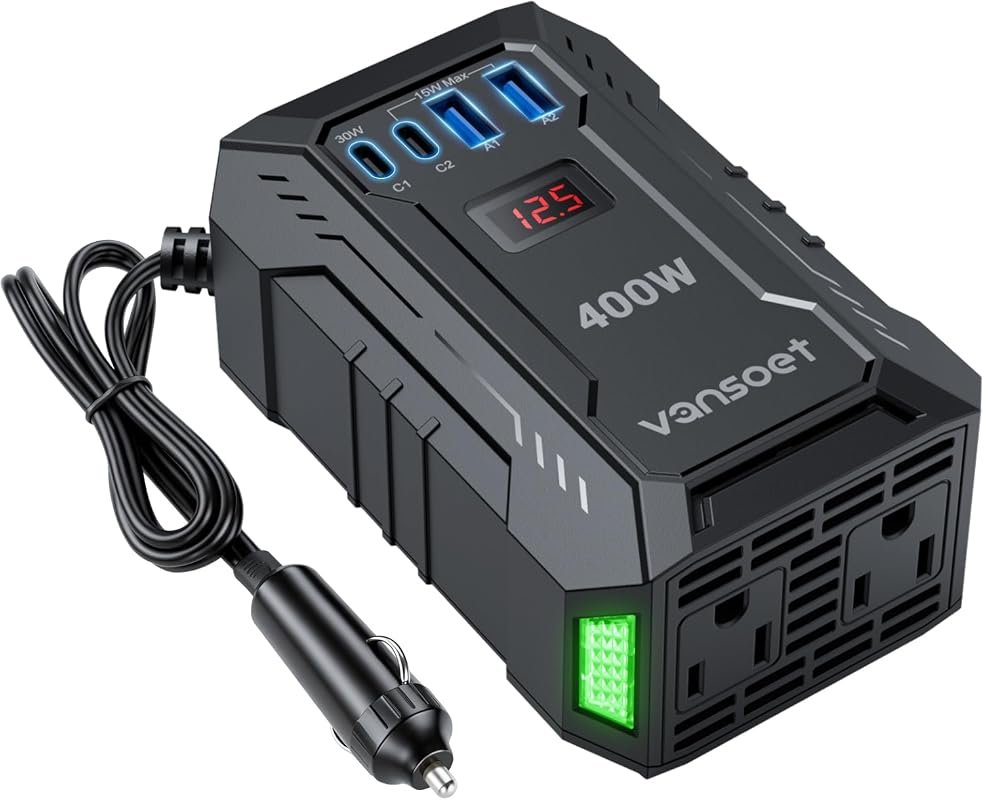 | Balanced everyday charging with AC and USB-C PD | Check Price |
| 2. 400W Vehicle Power Inverter | 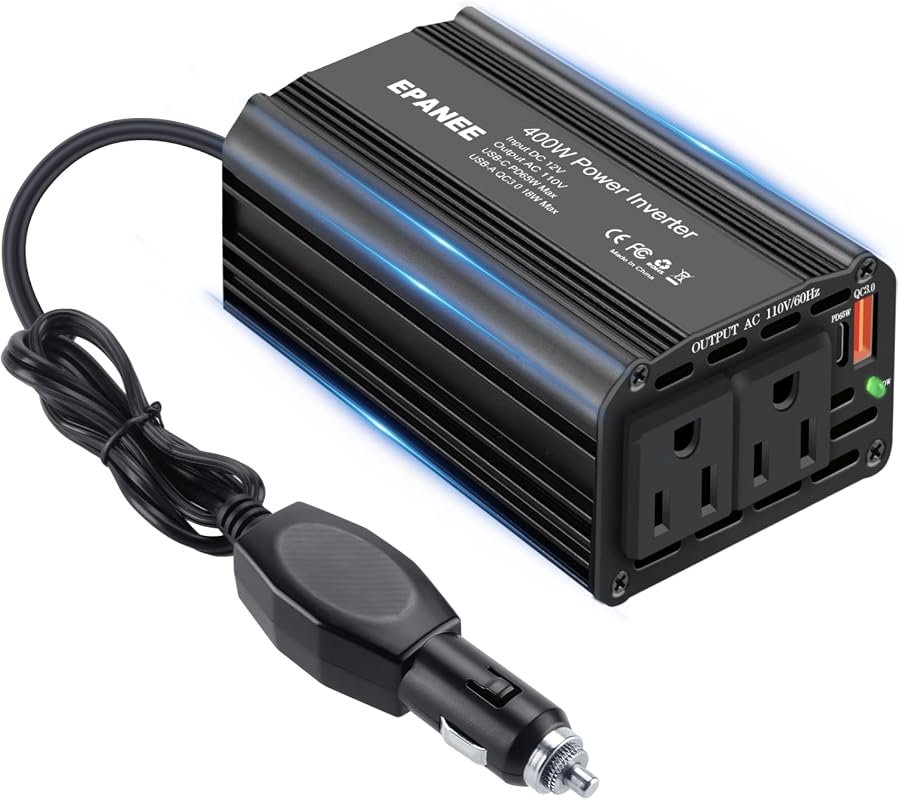 | Fast charging with a 65W USB-C port | Check Price |
| 3. 300W Car Power Inverter | 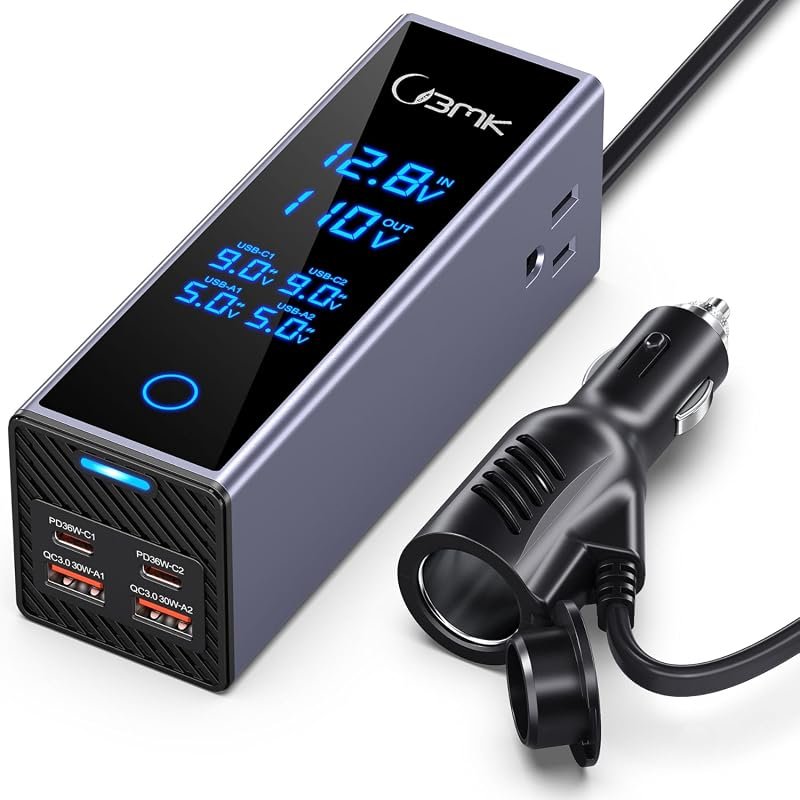 | Feature-rich charging with LCD monitoring | Check Price |
| 4. 200W Car Power Inverter | 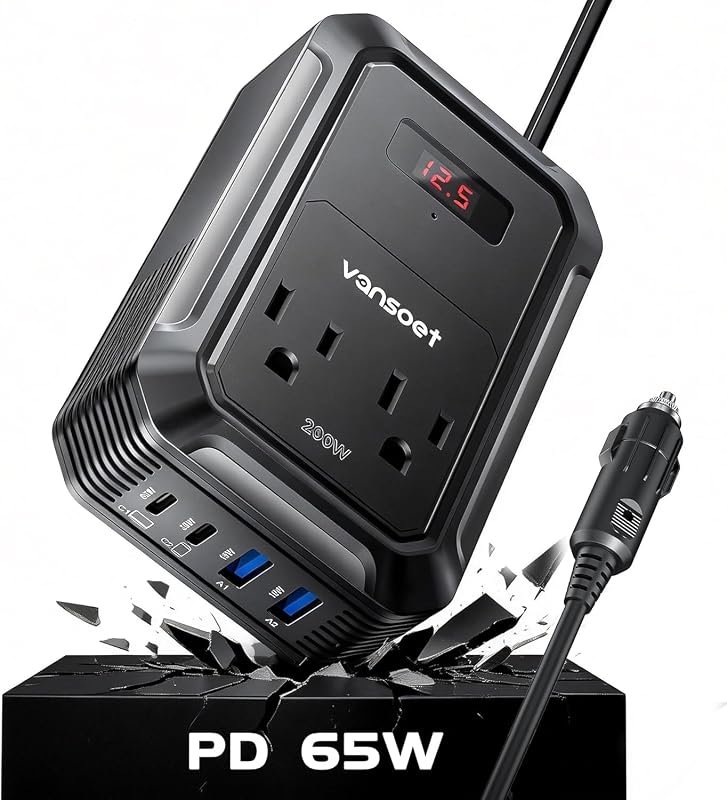 | Compact daily charging with strong USB-C output | Check Price |
| 5. 400W Vehicle Power Inverter | 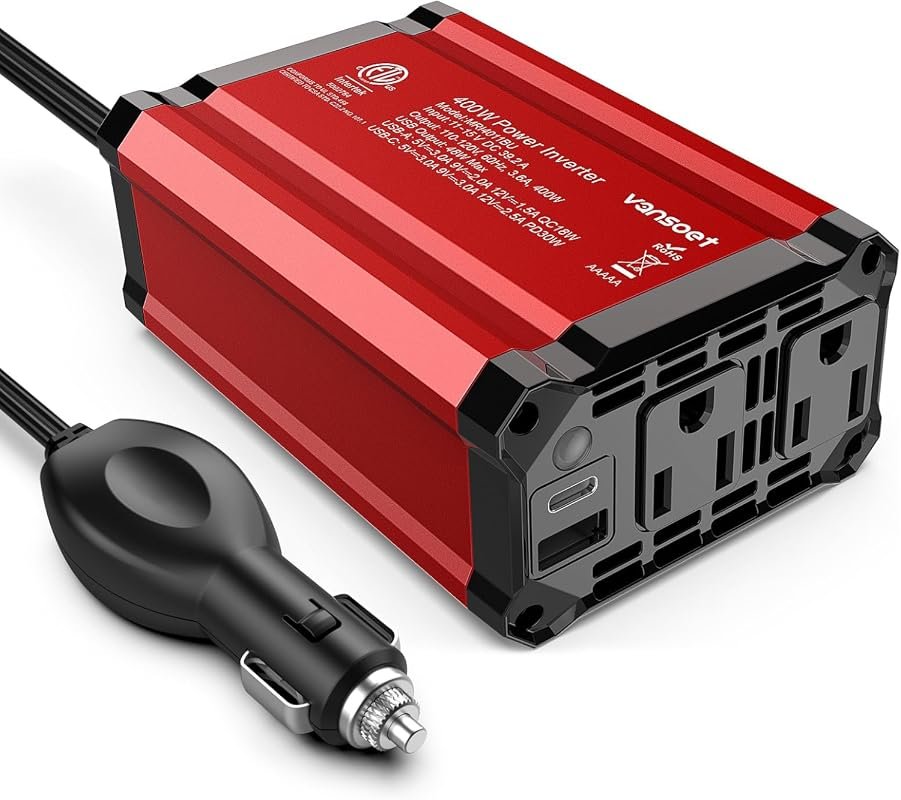 | Higher-output travel gear and portable device charging | Check Price |
| 6. 200W 7-in-1 Car Power Inverter | 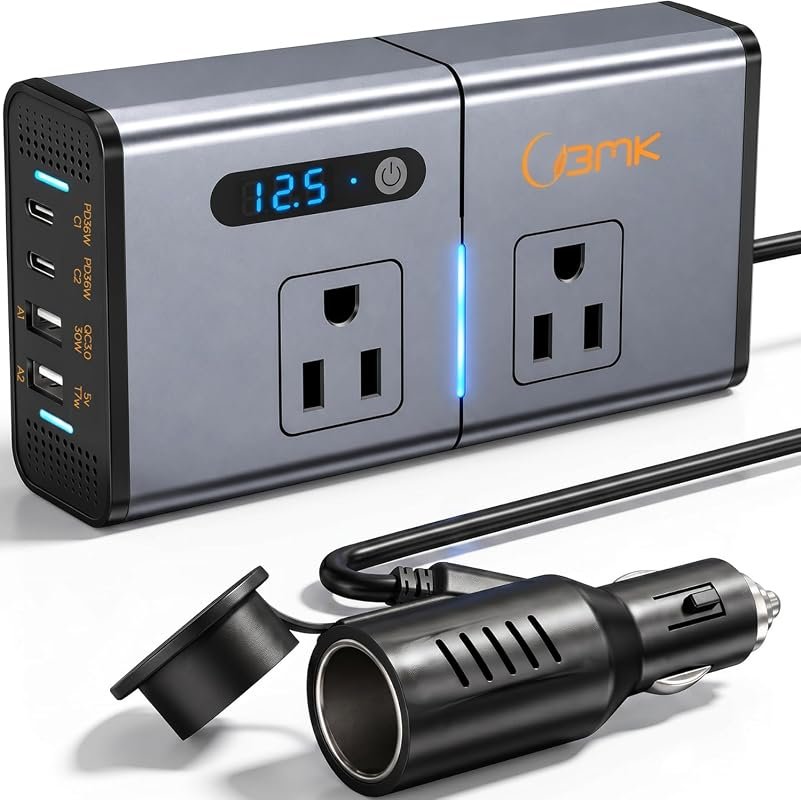 | Multi-device charging with a pass-through 12V socket | Check Price |
| 7. ALLWEI 300W Car Power Inverter | 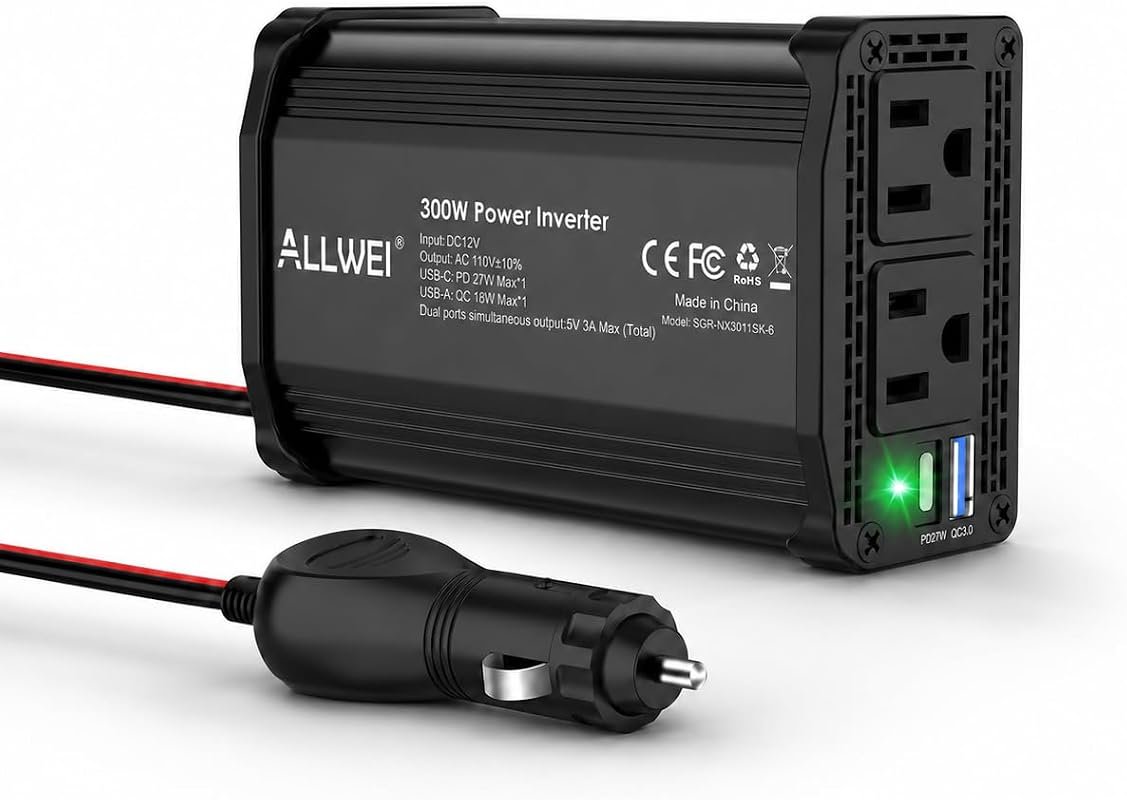 | Longer-cord setup for back-seat use | Check Price |
| 8. 300W Car Power Inverter | 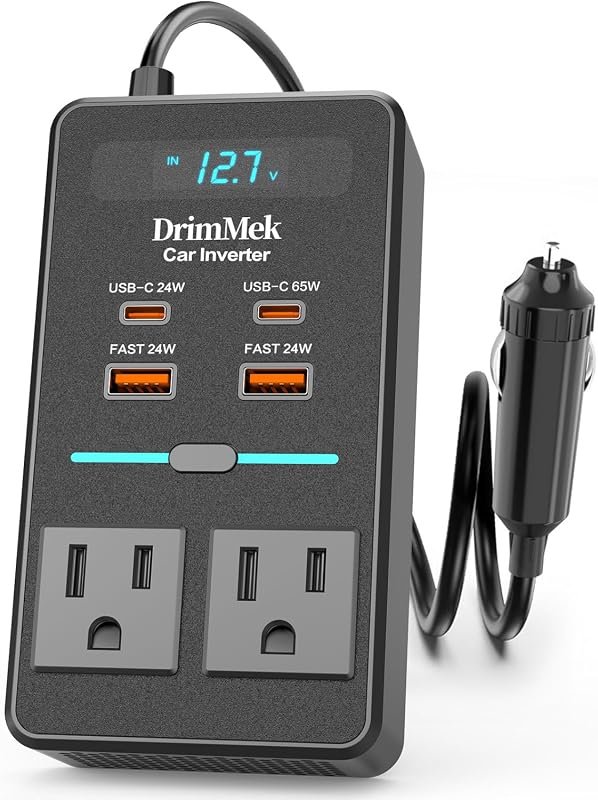 | Compact storage with multiple USB-C options | Check Price |
| 9. ALLWEI 200W Car Power Inverter | 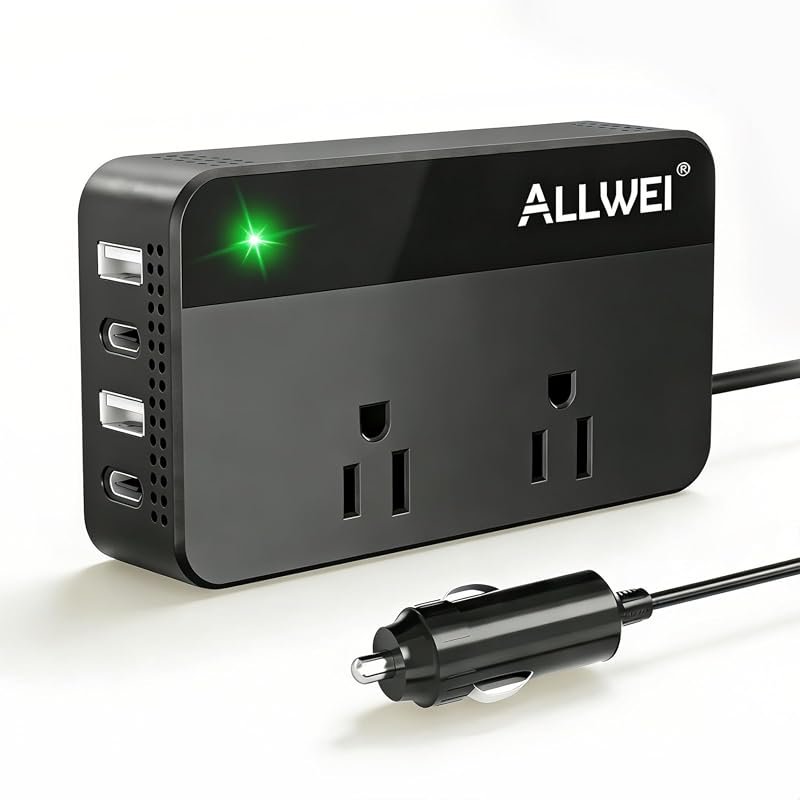 | Everyday low-profile charging | Check Price |
What to Look for in the best car power inverter with USB C PD
1) Match the inverter output to your devices
Start with the AC wattage and make sure it covers the electronics you plan to power. The supplied listings range from 200W to 400W, so shoppers should verify each device’s rated and peak power before buying.
2) Check the USB-C PD wattage and port mix
USB-C PD is the main reason many shoppers want these inverters, but the wattage varies a lot. Some models offer 18W or 27W, while others include 30W, 36W, or 65W USB-C ports, which changes how well they suit phones, tablets, and some laptops.
3) Look for clear voltage and status monitoring
An LCD or LED indicator can help you keep an eye on vehicle voltage and inverter status. That is useful for road trips and daily commuting, especially if you want a quick visual check without guessing whether the unit is operating normally.
4) Consider how many ports you really need
Some shoppers only need one USB-C port and one AC outlet, while others want multiple USB-C, USB-A, and AC connections at once. If you travel with a laptop, phone, earbuds, and a camera, a multi-port layout can be more practical than a basic two-port design.
5) Pay attention to cooling and placement
Several of these inverters use temperature-controlled fans or quiet cooling systems. That matters because heat management and airflow can affect comfort, noise, and stable operation during longer drives.
6) Confirm vehicle compatibility and use case
These models are listed for 12V vehicle use, so shoppers with 24V systems should verify compatibility before ordering. It is also worth checking whether the inverter plugs directly into the cigarette lighter socket or needs another setup for higher loads.
- Before checkout, compare your device charger labels to the inverter’s USB-C PD and AC output ratings, then leave some headroom for safer everyday use.
Our Top 9 Best Car Power Inverter With Usb C Pd Picks and Reviews
1. 400W Vehicle Power Inverter, 12V DC to 110V AC Car Converter, Black
This 400W inverter offers a balanced mix of AC and USB charging for travel, commuting, and mobile device power. It stands out for combining two AC outlets with a 30W USB-C PD port, a 15W USB-C port, and two USB-A ports.
Key Features That Stand Out
- 400W continuous car power for small electronics and appliances.
- 2 standard US AC outlets for devices that need wall-style power.
- 1x 30W PD USB-C, 1x 15W USB-C, and 2x 15W USB-A ports for multi-device charging.
- Dedicated AC switch for independent outlet control.
- LED status indicator and intelligent temperature-controlled cooling fan.
Why It Stands Out
For shoppers who want one device that can cover both AC needs and USB-C charging, this model is a practical middle ground. The feature mix is broad enough for phones, tablets, laptops, cameras, and similar travel electronics, while the separate AC switch adds convenience.
Best For
Pros and Cons
- Strong port variety for mixed charging needs.
- Independent AC control helps reduce unnecessary draw.
- Clear status light adds useful feedback.
- USB-C PD is 30W, so power-hungry laptops may need verification.
- Shoppers should confirm their device wattage before relying on the 400W limit.
2. 400W Vehicle Power Inverter, 12V DC to 110V AC Car Plug Adapter
This model is a strong pick for shoppers who want a higher-output USB-C port in a compact travel inverter. It pairs dual AC sockets with a 65W USB-C port and a USB-A QC 18W port.
Key Features That Stand Out
- Dual 110V AC sockets for everyday device support.
- 1 PD 65W USB-C port for faster charging of supported devices.
- 1 USB-A QC 18W port for a second fast-charge option.
- Built-in fuse protection and automatic cooling fan behavior.
- Compact size and lightweight build for travel use.
Why It Stands Out
The 65W USB-C port makes this option appealing for shoppers who want more charging headroom than typical 18W or 30W designs. That can be especially useful if your travel bag includes a USB-C laptop or a device that benefits from higher PD output.
Best For
Pros and Cons
- 65W USB-C port offers more charging flexibility.
- Dual AC outlets widen device support.
- Compact format is easy to pack and move.
- Users should confirm whether their laptop or accessory actually supports 65W USB-C PD.
- The listing does not provide a full certification breakdown in the supplied facts.
3. 300W Car Power Inverter, 12V DC to 110V AC with 4 USB Ports, PD 36W, QC3.0, LCD Display
This 300W inverter is a feature-heavy option for shoppers who want both AC outlets and a more advanced USB charging hub. Its LCD display and dual USB-C PD ports make it useful for monitoring and multi-device travel charging.
Key Features That Stand Out
- 300W continuous DC-to-AC output for common road-trip electronics.
- 2 USB-C PD 36W ports plus 2 USB-A QC3.0 ports.
- LCD voltage monitor for real-time input and output visibility.
- Two AC outlets with individual switches.
- Compact, stackable design with shockproof housing materials.
Why It Stands Out
This is a strong value pick because it includes more charging intelligence than many basic inverters. The combination of dual PD USB-C ports, QC3.0 USB-A ports, and a display gives it broad appeal for people carrying several gadgets at once.
Best For
Pros and Cons
- LCD display adds helpful status visibility.
- Two USB-C PD ports support shared charging.
- Independent AC switches can reduce unnecessary draw.
- Shoppers should confirm whether 36W USB-C output fits their laptop charging needs.
- Some users may prefer a simpler layout if they only need one or two ports.
4. 200W Car Power Inverter, 12V-17V DC to 110V AC with PD 65W/30W USB-C Ports
This compact inverter is aimed at shoppers who want strong USB-C output in a smaller 200W format. It includes dual AC outlets, two USB-C PD ports, two USB-A QC ports, and an LCD display.
Key Features That Stand Out
- 200W continuous output for everyday travel electronics.
- 2x PD USB-C ports rated at 65W and 30W.
- 2x QC 18W USB-A ports for additional device support.
- 2 AC outlets plus LCD display.
- Compact body with a 23.8-inch cable.
Why It Stands Out
For everyday vehicle use, 200W can be enough for many small electronics, and the USB-C port mix gives this model more flexibility than basic compact inverters. The display is also useful for quick checks during longer drives.
Best For
Pros and Cons
- Good USB-C variety for a smaller inverter.
- LCD display helps with visibility.
- Compact design is easy to store.
- 200W output may be limiting for higher-demand AC devices.
- Buyers should verify whether their vehicle’s outlet and cable length fit their setup.
5. 400W Vehicle Power Inverter, 12V DC to 110V AC Car Converter, Red
This 400W model is built for shoppers who want more power flexibility and a sturdier aluminum housing. It combines dual AC outlets with a 30W USB-C port and a USB-A QC 18W port.
Key Features That Stand Out
- 400W continuous and 800W instantaneous power.
- Dual AC outlets for small appliances and electronics.
- 1 PD 30W USB-C port and 1 USB-A QC 18W port.
- Ultra-compact aluminum housing for portability.
- Silent temperature-controlled cooling fan and built-in protection features.
Why It Stands Out
This is a good fit for shoppers who want a small inverter that still offers a higher overall power ceiling. The aluminum housing and quiet fan design also make it appealing for travel use where space and noise both matter.
Best For
Pros and Cons
- Higher 400W output than many compact models.
- Aluminum housing may help with heat dissipation.
- Quiet fan behavior is useful on long drives.
- USB-C output is 30W, so check laptop compatibility.
- Users should confirm whether the travel load stays within the inverter’s stated power limits.
6. 200W 7-in-1 Car Power Inverter, 12V DC to 110V AC with Dual PD USB-C, QC 3.0, 2 AC Outlets
This 7-in-1 inverter is designed for shoppers who want a lot of connection options in one unit. It includes dual AC outlets, dual USB-C ports, dual USB-A ports, and a pass-through 12V socket.
Key Features That Stand Out
- 200W total combined output across all connected ports.
- Two USB-C PD ports rated up to 36W each.
- One USB-A QC 3.0 port and one additional USB-A port.
- Separate AC switch while keeping USB charging available.
- LED voltage display and temperature-controlled fan.
Why It Stands Out
The mix of ports is the main attraction here. If you travel with several gadgets and still want to keep a 12V socket available, this layout is more flexible than many simpler car inverters.
Best For
Pros and Cons
- Very flexible port layout for mixed travel gear.
- USB charging stays available even when AC is switched off.
- Voltage display adds practical monitoring.
- 200W output may not suit larger AC appliances.
- Shoppers should verify whether the pass-through 12V socket meets their accessory needs.
7. ALLWEI 300W Car Power Inverter, 12V DC to 110V AC, Black
This ALLWEI model is a practical 300W option with a longer cord and a straightforward port mix. It includes 2 AC outlets, a USB-C PD 27W port, and a USB-A QC 18W port.
Key Features That Stand Out
- 300W DC-to-AC output for common travel electronics.
- 1 USB-C PD 27W port and 1 USB-A QC 18W port.
- 2 AC outlets for laptop or accessory power.
- 33-inch cord for back-seat convenience.
- Aluminum alloy housing and temperature-controlled cooling fan.
Why It Stands Out
The longer cord is the most practical detail here for families and passengers who need power from the back seat. The port selection is simpler than some rivals, but still enough for common devices.
Best For
Pros and Cons
- Longer cord improves placement flexibility.
- Metal housing may help with durability and heat management.
- Simple layout is easy to understand and use.
- USB-C PD is 27W, which may be modest for some larger devices.
- Buyers should verify whether the 300W AC side matches their intended load.
8. 300W Car Power Inverter, 12V DC to 110V AC Car Outlet Adapter
This inverter focuses on compact storage and a strong mix of ports. It offers dual AC outlets, two USB-C ports, and two USB-A ports, making it useful for families and travelers carrying several gadgets.
Key Features That Stand Out
- 300W output for common road-trip electronics.
- Two USB-C ports rated at 24W and 65W.
- Two USB-A ports rated at 24W.
- Dual AC outlets for laptop and small appliance support.
- Compact, lightweight design with built-in protection features.
Why It Stands Out
The mix of a 65W USB-C port and a second lower-power USB-C option gives this model some flexibility for mixed-device charging. Its compact size also makes it easier to store in a glove box or console.
Best For
Pros and Cons
- 65W USB-C port is useful for higher-demand charging.
- Compact design is easy to store.
- Multiple USB ports suit family travel.
- Buyers should check whether the AC side and USB side can handle all devices at once.
- Some shoppers may prefer an LCD display for quick status checks.
9. ALLWEI 200W Car Power Inverter, 12V DC to 110V AC with USB-C
This compact 200W model is built for everyday vehicle use and easy storage. It includes two AC outlets and four USB fast-charging ports, including USB-C PD 18W support.
Key Features That Stand Out
- 200W continuous output for small electronics.
- 2 AC outlets and 4 USB fast-charging ports.
- USB-C PD 18W plus USB-A fast charging.
- Phone-sized compact body for glove box or console storage.
- LED indicators and multiple safety protections.
Why It Stands Out
This is one of the simplest options in the roundup for shoppers who want a low-profile inverter with enough ports for everyday charging. It is a practical match for phones, tablets, cameras, and other small electronics.
Best For
Pros and Cons
- Small size makes it easy to carry and store.
- Multiple USB ports help reduce charger clutter.
- Clear LED status indicators are convenient.
- USB-C output is only 18W, so it is better for phones and smaller devices.
- 200W capacity may be too limited for heavier AC use.
Check your vehicle’s outlet rating, the inverter’s power limit, and your device chargers before plugging in multiple items. If a device needs more wattage than the inverter can supply, or if your car uses a 24V system, verify compatibility in the current listing or manual first.
Complete Roundup for Best Car Power Inverter With Usb C Pd
Best for compact daily charging; expect 200W output, fewer premium extras, and USB-C ports that suit phones and tablets.
Best for most shoppers; expect 300W to 400W output, more ports, and better flexibility for laptops and travel gear.
Best for users needing higher USB-C PD output or more monitoring features, such as LCD displays and broader port layouts.
Compatibility and intended use
These inverters are aimed at 12V vehicles such as cars, SUVs, trucks, and minivans. If you need to charge a phone, earbuds, tablet, camera, laptop, or a small travel accessory, the port mix matters more than the brand name alone.
USB-C PD support is especially important if you use modern iPhones, Android phones, tablets, or USB-C laptops. For MagSafe, Qi, or other wireless charging accessories, check whether your charger needs USB-C input and confirm its wattage requirement before relying on the inverter.
Dos and Don’ts
- Match the inverter’s wattage to your device’s charger label and leave some headroom.
- Use certified or manufacturer-approved cables and accessories where possible.
- Check whether the inverter’s USB-C PD port supports the device you plan to charge.
- Don’t assume every USB-C port can charge a laptop at full speed.
- Don’t overload the inverter with too many high-draw devices at once.
- Don’t block vents or place the unit where heat can build up.
Practical tips
- Keep the inverter easy to reach so you can check indicators and unplug it quickly if it runs hot.
- If you travel with a laptop, confirm both the inverter’s USB-C wattage and the laptop’s accepted charging profile.
- For family road trips, a model with multiple USB ports can reduce the need for extra adapters.
Before buying, confirm your vehicle is a 12V system, then compare your device’s charger wattage with the inverter’s AC and USB-C PD output. If the listing does not clearly state support for your exact laptop or accessory, verify it on the current Amazon page or manufacturer manual.
- 1. 400W Vehicle Power Inverter, Black: best all-around mix of AC outlets and USB-C ports.
- 2. 400W Vehicle Power Inverter, Car Plug Adapter: best if you want a stronger 65W USB-C port.
- 3. 300W Car Power Inverter, PD 36W, LCD: best value for monitoring and multi-port charging.
- 4. 200W Car Power Inverter, PD 65W/30W: best compact choice with strong USB-C output.
- 5. 400W Vehicle Power Inverter, Red: best for travelers who want compact 400W capability.
- 6. 200W 7-in-1 Car Power Inverter: best for users who need lots of connection options.
- 7. ALLWEI 300W Car Power Inverter, Black: best for back-seat reach and simpler everyday use.
- 8. 300W Car Power Inverter, Car Outlet Adapter: best for compact storage with a 65W USB-C option.
- 9. ALLWEI 200W Car Power Inverter, USB-C: best for small, low-profile everyday charging.
- Reminder: always verify wattage and vehicle compatibility before ordering.
- Reminder: the best pick is the one that matches your actual device mix, not just the highest number on the box.
Frequently Asked Questions About Best Car Power Inverter With Usb C Pd
It depends on the laptop charger’s wattage and whether you want to use the AC outlet or USB-C PD port. Check the charger label first, then choose an inverter with enough headroom for that load.
USB-C PD is usually better for newer phones, tablets, and some laptops because it can support higher negotiated power. USB-A is still useful for older cables and smaller accessories.
Yes, but the total load still has to stay within the inverter’s stated limits. If you use several devices together, check the combined wattage and leave some margin.
They are listed for 12V vehicle systems, so compatibility with 24V vehicles should be verified before purchase. Also confirm that your vehicle’s outlet can support the inverter’s intended draw.
Look for built-in protection features, good ventilation, and a layout that keeps the inverter from overheating. Use the manufacturer’s instructions and avoid overloading the unit with too many power-hungry devices.
No, but it can help you monitor voltage and status at a glance. That is useful if you drive often or want extra peace of mind on longer trips.
If you want the most balanced option, start with the 400W Vehicle Power Inverter, Black, because it offers a wide mix of ports without making the setup feel complicated. If your priority is stronger USB-C charging, the 400W Car Plug Adapter and the 200W 7-in-1 model are worth a closer look.
For budget-minded shoppers, the smaller 200W and 300W models can still be a smart fit as long as you match them to your actual devices. The safest choice is always the one that fits your vehicle, your cables, and your real charging habits.
This roundup is based on the supplied product titles, feature bullets, ratings, review counts, prices, images, and listing links only. Because no verified first-hand testing evidence was provided, the recommendations use evidence-based editorial judgment rather than personal testing claims. We compared port mix, USB-C PD output, AC wattage, safety features, portability, and stated use cases, while avoiding any unsupported performance claims or missing specifications.