How to Choose Headphones for Kids Safely and Easily
Choosing headphones for kids is about more than sound. It is about safety, comfort, and a fit that works for small ears and active days. This guide shows how to choose headphones for kids with simple tips on volume limits, size, durability, and more.
How to Choose Headphones for Kids Safely and Easily
Picking headphones for a child can feel simple at first. But once you start looking, there are a lot of choices. Some are too loud. Some are too big. Some break fast. And some just do not fit little heads well.
If you are wondering how to choose headphones for kids, the good news is that you do not need to overthink it. You just need to focus on a few key things: safe sound levels, comfort, size, and durability. When you know what to look for, it gets much easier to find a pair that works for school, travel, and home use.
This guide will walk you through the basics in a clear and simple way. You will learn how to choose headphones for kids without stress, and you will also get practical tips that help you avoid common mistakes.
Key Takeaways
- Point 1: Safe volume matters most, so look for headphones with built-in volume limits around 85 dB or less.
- Point 2: Comfort is key, because kids are more likely to use headphones that feel light, soft, and easy to wear.
- Point 3: Durability matters, since kids drop, bend, and toss things more than adults do.
- Point 4: Wired and wireless headphones each have pros, so choose based on age, use, and convenience.
- Point 5: A good fit helps with sound and safety, and it keeps headphones from slipping during use.
- Point 6: Extra features like a shared audio port, microphone, or travel case can make daily use easier.
- Point 7: The best headphones for kids are the ones your child will actually wear often and comfortably.
📑 Table of Contents
- Why Choosing the Right Kids’ Headphones Matters
- Look for Safe Volume Limits First
- Choose the Right Fit and Comfort
- Pick Durable Materials That Can Handle Daily Use
- Decide Between Wired and Wireless
- Look for Helpful Features, Not Just Fancy Ones
- How to Choose Headphones for Kids by Age
- Final Buying Tips Before You Decide
- Conclusion
Why Choosing the Right Kids’ Headphones Matters
Kids need more than “small adult” headphones
Kids are not just tiny adults. Their ears are more sensitive, and their heads are smaller. That means adult headphones often fit badly and can be too loud. When headphones do not fit right, they can be uncomfortable and may even encourage kids to turn the volume up.
That is why how to choose headphones for kids starts with safety and fit, not just style. A good pair should protect hearing, feel good to wear, and stand up to daily use.
Good headphones can make screen time better
Whether your child is watching videos, playing games, or learning online, the right headphones can help them focus. They can also keep noise down for the rest of the family. If your child uses headphones often, choosing the right pair can make a big difference in daily life.
If you already shop for tech gear, you may know that safety and quality matter in other products too. For example, if you have ever checked are budget chargers safe to use, you know that low price should never be the only factor. The same idea applies here.
Look for Safe Volume Limits First
Why volume control is the top priority
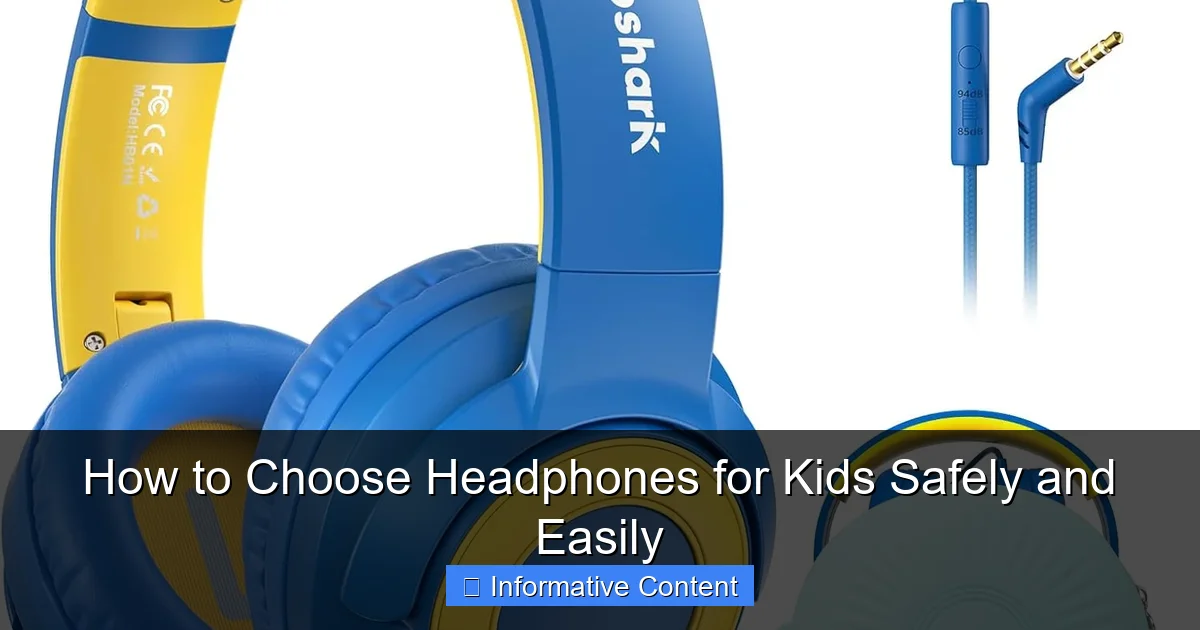
The biggest concern when learning how to choose headphones for kids is sound level. Loud sound can damage hearing over time. Children may not notice the danger because loud audio can still sound “normal” to them.
Visual guide about How to Choose Headphones for Kids Safely and Easily
Image source: m.media-amazon.com
Look for headphones with a built-in volume limit. Many safe kids’ headphones cap sound at about 85 decibels. That is a common target because it helps reduce risk during longer listening sessions.
What to check on the box
- Volume-limiting feature
- Maximum output around 85 dB
- Clear safety labeling
- Parental control options, if available
Some headphones also let parents adjust the limit for different ages. This can be useful if your child is older and uses headphones for school work or travel. Still, it is smart to keep the volume as low as possible.
Teach safe listening habits too
Even the best volume-limited headphones are only part of the answer. Teach your child to take breaks. Tell them not to wear headphones for hours without a pause. A simple rule like “listen, then rest” can help build healthy habits early.
If you are comparing features across devices, it can help to think the same way you would when reading guides like best charging habits for iPhone. Small habits can protect expensive gear and keep it working longer. The same is true for hearing.
Choose the Right Fit and Comfort
Lightweight is better
Comfort matters a lot when deciding how to choose headphones for kids. If the headphones feel heavy, tight, or scratchy, your child may refuse to wear them. Lightweight headphones are usually better for younger kids because they are easier to keep on for longer periods.
Look for soft ear cushions and an adjustable headband. The headband should not press hard on the top of the head. The ear cups should sit gently over the ears without squeezing.
Over-ear vs on-ear vs earbuds
For most kids, over-ear headphones are the best choice. They cover the ears more fully and often feel more stable. On-ear headphones can work too, but they may feel less comfortable for long sessions. Earbuds are usually not the first choice for younger children because they can fit poorly and may be easier to lose.
If your child is very young, choose a design made for kids. These models usually have smaller cups, softer materials, and more flexible parts.
Make sure the fit is not too loose
A loose fit can make headphones slide around. That is annoying, and it can also tempt kids to adjust them too much. A good fit should stay in place during normal movement, but it should never feel tight.
Try them on if you can. If you shop online, check the age range and head size details. Reviews from other parents can also help you see if a model runs small or large.
Pick Durable Materials That Can Handle Daily Use
Kids are rough on gear
When parents ask how to choose headphones for kids, durability should be near the top of the list. Kids drop things. They bend things. They stuff things into bags. So the best headphones are the ones that can survive real life.
Look for strong hinges, flexible headbands, and thick cables if you are buying wired headphones. For wireless models, check the build quality of the ear cups and buttons. If the headphones fold, make sure the folding parts feel sturdy.
Simple designs often last longer
Fancy features can be nice, but they can also add weak points. A simple, well-made pair often lasts longer than a flashy one with too many moving parts. Soft plastic and reinforced joints are helpful. Metal parts can add strength, but they should not make the headphones too heavy.
If you want something for school or travel, think about how it will be used every day. A child who carries headphones in a backpack needs a tougher build than a child who uses them only at home.
Check for easy cleaning
Kids’ headphones can get sticky, dusty, or full of crumbs fast. Choose materials that wipe clean easily. Removable ear pads are a bonus. This makes it easier to keep the headphones fresh and comfortable.
For families who travel often, a storage pouch or hard case can help a lot. It protects the headphones and keeps cords from tangling.
Decide Between Wired and Wireless
Wired headphones are simple and reliable
Wired headphones are often a good choice for younger kids. They do not need charging, and they are easy to use. Just plug them in and go. They can also be a smart pick for school tablets, shared devices, or long trips.
The downside is the cord. Cords can tangle, snag, or break if pulled too hard. If you choose wired headphones, look for a strong cable and a right-angle plug if possible.
Wireless headphones give more freedom
Wireless headphones can be great for older kids. They are easier to move around with, and there is no cord to deal with. That makes them useful for car rides, homework, and travel.
But wireless models need charging. If your child forgets to charge them, they will not work when needed. That is why some families like to keep a wired backup pair at home.
Match the type to the child
So how to choose headphones for kids in this area? Think about age and routine. Younger kids often do better with wired headphones because they are simpler. Older kids may enjoy wireless ones because they are easier to use on the go.
If you are buying for a child who already uses several devices, it can help to compare how accessories work across your home setup. That is similar to checking whether one charger can handle different devices, like in did multi-port chargers work for all devices. Compatibility matters.
Look for Helpful Features, Not Just Fancy Ones
Microphones and controls can be useful
Some kids’ headphones include a built-in microphone, volume buttons, or play and pause controls. These features can be helpful for online classes, video calls, or games. They can also make things easier for kids who want to control audio without asking for help each time.
Still, do not let extra features distract you from safety and comfort. A simple pair with good sound and a safe limit is better than a feature-packed pair that fits badly.
Shared audio ports are handy
Some headphones have a sharing port so another pair can connect. This is great for siblings or for parent-child movie time. It can reduce arguments on long rides and make shared screen time more fun.
Noise isolation can help, but do not confuse it with noise canceling
Noise isolation means the headphones block some outside sound by fitting closely over the ears. This can be useful because kids may not need to raise the volume as much. Active noise canceling is different and is not always needed for children.
If you are choosing between options, ask yourself what your child really needs. A lot of features sound nice, but not all of them are useful for kids.
How to Choose Headphones for Kids by Age
Toddlers and preschoolers
For very young children, keep it simple. Choose headphones with a safe volume limit, soft padding, and a flexible build. Big buttons and easy controls are helpful too. At this age, durability and comfort matter more than advanced features.
Also, make sure the headphones are not too large. A poor fit can make them frustrating to use.
School-age kids
Children in elementary school often need headphones for learning apps, videos, or classroom devices. A comfortable over-ear design with a volume limit is usually a strong choice. Wired models can work well here, especially if the school prefers them.
This is also the age when kids may start caring about color or style. That is fine. Just make sure style does not replace safety.
Older kids and tweens
Older kids may want wireless headphones, better sound, or a more grown-up look. That is okay as long as the volume limit is still there. Comfort, battery life, and durability should still guide your choice.
If your child uses headphones for homework, gaming, or travel, think about how often they will wear them. The best pair is the one that fits their routine and does not get in the way.
Final Buying Tips Before You Decide
Read reviews from other parents
Parent reviews can tell you a lot. They often mention whether the headphones are truly durable, whether the fit is accurate, and whether the volume limit is helpful in real use. Look for repeated comments, not just one opinion.
Check the return policy
Even if you know how to choose headphones for kids, the fit may still surprise you once the headphones arrive. A good return policy gives you peace of mind. It is especially useful when buying online.
Think about daily habits
Ask yourself a few simple questions. Will these headphones be used at home or on the go? Does your child need a mic? Will they share them with a sibling? Do they need a case?
These small questions can help you choose better. They also stop you from paying for features your child will never use.
Keep the choice kid-friendly
In the end, the best headphones are the ones that are safe, comfortable, and easy to use. If the headphones are too complicated, too heavy, or too fragile, they will probably end up in a drawer. A kid-friendly design makes daily use much smoother.
Conclusion
Learning how to choose headphones for kids does not have to be hard. Start with safe volume limits. Then check comfort, fit, and durability. After that, think about whether wired or wireless makes more sense for your child’s age and routine.
The goal is not to find the fanciest pair. The goal is to find the one that protects hearing, feels good to wear, and stands up to real life. When you keep those things in mind, choosing headphones for kids becomes simple, safe, and easy.
Frequently Asked Questions
What is the safest volume for kids’ headphones?
A safe limit is usually around 85 decibels or lower. This helps protect hearing during longer listening sessions. Lower is even better when possible.
Are wireless headphones safe for kids?
Yes, wireless headphones can be safe for kids if they have a volume limit and a good fit. Just remember that they need charging, so they may not work if the battery runs out.
What age can a child start using headphones?
There is no single age for every child, but many parents start with kid-sized headphones once a child can wear them comfortably and follow simple listening rules. For younger kids, always choose models made for children.
Should I buy over-ear headphones or earbuds for my child?
Over-ear headphones are usually the better choice for kids because they fit more securely and often feel more comfortable. Earbuds can be harder to fit well and may not stay in place.
How do I know if headphones fit my child properly?
The headphones should sit comfortably without pinching or slipping. The ear cups should cover the ears well, and the headband should not press too hard on the top of the head.
What features are most important when choosing headphones for kids?
The most important features are a safe volume limit, a comfortable fit, and strong durability. Extra features like a microphone or sharing port can be helpful, but they should come after safety and comfort.