Best Steam Cleaners for Commercial Kitchens in 2026
The best steam cleaner for a commercial kitchen is the one that matches your surface types, cleaning frequency, and available storage space. Prioritize runtime, refill style, and safety over marketing claims, and verify the manual before using steam on any surface.
Steam cleaners can be a smart fit for commercial kitchens when you need fast, chemical-light cleaning on grease, grime, and hard-to-reach surfaces. The best choice depends on your kitchen size, the surfaces you clean most, and whether you need a compact detail tool or a heavier-duty unit built for longer duty cycles.
- Match the machine to the job: Small kitchens need portability; high-volume kitchens need longer runtime and stronger durability.
- Verify surface compatibility: Steam is useful on sealed grout and stainless steel, but not every finish can.
- Check power and storage needs: Wattage, cord quality, footprint, and refill method affect real kitchen workflow.
- Safety comes first: Hot vapor can burn, and wet floors can become slip hazards if you rush.
- Maintenance affects performance: Emptying, descaling, and hose inspection help prevent downtime and weak steam output.
Best Steam Cleaners for Commercial Kitchens in 2026: Quick Verdict and Who They’re For
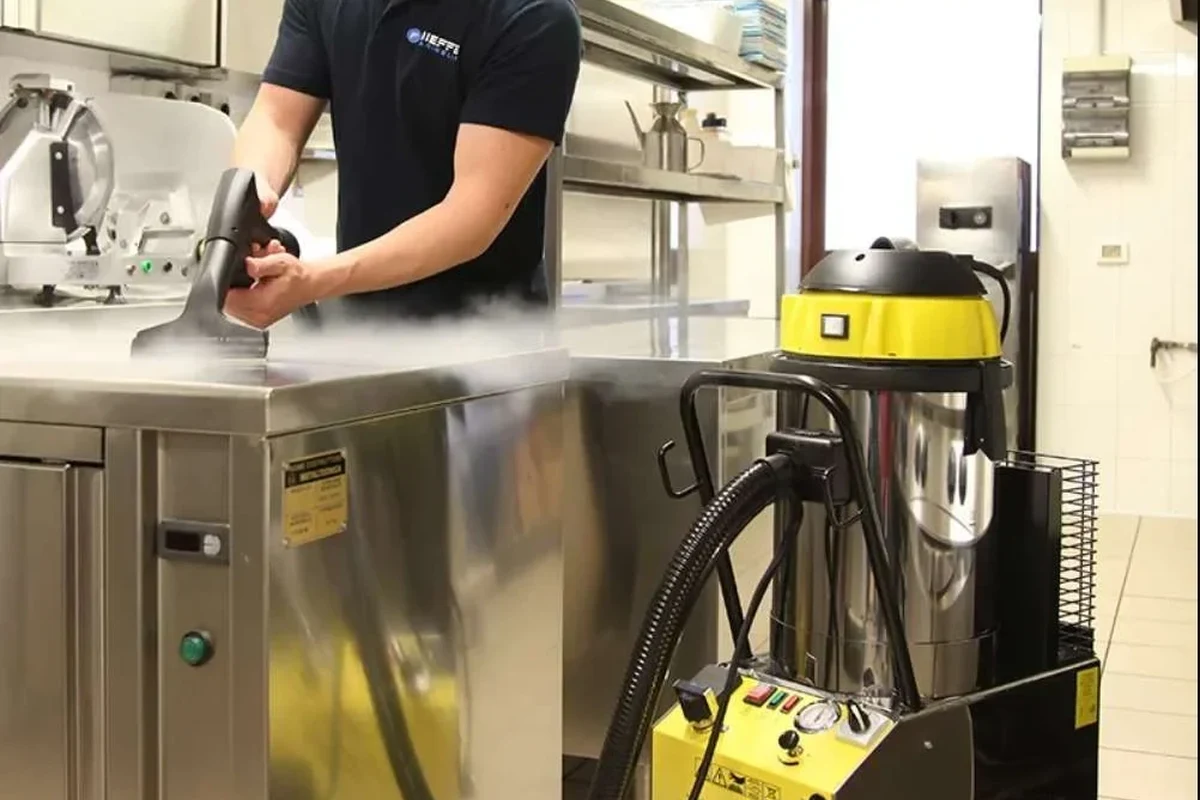
For most commercial kitchens, the best steam cleaner is the one that balances heat output, runtime, mobility, and safe use on your specific surfaces. Small cafes usually benefit from a compact canister or handheld-style unit, while high-volume kitchens are better served by a larger model with a bigger tank, stronger steam delivery, and easier refill access.
If you are comparing steam cleaners alongside other cleaning equipment, it can help to think about the job first: daily wipe-downs, grout cleanup, stainless steel detailing, or periodic degreasing in tight corners. For broader floor and debris cleanup, a commercial vacuum cordless model may still be part of the workflow, but steam is often the better tool when residue is stuck on and you want to reduce chemical use.
How Steam Cleaners Work in a Commercial Kitchen
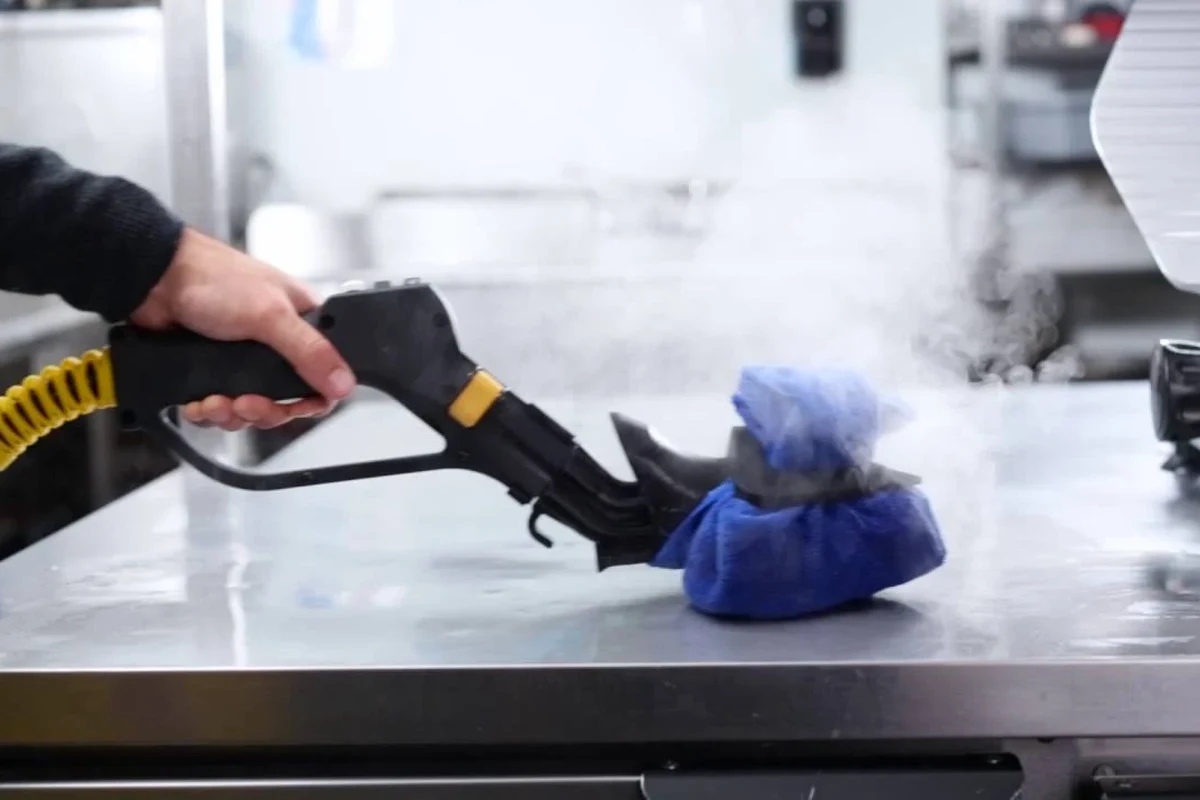
Steam cleaners heat water until it becomes pressurized vapor, then direct that steam through a nozzle, brush, or attachment. In a kitchen, the heat helps loosen grease and food residue so it can be wiped away more easily, especially on flat, sealed, or nonporous surfaces.
Steam temperature, pressure, and why they matter for grease removal
Higher heat and stronger steam delivery generally improve cleaning performance on grease, but the exact result depends on the model, attachment, and dwell time. Some manufacturers advertise pressure in bars or pounds per square inch, while others focus on steam temperature or continuous output; because those figures are not standardized across every brand, compare them only within the same product line when possible.
In practical terms, a kitchen steam cleaner is less about brute force and more about controlled heat. Too little steam can leave residue behind, while too much can over-wet seams, joints, or electrical-adjacent areas if the operator is careless.
What surfaces and equipment they can safely clean
Steam cleaners are commonly used on sealed tile, grout, stainless steel exteriors, some countertops, sinks, backsplash areas, and certain floor surfaces approved by the manufacturer. They may also help with hood exteriors, prep station edges, and tight corners where cloth wiping is slow.
They are not automatically safe for every material. Unsealed wood, delicate laminates, some adhesives, and water-sensitive electronics should be avoided unless the manufacturer specifically says otherwise. Always check the appliance manual and the surface care instructions before using steam on anything expensive or moisture-sensitive.
Surface compatibility can vary by finish, sealant, and age of the material. A floor or countertop that tolerates steam in one kitchen may not be a good match in another.
What to Look For Before You Buy
The right model is usually the one that fits your workload instead of the one with the biggest marketing claims. In a commercial kitchen, that means looking closely at runtime, refill style, power requirements, and whether the machine is easy to move between prep, dish, and serving areas.
Tank capacity, heat-up time, runtime, and refill style
Larger tanks usually mean longer runtime, which matters when you are cleaning during a short closing window. Faster heat-up time is useful for quick touch-ups, while continuous-refill or on-the-fly refill designs can reduce downtime in busier kitchens.
Before buying, verify whether the model needs to cool down before refilling. That detail affects workflow more than many buyers expect, especially if the cleaner will be used between lunch and dinner service.
Wattage, power cord quality, and outlet requirements
Steam cleaners can draw meaningful power, and not every kitchen outlet setup is the same. Check the manufacturer’s wattage rating, plug type, and any guidance on dedicated circuits or extension cord use before you place the machine in service.
Cord quality matters too. A long, durable cord can improve reach, but only if it is rated appropriately and kept away from hot surfaces, standing water, and traffic lanes. If you are also building out a cleaning kit, it is worth reviewing power needs alongside other gear, much like you would compare options in a budget charger guide where wattage and compatibility determine whether the setup actually works.
Dimensions, weight, mobility, and storage footprint
Commercial kitchens are crowded, so a steam cleaner should fit the space both in use and in storage. Pay attention to the machine’s footprint, hose length, handle design, and whether it has wheels that roll smoothly over wet or uneven floors.
Heavier machines may offer more capacity, but they can be awkward in narrow prep areas or stair-access locations. If storage is tight, a compact unit with organized accessory storage may be more practical than a larger cart-style cleaner.
Noise level, consumables, and warranty details to verify
Noise can matter in open kitchens, early-morning prep, and shared workspaces. Manufacturer claims about sound are not always comparable, so treat them as a rough guide rather than a universal benchmark.
Also verify what counts as a consumable: filters, pads, brushes, descaling solution, or replacement nozzles may not be included forever. Warranty terms vary widely, so confirm coverage length, exclusions, and whether commercial use affects support before you buy.
- Check compatibility with your floor, countertop, and stainless-steel finishes
- Confirm wattage, plug type, refill method, and storage space
- Review the warranty, consumables, and commercial-use limitations
Best Use Cases in Restaurants, Cafes, and Catering Kitchens
Steam cleaners work best where heat can loosen buildup without soaking the area. That makes them especially useful for detail cleaning, periodic deep cleaning, and spots where abrasive scrubbing would take too long or risk surface damage.
Floors, grout, stainless steel, hoods, and prep stations
On sealed floors and grout, steam can help lift embedded dirt that mops often spread around. On stainless steel, it can loosen grease around edges, seams, and hardware, but the final finish still depends on wiping technique and the right cloth.
For hood exteriors, prep tables, and sink surrounds, steam can be a strong maintenance tool when used carefully. It is usually more effective for targeted cleaning than for large-scale grease removal from a heavily neglected system, which may still need professional service.
When a steam cleaner is better than chemicals or pressure washing
Steam is often a better fit when you want less chemical residue, faster detail work, and more control around seams and fixtures. It can also be useful in areas where you do not want overspray or where cleaning crews need a portable option between stations.
Pressure washing is usually too wet and too aggressive for many indoor kitchen settings, and chemical-only cleaning can leave residue or require longer dwell time. Steam is not a replacement for every cleaner, but it can reduce reliance on harsh products when the surface and sanitation plan allow it.
Safety, Setup, and Proper Operating Practices
Commercial kitchen steam cleaning is as much about safe handling as it is about cleaning power. Hot vapor, slippery floors, and crowded work areas create risks, so setup and training matter.
Startup checklist, PPE, and ventilation basics
Start by reading the manual, checking the water level, confirming the attachment is locked in place, and verifying that the cord and hose are undamaged. Use the PPE recommended by the manufacturer and your workplace safety policy, which may include gloves, slip-resistant footwear, and eye protection.
Ventilation should be adequate before and during cleaning, especially in tight kitchens or near heat-producing equipment. If the area feels too humid or visibility drops, pause and reassess the workflow.
Heat, burn, and slip hazards to avoid
Steam can burn skin quickly, even if the nozzle itself looks harmless. Keep hands, faces, and bystanders away from the output path, and never aim steam at people, pets, or exposed electrical components.
Wet floors are another common hazard. Mark the area if needed, work in sections, and give cleaned surfaces time to dry before foot traffic resumes.
Stop using any steam cleaner with a damaged cord, loose hose connection, cracked tank, leaking fittings, or signs of overheating. Follow the manufacturer’s guidance before returning it to service.
Common mistakes that reduce cleaning performance
One common mistake is moving the nozzle too quickly. Steam needs brief contact time to loosen grease, especially on stubborn buildup.
Another mistake is using the wrong attachment or cleaning a surface that cannot tolerate heat and moisture. Skipping pre-scraping on heavy residue can also make the job slower and less effective than it should be.
Maintenance, Descaling, and Storage Guide
A steam cleaner lasts longer and performs more consistently when it is emptied, dried, and inspected regularly. In commercial use, small maintenance habits matter because buildup can affect performance and downtime can disrupt kitchen schedules.
Daily emptying, nozzle care, and hose inspection
After use, empty the tank if the manual recommends it, then let the machine cool fully before handling. Check the nozzle, brush, and hose for residue or wear, and wipe down the exterior so grease does not accumulate on the housing.
Inspect the hose and fittings for kinks, cracks, or looseness. If the attachment does not seat properly or steam output seems inconsistent, stop and verify the cause before the next shift.
Descaling schedules, filter checks, and replacement parts
Mineral buildup is a common issue, especially in areas with hard water. Some models require periodic descaling or filter replacement, but the exact schedule depends on the manufacturer and local water conditions.
Use only the cleaning method approved in the manual. Unapproved descaling chemicals or improvised fixes can damage seals, pumps, or heating elements.
Off-shift storage and long-term care
Store the unit in a dry, stable location with the cord loosely wrapped and the tank empty unless the manual says otherwise. Keep accessories together so nozzles, brushes, and pads are easy to find for the next cleaning cycle.
If the machine will sit unused for a long period, review the storage instructions for the exact model. That is especially important for units with filters, seals, or water reservoirs that can dry out or collect residue over time.
Comparison Criteria: Commercial-Grade vs. Heavy-Duty Consumer Models
Not every kitchen needs a true commercial unit. Some heavy-duty consumer steam cleaners can handle moderate kitchen cleanup well, but they may not be designed for the same duty cycle, repairability, or service support as commercial-grade equipment.
Durability, duty cycle, and value for money
Commercial-grade machines are usually built for more frequent use, longer sessions, and tougher environments. That can make them a better value if the cleaner will be used daily or by multiple staff members.
Heavy-duty consumer models may cost less and still do a good job for smaller operations, but they can be less comfortable for long shifts and may have shorter warranties or fewer replacement-part options. If you are also comparing other rugged equipment for a busy workspace, the same logic applies as it does when choosing a cordless commercial vacuum cleaner: durability and service support often matter more than headline features.
Limitations, evidence gaps, and realistic expectations
Because commercial kitchen conditions vary so much, the same steam cleaner can perform differently depending on grease level, floor finish, water hardness, and operator technique. Manufacturer claims are useful, but they do not replace a real workflow assessment.
There are also evidence gaps to keep in mind. Unless a brand provides clear commercial-use documentation, replacement-part information, and safety guidance, it is best to treat performance claims as model-specific rather than universal.
Small kitchens should look for a compact, fast-heating model with easy storage and straightforward refills. High-volume kitchens should prioritize larger capacity, stronger runtime, and durable accessories, while budget buyers should focus on verified compatibility, warranty terms, and the cost of replacement parts rather than just the lowest sticker price.
Final Recommendation: Which Steam Cleaner Type Fits Your Kitchen Best?
If your kitchen is small or moderately busy, a compact steam cleaner with a manageable tank, quick heat-up, and a practical accessory set is usually the most sensible choice. It will be easier to store, faster to deploy, and less disruptive during short cleaning windows.
For high-volume kitchens, choose a heavier-duty model that can handle longer sessions, repeated refills, and more frequent use without constant downtime. Budget buyers should compare warranty coverage, consumables, and surface compatibility first, because the cheapest unit is not a good value if it cannot safely handle your actual cleaning tasks.
Before you buy, confirm the manual, outlet requirements, and approved surfaces, then match the machine to the way your team actually cleans. That is the most reliable way to choose among steam cleaners for commercial kitchens without overbuying or ending up with a tool that does not fit the workflow.
Frequently Asked Questions
A compact canister unit works well for smaller kitchens, while larger kitchens usually need a heavier-duty model with longer runtime and easier refills. The best choice depends on how often it will be used and what surfaces you need to clean.
Yes, many steam cleaners work well on sealed grout and stainless steel exteriors when used correctly. Always confirm the surface is approved by the manufacturer and avoid delicate finishes or moisture-sensitive materials.
Not completely. Steam can reduce chemical use for detail cleaning and grease removal, but sanitation plans may still require approved cleaners in some areas.
Check tank capacity, heat-up time, runtime, refill method, wattage, cord quality, size, and warranty terms. Also verify which surfaces the model is safe to clean and whether commercial use affects support.
Empty and cool the machine after use, inspect the hose and nozzle, and follow the manual’s descaling guidance. Replace filters or worn parts as needed and store the unit in a dry place.
It can be enough for light to moderate use in some kitchens, but it may not hold up as well under daily commercial duty. Compare durability, replacement parts, warranty coverage, and runtime before deciding.