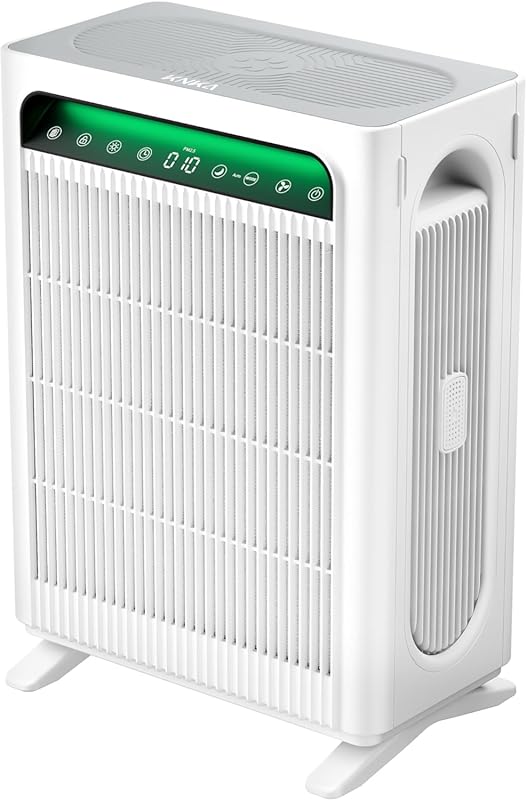
Best HEPA Air Purifier for Cigarette Smoke in 2026
The best HEPA air purifier for cigarette smoke is a true HEPA model with strong activated carbon and enough CADR for your room. For the best results, pair it with ventilation and keep it running consistently in the space where smoke lingers most.
If you need a HEPA air purifier for cigarette smoke, the best choice is usually a true HEPA model with a substantial activated carbon stage and enough CADR for your room. HEPA handles smoke particles well, but odor and gases depend heavily on carbon filtration and good room setup.
- HEPA handles particles: It reduces smoke haze and fine airborne debris, but odor needs carbon filtration too.
- CADR matters: A higher clean-air delivery rate is more useful than vague room-size claims.
- Carbon quality counts: Thin carbon layers may help a little, but stronger carbon stages usually handle smoke.
- Setup affects results: Placement, room sealing, and continuous operation can make a big difference.
Best HEPA Air Purifier for Cigarette Smoke in 2026: Quick Answer and What to Expect

For cigarette smoke, look for three things first: true HEPA filtration, meaningful activated carbon, and a CADR that matches the room rather than the marketing claim on the box. If you are shopping for a bedroom, apartment, or shared living area, the most practical option is often a purifier that can run continuously at a low-to-medium fan speed without becoming too noisy.
One important reality check: no purifier can fully “solve” indoor smoking if smoke is constantly being produced. The best results come from pairing the purifier with ventilation and source control, especially in enclosed spaces.
How HEPA Air Purifiers Handle Cigarette Smoke: What They Remove and What They Don’t

Cigarette smoke is a mix of fine particles, gases, and odor compounds. A HEPA filter is excellent at capturing particulate matter, including the tiny particles that make smoke visible and irritating. That is why a true HEPA purifier can make a room feel cleaner even when it cannot eliminate every trace of smoke smell.
HEPA filtration vs. activated carbon for smoke odor and gases
HEPA and carbon do different jobs. HEPA captures airborne particles; activated carbon helps absorb some odor compounds and gaseous pollutants. For cigarette smoke, the carbon stage matters more than many buyers expect, because a purifier with strong particle filtration but weak carbon can still leave the room smelling smoky.
Carbon performance varies widely by model. Manufacturers may describe carbon filters in vague terms, so check the filter type, weight, and replacement guidance in the official manual before buying.
In practical terms, a purifier with a thin carbon coating may help a little, but a deeper carbon bed usually has more odor-handling potential. That said, even strong carbon filters eventually saturate and need replacement, especially in homes with frequent smoking.
Why CADR matters more than “room size” marketing claims
Room-size claims can be misleading because they often assume ideal conditions, a specific ceiling height, and low air leakage. CADR, or Clean Air Delivery Rate, is more useful because it indicates how quickly the purifier can move smoke particles out of the air.
When comparing models, a higher CADR usually means faster smoke reduction in real use, as long as the unit is not too loud for the space. If a purifier is marketed for a “large room” but has a modest CADR, it may struggle in a smoky apartment or open living area.
For smoke-heavy spaces, prioritize CADR and fan performance over decorative features. A quieter purifier that runs all day is often more effective than a flashy model that people avoid turning on.
Who Needs a Cigarette Smoke Air Purifier Most?
These purifiers are most useful for people who share indoor air with smoke but cannot fully control the source. That includes renters, roommates, families with a smoker in the home, people living near smoking areas, and anyone trying to reduce lingering odor in a bedroom or living room.
Best fit for apartments, bedrooms, living rooms, and shared homes
Bedrooms benefit from a quieter purifier that can run overnight. Living rooms and shared homes often need stronger airflow because smoke spreads into larger, more open spaces. In apartments, a purifier can help reduce the smell in one room, but it will not fully stop smoke from moving through hallways, vents, or gaps under doors.
If you are also trying to improve other indoor air issues, such as pet dander or dust, a smoke-capable HEPA purifier can be a good multi-use purchase. Readers looking for broader home-cleaning gear may also find our guide to the best cordless vacuum for pet hair useful for keeping floors from re-releasing dust into the air.
When a purifier is not enough: ventilation and source control
A purifier is a support tool, not a substitute for fresh air. Opening windows when outdoor conditions allow, using exhaust fans, and keeping the smoking area as isolated as possible all improve results. If the smoker is in the same room where you sleep or work, even a strong purifier may only reduce—not remove—the impact.
Do not place a purifier where it blocks walkways, overheats against furniture, or draws in moisture. Follow the manufacturer’s clearance instructions and keep it away from candles, ash, and direct smoke sources.
Key Specs to Compare Before Buying
When shopping for a cigarette smoke purifier, the spec sheet matters more than the marketing headline. The best models are the ones that balance filtration, airflow, noise, and long-term ownership cost.
True HEPA, carbon weight, and pre-filter design
True HEPA is the baseline for fine particle capture. A washable or easy-to-clean pre-filter can help trap larger dust and lint before it reaches the main filter, which may extend filter life. For smoke, though, the carbon stage is just as important as the HEPA stage.
Because manufacturers do not always publish carbon weight clearly, buyers should check product pages and manuals carefully. If the carbon layer is tiny or unspecified, treat odor reduction claims cautiously.
- Check the exact filter type and whether it is true HEPA
- Confirm how much activated carbon is included and how often it must be replaced
- Verify room coverage, CADR, noise levels, and power requirements
- Review warranty terms, return policy, and replacement filter availability
Room coverage, CADR, airflow, and noise levels
For smoke control, airflow matters as much as filtration. A purifier needs enough clean-air delivery to cycle the room air frequently, especially if smoke is actively present. Noise matters too, because a purifier that is too loud often gets turned down or off, which reduces its effectiveness.
For bedrooms, look for a model that can stay tolerable on a sleep setting. For larger rooms, consider whether the purifier can move enough air without sounding like a fan on high all evening. If you are also building a smarter home environment, some buyers prefer a purifier that can sit alongside routines used for smart lighting or other connected devices, such as the setups covered in our smart lights for bedroom guide.
Filter replacement cost, warranty, and long-term value
The purchase price is only part of the cost. Replacement filters, especially carbon-heavy ones, can add up over time. A cheaper purifier with expensive proprietary filters may cost more in the long run than a pricier model with more reasonable maintenance costs.
Warranty length, filter availability, and the ease of opening the unit matter too. If the filter compartment is awkward or the replacement schedule is unclear, maintenance tends to get neglected. That is a problem for smoke, because a saturated filter loses effectiveness faster than many buyers expect.
Top Buying Criteria for 2026 Models
Current models vary, but the best cigarette smoke purifiers in 2026 should still be judged by the same fundamentals: filtration quality, airflow, maintenance, and practical usability. Smart features are helpful only after the core cleaning performance is solid.
Smoke-specific performance and odor reduction expectations
Look for models that explicitly address smoke, odors, or VOCs in the manufacturer’s documentation. Be careful with vague “fresh air” language. A purifier can reduce visible smoke particles quickly and still leave a noticeable odor if the carbon stage is weak or undersized.
HEPA filters do not remove gases or odors by themselves, which is why smoke-focused purifiers usually pair HEPA with activated carbon.
Energy use, fan speeds, and smart features worth paying for
Energy use matters most if the purifier runs all day, which is common in smoke-prone homes. Multiple fan speeds are useful because they let you run the unit quietly overnight and more aggressively during or after smoking. Smart features can be convenient for scheduling and reminders, but they are not essential if the purifier already has simple, reliable controls.
If app control is included, verify the app’s current availability, permissions, and update support before purchase. App features can vary by region, firmware, and phone platform, so the manual and app store listing are the safest sources to confirm compatibility.
Build quality, filter access, and maintenance convenience
A purifier that is easy to open and reassemble is more likely to get maintained on time. Look for straightforward filter access, clearly labeled replacement parts, and a design that makes it obvious when the pre-filter or main filter needs attention.
- Choose a model with easy front or side filter access if you expect frequent maintenance.
- Check whether replacement filters are widely available before you buy.
- Prefer simple controls if multiple household members will use the purifier.
How to Set Up a HEPA Air Purifier for Best Smoke Control
Even a strong purifier can underperform if it is placed badly or run inconsistently. Good setup is especially important for smoke because the problem spreads quickly through the room.
Placement tips for bedrooms, living spaces, and near smoking areas
Place the purifier where air can circulate freely around it, not jammed into a corner or hidden behind furniture. In bedrooms, a spot with open space on the intake and exhaust sides usually works better than a tight bedside nook. In living rooms, position it where it can pull air from the main smoke path without being blocked.
If the goal is to reduce smoke in a specific room, close the door when possible and keep gaps minimized. A purifier works better in a contained space than in a fully open floor plan.
Initial run time, continuous operation, and room sealing basics
For smoke, continuous operation is usually more effective than short bursts. Letting the unit run before, during, and after exposure can help keep particle levels lower. If the room is very smoky, the purifier may need time to catch up, especially after heavy indoor smoking.
Simple sealing steps can help too: close windows when outdoor air is worse, reduce drafts from hallways if possible, and limit how much smoke escapes into adjacent rooms. A purifier is most effective when it is not fighting a constantly changing airflow pattern.
Set the purifier to a steady fan speed you can tolerate for several hours. A consistent setting is often more useful than repeatedly turning the unit on and off.
Common setup mistakes that reduce performance
One common mistake is assuming the purifier will work well even if it is placed too close to a wall or blocked by curtains. Another is buying a unit that is too small for the room and expecting it to handle heavy smoke anyway.
People also underestimate filter saturation. If the room is frequently smoked in, the purifier may need more frequent filter changes than the default schedule suggests. That is especially true for carbon filters, which can lose odor performance before the HEPA media looks dirty.
Real-World Benefits, Limitations, and Safety Considerations
Used correctly, a smoke-focused HEPA purifier can make a home feel noticeably less stale and reduce airborne particles that irritate the eyes, nose, and throat. The biggest benefit is often better day-to-day comfort rather than perfect odor elimination.
What users can realistically expect from smoke removal
Expect the purifier to reduce visible smoke haze and improve air quality in the room where it is placed. In a bedroom or office, that can make the space more comfortable for sleeping, studying, or working. Results are usually best when the purifier is sized appropriately and run consistently.
For people who also work from home, a cleaner room can make a noticeable difference in comfort during long sessions. If you are setting up a quieter home workspace, you may also want to compare other room gadgets such as the options in our smart lights for home office coverage if you want a better overall desk environment.
Limitations with heavy indoor smoking and lingering odor
Heavy indoor smoking can overwhelm even a good purifier. Odor can cling to fabrics, carpets, curtains, and furniture, which means the air cleaner may improve the room while the smell remains in soft surfaces. In those cases, cleaning textiles and reducing the source are just as important as filtration.
If smoke is coming from another apartment or from a shared space, the purifier may help reduce the local impact but cannot fully stop infiltration. That is why source control and ventilation are part of the solution, not optional extras.
Safe use, filter care, and when to replace consumables
Follow the manufacturer’s replacement schedule as a starting point, then adjust based on smoke exposure and odor. If the unit starts smelling stale, airflow drops, or the filter indicator suggests replacement, do not wait too long to change consumables.
Stop using any purifier that has damaged housing, unusual burning smells, loose parts, or a frayed power cord. Check the official manual for cleaning and replacement guidance before opening the unit.
Final Recommendation: Best Use Cases, Value, and What to Buy in 2026
The best HEPA air purifier for cigarette smoke is the one that matches your room size, odor problem, and maintenance tolerance. For most buyers, that means a true HEPA purifier with a stronger-than-average carbon stage, solid CADR, and easy filter replacement.
Best overall choice, best budget pick, and best for larger rooms
Best overall: a mid-to-high-output purifier with true HEPA, meaningful carbon, and multiple fan speeds is the most balanced choice for bedrooms and apartments. It offers the best mix of smoke particle removal, odor reduction potential, and daily usability.
Best budget pick: a simpler true HEPA purifier with a modest carbon stage can still help in a small bedroom or office, especially if smoke exposure is occasional. The tradeoff is weaker odor control and possibly higher long-term annoyance if the filter system is awkward.
Best for larger rooms: choose the model with the strongest verified CADR and a filter system designed for sustained airflow. Large spaces need more air movement, not just a bigger-looking cabinet.
Transparent verdict based on performance, maintenance, and value
For cigarette smoke, the smartest purchase is usually not the fanciest purifier but the one with the clearest filtration specs and the most realistic airflow for your room. If you confirm CADR, true HEPA filtration, carbon depth, replacement costs, and noise tolerance, you will be much more likely to end up with a purifier that actually helps day after day.
If you are still comparing options, use the official manual and current manufacturer specs as your final check before buying. That is the best way to avoid oversized marketing claims and choose a purifier that fits your home.
Frequently Asked Questions
A true HEPA purifier with a meaningful activated carbon stage is the best starting point. HEPA captures smoke particles, while carbon helps with odor and some gases.
HEPA alone does not remove smell well because it targets particles, not gases. For odor reduction, look for a purifier with stronger activated carbon filtration.
Use CADR and room size together instead of relying on marketing claims. A purifier with higher CADR is usually better for smoke, especially in larger or more open rooms.
No, a purifier cannot replace fresh air or source control. It works best when paired with opening windows when appropriate, using fans, and reducing indoor smoke exposure.
Follow the manufacturer’s schedule, then replace filters sooner if smoke exposure is frequent. Carbon filters can saturate earlier than HEPA media, especially in smoky homes.
Check true HEPA status, carbon filtration details, CADR, noise levels, filter replacement cost, warranty, and current app or smart features if included. Confirm details in the official manual and product listing before purchase.