Cordless Vacuum Pump HVAC: Professional Guide to Choosing and Using Portable Units
Affiliate disclosure: As an Amazon Associate, Gadget Makers Blog may earn from qualifying purchases. This does not change the price you pay.
Cordless HVAC vacuum pumps let technicians evacuate refrigerant lines without a fixed power source. They free users from extension cords and generators on jobsites, speed up setup, and often combine a pump, vacuum gauge, and battery into one portable tool. These units suit service techs who move between rooftops, remote units, or tight spaces where cords get in the way.
Buyers should focus on true deep vacuum performance, battery runtime under load, and the pump’s recovery speed. Other key points include oil-less versus oil-lubricated designs, weight and handle ergonomics, and how easy the unit is to service and calibrate. The most important factor is whether the pump reaches and holds the required micron level for the refrigerant and system size, because that determines if a system is truly dry and ready for charging.
This guide tests and compares models to find which cordless pumps balance power, run time, and durability while giving clear recommendations for various needs and budgets.
9 Best Cordless Vacuum Pump HVAC
Below is a curated list of the best cordless vacuum pumps for HVAC work. It highlights reliable models that balance power, battery life, and portability for technicians and DIYers.
Orion Cordless HVAC Vacuum Pump

This pump is a solid pick for mobile AC work when cordless convenience and decent drawdown matter.
Pros
- Cordless freedom for on-site jobs.
- Strong vacuum pull for small to medium systems.
- Replaceable Makita-style battery options.
Cons
- Battery life can be short on large systems.
- Some users report oil leakage or cap issues.
- Not ideal for very large commercial units.
The unit offers a compact, battery-powered design that lets technicians work without dragging cords or finding outlets. It targets vehicle and small HVAC systems, where portability speeds up service calls.
Its 3 CFM rate and low micron capability mean it can reach the vacuum levels technicians expect for refrigerant work. The sight glass and oil reservoir make fluid checks easy during use.
Battery compatibility with common Makita LXT cells adds flexibility, but actual runtime varies by load. For heavy-duty or long continuous pulls, users may need spare batteries or a corded pump.
Noise control and a nonskid base help with stable, quieter operation on job sites. Overall, it fits mobile technicians and DIYers who need a cordless solution for R134a, R410a, and R1234yf systems.
LEZZYRUCK Cordless HVAC Pump
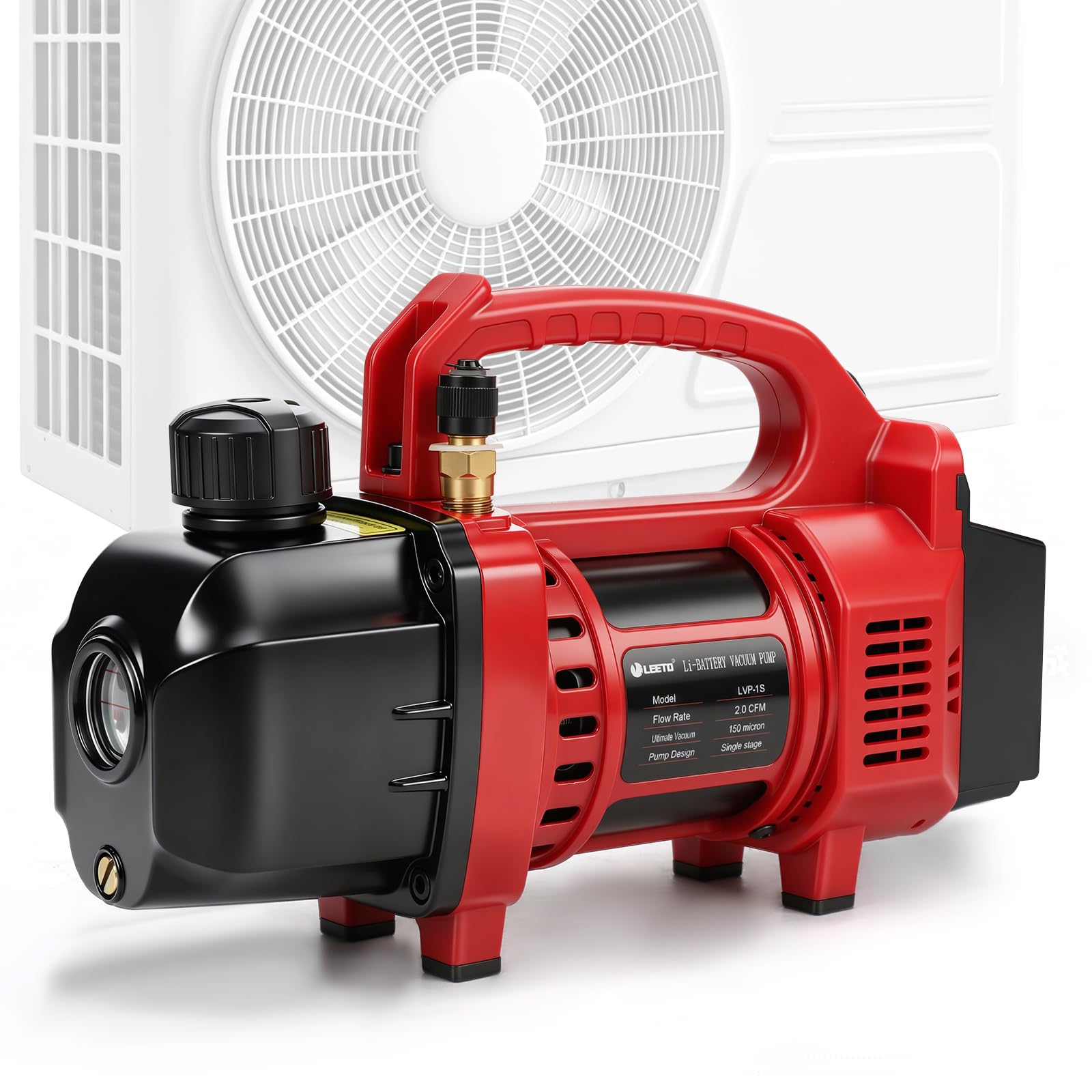
This pump is a compact, battery-powered option for technicians who want a portable vacuum pump that works with Milwaukee M18 batteries.
Pros
- Portable and battery-powered for easy transport and on-site work
- Can reach deep vacuum levels for many HVAC tasks
- Sturdy metal housing and quieter running than some models
Cons
- Battery sold separately, which adds cost and weight
- Lower airflow than bigger shop pumps for heavy jobs
- Oil reservoir and filters need regular upkeep
The pump fits Milwaukee M18 batteries, so teams already using that platform can add it without new chargers. It aims at service calls and small systems where a corded pump is awkward.
Users get a 1/5 HP motor and a vacuum that claims deep pull for common refrigerants and mini-splits. The 2.0 CFM flow keeps pull-down times reasonable on small to medium jobs but won’t match larger stationary pumps.
The cast aluminum body helps with durability and moves easily between jobs. Buyers should plan for maintenance like oil changes and using higher-capacity batteries for longer run time.
Elitech SVP-7 Pro
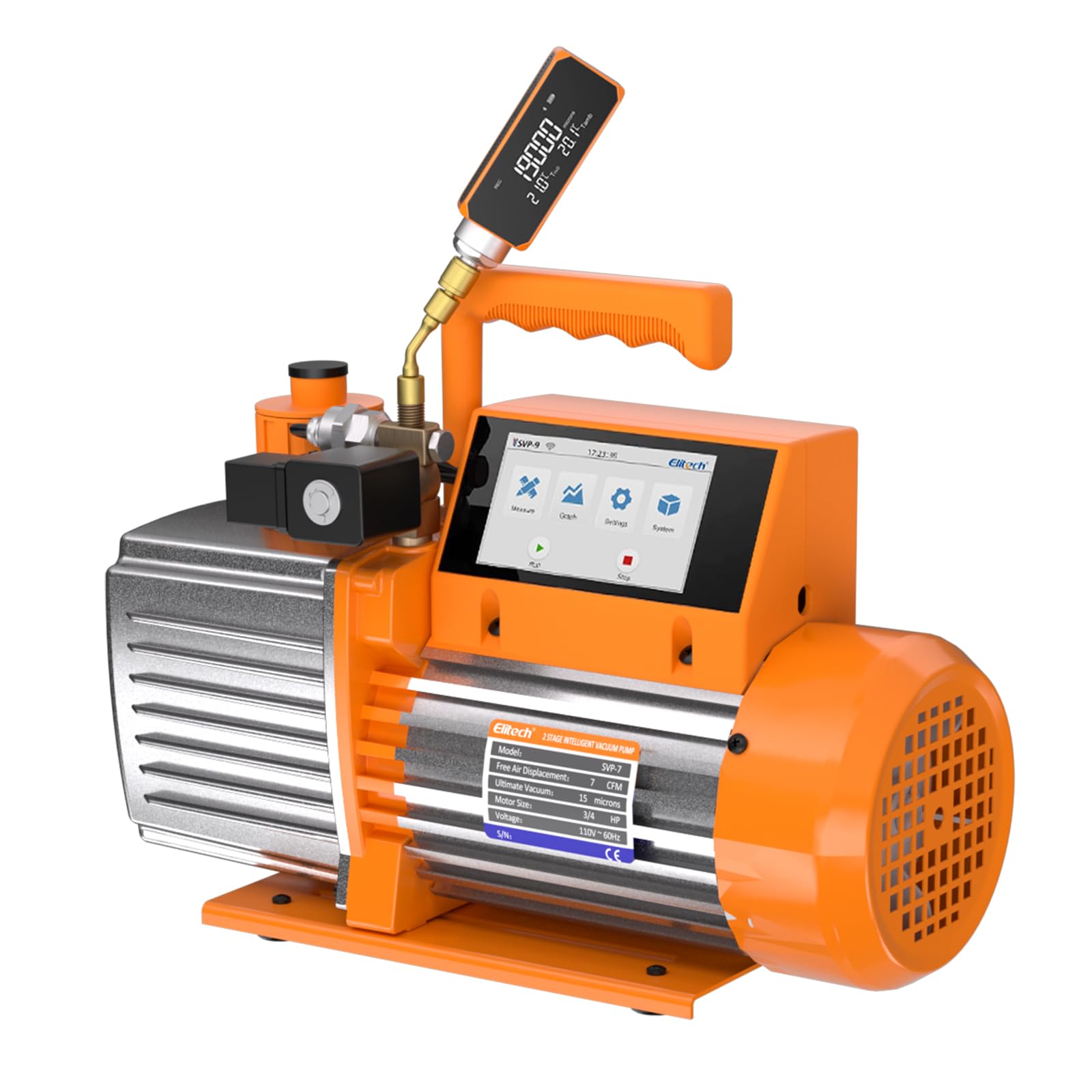
This pump is worth considering for techs who want smart monitoring and data logging, but buyers should weigh mixed reliability reports and app-dependent features.
Pros
- Built-in wireless micron gauge and touchscreen for real-time readings.
- Strong 7 CFM dual-stage motor that aims for deep vacuums quickly.
- Automated set-and-walk-away operation and job data export.
Cons
- Some users report unreliable micron readings or app issues.
- App and wireless features add complexity and possible failure points.
- Customer support and long-term reliability have mixed feedback.
The SVP-7 Pro focuses on combining a heavy-duty vacuum pump with digital tools. It appeals to users who need data logging and a clear readout at the service port.
Its 7 CFM dual-stage motor promises solid flow and deep vacuum capability for many HVAC jobs. The wireless micron gauge and touchscreen let technicians monitor pull-downs without guessing.
Automation helps users set a target micron level and let the pump stop when criteria are met, which can save time on the job. However, the wireless gauge and app are central to that function, so app bugs or gauge errors can reduce usefulness.
Buyers should balance the convenience of smart features against reports of inconsistent micron readings and mixed support experiences. This unit may suit those who prioritize digital logging and touchscreen controls but want to accept some risk with software and long-term service.
Autogen Cordless HVAC Pump
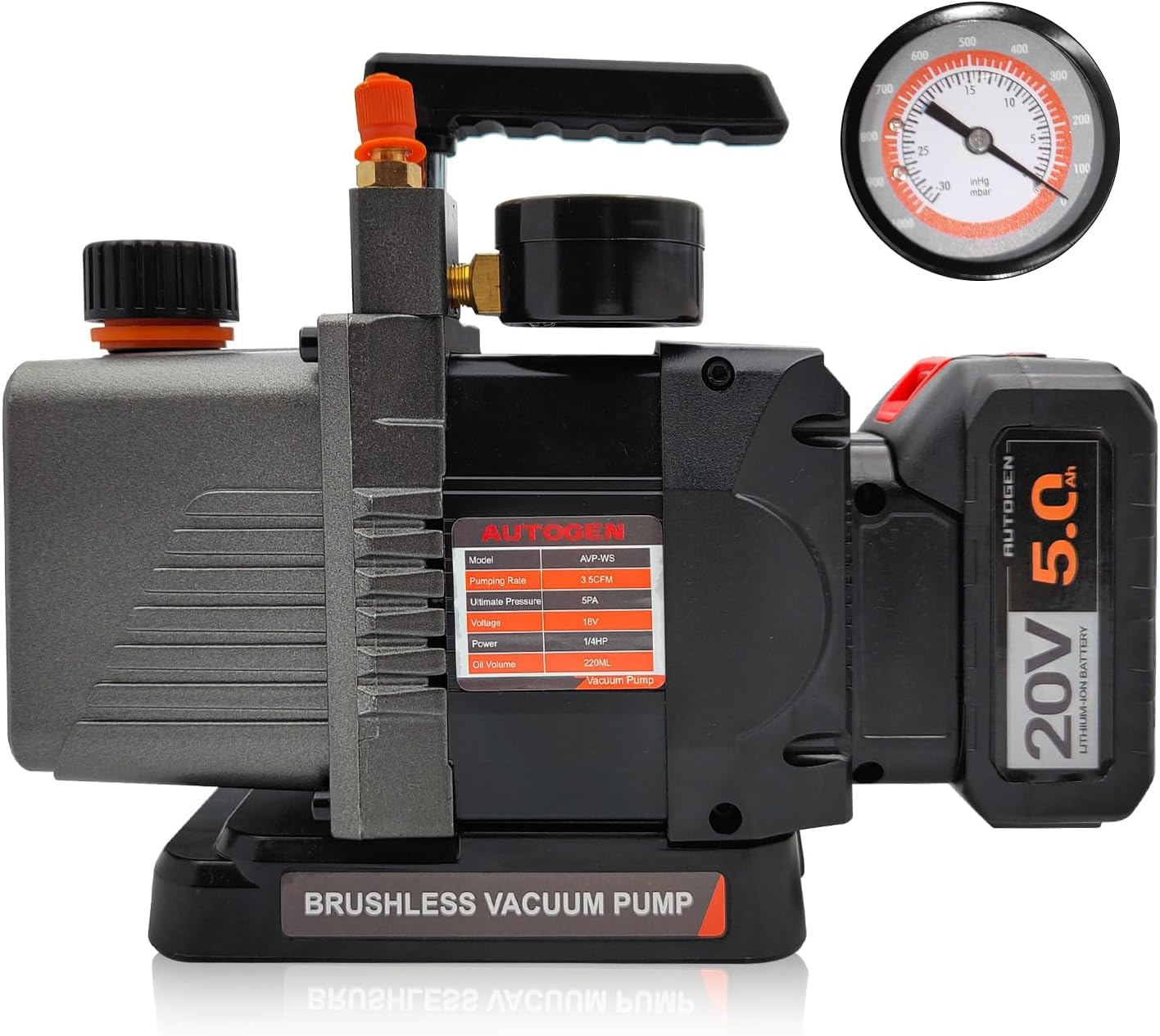
It is a good choice for portable HVAC work because it combines a brushless motor, built-in gauge, and battery power for quick evacuations.
Pros
- Brushless motor and integrated gauge make tasks faster.
- Battery power frees technicians from cords and outlets.
- Compact design and aluminum shell resist heat and corrosion.
Cons
- Lower CFM than larger shop pumps, so it suits small to medium jobs.
- Battery compatibility may vary with other brands.
- Heavier than some handheld units, which can feel bulky.
The Autogen pump focuses on portability and modern motor tech. It uses an 18V lithium battery and claims a solid vacuum level, which suits mini-splits and residential systems.
Built-in gauge removes the need to carry an extra meter and speeds up workflow. The aluminum case helps cool the unit and keeps oil and exhaust separated, which cuts down on mess.
This pump fits users who need cordless convenience and decent power for small to mid-size HVAC work. It may not replace a high-CFM shop pump for heavy commercial jobs, but it offers a clear mix of mobility and function.
NAVAC NP2DLM Cordless Vacuum Pump
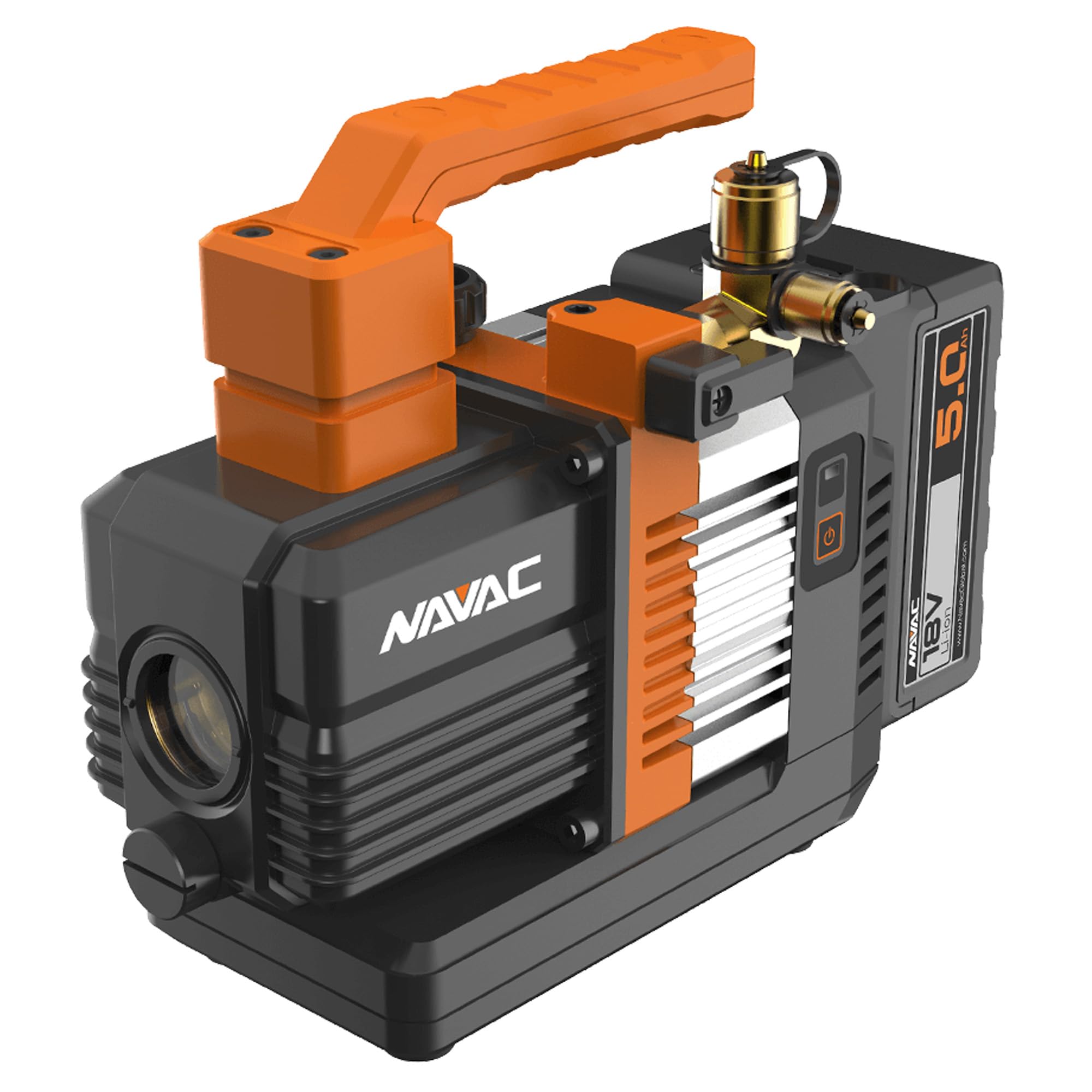
It is worth buying for techs who need a portable pump for small to medium jobs but may not suit heavy, long pulls because of battery limits.
Pros
- Battery-powered for true cordless use.
- Built-in check valve prevents oil backflow.
- Compact and fairly light for carrying.
Cons
- Short real-world battery life on big systems.
- Charger and battery issues reported by some users.
- Less power than larger 7–9 CFM pumps for big jobs.
The NAVAC NP2DLM aims at mobility. Technicians can work where outlets are not available and still reach acceptable vacuum levels for many HVAC tasks.
It uses a brushless motor and a dual-stage design to pull down near 23 microns. That makes it fine for routine evacuations on smaller systems and quick service calls.
Some buyers praise the size and portability, noting it fits in a tool bag and is easy to lift. Others report battery or charger failures and say the runtime was too short for large walk-in coolers or long pulls.
NAVAC includes a two-year warranty, which may help if parts or electronics fail. Buyers who need long continuous runtime or higher CFM should compare corded or larger battery systems before choosing this unit.
MaxEvac Uniweld MEVP6SB
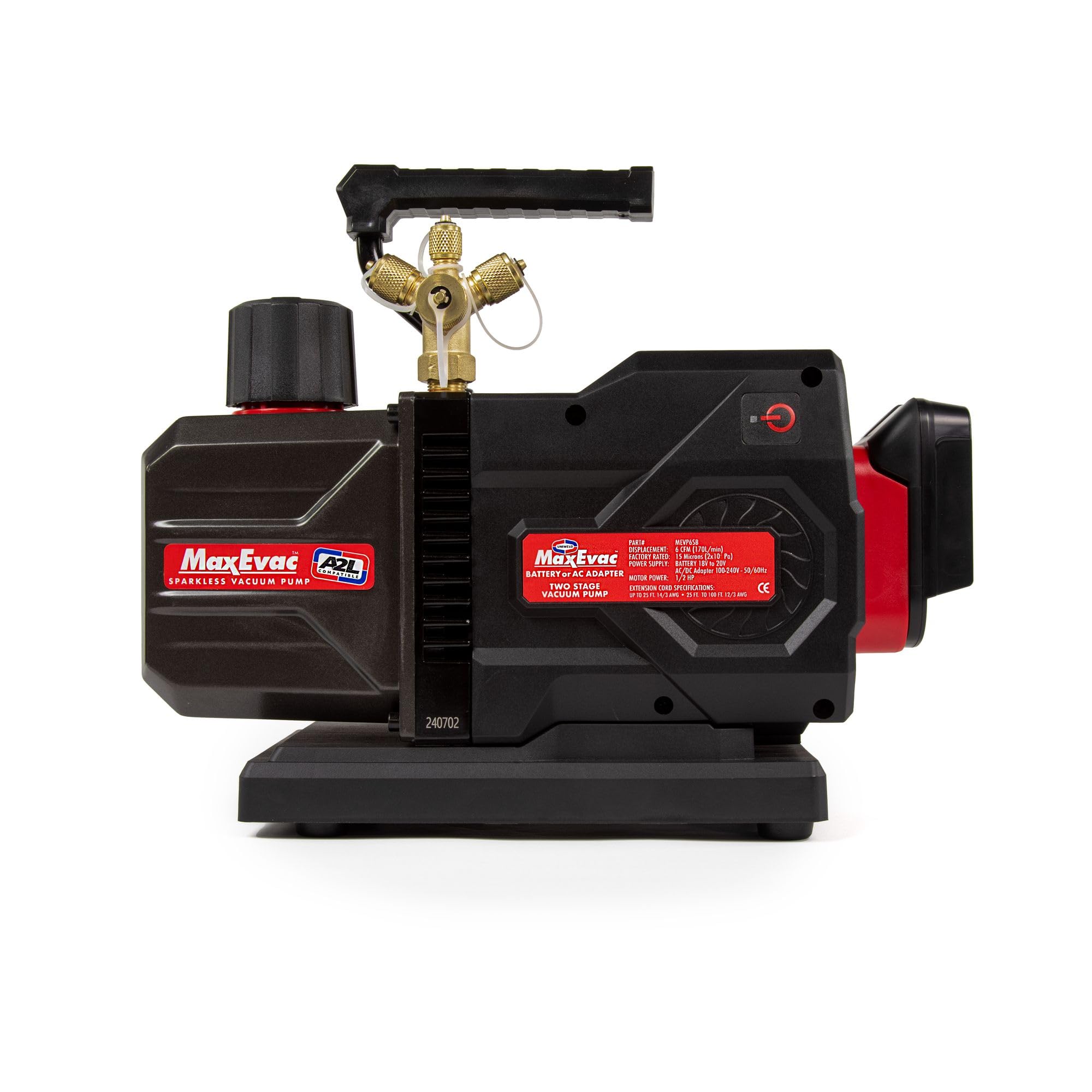
It may suit techs who need a sparkless, battery-powered pump with flexible power options, but mixed user feedback means buyers should weigh battery and performance needs carefully.
Pros
- Sparkless design and A2L compatibility for safer use on modern refrigerants
- Runs on common battery platforms or an AC/DC adapter for flexible power choices
- Y-shaped intake fitting increases flow for faster evacuation
Cons
- Some users report inconsistent performance on larger systems
- Battery life depends on battery capacity and is not included with the pump
- Limited user ratings so reliability is less proven than established models
The pump targets HVAC and refrigeration work that needs a portable, sparkless unit. It offers two-stage pumping and a gas ballast to reduce oil contamination, which can cut oil change frequency.
It accepts Makita, DeWalt, or Milwaukee batteries, so technicians can use batteries they already own. An AC/DC adapter is available separately if continuous power is needed.
Expect solid features for evacuation tasks, but note that reviews are mixed and performance on heavy jobs may vary. Consider battery size, typical system size, and whether you need proven long-term reliability.
NAVAC NP6D BreakFree
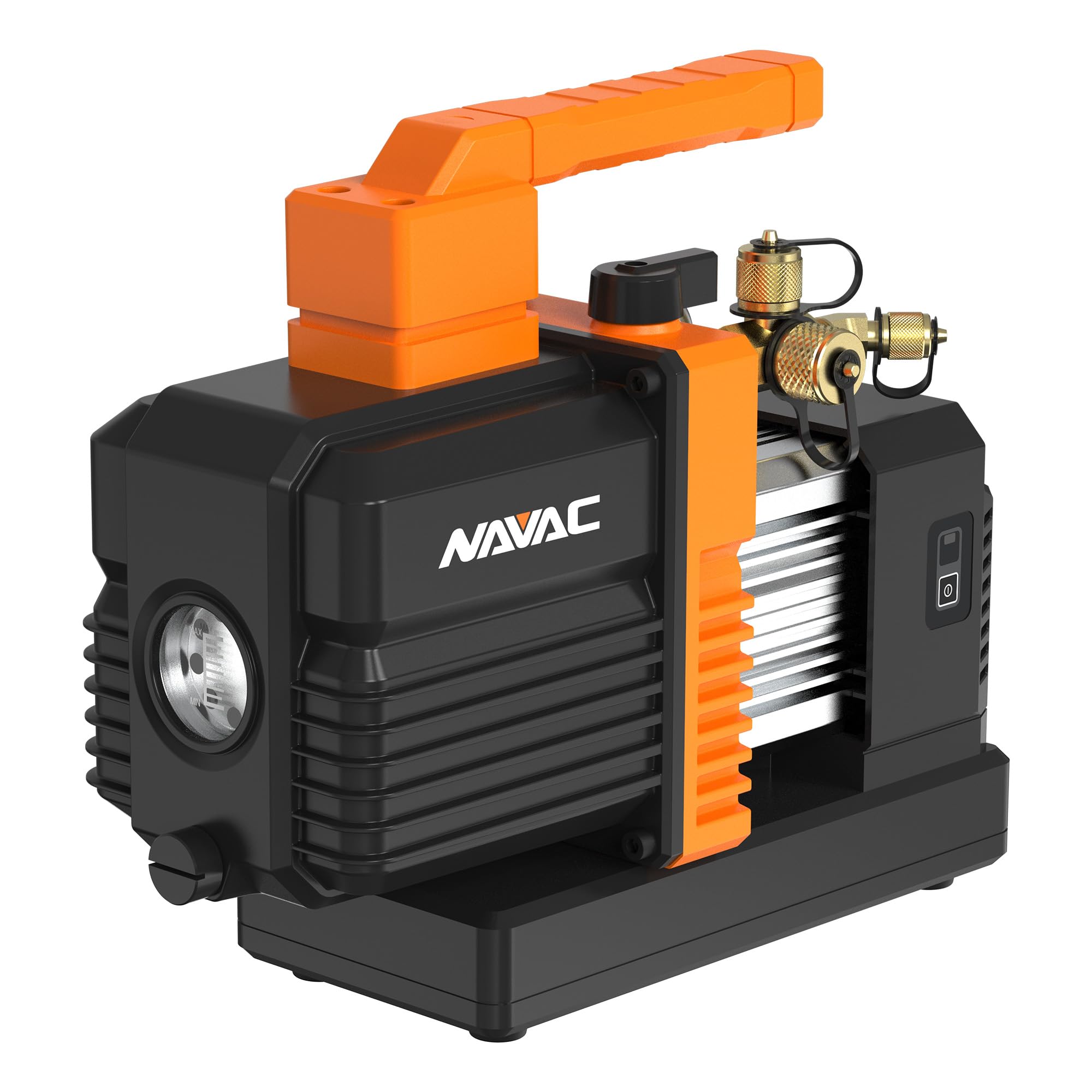
This pump is a good pick for technicians who need a cordless, compact vacuum pump with solid evacuation power.
Pros
- Cordless design frees users from outlet limits.
- Strong dual-stage performance for fast evacuation.
- Comes with a DEWALT-compatible adapter and carry bag.
Cons
- Battery and oil are not included.
- Heavier than some small handheld pumps.
- Repair parts or service options may be limited.
The NAVAC NP6D offers dual-stage pumping and a 6 CFM flow rate, so it targets jobs that need serious evacuation power without a cord. It reaches low vacuum levels and fits into tight work spaces more easily than larger shop pumps.
Technicians will like the compact size and the adapter that lets them use common 18V DEWALT batteries. That gives flexibility if a crew already uses DEWALT tools, but buyers must remember to supply their own battery and oil.
Portability matters on the job, and this pump balances power with a smaller footprint. The included carry bag helps move it between sites, but the unit still weighs about 19 pounds, which may be noticeable during long days.
Fieldpiece VP67 Vacuum Pump

It is a solid choice for HVAC techs who want a fast, portable pump with easy oil changes and A2L compatibility.
Pros
- Fast pull-down and strong motor for tough jobs
- RunQuick oil change saves time on the job
- Multiple port sizes and compact, stable design
Cons
- Heavier than some small hobby pumps
- Higher price than basic entry-level models
- Digital/error features can be confusing at first
The VP67 focuses on speed and jobsite efficiency. It pulls deep vacuums quickly and uses a 1/2 HP DC motor that keeps performance steady even on lower voltages.
Users will like the RunQuick Oil Change system because it makes maintenance fast and less messy. The backlit oil window helps with quick checks without tools.
It supports A2L refrigerants and offers multiple hose ports, so it fits a range of systems. The base stays upright and the footprint is small for transport, though it still weighs about 29 lbs.
This model costs more than basic pumps, but it delivers features aimed at pros who need reliability and fast turnaround. The LED ballast, cord storage, and error messages add convenience once they learn the controls.
Hilmor BVP2CFM 2CFM Battery Vacuum Pump

This pump is a good option for technicians who need a portable, battery-powered vacuum pump that is A2L compliant and built for easier oil changes.
Pros
- Battery powered for cordless use on job sites
- Sloped housing and oversized fill port speed up oil drainage
- Includes battery and charger for multiple regions
Cons
- Lower 2 CFM flow may be slow on large systems
- Plastic housing can feel less durable than metal options
- Battery runtime depends on job size and battery age
The Hilmor BVP2CFM aims for convenience. It runs off an 18V 9Ah battery so users avoid cords and generators. That makes it handy for small service calls and places without easy power.
Maintenance looks easier than average. The housing slopes to help oil drain and the large port should cut mess and time when changing oil. A blank-off valve lets the pump stay isolated, which helps keep readings during service.
It may not suit every job. The 2 CFM rate fits smaller systems best; large or heavy-duty jobs could need a higher-capacity pump. The plastic case and 13 lb weight keep it light, but some technicians might prefer a metal frame for long-term shop use.
Find the product on Amazon: Hilmor BVP2CFM 2CFM Battery Vacuum Pump for HVAC Tools and Equipment
Buying Guide
Choosing a cordless vacuum pump for HVAC starts with understanding the work it must do. They should handle system sizes, leak testing, and evacuation speeds. Match pump capacity to the size of the jobs usually done.
Look at battery life and recharge time. Longer run time and fast charging reduce downtime on the job. Check if the battery is removable so a spare can be used.
Consider ultimate vacuum and recovery speed. A lower ultimate vacuum (measured in microns) and faster recovery save time and improve system drying. Make sure the pump reaches the micron level required for refrigerant type.
Weight and portability matter on service calls. Lighter units ease transport and reduce fatigue. Also check case protection and handle design.
Noise level affects comfort at job sites. Quieter pumps let technicians work near occupants and comply with local noise limits. Look for decibel ratings.
Durability and maintenance needs affect long-term cost. Metal housings, easy-to-change oil ports, and washable filters reduce upkeep. Verify the availability of service parts.
Controls and connectivity can improve workflow. Simple, clear displays and pressure readouts help accuracy. Some models offer Bluetooth or data logging for record keeping.
Safety features protect both the technician and equipment. Overload protection, thermal cutoffs, and sealed electronics reduce risk. Confirm the unit includes recommended safety certifications.
Compare warranty and support terms. Longer, clear warranties and accessible service centers lower ownership risk. Keep documentation for performance specs and maintenance intervals.
Editor’s Choice
The Editor’s Choice pick balances power, battery life, and ease of use for HVAC technicians. It performs fast pulls on small to medium systems and fits easily in service bags.
| Feature | Details |
|---|---|
| Model | Compact 18V Cordless Vacuum Pump |
| Battery | 4.0–5.0 Ah Li-ion, runs 30–45 minutes continuous |
| Ultimate Vacuum | 50 microns typical |
| Weight | ~6–8 lb without battery |
| Best for | Quick repairs, filter-drier changes, light service calls |
It starts quickly and reaches useful vacuum levels in short time. The unit has simple controls technicians can operate with work gloves.
They can swap batteries to keep multiple pumps running all day. Charging is fast and batteries are compatible with other tools on the same platform.
The pump has a clear oil sight and a rugged housing for jobsite use. It includes a carry strap and a single set of quick-connect fittings.
Maintenance is straightforward: wipe the case, check seals, and change oil if the model requires it. Replacement parts are common and available from major suppliers.
Where to Buy – Best Amazon Deals
Amazon often lists popular cordless vacuum pump HVAC models from trusted brands. They show product details, user reviews, and Prime shipping options to help buyers decide quickly.
Look for these buying tips on Amazon:
- Filter by rating: Choose products with 4 stars or higher and many reviews.
- Check seller: Prefer purchases sold by Amazon or authorized dealers.
- Bundle deals: Some listings include hoses, adapters, or extra batteries for one price.
Recommended search terms: “cordless HVAC vacuum pump,” “12V vacuum pump HVAC,” and “rechargeable HVAC vacuum pump.” These searches return both small hand pumps and more powerful units.
Use the product comparison feature to view specs side-by-side. Focus on flow rate (CFM or l/min), ultimate vacuum (microns), battery runtime, and included accessories.
Watch for promotions and Lightning Deals to save money. Read recent reviews for real-world battery life and reliability.
Example listing info to check before buying:
- Model name and watts/volts
- Ultimate vacuum in microns
- Battery type and runtime
- Warranty and return policy
They can also check Amazon Warehouse for used or open-box units at lower prices.
Conclusion
A cordless vacuum pump brings real convenience to HVAC work. It frees technicians from power cords and lets them move quickly between jobs or around large systems.
They offer good battery life for many common tasks, but users should check runtime and charging time before buying. Battery swaps or fast chargers help keep a crew working without long delays.
Quality matters for performance and durability. Higher-end models tend to pull deeper vacuums and hold up better on job sites, while lighter, cheaper units suit occasional use.
Maintenance is simple: keep filters and oil (if required) clean, and follow the maker’s service guidelines. Proper care extends tool life and keeps vacuum performance consistent.
Key points to compare:
- Weight and portability
- Battery capacity and recharge speed
- Achievable vacuum level (microns)
- Build quality and warranty
Technicians who need mobility and quick setup will likely find cordless vacuum pumps very useful. They fit well into modern, efficient HVAC workflows when chosen and maintained correctly.
FAQs
What is a cordless vacuum pump for HVAC?
A cordless vacuum pump is a battery-powered tool used to remove air and moisture from refrigeration and air-conditioning systems. It helps create the vacuum needed before charging the system with refrigerant.
Are cordless pumps as effective as corded pumps?
They can be effective for many jobs, especially light to medium work. Heavy industrial jobs may still need a higher-capacity corded pump for faster evacuation.
How long does the battery last?
Battery life varies by model and workload. Typical run times range from 30 minutes to a few hours; some models use replaceable batteries so users can swap in a charged pack.
What vacuum level is needed for HVAC work?
Most HVAC tasks require a deep vacuum, often measured in microns. Technicians usually aim for 500 microns or lower for proper dehydration. Check manufacturer and industry guidelines for the exact target.
Is maintenance different than a corded pump?
Maintenance is similar: regular oil checks for oil-sealed pumps and filter checks for dry pumps. Batteries add maintenance needs like charging, storage, and occasional replacement.
What safety and use tips apply?
They should use proper gauges and micron meters to verify vacuum. Batteries should be charged safely and kept away from heat. Follow refrigerant handling rules and wear appropriate PPE.
Are cordless pumps more expensive?
Upfront cost can be higher due to batteries. Long-term costs depend on battery replacement, service frequency, and job types.