Get Procurement-Ready Documentation for Smart Locker Deployments
Gather the spec sheet, installation requirements, software details, warranty terms, and site measurements before approving a smart locker deployment. The best choice is the one that fits the actual space, network, and support plan, not just the brochure.
If you need to get procurement-ready documentation for smart locker deployments, the goal is simple: give facilities, IT, security, and finance everything they need to approve the project without guesswork. That means clear specs, installation requirements, integration details, warranty terms, and a deployment plan that matches the real site conditions.
Smart lockers can improve parcel handling, secure item exchange, and controlled access, but only when the paperwork matches how the system will actually be installed and operated. This guide walks through what to collect, what to compare, and where buyers often miss important details before approval.
- Core packet: Include specs, drawings, power/network needs, software access, warranty, and support terms.
- Fit first: Confirm footprint, clearance, delivery path, and installation constraints before purchase.
- IT matters: Verify app requirements, integrations, admin roles, and update support early.
- Long-term cost: Factor in subscriptions, maintenance, parts, and service response times.
Get Procurement-Ready Documentation for Smart Locker Deployments: What to Gather First
Quick answer: the core documents buyers, facilities teams, and IT need before approval
Start with the product spec sheet, installation guide, electrical and network requirements, software/app documentation, warranty terms, and any compliance or safety documents the vendor provides. Add a site plan with dimensions, access path, mounting needs, and a list of required integrations so each department can review the same version of the project.
- Confirm model number, compartment layout, power needs, network requirements, and intended use
- Verify installation clearance, software access, warranty coverage, support terms, and privacy settings
Why procurement-ready paperwork matters for smart locker projects in 2026
Smart locker deployments often cross multiple teams, and each team looks at risk differently. Procurement wants predictable costs, facilities wants installation feasibility, IT wants secure connectivity, and operations wants a system that is easy to support after rollout.
Good documentation reduces delays, prevents mismatched purchases, and helps avoid expensive rework after delivery. It also gives decision-makers a clearer way to compare models that may look similar online but differ in software licensing, access methods, or maintenance burden.
How Smart Locker Deployments Work in Real-World Use

Typical components: locker cabinets, controllers, access methods, cloud dashboard, and user app
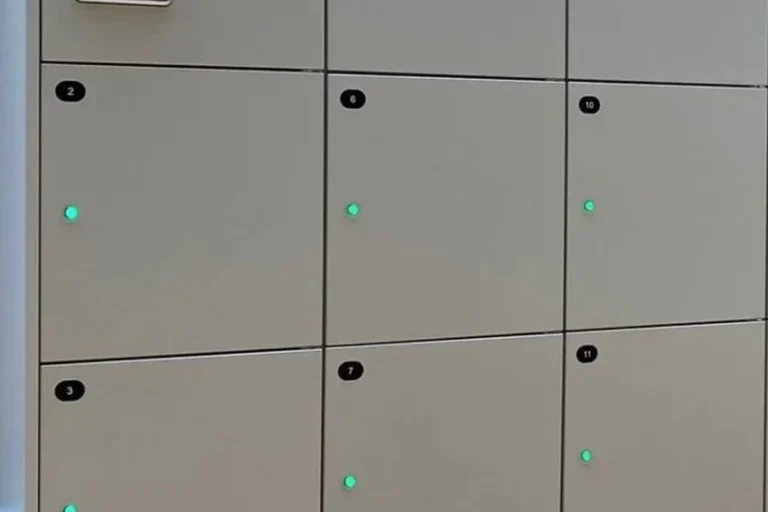
A smart locker system usually includes the physical cabinet, locking compartments, a controller or access panel, and software for administrators and end users. Depending on the model, users may unlock compartments with a PIN, RFID badge, QR code, mobile app, or another supported method.
The cloud dashboard is often where managers create users, assign compartments, review logs, and monitor activity. Because features vary by vendor and firmware, procurement documentation should separate confirmed capabilities from features that are optional, subscription-based, or available only on certain models.
Access methods, software dashboards, and app permissions can differ by model, region, and firmware version. Always verify the current compatibility list and admin features before approval.
Connectivity and power requirements to verify before purchase
Before a purchase moves forward, confirm whether the locker needs Ethernet, Wi-Fi, cellular backup, or a wired controller connection. Also verify whether the system requires standard AC power, a specific outlet type, or a dedicated circuit, since these details affect installation cost and site readiness.
Facilities teams should also check cable routing, wall access, ventilation around electronics, and any battery backup or UPS recommendations from the manufacturer. If the locker is intended for a busy lobby, mailroom, or outdoor-adjacent area, ask whether the model is rated for the expected environment instead of assuming indoor use is enough.
Do not approve a deployment until the power, grounding, and installation instructions are confirmed in the official manual. Damaged power cords, overloaded outlets, and improvised mounting can create safety and reliability problems.
Where these systems fit best: apartments, offices, gyms, campuses, and retail back-of-house
Smart lockers make the most sense where items move between many people and handoffs need to be tracked. That includes apartment package rooms, workplace equipment checkout, gym rental gear, campus pickup points, and retail back-of-house storage for controlled access.
They are less compelling in low-traffic settings where a shared cabinet or manual sign-out sheet already works well. The value rises when the location has recurring handoffs, after-hours access needs, or a history of lost items and misdelivery.
Essential Specifications to Include in Procurement Documentation
Dimensions, footprint, and installation clearance
Document the cabinet height, width, depth, door swing, anchor points, and the clearance needed for installation and daily use. Buyers should also note whether the unit can pass through elevators, hallways, loading docks, and doorways on the way to the final location.
For multi-unit deployments, include a floor plan that shows spacing for maintenance access, user queuing, and any required wall clearance. This is one of the easiest ways to prevent a purchase that fits on paper but not in the actual room.
Ask the vendor for a dimensioned drawing, not just a marketing image. A scaled drawing helps facilities confirm fit before the order is finalized.
Materials, finish, weather resistance, and security rating details
Procurement docs should state cabinet material, finish type, and any corrosion or weather resistance claims. If the locker will sit near an exterior entrance, in a garage, or in a humid environment, the vendor should specify whether the unit is intended for indoor-only use or has a verified outdoor rating.
Security-related details matter too. If a model claims tamper resistance, reinforced doors, or a lock rating, those claims should be documented clearly rather than left as brochure language. Buyers should ask for the exact standard, certification, or test basis if one is provided.
Network compatibility, app requirements, and access-control integrations
IT teams need to know what networks and apps the locker depends on. That includes supported operating systems, browser requirements, admin portal access, MFA or single sign-on support if offered, and whether the system integrates with existing access control, visitor management, or identity platforms.
If the deployment will connect to a property management system, workplace badge system, or delivery workflow tool, verify the integration method before purchase. Some systems offer native integrations, while others rely on APIs, third-party middleware, or manual workflows that may not scale well.
Warranty terms, support coverage, and service-level expectations
Warranty documentation should spell out what is covered, how long coverage lasts, and what counts as wear, misuse, or excluded damage. For a business deployment, support coverage is just as important as the hardware warranty because downtime can affect deliveries, staff workflows, and resident satisfaction.
Ask whether support is phone, email, portal-based, or on-site, and whether replacement parts are stocked locally or shipped from a central warehouse. If the vendor offers service-level expectations, include response times and escalation steps in the procurement packet so there is no confusion later.
Who Smart Locker Systems Fit Best — and Who Should Reconsider
Ideal users: property managers, workplace teams, multifamily operators, and parcel-heavy locations
Smart locker systems fit best for teams that manage repeated handoffs and need a reliable audit trail. Property managers, workplace operations teams, multifamily operators, and campus facilities groups often see the clearest benefit because they deal with packages, tools, supplies, or shared assets every day.
These systems also work well when front-desk staff are stretched thin or when access needs to happen outside normal business hours. In those cases, the locker can reduce manual coordination while keeping a record of who accessed what and when.
Use cases that justify the investment
Common justifications include parcel overflow, secure temporary storage, equipment checkout, and controlled contactless pickup. The investment is easier to defend when the locker reduces labor, improves chain of custody, or prevents recurring loss and confusion.
For buyers preparing documentation, it helps to describe the operational pain point first and the locker second. That makes the business case stronger than simply saying the building wants a smarter system.
Situations where simpler storage or manual check-in may be enough
If the site handles only a small number of items, has stable staffing, and does not need detailed access logs, a simpler storage cabinet or manual sign-in process may be enough. The same is true when the budget is tight but the operational gain is modest.
In those cases, procurement should compare the locker against lower-cost alternatives, not just against other smart lockers. A good decision is the one that solves the actual workflow problem with the least complexity.
Procurement Decision Criteria: What Buyers Should Compare
Capacity, compartment sizes, and scalability across sites
Compare total compartment count, compartment size mix, and whether the system can expand later with additional modules. A deployment that works in one lobby may fail at another site if package volumes, user counts, or item sizes are different.
For multi-site rollouts, ask whether the same software and hardware family can be standardized across locations. Standardization often makes support easier, but only if the locker sizes and access workflows fit each site’s actual use pattern.
Access options: PIN, RFID, mobile app, QR code, or biometric support
Access method affects both usability and security. PINs are straightforward, RFID is convenient for badge-based environments, QR codes can support temporary access, and mobile apps may be easier for recurring users who already have the right device and permissions.
Biometric support, if offered, should be reviewed carefully for privacy, consent, and policy fit. Not every site needs it, and not every organization wants the added administrative burden that can come with it.
Choose the access method that matches your existing workflow first. The most practical system is usually the one users can adopt without extra training or policy friction.
Admin controls, audit trails, reporting, and user management
Administrators should be able to add and remove users, assign compartments, review access logs, and export reports without needing vendor help for routine tasks. If the system is meant for compliance-sensitive or shared environments, audit trails become a core requirement rather than a nice-to-have.
Also check whether the software supports role-based permissions, temporary access windows, and delegated admin roles. Those features can make a big difference in larger buildings or campuses where one person should not control every setting.
Installation complexity, maintenance burden, and total cost of ownership
Procurement should look beyond the purchase order and compare installation labor, network work, software subscriptions, periodic maintenance, and replacement parts. A lower upfront price can become a higher long-term cost if the system needs frequent support or a paid platform to stay useful.
Ask whether the vendor includes commissioning, training, and handoff documentation. A system that is easy to deploy on paper but difficult to support after installation can create hidden costs for facilities and IT.
Real-Use Benefits, Limitations, and Common Mistakes to Avoid
Operational benefits: fewer lost items, better parcel handling, and faster handoffs
When the right system is deployed well, it can reduce lost items, improve chain of custody, and speed up handoffs between staff and users. That is especially valuable in environments where many people access the same shared space.
Smart lockers can also reduce interruption at front desks and service counters. Instead of waiting for a person to be available, users may be able to retrieve or return items on their own within the access window set by the administrator.
Limitations: network dependence, software subscriptions, and power outages
These systems depend on reliable power and, in many cases, network connectivity. If either one goes down, users may lose access to the dashboard or the locker may fall back to limited offline behavior depending on the model.
Software subscriptions can also affect the long-term value of the system. Buyers should confirm what happens if the subscription ends, what features remain available, and whether the hardware is still usable without the cloud service.
Common procurement mistakes: missing site measurements, skipping integration checks, and underestimating support needs
One of the most common mistakes is approving a locker without a full site measurement. Another is assuming the software will integrate with existing systems simply because the vendor says it is “compatible.”
Support needs are often underestimated too. If the deployment is going into a busy building, make sure the team knows who resets access, handles lockouts, replaces damaged parts, and responds when users cannot retrieve items.
Stop using any locker component that shows damage, unstable mounting, overheating electronics, or frayed power cabling. Follow the manufacturer’s service guidance and have a qualified technician handle repairs when needed.
Safety, Maintenance, and Storage Requirements for Long-Term Reliability
Safe use, emergency access, and tamper prevention procedures
The procurement file should explain how emergency access works, who has override permission, and how tamper events are handled. That is especially important for locations that store sensitive items, expensive equipment, or time-critical deliveries.
Security procedures should be documented in plain language so front-line staff can follow them without guessing. If the system includes an override key, admin code, or emergency release method, the policy should say where it is stored and who is authorized to use it.
Cleaning, inspection, and routine maintenance intervals
Routine maintenance usually includes cleaning contact surfaces, checking locks and hinges, verifying software updates, and confirming that the cabinet remains level and secure. The exact interval depends on traffic, environment, and vendor recommendations.
For procurement, it helps to document who performs these tasks and how often. A system that is easy to clean and inspect is much more likely to stay reliable after the initial rollout.
Create a simple maintenance log for each site. Even a basic record of inspections, software updates, and service calls can make support faster later.
Consumables and replaceable parts to document before rollout
Some systems may require replacement labels, batteries for certain accessories, access cards, lock hardware, or other consumables depending on the model. Procurement should list these items in advance so operations knows what to stock and what to reorder.
If the vendor offers replaceable modules, ask how long they are expected to remain available. That matters for deployments that need to last several years and may be scaled or repaired over time.
Environmental storage conditions and seasonal care considerations
Environmental conditions matter more than many buyers expect. Heat, humidity, dust, and direct exposure to weather can affect electronics, lock mechanisms, and finishes, so the vendor’s storage and operating guidance should be part of the approval packet.
For seasonal care, document what to do during cold snaps, heavy rain, or periods of high humidity if the unit is near an entrance or in a semi-protected area. If the locker is not rated for a particular environment, do not treat indoor performance as proof of outdoor readiness.
Final Recommendation: When Smart Locker Documentation Is Procurement-Ready
Evidence checklist for approval: specs, compliance, warranty, support, and deployment plan
Smart locker documentation is procurement-ready when the buyer can verify the exact model, installation footprint, power and network needs, access methods, integration fit, warranty coverage, support process, and maintenance plan. The packet should also include any compliance, safety, or environmental limits that affect the intended site.
Before approval, compare the vendor’s claims against the official manual, current compatibility list, app listing, warranty terms, and any safety or recall notices that apply. If any of those details are unclear, the deployment is not ready yet.
- Gather specs, site measurements, network needs, software details, and support terms before approval.
- Match the locker to the real workflow, not just the brochure features.
- Confirm maintenance, emergency access, and long-term serviceability so the deployment stays manageable.
Transparent verdict on value, risks, and best-fit deployment scenarios
Smart lockers can be a strong fit for parcel-heavy, multi-user, or access-controlled spaces, but only when the documentation is complete enough for facilities, IT, and operations to sign off with confidence. If the site is simple, low-traffic, or budget-sensitive, a less complex storage solution may deliver better value with fewer moving parts.
If you are preparing a purchase packet, the safest approach is to treat the locker like a small building system, not a consumer gadget. That mindset leads to better approvals, fewer surprises, and a deployment that is easier to support after installation.
- Request dimensioned drawings and a written installation checklist before signing off.
- Verify software access, admin roles, and update support with IT early.
- Document who handles lockouts, maintenance, and replacement parts at each site.
Frequently Asked Questions
Start with the spec sheet, installation guide, power and network requirements, software/app details, warranty terms, and any compliance or safety documents. Add a site plan with dimensions and access paths so each team reviews the same deployment plan.
Check the cabinet dimensions, door swing, installation clearance, and delivery path from loading area to final location. A scaled drawing is the best way to confirm fit before purchase.
IT should confirm network type, app requirements, admin access, update support, and any integrations with identity or access-control systems. It is also important to verify whether the system still works if the subscription or cloud service changes.
No. They fit best in parcel-heavy, multi-user, or access-controlled spaces, and they may be unnecessary in low-traffic sites where manual storage already works well.
Document cleaning intervals, inspection routines, software updates, and who is responsible for lockouts or service calls. Also list any consumables or replaceable parts the site may need to stock.
The most common mistakes are missing site measurements, skipping integration checks, and underestimating support needs. Buyers should also confirm warranty coverage, emergency access, and environmental limits before approval.