Do Multi-Port Chargers Charge Faster? The Truth About Charging Speed
Many people think adding more ports means faster charging. In most cases, that is not true. A multi-port charger can charge several devices at once, but the actual speed depends on the charger’s power output, charging technology, and how many devices are connected.
Do multi-port chargers charge faster? Not always. A multi-port charger can charge multiple devices at the same time, but charging speed depends on the total wattage available and how the charger shares power between connected devices.
After testing smartphones, tablets, laptops, and power banks, I found that a quality multi-port charger can deliver fast charging. However, speed depends on power distribution. One device may charge very fast, while several connected devices may share available power.
Introduction
Hello, I’m Ethan Walker. I regularly test chargers, USB-C cables, batteries, laptops, and mobile accessories.
One question I hear often is: do multi-port chargers charge faster?
The answer is simple. A multi-port charger does not automatically increase charging speed. Instead, it gives you the convenience of charging more devices from one outlet.
Understanding how power is shared can help you get the best charging performance.
How Multi-Port Chargers Work
A multi-port charger has several charging ports in one unit.
Instead of using separate wall adapters, you connect multiple devices to a single charger.
The charger receives power from the wall and distributes it across its ports.
Some chargers dynamically adjust power between ports. Others assign a fixed amount of power to each port.
Do Multi-Port Chargers Charge Faster Than Single-Port Chargers?
Not necessarily.
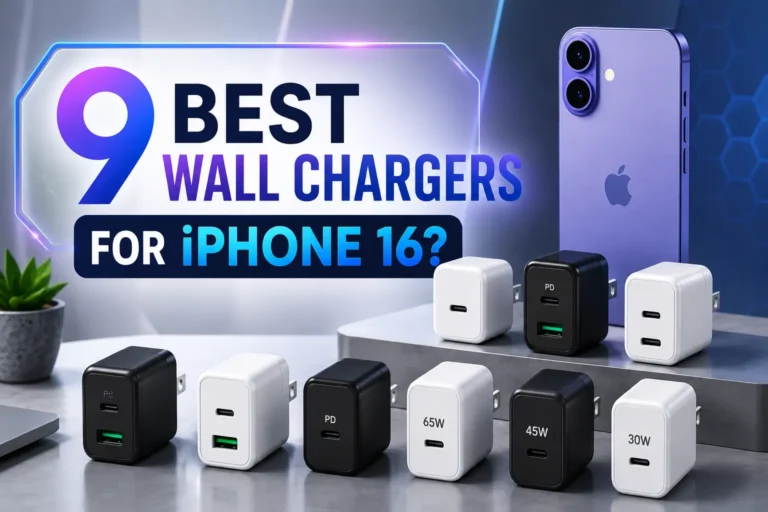
If a single-port charger provides 45W to one device, it may charge that device faster than a multi-port charger that splits 45W between several devices.
However, a high-quality multi-port charger with enough power can charge multiple devices quickly at the same time.
| Scenario | Expected Charging Speed |
|---|---|
| One device on a high-power multi-port charger | Usually very fast |
| Two devices connected | May share power |
| Three or more devices connected | Speed may decrease |
| High-wattage charger with smart power management | Often maintains fast charging |
What Affects Charging Speed?
Total Power Output
The most important factor is wattage.
A charger with higher total wattage can provide more power to connected devices.
Charging Technology
Fast-charging standards help devices charge faster when supported.
You can learn more from USB-IF.
Cable Quality
A poor cable can slow charging even when the charger is powerful.
Use certified USB-C cables whenever possible. A high-quality cable helps deliver stable power.
Single-Port vs Multi-Port Charging
| Feature | Single-Port Charger | Multi-Port Charger |
|---|---|---|
| Number of Devices | One | Several |
| Convenience | Lower | Higher |
| Power Sharing | No | Sometimes |
| Travel Friendly | Moderate | Excellent |
| Desk Organization | Average | Better |
When Multi-Port Chargers Can Feel Faster
Many users think their charger is faster because several devices charge at once.
Even if each device charges at a similar rate, overall convenience improves.
Instead of waiting for one device after another, everything charges together.
Charging three devices at the same time often saves more total time than charging them one by one.
Checklist Before Buying a Multi-Port Charger
- Check total wattage output
- Verify fast-charging support
- Use quality USB-C cables
- Match charger power to your devices
- Choose enough ports for future needs
Device Compatibility
Pros and Cons of Multi-Port Chargers
- Charge several devices at once
- Reduce outlet clutter
- Great for travel
- Save desk space
- Can support fast charging
- Power may be shared between ports
- Some models reduce speed with many devices connected
- Low-quality chargers may perform poorly
How to Get the Fastest Charging Speeds
Make sure the charger provides enough power for all connected devices.
Damaged or cheap cables can reduce charging performance.
Some chargers allocate power differently depending on connected devices.
Dust and debris can affect charging stability.
Troubleshooting Slow Charging
| Problem | Possible Solution |
|---|---|
| Slow charging | Use a higher wattage charger |
| Device not fast charging | Check cable and charging standard support |
| Heat buildup | Reduce device load while charging |
| Power drops with multiple devices | Disconnect low-priority devices |
Safety Tips
Safe charging matters just as much as speed.
Do not use damaged chargers, cables, or wall outlets. Faulty equipment can cause overheating and device damage.
| Safety Practice | Benefit |
|---|---|
| Use certified chargers | Improves reliability |
| Replace damaged cables | Reduces charging issues |
| Avoid covering chargers | Helps cooling |
| Keep ports clean | Improves connection quality |
For battery education, visit Battery University.
You can also review energy efficiency information from ENERGY STAR and consumer guidance from FTC.
Apple users can find device charging recommendations at Apple Support.
Frequently Asked Questions
Not always. Charging speed depends on total power output and how power is shared between connected devices.
Yes. If the charger and phone support the same fast-charging standard, fast charging can work normally.
It can. Some chargers divide available power among connected devices.
Yes. Quality chargers with built-in protection features are generally safe for everyday use.
Yes. The charger must provide enough total wattage for both devices.
USB-C often supports higher power delivery, but actual speed depends on device compatibility.
Use a high-wattage charger, certified cables, and connect fewer devices when maximum speed is needed.
Related Guides
- How USB-C Power Delivery Works
- How to Choose the Right Charging Cable
- Why Fast Charging Speeds Vary
- How to Extend Battery Life
Conclusion
So, do multi-port chargers charge faster? The simple answer is no. They do not automatically increase charging speed.
What they do offer is convenience. A good multi-port charger can power several devices at the same time while still delivering fast charging when enough power is available.
If you want the best results, choose a charger with sufficient wattage, use quality cables, and follow basic charging safety practices.
- Multi-port chargers do not automatically charge faster
- Total wattage affects charging speed
- Power may be shared between connected devices
- Quality cables help maintain performance
- Safety and compatibility are important
Multi-port chargers are best for convenience and efficiency. If the charger has enough power, you can enjoy fast charging on multiple devices without filling every wall outlet in your home.