

9 Best Charger Review: Top Picks, Performance Tests, and Buying Guide
Affiliate disclosure: As an Amazon Associate, Gadget Makers Blog may earn from qualifying purchases. This does not change the price you pay.
Chargers power the devices people use every day, from phones and tablets to laptops and wireless earbuds. They come in many forms—wall plugs, USB-C bricks, multiport hubs, and wireless pads—each built to deliver voltage and current safely and quickly. A good charger keeps a device healthy, charges fast, and fits how someone uses their tech.
Buyers should focus on compatibility, output (watts and amps), safety features like overheat and surge protection, and whether the charger supports fast charging standards such as USB Power Delivery or Qualcomm Quick Charge. Cable quality, port count, and size matter too, especially for travel or multi-device setups. Choosing a charger that matches a device’s required power and includes reliable safety protections delivers the most value.
9 Best Chargers
Below is a curated list of the best chargers that balance speed, safety, and value. It helps buyers choose reliable options for phones, tablets, and other devices.
Anker 65W 3-Port Charger

It is a solid pick for shoppers who want one compact charger to power a phone, tablet, and laptop without clutter.
Pros
- Charges multiple devices at once from three ports.
- Compact, foldable design that saves space.
- Fast charging capable for many laptops and phones.
Cons
- May stick out from some wall outlets more than slimmer models.
- Power divides when charging three devices, so a laptop may charge slower.
- Plastic finish can show wear over time.
This charger focuses on power and size. It uses newer GaN tech to keep wattage high while staying small. That makes it easy to pack for travel or to use at a desk without too much bulk.
The three ports give users choices: full 65W to one device or shared output across three gadgets. That flexibility works for mixed device setups like a phone, tablet, and earbuds. Buyers should expect slower laptop charging if all ports are used at once.
It folds up for storage and has a simple, plain look that fits most setups. Some people note it can protrude more than ultra-flat chargers and the outer shell is basic plastic, but the charger still offers reliable fast-charging performance and broad device support.
Anker 100W GaN Charger
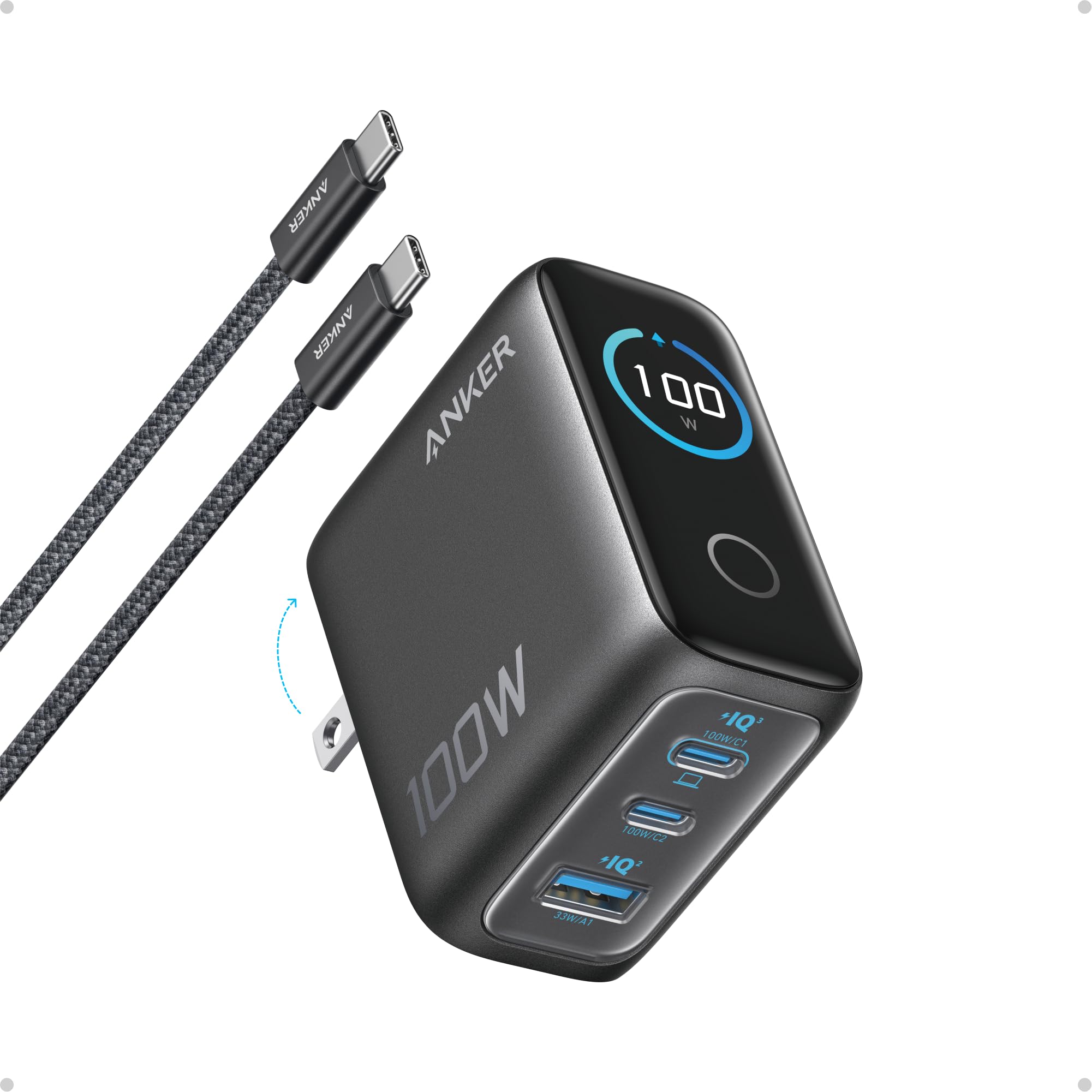
This charger is a strong pick for buyers who want high power in a small package and a clear display that shows charging status.
Pros
- Very fast charging across multiple devices.
- Compact size with a foldable plug for travel.
- Clear screen shows real-time charging info.
Cons
- Display and features add cost versus basic chargers.
- Can feel a bit heavy for its size.
- May run warm under heavy load.
It delivers up to 100W from a GaN design that fits into a much smaller case than older chargers. The smart display reports watts, temperature, and port use so users can see what’s happening while devices charge.
It has three ports to power a laptop and two accessories at once, and it can lower output to safely charge tiny devices. The foldable plug and small footprint make it easier to pack for work or travel.
Some buyers may not need the display or full 100W output and could prefer a cheaper, simpler charger. Users should also be aware it can get warm when pushing full power for long periods.
Anker Nano 45W Charger

It is a compact, fast charger with a smart display and care mode that suits users who want quick power and gentler charging for supported iPhones and iPads.
Pros
- Charges quickly while adjusting output for battery care.
- Small size with foldable prongs eases travel and crowded outlets.
- Smart display shows charging status and mode at a glance.
Cons
- Device compatibility is limited to certain iPhone and iPad models.
- Only one USB-C port limits charging multiple devices at once.
- Display controls add complexity for users who prefer simple plugs.
The charger offers up to 45W output and claims to lower charging temperature with a care mode to protect batteries. It uses a small footprint, so it fits into bags and tight wall spaces without bulk.
The smart display gives real-time status and lets users switch modes by tapping. Settings may need reading the manual since the display is not a touchscreen and some navigation uses specific tap patterns.
This model focuses on Apple device recognition and safer charging for supported models, which helps cautious buyers. Travelers and daily users who only need one fast USB-C port will find the design and speed useful.
Anker Prime 160W
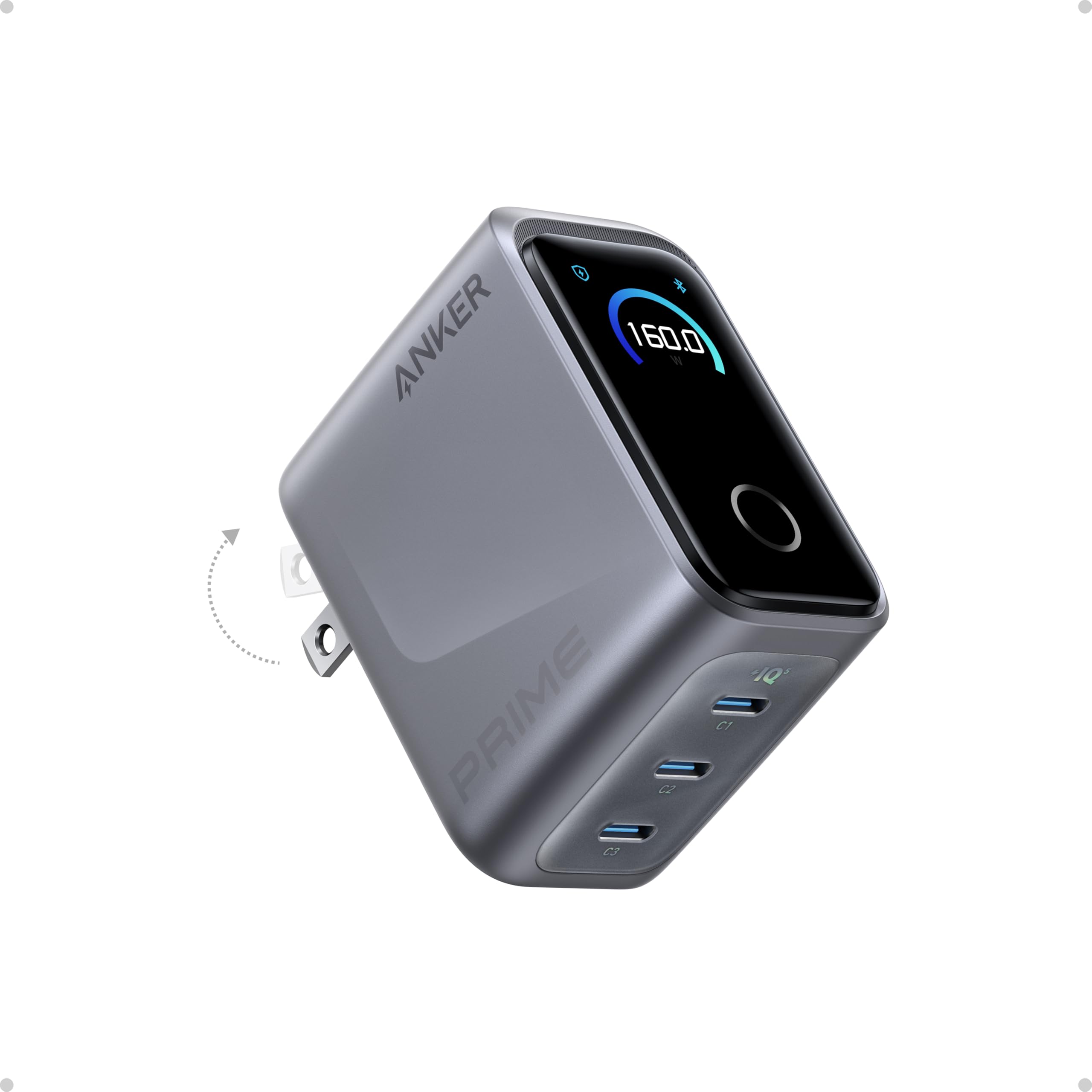
It is a strong choice for someone who wants one compact charger to power a laptop, phone, and tablet at once.
Pros
- Very high power in a small package.
- Smart display shows real-time power use.
- Can replace multiple chargers for travel.
Cons
- Large plug can be hard to unplug from some outlets.
- Some settings require the app to change.
- Cable not included, so you may need to buy one.
The charger packs lots of wattage into a case about the size of AirPods. It can run a 16″ laptop and two smaller devices at the same time without slowing single-port output. This makes it handy for people who need fewer adapters.
A clear display and touch controls show power draw and let users switch modes quickly. The Bluetooth app adds custom settings, but some buyers may not want to use an app to change basic options.
It trades away a little convenience for power: the plug is stiff in some outlets and it does not include a charging cable. Overall, the unit suits users who want high-speed charging in one compact device.
Anker Nano 70W Charger
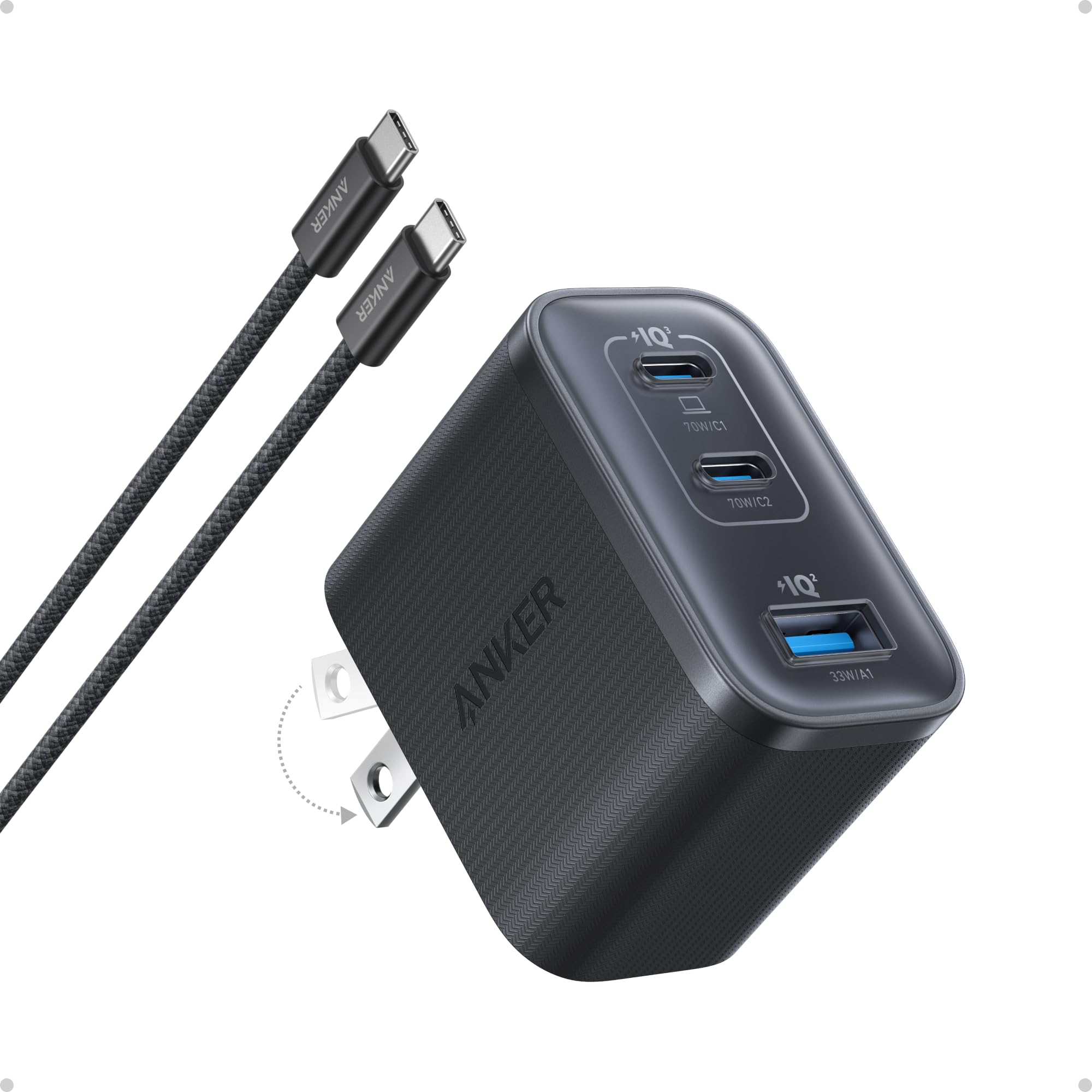
It is a strong pick for travelers and laptop users who want compact, fast charging with multiple ports.
Pros
- Very compact for a 70W three-port charger.
- Fast charging that runs cooler than many rivals.
- Comes with a USB-C cable and a clean design.
Cons
- Higher price than basic single-port chargers.
- May be heavier than its small size suggests.
- Three devices at once can reduce top speed per port.
The charger offers a lot of power in a small package. It aims to charge laptops, phones, and tablets quickly while staying cool.
They can plug in three USB-C devices without carrying multiple bricks. The design looks modern and fits well in a travel bag or on a desk.
Users who value portability and higher wattage will like this model. Buyers who only need a single slow charger might find it more than they need.
Anker Prime 100W Charger

It is a strong choice for buyers who want a compact, multi-port charger that can fast-charge laptops and phones at the same time.
Pros
- Charges multiple devices fast with high total power.
- Small, foldable design for easy travel.
- Solid build that feels durable.
Cons
- Heavier than some travel chargers.
- May be bulky in a light pocket or small bag.
- Some users report plug fit issues in certain outlets.
The charger offers up to 100W split across three ports, so it can handle a laptop and phone together without slowing down basic charges. Buyers who need speed and fewer bricks in their bag will like that it uses GaN to stay compact.
Its foldable prongs and balanced shape help keep it steady in the wall and make packing simpler. The device aims to stay firmly connected, but people with loose outlet fit might find it slips more than they’d like.
Anker includes a 24-month warranty and customer support, which adds confidence for many shoppers. The design targets users who want a single charger for travel and everyday use without too many extra features.
Anker 20W Dual-Port Charger (2-Pack)

It is a solid choice for buyers who want a compact, two-port fast charger for phones and small devices.
Pros
- Charges quickly with 20W output.
- Two ports let them power two devices at once.
- Small and easy to take on trips.
Cons
- Not the highest wattage for larger tablets or laptops.
- USB-A and USB-C mix may need different cables.
- Only basic safety features; not for heavy-duty charging needs.
This charger gives steady, fast power for phones and small tablets. The two-port layout helps when more than one device needs juice at the same time.
Buyers will like the compact size for travel and the included cables in the 2-pack. It should fit a bedside table or a travel bag without taking much room.
People who need very high power for laptops or multiple heavy devices might want a stronger unit. For everyday phone charging and occasional tablet use, it covers the basics well.
Anker 45W Fast Charger (2-Pack)

It is a solid pick for buyers who want fast, compact USB-C chargers with two cables included.
Pros
- Charges phones and tablets quickly with high wattage.
- Comes as a two-pack with long cables for less clutter.
- Built-in safety tech reduces risk of short circuits and overvoltage.
Cons
- Two blocks can block adjacent outlets on some power strips.
- May be more charger than needed for small devices like earbuds.
- Not all outlets worldwide use the same plug type without an adapter.
The design stays small and travel-friendly, so it fits well in bags and tight outlet spaces. Its faster output suits phones and some laptops, which helps cut charging time.
Cables are long and feel durable, which reduces the need to buy extras. The package includes cable organizers that help keep cords tidy.
Safety features aim to protect devices while charging, providing extra peace of mind for mixed-device households. Ratings and many buyer comments point to reliable performance across phones, tablets, and some laptops.
Anker Nano 45W Charger
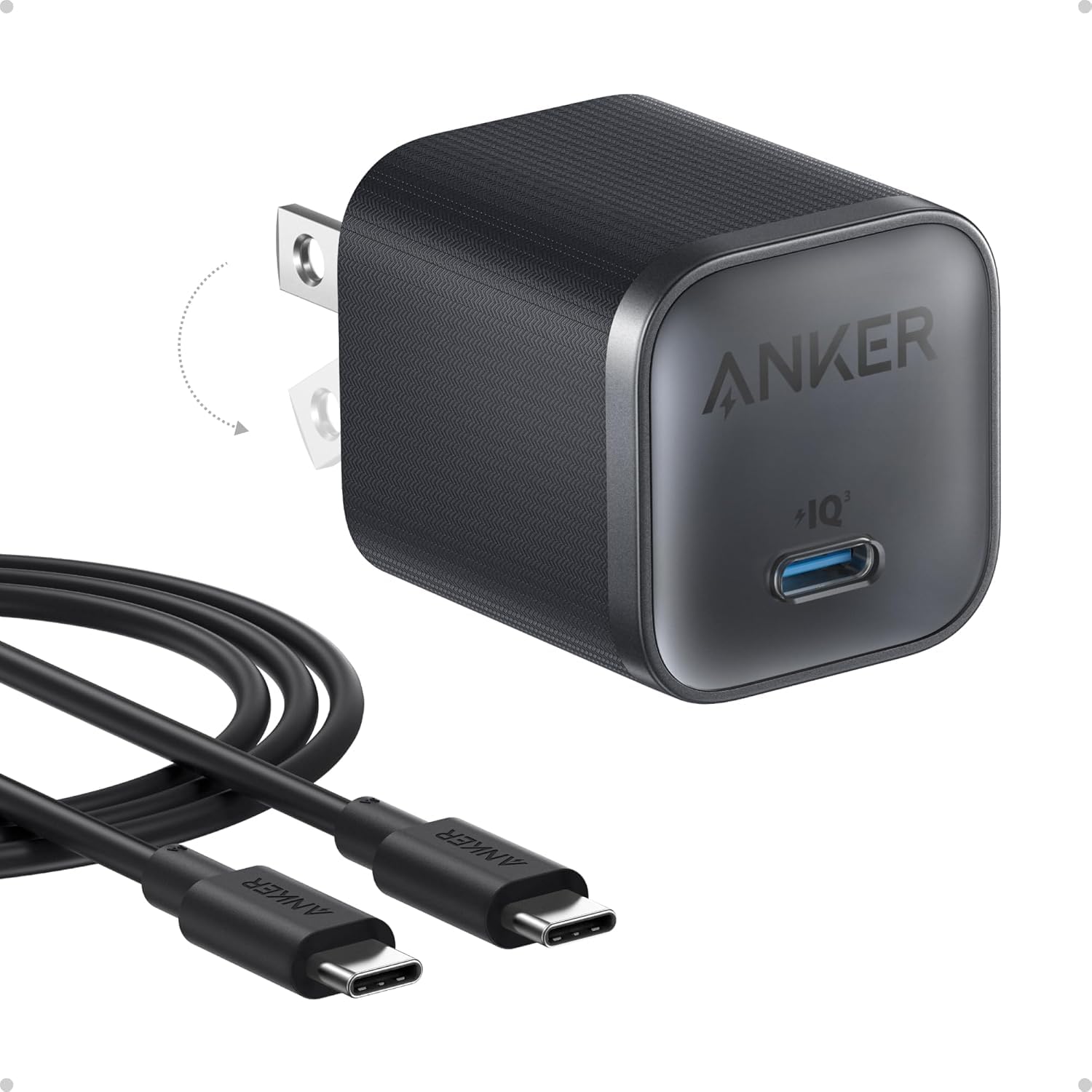
It is a solid choice for someone who wants fast, compact charging for phones, tablets, and small laptops.
Pros
- Charges quickly for short top-ups.
- Very small and easy to pack.
- Includes a long USB-C cable and basic safety features.
Cons
- One port limits charging multiple devices at once.
- Some users reported damaged units on arrival.
- Not meant for heavy desktop power needs.
This charger uses GaN-based fast charging to deliver strong speeds in a tiny body. It fits in a pocket or small bag and has a foldable plug for neat storage.
It works well with phones from Apple, Samsung, and Google, and can handle tablets and light laptops at reduced speeds. The cable in the box is long, which helps when outlets are not close.
A few buyers noted issues with damaged items or early failure, so checking return options is wise. Overall, it balances speed, size, and safety for everyday travel and daily mobile charging.
Buying Guide
When choosing a charger, the buyer should check power output first. Look at wattage and voltage to match device needs. Higher wattage charges faster but must be compatible.
They should also consider connector type. USB-C, Lightning, and USB-A are common. Pick one that fits the device and any cables the user already owns.
Safety features matter. Look for overcurrent, overvoltage, short-circuit, and temperature protection. These reduce risk of damage to devices.
Port count affects convenience. More ports let multiple devices charge at once. Note how power is shared across ports to avoid slow charging.
Size and build quality influence portability. Small, sturdy chargers fit travel bags better. Foldable plugs or compact designs help on the go.
Efficiency and certification show reliability. Check efficiency ratings and regulatory marks. Certified chargers meet basic safety and performance standards.
Price versus features should be balanced. Higher cost can mean better performance or safety, but not always. Compare specs and pick what matches the buyer’s needs.
They should read user reviews for real-world performance. Reviews reveal heat, durability, and actual charging speeds. Combine reviews with specs to make a sound choice.
Key features at a glance:
| Feature | Why it matters |
|---|---|
| Wattage | Determines charging speed |
| Connector type | Ensures compatibility |
| Safety protections | Prevents damage |
| Port count | Supports multiple devices |
| Size/portability | Ease of travel |
| Certifications | Confirms standards |
Editor’s Choice
They picked the Anker PowerPort Atom III as the Editor’s Choice for its balance of speed, size, and reliability. It delivers consistent charging up to 60W with USB-C Power Delivery, which suits laptops, tablets, and phones.
| Feature | Why it matters |
|---|---|
| Power output | 60W PD charges laptops and fast-charges phones. |
| Size | Compact, easy to carry for travel or daily use. |
| Ports | One USB-C avoids cable clutter while keeping fast output. |
| Safety | Built-in protections guard against overheat and short circuits. |
| Build quality | Solid housing and stable connector fit for long use. |
It charges most modern devices quickly without making big trade-offs. Review tests showed stable power under load and low heat compared with similar chargers.
They found it reliable in daily use and convenient for travel. Replacement or warranty support is straightforward and usually available through major retailers.
Where to Buy – Best Amazon Deals
Shoppers often find the widest selection on Amazon. It lists major brands, budget options, and bundles that include cables or adapters.
Look for these quick tips when choosing a charger on Amazon:
- Check ratings: Aim for 4 stars or higher from many reviewers.
- Read recent reviews: They show current quality and any issues.
- Compare specs: Match power (W), ports, and fast-charge standards to the device.
Recommended search filters to save time:
- Brand: choose trusted names first.
- Price: set a range to avoid overspending.
- Prime: filter for fast shipping and free returns.
Example deals layout:
| Product Type | What to watch for | Deal signal |
|---|---|---|
| GaN chargers | Higher efficiency, smaller size | Frequent discounts |
| Multi-port PD hubs | Total wattage & distribution | Bundle deals |
| Wireless chargers | Qi compatibility | Coupons or promos |
They should use Amazon’s “Subscribe & Save” or coupon buttons when available. Tracking price history tools helps spot real discounts.
Always verify the seller and warranty before buying. If a listing looks too good to be true, they should avoid it or contact the seller for details.
Conclusion
The best chargers balance speed, safety, and convenience. Readers should pick one that fits their devices and charging habits.
They should check power output and supported fast-charge standards first. Compatibility matters more than brand alone.
Durability and warranty protect the purchase. A well-made charger can last years and avoid replacement costs.
Port variety and cable options add value. More ports mean fewer adapters and simpler travel packing.
Safety features like overcurrent and temperature protection reduce risk. These features matter for both phones and laptops.
Price should match needs. A mid-range unit often gives the best mix of performance and reliability.
Recommended picks include a fast single-port charger for phones, a multiport USB-C hub for families, and a high-watt GaN charger for laptops. Each serves a clear use case.
Buyers should read spec sheets and user reviews before deciding. That step helps avoid mismatches and ensures a useful, long-lasting charger.
FAQs
What should a reader look for when buying a charger?
They should check output power (watts), port types (USB-C, USB-A), and safety features like overcurrent protection. Higher wattage charges laptops; lower wattage suits phones and earbuds.
Are all USB-C chargers the same?
No. Chargers differ by power delivery (PD) profile and cable quality. A PD-certified charger with a good cable gives faster, safer charging.
Can one charger safely charge multiple devices at once?
Yes, if the charger supports multi-port output and manages power distribution. Look for chargers with dynamic power allocation or per-port limits.
Do fast chargers harm batteries?
They can if poorly designed. Modern fast chargers and device software manage heat and voltage to protect battery life. Using certified chargers reduces risk.
Is a branded charger necessary?
Not always. Third-party chargers can work well if they meet safety standards and have good reviews. Certification (UL, CE, FCC) is a key sign of quality.
How long should a charger last?
A good charger lasts several years with normal use. Heat, drops, and poor ventilation shorten life.
How to find the right cable?
Match the cable to the charger’s max wattage and the device port. Look for cables labeled for high-wattage PD or fast-charging.
What safety features matter most?
Over-voltage, over-current, short-circuit, and temperature protection matter most. Those features prevent damage to devices and the charger itself.


One Comment