Best Cool Mist Filter Free Humidifier for Clean Air
A cool mist filter free humidifier is best for buyers who want simple, quiet humidification with fewer ongoing costs. It is a strong choice if you can match the room size and keep up with regular cleaning.
A cool mist filter free humidifier is a good fit if you want simple, low-maintenance moisture for a bedroom, office, nursery, or dry home. The best models are easy to fill, easy to clean, and sized correctly for your room, but they still need the right water quality and regular care to stay sanitary and avoid residue.
- Best fit: Bedrooms, offices, nurseries, and other small-to-medium spaces where quiet comfort matters.
- Main trade-off: Lower upkeep than filtered models, but more sensitivity to hard water and mineral residue.
- Buy smart: Verify room coverage, tank size, cleaning access, and warranty terms before choosing.
- Care matters: Regular cleaning and proper drying are essential to reduce odor, buildup, and mold risk.
Best Cool Mist Filter Free Humidifier: What It Is and Whether It’s the Right Choice

Filter-free cool mist humidifiers are popular because they remove one recurring task: buying and replacing filters. That makes them appealing for people who want a straightforward appliance with lower ongoing upkeep, especially if they are trying to keep a bedroom or workspace more comfortable without adding a lot of maintenance.
Quick answer: who should buy a filter-free cool mist humidifier in 2026
This type of humidifier is usually best for people who want convenience, quiet operation, and a lower-cost ownership experience over time. It is especially appealing if you are comfortable cleaning the tank and base regularly and you can use water that reduces mineral buildup.
How filter-free cool mist models work and why they’re popular
These humidifiers add moisture by turning water into a cool mist, usually through ultrasonic vibration or another non-heated misting method. Because they do not rely on a replaceable filter, they tend to have fewer consumables, simpler setup, and less long-term hassle for everyday users.
They are popular in bedrooms, home offices, and smaller living spaces because they are often quieter than many warm-mist or evaporative designs. The trade-off is that filter-free designs can be more sensitive to water quality, which matters if your tap water is hard or mineral-heavy.
Top Buying Criteria for a Filter Free Humidifier
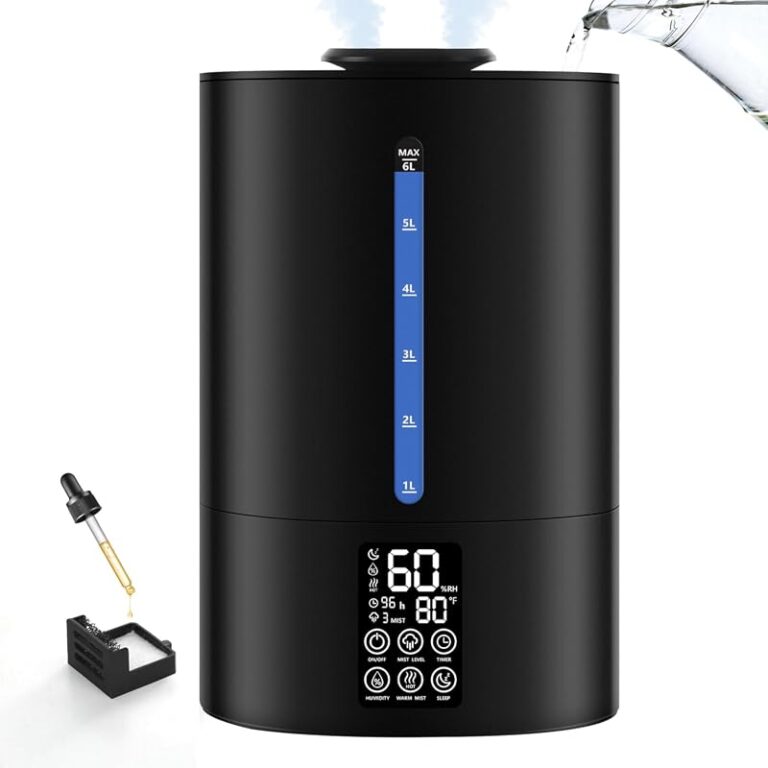
Before comparing brands, focus on the practical details that affect daily use. The right humidifier is not just the one with the biggest tank or the most mist; it is the one that fits your room, your cleaning habits, and your water conditions.
Tank capacity, runtime, and room size match
Tank size affects how often you need to refill, but runtime claims can vary based on mist setting, room airflow, and humidity level. A large tank may still be a poor fit if the unit is meant for a small room, while a compact model may be enough for a desk area or small bedroom.
Mist output control, coverage claims, and noise level
Adjustable mist output is useful because indoor humidity needs change with weather, heating, and room occupancy. If a humidifier only has one strong setting, it may over-humidify a small room or feel underpowered in a larger one.
Noise matters most in bedrooms, nurseries, and study spaces. Manufacturer noise claims are not always directly comparable across brands, so it helps to look for user-friendly controls such as sleep mode, dimmed lights, and a simple on/off mist adjustment.
If you plan to use the unit overnight, prioritize simple controls and a visible water level window so you can refill it before it runs dry.
Build quality, ease of cleaning, and warranty details to verify
Filter-free units are only low-maintenance if the tank opening, base, and mist outlet are easy to access. Wide openings, smooth surfaces, and fewer hard-to-reach corners usually make cleaning faster and reduce the chance of buildup.
Also check the warranty terms, return policy, and whether replacement parts are available. If the manufacturer does not clearly explain cleaning instructions, descaling guidance, or replacement availability, consider that a warning sign for long-term ownership.
- Check room size, tank capacity, and refill frequency
- Confirm cleaning access, warranty terms, and return policy
- Verify whether the model recommends distilled or filtered water
- Look for clear safety and maintenance instructions in the manual
Best Use Cases: Bedrooms, Nurseries, Offices, and Dry-Climate Homes
The best filter-free cool mist humidifiers are the ones that solve a specific comfort problem without creating extra work. They are often a better fit for people who want a simple appliance that supports sleep, focus, or dryness relief without adding noise or recurring filter costs.
Who benefits most from clean, low-maintenance humidification
People with dry indoor air often notice comfort improvements in the bedroom, especially during heating season or in arid climates. Students, remote workers, and gamers may also appreciate a quieter environment that feels less dry during long screen sessions.
Families can also like the simplicity of a filter-free model, provided the unit is placed safely and cleaned regularly. For nurseries, the main benefit is usually convenience and predictable maintenance, not any special medical effect.
When a filter-free design is a better fit than a traditional humidifier
Choose filter-free when you want fewer consumables, less replacement planning, and a simpler ownership routine. That is especially true if you prefer a model you can quickly fill and clean without tracking filter inventory.
Traditional filtered humidifiers can make more sense if your water is hard, if you want help reducing mineral output, or if you prefer a design that uses a replaceable filter to manage some buildup. The better choice depends on whether you value convenience or water-condition tolerance more.
Performance, Comfort, and Real-World Benefits
A humidifier does not “purify” air, but it can make dry indoor spaces feel more comfortable. The main benefits are usually related to comfort, not air cleaning, so it is important to set the right expectations before buying.
How cool mist can improve comfort, sleep, and dry-air symptoms
Cool mist can help reduce the feeling of dry air, which may make sleeping, breathing, and working indoors more comfortable for some people. Many users look for relief from dry throat, dry skin, or static-prone rooms, especially when indoor heat is running often.
The effect is usually strongest when the room is genuinely dry and the humidifier is sized correctly. If the room is already near comfortable humidity, adding too much moisture can create a stuffy environment instead of helping.
Many comfort issues blamed on “bad air” are actually caused by low indoor humidity, especially in winter or in desert climates.
Trade-offs: mineral dust, white residue, and water quality concerns
Filter-free cool mist models can leave white dust or residue if they atomize minerals from hard water. That is not dangerous in every case, but it can settle on furniture and signal that water quality or cleaning habits need attention.
Using distilled or appropriately treated water can reduce that issue, though the best option depends on the model and your local water conditions. If you live in a hard-water area, it is worth checking the manual before assuming any water source will work equally well.
Water recommendations vary by model. Always follow the manufacturer’s manual if it specifies distilled water, filtered water, or another cleaning routine.
Safety Guide: Safe Use, Placement, and Common Mistakes to Avoid
Humidifiers are simple appliances, but safe placement and regular maintenance matter. Water, electricity, and indoor surfaces can create problems if the unit is used carelessly or allowed to stay dirty.
Correct placement, fill practices, and electrical safety basics
Place the humidifier on a flat, stable surface where mist will not blow directly onto walls, outlets, electronics, or bedding. Keep it away from children and pets, and make sure the cord is routed so it cannot be pulled or tripped over.
When filling, unplug the unit first and follow the manufacturer’s instructions for the tank and base. Never overfill beyond the marked line if one is present, and avoid using a damaged plug, frayed cord, or cracked tank.
Stop using any humidifier that leaks near the cord, shows electrical damage, has a cracked tank, or produces a persistent burning smell. Follow the manufacturer’s safety guidance immediately.
When to stop using it and signs of poor maintenance or mold risk
If you notice persistent odor, visible slime, cloudy buildup, or a musty smell, the unit likely needs a deep clean before continued use. Mold risk increases when water sits too long, the tank is not dried properly, or the base is neglected.
Shut the unit down and clean it if the mist output drops unexpectedly or if residue keeps returning quickly. If the manufacturer’s cleaning instructions are unclear, that is a good reason to reconsider the model’s long-term practicality.
Maintenance and Care: Cleaning, Storage, and Long-Term Value
Maintenance is the real difference between a convenient humidifier and a frustrating one. Filter-free models can be a great value, but only if you are willing to do a little routine care.
Daily and weekly cleaning routine for filter-free models
Empty leftover water daily if the unit is not designed for continuous use, and rinse the tank before refilling when practical. Once a week, inspect the tank, cap, base, and mist outlet for film, scale, or odor.
Use only the cleaning methods recommended in the manual, since some plastics and internal parts can be damaged by harsh cleaners. A simple routine is usually enough to keep performance consistent and reduce buildup.
- Refill with fresh water instead of topping off old water for long periods
- Dry the tank between uses if the humidifier will sit idle
- Check the mist outlet regularly for mineral buildup
- Keep the base level so sensors and float mechanisms work properly, if included
Descaling, storage for off-season use, and replacement guidance
Descaling frequency depends on water hardness and how often the humidifier runs. If your area has hard water, you may need to clean buildup more often than the manual’s general schedule suggests.
For storage, clean and dry every removable part before packing it away. If the tank, seals, or electrical components show wear, follow the manufacturer’s replacement guidance rather than trying to extend the life of a damaged part.
Comparison Guide: Filter-Free vs Filtered Cool Mist Humidifiers
Both styles can add moisture, but they solve different problems. The right choice depends on your budget, water quality, maintenance tolerance, and room size.
Upfront cost, ongoing consumables, and total ownership value
Filter-free models often look simpler from a long-term cost perspective because you are not regularly buying replacement filters. That can make them attractive for people who want predictable ownership costs and less supply management.
Filtered humidifiers may cost more over time, but the filter can help with certain water conditions and may reduce some maintenance burden in homes with mineral-heavy tap water. The better value is the one that matches your environment and cleaning habits, not just the lowest sticker price.
Which option is better for hard water, larger rooms, or allergy-sensitive users
If you have hard water, a filtered model may be easier to live with because it can help manage mineral output, though you still need to replace the filter on schedule. For larger rooms, compare coverage claims carefully and do not assume every high-output model will perform equally in open spaces.
For allergy-sensitive users, the key issue is not the label “filter-free” itself but how well the unit is cleaned and how much mineral residue it leaves behind. If you are sensitive to dust or buildup, water quality and maintenance discipline matter as much as the humidifier design.
| Option | Best For | Key Consideration |
|---|---|---|
| Filter-free cool mist | Low-maintenance buyers | May need distilled water and regular cleaning |
| Filtered cool mist | Hard-water homes | Requires ongoing filter replacement |
| Small-room model | Bedrooms, desks, nurseries | Check coverage and refill frequency |
| Larger-tank model | Longer runtime needs | Make sure it still fits the room size |
Final Verdict: Best Choice for Clean Air in 2026
A cool mist filter free humidifier is a smart choice for buyers who want simple humidification, lower ongoing upkeep, and quiet comfort in a bedroom, office, or small living space. It is not automatically the best choice for hard-water homes or anyone who wants the easiest possible path to cleaner-looking operation, because those users may be better served by a filtered design.
Transparent recommendation by user type and budget
Choose filter-free if you value convenience, want to avoid recurring filter purchases, and are comfortable cleaning the tank on a regular schedule. If you want the most practical all-around option for a dry bedroom or home office, this is often the most straightforward place to start.
Key limitations and what to verify before buying
Before you buy, verify room-size coverage, water recommendations, cleaning access, warranty terms, and whether the model is known to leave mineral residue in hard-water conditions. If those details are not clearly stated by the manufacturer, treat that as a sign to compare alternatives before making your final choice.
For most buyers who want clean, low-maintenance humidification, a filter-free cool mist model is the best balance of simplicity and comfort. Just make sure the room size, water quality, and cleaning routine fit the model before you commit.
Frequently Asked Questions
It is a good fit for people who want simple humidification with fewer recurring consumables. It works best for bedrooms, offices, and small spaces when you are willing to clean it regularly.
Check the manufacturer’s room-size guidance and compare it with your actual space. Bigger tanks help with refill frequency, but they do not guarantee better performance in a larger room.
They can, especially if you use hard tap water. Distilled or otherwise recommended water can reduce mineral residue, but you should confirm the manual’s guidance for your exact model.
Empty and rinse it regularly, and do a deeper cleaning on the schedule in the manual. If you notice odor, slime, or buildup, clean it before using it again.
It depends on your water quality and maintenance preferences. Filtered models can be easier in hard-water homes, while filter-free models usually have lower ongoing cost and simpler upkeep.
Confirm room coverage, tank size, cleaning access, warranty terms, and the manufacturer’s water recommendations. Also check for any current safety notices, recalls, or model-specific limitations before you buy.