9 Best Solar Power Banks for Camping: Top Portable Chargers for Backcountry and Overlanding
Affiliate disclosure: As an Amazon Associate, Gadget Makers Blog may earn from qualifying purchases. This does not change the price you pay.
Solar power banks let campers charge phones, lights, and cameras without relying on campsites or car outlets. They combine a battery pack with solar panels so users can top up power off-grid, which is handy on multi-day trips, hikes, or emergencies. Small models fit in a backpack and offer extra ports and rugged casings, while larger units supply enough juice for laptops or multiple devices.
The key things to watch are battery capacity, charging speed, panel efficiency, weight, and durability. Battery capacity determines how many charges the bank provides; panel efficiency and size affect how fast it recharges in sunlight; and weight and waterproofing matter for rough outdoor use. Choosing a balance between capacity and portability while checking for reliable output ports and weather resistance gives the best real-world value for camping. This guide tests options across sizes and uses to help campers pick the right solar power bank.
9 Best Solar Power Banks for Camping
Below is a curated list of the best solar power banks for camping that balance durability, battery capacity, and charging speed. The list helps shoppers compare top options for short hikes, multi-day trips, and emergency backup.
ZeroKor R200 Portable Solar Generator

It is a good buy for campers who want a mid-size power station with a built-in 60W solar panel for basic device charging and light campsite use.
Pros
- Includes foldable 60W solar panel so it can recharge off-grid.
- Multiple outlet types cover phones, tablets, and small laptops.
- Built-in safety features protect the battery and devices.
Cons
- Not suitable for high-wattage appliances over 300W.
- Solar charging can be slow in low light or partial shade.
- Some users report mixed quality control on ports and performance.
The unit offers a compact, carryable battery pack and a simple way to run small electronics at camp. It has AC outlets, USB-A, USB-C, and a DC port, plus a flashlight with an SOS mode for night use.
Its 60W monocrystalline panel is efficient for its size, so it can top up the battery on sunny days. Expect slower charging when clouds or tree cover block sunlight, so plan for backups or charging before you leave.
The built-in battery management system handles common faults and the fan manages heat during use. Buyers should avoid plugging in devices that draw more than 300W and follow the maker’s advice about storage and regular charge cycles.
Find it on Amazon: ZeroKor R200 Portable Solar Generator
Jackery Explorer 300
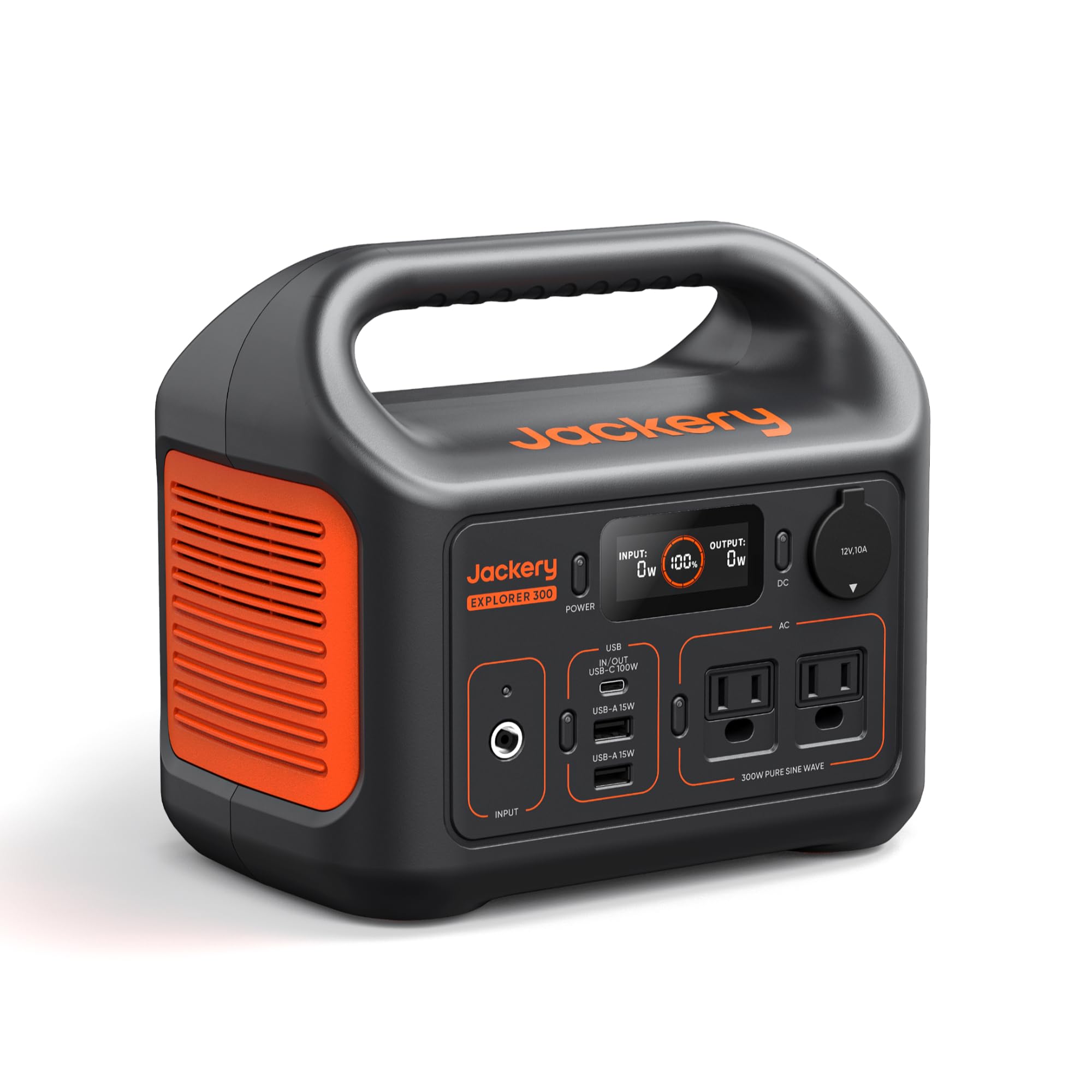
It is a solid choice for campers who want quiet, reliable power for phones, laptops, and small appliances.
Pros
- Lightweight and easy to carry
- Multiple ports for several devices at once
- Long battery life and many charge cycles
Cons
- Not enough power for large appliances
- Solar panels sold separately
- Heavier than small power banks
The Jackery Explorer 300 offers a tidy balance of capacity and portability for weekend trips. It gives enough outlets to run phones, cameras, and small fridges without making a pack too heavy.
It charges faster with a good solar panel and supports USB-C PD for quick device top-ups. Users should plan power needs, since it won’t run high-wattage gear like full-size coffee makers.
Buyers who want a reliable, low-noise backup for camping or short outages will find this unit useful. See more details and current pricing on Amazon: Jackery Explorer 300.
Anker SOLIX C1000 Gen 2
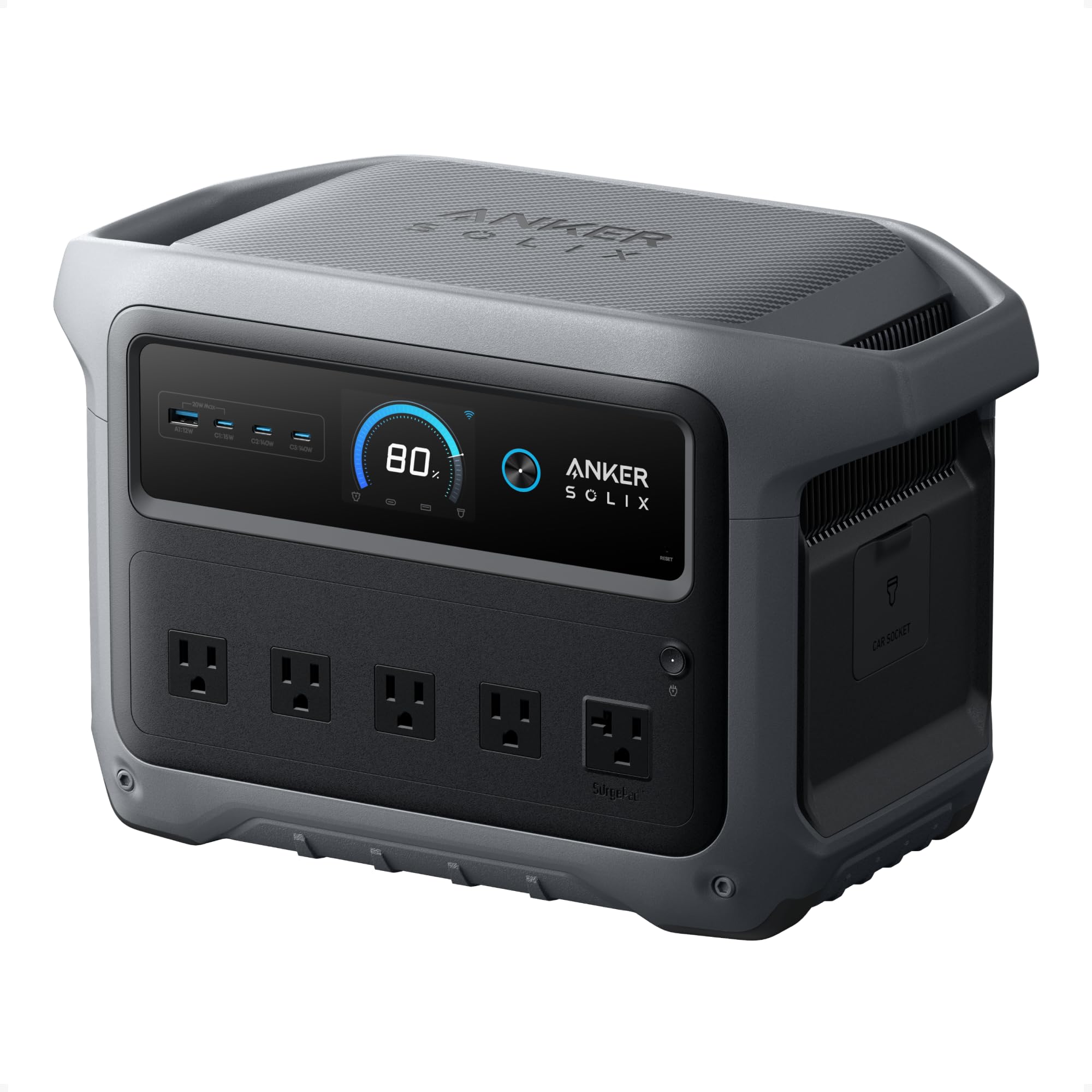
It is a strong choice for campers who want fast recharging, many outlets, and reliable battery life.
Pros
- Very fast recharge and solar support for quick top-ups.
- Plenty of ports to run several devices at once.
- Compact for its capacity and built to last many cycles.
Cons
- Heavier than small, pocket-sized power banks.
- High power means a higher price than basic units.
- Full capability needs optional solar panels which cost extra.
It delivers a large 1,024Wh LiFePO4 battery and lots of output ports, so it can run lights, phones, small appliances, and CPAP machines while camping. The fast wall and solar charging cuts downtime, which helps on short trips.
The unit includes app controls and a UPS mode that switches in under 10 ms. That makes it useful for sensitive gear and for managing power use during longer off-grid stays.
Buyers should plan for the extra weight and the cost of solar panels if they want true off-grid independence. For people who need reliable, high-capacity power at a campsite or in an RV, this model fits well.
Jackery Explorer 1000 v2

It is a strong choice for campers who need high-capacity, fast charging, and multiple outlets in a reasonably portable unit.
Pros
- High capacity and strong AC output for many devices.
- Fast one-hour emergency charge option via the app.
- LFP battery designed for long life and many cycles.
Cons
- Heavy compared to small power banks, still about 24 lbs.
- One-hour fast charge requires enabling emergency mode each time.
- Solar panel ships separately and may add cost and bulk.
The Explorer 1000 v2 offers a lot of power for its size. It can run fridges, lights, and small appliances that most compact solar power banks cannot.
Its app-controlled fast charge is useful when time is tight, and the LFP battery promises years of use. Campers who value longevity and many outlets will like that design.
Weight and separate shipping of the panel make it less ideal for ultralight trips. This model fits car camping, RV use, or basecamp setups better than minimalist backpacking.
EnginStar R300 Portable Solar Generator
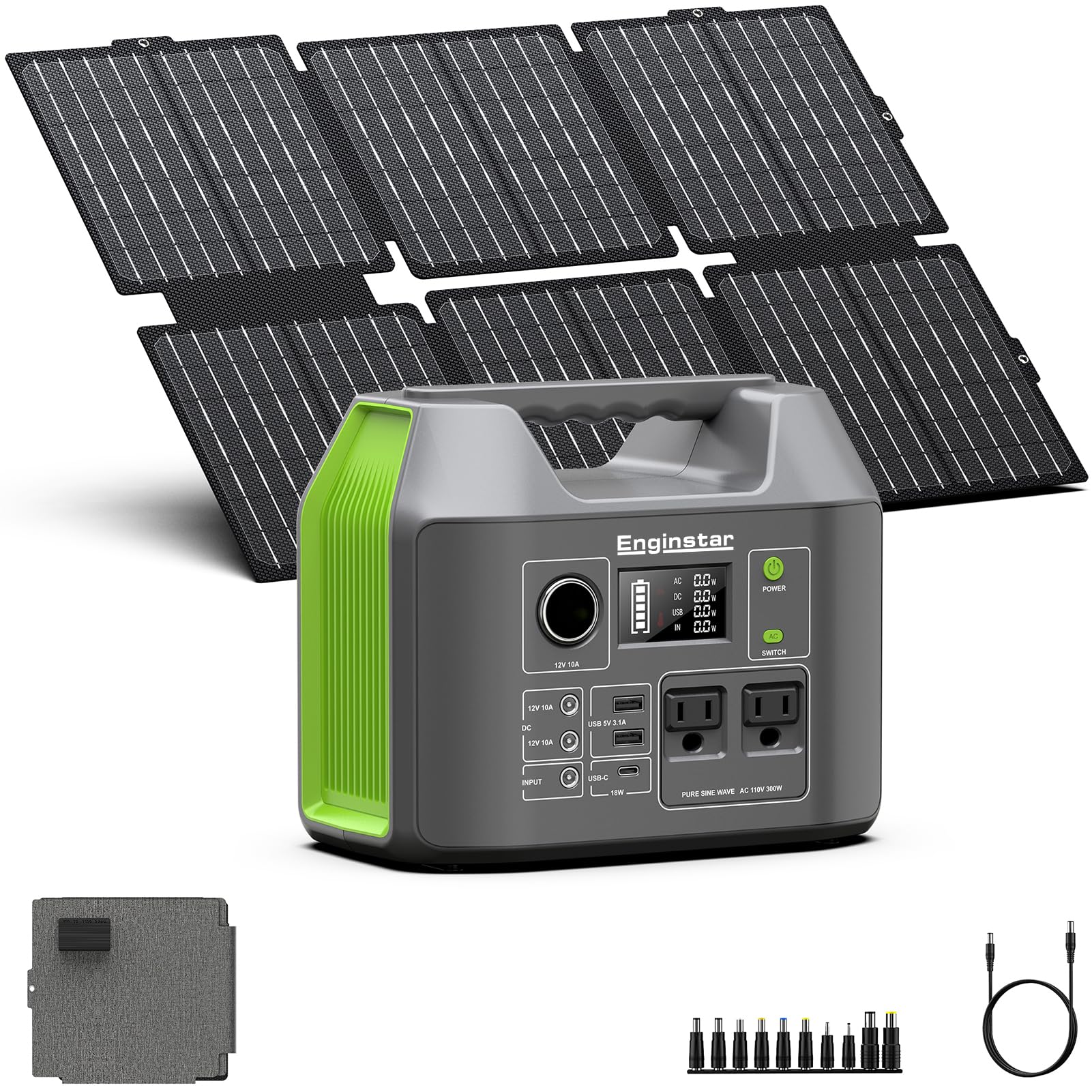
It is a solid choice for campers who want a mid-size portable power station with a built-in 60W solar panel and multiple output options.
Pros
- Good mix of ports for phones, laptops, and small appliances
- Includes a foldable 60W solar panel for off-grid recharging
- Compact and fairly lightweight for its capacity
Cons
- Charging from the wall or solar can take time for full capacity
- Not powerful enough for high-draw appliances long-term
- Some users report slower USB charging speeds
This unit offers 296Wh of battery in a package small enough to carry to a campsite. It has two AC outlets, USB-A, USB-C, and DC outputs so campers can charge phones, cameras, CPAPs, and small fridges at the same time.
The included 60W monocrystalline solar panel adds flexibility when sunlight is available, though full recharge can be slow compared with wall charging. The pure sine wave AC output helps protect sensitive gear like laptops and CPAP machines.
Safety features and battery management aim to prevent overcharging and short circuits. For someone who needs moderate power and wants solar recharging included, this model balances features, portability, and price.
Anker SOLIX C300

It is a solid choice for campers who want a compact, quiet power station with fast USB-C charging and optional solar input.
Pros
- Strong fast charging through high-power USB-C ports
- Compact size for easier packing and travel
- Long battery life designed for many charge cycles
Cons
- Heavier than small power banks and needs a flat pack space
- Solar panel sold separately for full off-grid use
- More features and ports mean a slightly higher price
The unit offers 288Wh capacity and up to 300W output, so it can run phones, lights, and small appliances on short trips. It charges quickly via USB-C or AC, which cuts downtime at camp.
Campers who use laptops, cameras, or a Mini Starlink will like the multiple AC and USB ports. The quiet 25dB operation keeps the campsite peaceful while running devices.
A 100W solar panel works with this station if you plan longer off-grid stays, but remember the panel is not included. The LiFePO4 battery promises many cycles, which helps if someone wants a dependable unit over years.
Anker SOLIX C300 Power Station

It is a solid mid-size power station that suits campers who want fast charging and many ports without carrying a heavy generator.
Pros
- Lots of ports for charging several devices at once.
- Fast USB-C charging and multiple recharging options.
- Durable LiFePO4 battery with a multi-year warranty.
Cons
- No wall charger included, so buyers must add one.
- Heavier and pricier than small solar power banks.
- Some solar panels are not compatible.
This unit gives reliable power for multi-day camping trips where phones, laptops, lights, and a small fridge need steady juice. The 288Wh capacity and DC outputs make it useful for a camp setup that uses more than just USB gadgets.
Users can recharge it quickly with high-watt USB-C chargers, or use solar panels for longer outings, though buyers should pick compatible panels. The LiFePO4 chemistry and impact-resistant design aim to last through many trips.
Its size trades off carry weight for real output. Campers who want tiny pocket-sized solar banks will find this larger, but those who need to run heavier gear will appreciate the power and port selection.
BLUETTI Elite 30 V2
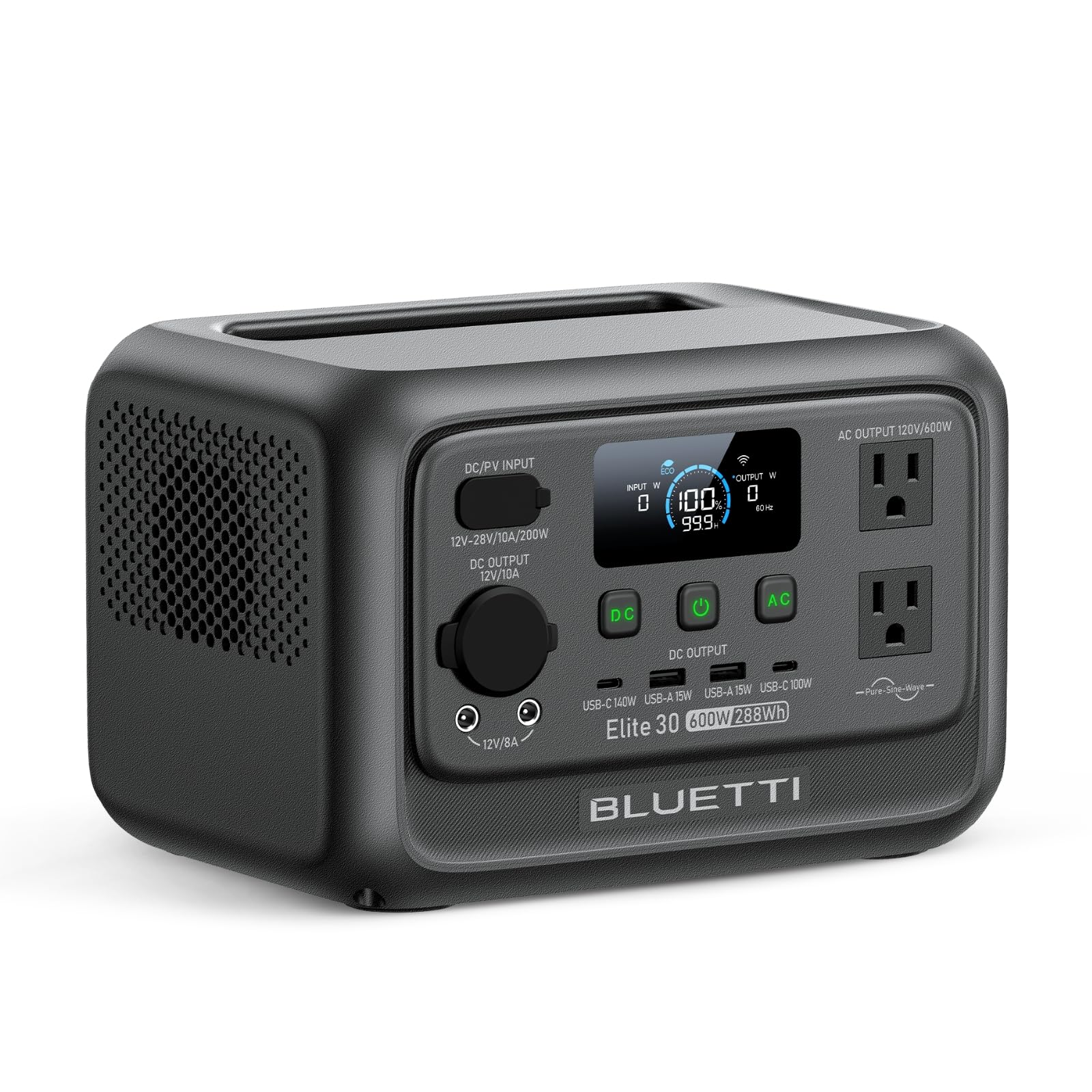
It is a solid choice for campers who want a lightweight, fast-charging power station that can run small appliances and offer UPS backup.
Pros
- Lightweight and easy to carry for short trips.
- Fast charging and multiple input options.
- UPS feature protects sensitive gear during outages.
Cons
- 288Wh may be too small for long trips or heavy loads.
- Heavier than tiny power banks despite being portable.
- May require extra solar panels for full off-grid use.
The Elite 30 V2 packs useful power into a compact unit. It can run lights, phones, laptops, and small fridges, and its Power Lifting mode gives a temporary boost for higher-startup devices.
Users will like the 140W USB-C PD ports for fast charging phones and laptops. The 10ms UPS helps keep routers and CPAP devices running through brief outages.
For campers who need multiway charging and quick recharge times, this works well for weekend trips and emergency backup. Those planning extended off-grid stays should pair it with solar panels or a larger unit.
Buying Guide
Choosing a solar power bank for camping means balancing size, power, and ruggedness. Campers should pick capacity based on device needs and trip length. A small pack can charge a phone once; larger units can run multiple devices or small appliances.
Look for charging speed and ports. Fast output (measured in watts or amps) shortens charging time. Multiple ports and USB-C make it easier to charge several devices or modern gear.
Check solar panel efficiency and placement. Built-in panels work in a pinch but are slow; larger, exposed panels charge faster in strong sun. Consider whether the unit supports pass-through charging so devices can charge while the bank recharges.
Durability matters outdoors. Water resistance, shockproof housing, and solid construction reduce risk of damage. Lightweight yet sturdy designs make packing easier without sacrificing toughness.
Battery type and safety features are important. Li-ion or LiFePO4 batteries offer different trade-offs in weight, lifespan, and temperature tolerance. Overcharge, short-circuit, and temperature protection increase safety.
Consider weight and form factor for hiking versus car camping. Heavier units give more power but add carry weight. Foldable panels or detachable designs offer flexibility.
Compare real-world runtime, not just mAh ratings. Read measured outputs and test notes when possible. Also check warranty and customer support for peace of mind.
Pricing should match needs. Higher cost often buys faster charging, better durability, or longer life. Campers should prioritize the features they use most to get the best value.
Editor’s Choice
The editor picked the Anker 737 Solar as the top choice for most campers. It balances high capacity, fast charging, and a durable build that holds up outdoors.
| Feature | Why it matters |
|---|---|
| Capacity: 24,000 mAh | Charges phones 4–6 times. Good for multi-day trips. |
| Solar input | Slow but useful in emergencies. Primary charging via USB-C PD. |
| Output: 140W USB-C | Fast charging for phones and small devices. Can power some laptops. |
| Durability | IP65 splash resistance and rugged casing for rough use. |
It excels at quick power when a camper needs it most. The high USB-C output lets devices charge fast, saving time at camp.
They should note the solar panel is for emergency topping, not full recharges. For reliable off-grid use, pair it with sun exposure planning or a small foldable solar panel.
Included accessories are simple: a USB-C cable and a carrying pouch. That keeps weight down and packing easy.
Where to Buy – Best Amazon Deals
Amazon carries a wide range of solar power banks, from budget models to high-capacity units. It lists user reviews, Q&A, and detailed specs that help buyers compare features like mAh, charging speed, and water resistance.
Look for deals with fast shipping and reliable sellers. Amazon Prime often offers free two-day delivery and easy returns, which helps when testing gear before a trip.
Use these tips when shopping:
- Sort by customer reviews to see well-tested models.
- Filter by battery capacity (10,000–30,000 mAh is common for camping).
- Check for solar panel size and charging speed; small panels recharge slowly.
Watch for bundle offers and seasonal sales. Lightning Deals, Prime Day, and holiday discounts can cut prices significantly.
Read recent reviews and reviewer photos to confirm real-world performance. Pay attention to reports of slow solar recharge or poor durability, since real use matters most outdoors.
They should compare seller ratings and return policies before buying. A good return policy protects against defects or units that don’t meet expectations.
Conclusion
They should pick a solar power bank that matches the trip length, device needs, and weather conditions. Capacity, charging speed, and durability matter most for camping use.
For short trips or day hikes, a compact model with fast output works well. For multi-day trips, a high-capacity unit or one that supports pass-through charging is better.
Look for features that fit the campsite: water resistance, rugged housing, and reliable solar panels. Bright LEDs and multiple ports add convenience without much extra weight.
Budget matters, but value beats the cheapest option. Spending a bit more often brings longer life, better warranty, and safer charging.
Quick checklist:
- Capacity vs. weight
- Output ports and charging speed
- Solar panel efficiency and placement
- Durability and weather resistance
They should test the power bank at home before leaving. That confirms real charging times and avoids surprises on the trail.
Choose the model that balances weight, power, and toughness for the trip. That makes camping more reliable and keeps devices ready when needed.
FAQs
What size power bank is best for camping?
They should pick a power bank with at least 10,000 mAh for phones and small devices. For multiple days or laptops, 20,000–30,000 mAh works better.
How long does solar charging take?
Solar charging time varies by panel size, sun strength, and battery capacity. Expect partial top-ups in a few hours and full charges to take one to several days of good sun.
Can a solar power bank run a laptop?
Some can, if they offer USB-C PD with enough wattage (usually 45–100W). Check the laptop’s power needs and the power bank’s output before relying on it.
Are solar power banks waterproof and rugged?
Many models offer water resistance and rugged casings, but not all are equal. Look for IP ratings (IP65, IP67) and reinforced corners for rough use.
How should they care for a solar power bank?
Keep the solar panel clean and dry for best performance. Store the battery in a cool, dry place and recharge it every few months to avoid deep discharge.
Are there safety features to look for?
They should look for overcharge, short-circuit, and temperature protection. Certified batteries (UL, CE) add an extra layer of safety.
Is a solar panel built into the power bank enough?
Built-in panels help in emergencies but are slower than separate panels. For regular camping use, a foldable external panel is more reliable.