What Solar Power Banks Are Available for Outdoor Use
Solar power banks are a smart way to keep your devices charged when you are far from a wall outlet. This guide explains what solar power banks are available, how they work, and which types fit camping, travel, and emergency use best.
What Solar Power Banks Are Available for Outdoor Use
When people ask what solar power banks are available, they usually want one thing: a simple way to keep phones, lights, GPS tools, and small gadgets powered outside. That makes sense. Out in the wild, power outlets are rare. A good solar power bank can help you stay connected, safe, and ready.
But not all solar power banks are the same. Some are tiny and easy to carry. Others are big, rugged, and built for rough weather. Some are best for hiking. Others are better for car camping or emergency kits. If you are trying to figure out what solar power banks are available, this guide will help you understand the main types and how to choose the right one.
There is also one big thing to know right away. Most solar power banks do not charge fast from the sun alone. The solar panel is often a backup or emergency feature. The battery is usually charged by USB first, then topped up by sunlight when needed. That is still very useful, especially outdoors.
Key Takeaways
- Point 1: Solar power banks come in many forms, from small pocket models to large rugged units made for outdoor trips.
- Point 2: Most solar power banks charge best by USB, while the solar panel is usually a backup for slow top-ups in the sun.
- Point 3: Battery size, panel size, and build quality matter more than looks when choosing a solar power bank for outdoor use.
- Point 4: Outdoor-ready solar power banks often include features like waterproofing, flashlights, carabiners, and shock resistance.
- Point 5: The best solar power banks for camping and hiking are light, durable, and easy to carry.
- Point 6: For emergency kits, larger solar power banks with high capacity and multiple ports are often the better choice.
- Point 7: Smart use, like placing the panel in direct sun and charging the battery before trips, makes solar power banks more useful.
📑 Table of Contents
What a Solar Power Bank Is
A battery with a solar panel
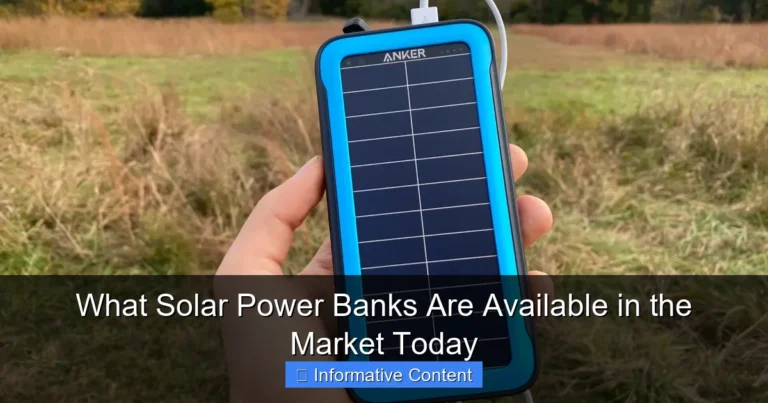
A solar power bank is a portable battery with one or more small solar panels attached. It stores energy and sends that energy to your phone or device later. In simple terms, it works like a regular power bank, but it has a way to gather some power from the sun too.
Why people use them outdoors
People use solar power banks for camping, hiking, fishing, road trips, and emergencies. They are helpful when you are away from power for a long time. If your phone dies on a trail, or your flashlight runs low at night, a solar power bank can save the day.
For a broader look at portable charging options, you may also want to read about budget power banks. Many outdoor users compare those with solar models before they buy.
What Solar Power Banks Are Available
Small portable solar power banks
These are the lightest and easiest to carry. They often have a modest battery size and one small solar panel. They are a good fit for day hikes, short trips, and light emergency use. You can clip them to a backpack and let them soak up some sun while you walk.
Small models are best when weight matters most. They are not ideal for charging lots of devices, but they can keep a phone alive long enough for a call, map check, or photo use.
Mid-size outdoor solar power banks
Mid-size models are one of the most common answers to what solar power banks are available. They usually offer a better mix of battery life, size, and price. Many have two USB ports, a stronger case, and a flashlight.
These are great for weekend camping, travel, and family outings. They are still portable, but they give you more comfort than a tiny model. If you need a good all-around choice, this is often the sweet spot.
High-capacity solar power banks
These are made for people who need more power. They often hold enough charge for several phone charges, and sometimes more. They are heavier, but they are useful for long trips, group camping, and backup home use during outages.
If you want a solar power bank that can support more than one person, high-capacity models are worth a look. They are also useful if you carry a phone, earbuds, GPS unit, and small camera gear.
Rugged and waterproof solar power banks
Outdoor use can be hard on gear. That is why rugged solar power banks are so popular. These models often have shock-resistant cases, sealed ports, and water resistance. Some are made to handle dust, rain, and rough handling.
If you hike, fish, or camp in wet weather, this type may be the safest pick. A rugged model is often more reliable than a plain power bank with a solar panel added on top.
Solar power banks with built-in lights and extras
Some solar power banks include LED flashlights, compasses, emergency signals, or carabiner clips. These extras can be useful, but they should not be the main reason you buy one. The battery, panel, and build quality matter more.
Still, for emergency kits and outdoor bags, these features can be handy. A flashlight on the side of the unit can be useful when you are setting up a tent after dark.
How to Choose the Right Solar Power Bank
Check the battery capacity
Battery capacity is measured in mAh. A higher number means the power bank can store more energy. Small solar power banks may be fine for one phone charge. Larger ones can charge a phone several times.
Think about how long you will be away from power. If you only need a backup for one day, a smaller unit may be enough. If you are on a long camping trip, choose a bigger battery.
Look at the solar panel size
The panel size matters a lot. Tiny panels charge slowly. Bigger panels can collect more sunlight, but they also make the unit larger and heavier. Many buyers want what solar power banks are available with the biggest panel, but size alone is not the full answer.
For most people, the solar panel should be seen as a backup. Use USB charging at home, then use sunlight as a support option outdoors.
Think about weight and carry style
If you are hiking, every ounce counts. A heavy solar power bank can feel annoying after a few miles. If you are car camping, weight matters less, so a larger model may be fine.
Some models come with straps or clips so you can hang them on a backpack. That is a smart feature because the panel can face the sun while you move.
Choose useful ports
Most people need USB-A or USB-C ports. Some solar power banks offer both. More ports can help if you want to charge a phone and a headlamp at the same time.
If you use newer phones, USB-C is a big plus. It can make charging easier and faster. If you want to learn more about portable charging styles, see our guide on whether MagSafe power banks are worth it. It is a different style, but the buying logic is similar.
Best Uses for Solar Power Banks Outdoors
Camping trips
Camping is one of the best uses for a solar power bank. You may need to charge phones, lanterns, or speakers. A solar power bank gives you a backup source of energy, which can be very helpful on multi-day trips.
For example, if you are camping for two nights, you can charge the battery before leaving, then let it rest in the sun during the day. That gives you more flexibility at night.
Hiking and backpacking
For hiking, lighter is better. A compact solar power bank can keep your phone ready for maps and emergency calls. It may not charge fast while you walk, but it can still collect some power during breaks.
Backpackers often like models that clip to a pack. That way, the battery can get sunlight while they move. It is not perfect, but it helps.
Travel and road trips
Solar power banks are also useful on long drives and travel days. You may not always have easy access to a plug. A charged power bank can keep your phone alive for navigation, music, and photos.
If you travel often, it can help to compare your options with other portable charging guides, such as whether MagSafe power banks are good for travel. That can help you see the trade-offs between wireless and solar charging.
Emergency kits
Power outages can happen at any time. That is why many people keep a solar power bank in a home emergency kit. If the power goes out, the bank can help you charge a phone or light.
For emergency use, choose a model with a large battery and a strong case. It should be ready when you need it most.
What Features Matter Most
Durability
Outdoor gear gets dropped, bumped, and wet. A solar power bank should be tough enough to handle that. Look for strong plastic, rubber edges, and water resistance if you plan to use it outside a lot.
Fast USB charging
Since solar charging is slow, USB charging speed matters a lot. A good solar power bank should recharge quickly from a wall plug or laptop before you leave home. This saves time and makes the unit much more useful.
Clear battery indicators
Battery lights help you know how much power is left. That matters when you are far from home. If the display is easy to read, you can plan better and avoid surprises.
Multiple device support
Many outdoor users carry more than one device. A good solar power bank should let you charge a phone, headlamp, or GPS unit without trouble. This is one reason some people prefer larger models.
If you are still comparing portable charging options, it may help to read about which MagSafe power banks are the best. Even though those are built for magnetic charging, the review style can help you think through features clearly.
Tips for Getting the Most from a Solar Power Bank
Charge it fully before you go
Do not rely on the sun alone. Charge the power bank at home first. That gives you a full battery before your trip starts.
Place it in direct sunlight
Solar panels work best in bright, direct sun. Shade, clouds, and dirty panels all slow things down. If you can, face the panel toward the sun and keep it clean.
Use it as backup power
Think of solar charging as a helper, not the main plan. That mindset will save you frustration. The best solar power banks are useful because they combine stored power with solar support.
Keep cables in your bag
A power bank is only useful if you can connect your devices. Pack the right cable before you leave. It is a small thing, but it makes a big difference.
Store it safely
When you are not using it, keep the solar power bank dry and cool. Very hot or wet storage can shorten its life. A simple pouch can help protect it.
Conclusion
So, what solar power banks are available? The answer is a wide range of options. You can find small clip-on models, mid-size outdoor units, large high-capacity banks, rugged waterproof designs, and feature-packed emergency models. Each one fits a different kind of trip.
The best choice depends on how you travel. If you hike light, choose a compact model. If you camp for days, go bigger. If you want backup power for storms or outages, pick a rugged high-capacity unit. The key is to focus on battery size, durability, and real-world use, not just the solar panel alone.
In the end, solar power banks are most useful when you use them the smart way. Charge them before you leave. Keep them in the sun when you can. And treat solar power as a backup that adds freedom outdoors. That simple approach makes a big difference.
Frequently Asked Questions
Are solar power banks worth it for outdoor use?
Yes, they can be worth it if you spend time away from outlets. They are especially useful for camping, hiking, travel, and emergencies. Just remember that solar charging is usually slow, so the USB charging feature matters most.
How long do solar power banks take to charge in the sun?
It depends on the panel size, sunlight strength, and battery size. Small panels can take a very long time, even days, to fully charge a power bank. That is why most people charge them by USB first.
Can a solar power bank charge a phone fully?
Yes, many solar power banks can fully charge a phone one or more times. The number of charges depends on the battery capacity and the phone’s battery size. Larger models give you more charging room.
What is the best type of solar power bank for camping?
A mid-size or high-capacity rugged model is usually best for camping. Look for water resistance, strong battery life, and more than one charging port. A built-in flashlight can also be handy.
Do solar power banks work on cloudy days?
They can still collect some energy, but much less than in direct sun. Charging will be slower and less reliable. For best results, use them in bright sunlight whenever possible.
What should I look for when buying a solar power bank?
Focus on battery capacity, durability, charging speed, and port options. The solar panel is useful, but it should not be the only thing you judge. A good solar power bank should be practical, tough, and easy to carry.