What Smart Lights Work With Google Home? A Beginner-Friendly Guide
Most modern smart lights work with Google Home if they support Google Assistant integration. Smart bulbs, smart light strips, smart lamps, and smart switches from many major brands can connect to Google Home and be controlled with voice commands, routines, and the Google Home app.
Smart lights that support Google Home or Google Assistant can work with your Google Home setup. Once connected, you can turn lights on or off, dim brightness, change colors, create schedules, and control multiple rooms using voice commands.
Google Home works with a wide range of smart lighting products. If you choose lights that clearly list Google Home compatibility, setup is usually quick and easy. For most users, smart lights are one of the simplest ways to start building a smart home.
Introduction
As Ethan Walker, I test smart home gadgets regularly alongside chargers, batteries, USB-C accessories, and connected devices. One question I hear often is: what smart lights work with Google Home?
The good news is that Google Home supports many smart lighting systems. You do not need advanced tech skills. Most smart lights connect through Wi-Fi, Bluetooth, Matter, Zigbee hubs, or Thread networks.
Once connected, you can control your lights with simple voice commands. You can also automate lighting for your morning routine, movie nights, or bedtime schedule.
How Google Home Works With Smart Lights
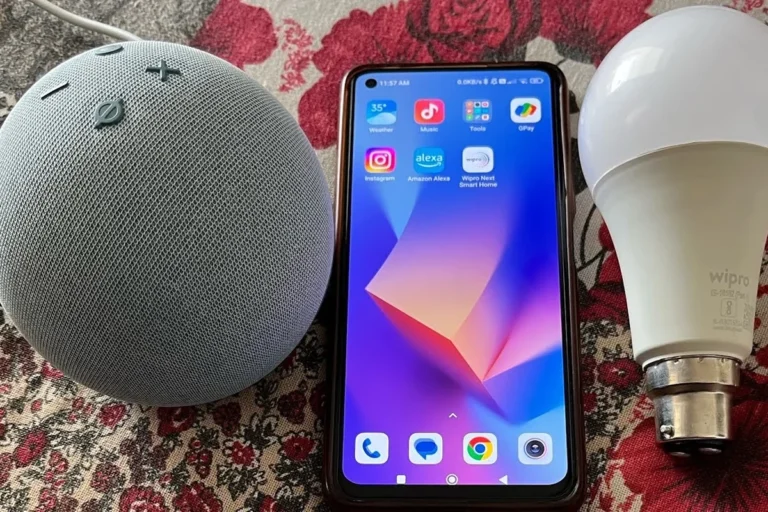
Google Home acts as a central control system. After linking compatible lights, you can manage them from the Google Home app or with voice commands through Google Assistant.
Common commands include:
- Turn on bedroom lights
- Turn off all lights
- Dim living room lights to 50%
- Set kitchen lights to warm white
- Change lights to blue
Assign lights to rooms inside the Google Home app. This makes voice control much faster and more accurate.
Types of Smart Lights That Work With Google Home
| Light Type | Works With Google Home | Main Features |
|---|---|---|
| Smart Bulbs | Yes | On/off, dimming, color control |
| Smart Light Strips | Yes | Accent lighting and colors |
| Smart Lamps | Yes | Portable smart lighting |
| Smart Ceiling Lights | Yes | Whole-room lighting |
| Smart Switches | Yes | Control standard bulbs |
Compatibility Standards to Look For
Before buying any smart light, check the packaging or product page for compatibility labels.
Matter-certified smart lights often work across multiple smart home ecosystems, making future upgrades easier.
Smart Light Connection Methods
Not all smart lights connect the same way.
| Connection Type | Internet Required | Typical Setup Difficulty |
|---|---|---|
| Wi-Fi | Yes | Easy |
| Bluetooth | Sometimes | Easy |
| Zigbee Hub | Usually | Moderate |
| Thread | Usually | Easy |
| Matter | Varies | Easy |
Benefits of Using Smart Lights With Google Home
- Hands-free voice control
- Easy scheduling
- Room-based automation
- Energy-saving features
- Remote access through apps
- Requires initial setup
- Some lights need a hub
- Internet issues can affect control
- Features vary by manufacturer
Checklist Before Buying Smart Lights
- Verify Google Home compatibility
- Check connection type
- Confirm dimming support
- Check color-changing features if needed
- Review app requirements
- Look for Matter certification
How to Connect Smart Lights to Google Home
Place the smart bulb or device according to the manufacturer’s instructions.
Use the manufacturer’s app to connect the light to your network.
Launch the Google Home app on your smartphone.
Choose the option to add a new device and follow the prompts.
Place the light in the correct room for easier voice control.
Try turning the light on and off with Google Assistant.
Use simple room names such as Bedroom or Kitchen. This reduces voice command errors.
Common Troubleshooting Tips
| Problem | Possible Fix |
|---|---|
| Light not showing up | Reconnect through the manufacturer’s app |
| Voice commands fail | Check room names and internet connection |
| Light offline | Restart router and smart light |
| Slow response | Improve Wi-Fi signal strength |
| Sync issues | Relink the device in Google Home |
Many connectivity problems disappear after restarting both the light and your router.
Smart Light Safety Tips
Always use smart lights in fixtures that match the bulb’s voltage, wattage, and environmental ratings. Follow the manufacturer’s safety instructions.
| Safety Practice | Why It Matters |
|---|---|
| Use approved fixtures | Prevents overheating |
| Keep firmware updated | Improves security |
| Use strong passwords | Protects smart home access |
| Follow installation instructions | Reduces electrical risks |
For additional energy-saving information, visit ENERGY STAR. For consumer guidance, see the FTC. Technical standards can be found at USB-IF, while battery and power education is available through Battery University. Device support information is available from Apple Support.
In my testing, the easiest smart home setups are usually those that support modern standards like Matter and have clear Google Home integration from the start.
Did you know? Google Home can control multiple lights at once using groups and room assignments.
Frequently Asked Questions
No. Smart lights must support Google Home or Google Assistant compatibility to work properly.
Yes. After setup, you can use Google Assistant voice commands to control compatible lights.
Many do, but some use Bluetooth, Matter, Thread, or hub-based connections.
Yes, if the smart light supports dimming features.
Yes. Google Home lets you organize lights by rooms and groups for easier control.
Matter is a smart home standard that helps devices work across different platforms and ecosystems.
Many smart lighting systems allow remote control through their mobile apps and Google Home integration.
Yes, when installed correctly and used according to the manufacturer’s instructions.
Related Guides
- How Google Home automation works
- Matter vs Wi-Fi smart home devices
- How to improve smart home Wi-Fi coverage
- Smart lighting tips for beginners
- How to create Google Home routines
Conclusion
So, what smart lights work with Google Home? Any smart light that officially supports Google Home or Google Assistant can usually be connected and controlled through the Google Home ecosystem.
Before buying, check compatibility labels, connection methods, and supported features. Focus on safe installation and keep device firmware updated.
If you are new to smart homes, smart lighting is one of the easiest and most useful upgrades you can make. Start with compatible lights, organize them by room, and enjoy simple voice control every day.
- Google Home works with many smart lighting types
- Look for Google Home or Google Assistant compatibility
- Matter support improves future compatibility
- Voice commands make lighting control simple
- Follow safety and setup guidelines
Smart lights that support Google Home can provide easy voice control, automation, and energy-saving convenience. Check compatibility before buying, follow safe installation practices, and use room organization for the best experience.
Author: Ethan Walker