Yes, iPhone chargers work in Europe. Apple USB power adapters support 100–240V AC at 50–60Hz, so a compatible Apple charger can handle European electricity. A traveler from the United States normally needs the correct plug adapter, not a voltage converter.
A regional adapter set is more flexible than one generic round-pin plug when your itinerary crosses mainland Europe, Italy, and the UK.
Built-in USB ports make it useful when one travel unit must charge an iPhone, accessories, tablet, and many compatible USB-C laptops.
Read the input label. When it says 100–240V and 50–60Hz, keep the charger and purchase only the plug adapter your destination requires.
A genuine Apple USB power adapter is designed for power sources rated from 100V to 240V AC at 50Hz to 60Hz. Most European countries use roughly 230V at 50Hz, which is within that supported input range.
- Your normal Apple or compatible USB charger. Confirm the printed input rating before travel.
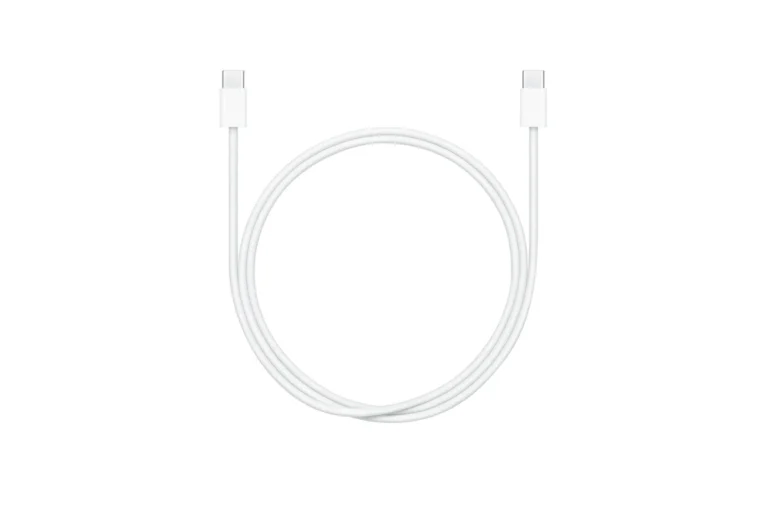
- The correct charging cable. Use USB-C or Lightning according to the iPhone model and charger port.
- A destination-appropriate plug adapter. This changes the physical plug shape.
- No voltage converter for the charger itself when its label clearly says 100–240V.
| Item | What it does | Needed for a compatible iPhone charger? |
|---|---|---|
| Plug adapter | Changes the physical prong shape so a US charger fits the local wall socket. | Yes, whenever the charger plug does not match the destination. |
| Voltage converter | Changes electrical voltage, such as stepping 230V down toward 120V. | Normally no when the charger input says 100–240V. |
| USB power adapter | Converts wall power into the USB output used by the phone. | Yes. This is the Apple or compatible third-party charger. |
| Charging cable | Connects the power adapter to the iPhone. | Yes. Match USB-C or Lightning to the phone and adapter. |
This set includes multiple European plug options, making it easier to prepare for mainland sockets, Italy, and the United Kingdom without carrying a bulky voltage converter.
| Destination | Common plug types | What to pack from the US |
|---|---|---|
| France, Belgium, Poland, Czechia | Type C and E | A Type C/E-compatible adapter. |
| Germany, Austria, Spain, Portugal, Netherlands | Type C and F | A Type C/F or E/F-compatible adapter. |
| Italy | Type C, F, and L | Include Type L support when the itinerary requires it. |
| United Kingdom and Ireland | Type G | A separate Type G adapter or a universal model. |
| Switzerland and Liechtenstein | Type C and J | Verify Type J compatibility rather than assuming every Europe adapter fits. |
| Denmark | Type C, E, F, and K may appear | A good regional set or compact universal adapter. |
| Greece, Turkey, Croatia, Norway, Sweden | Type C and F are common | A Type C/F-compatible adapter usually covers phone charging. |
| Malta and Cyprus | Type G is common | Pack Type G rather than relying only on a mainland round-pin adapter. |
- Read the input label. Look for “100–240V” and “50–60Hz” on the charger body.
- Inspect every part. Replace cracked adapters, loose plugs, exposed wires, scorch marks, or cables that work only at an angle.
- List each country and layover. Include airport stops if you expect to charge there.
- Choose the plug solution. Buy one small adapter for a simple trip, a Europe set for a mixed route, or a universal adapter for frequent travel.
- Test the fit at home. Your charger should sit firmly in the travel adapter without wobbling or exposing metal.
- Pack the setup in your carry-on. Keep the adapter, charger, and a backup cable together.
| iPhone family | Phone-side connector | Recommended travel setup |
|---|---|---|
| iPhone 15 and later USB-C models | USB-C | USB-C to USB-C cable plus a compatible USB-C charger. |
| iPhone 14 and many earlier models | Lightning | USB-C to Lightning for fast charging, or an older USB-A setup for slower charging. |
| MagSafe-compatible iPhones | Wireless | MagSafe charger plus the power adapter required by that accessory. |
Europe does not require a special phone cable. The cable depends on your iPhone and charger ports, not the country.
Many reputable third-party USB-C chargers also support 100–240V at 50–60Hz. The actual printed input label is the final check. Do not rely only on a marketplace title or a familiar brand name.
A compatible USB-C MacBook power adapter can also charge an iPhone. The phone and charger negotiate the appropriate power, so the laptop adapter does not force its entire maximum wattage into the phone.
| Charger type | Likely Europe compatibility | What to verify |
|---|---|---|
| Genuine Apple USB adapter | Designed for 100–240V input | Condition, correct plug adapter, and the cable required by the phone. |
| Reputable USB-C PD charger | Often compatible | Printed 100–240V input and applicable safety information. |
| USB-C MacBook adapter | Compatible when its label supports European input | Correct plug adapter or regional Apple plug attachment. |
| Old, damaged, or no-name adapter | Do not assume | Readable input specifications, physical condition, and product legitimacy. |
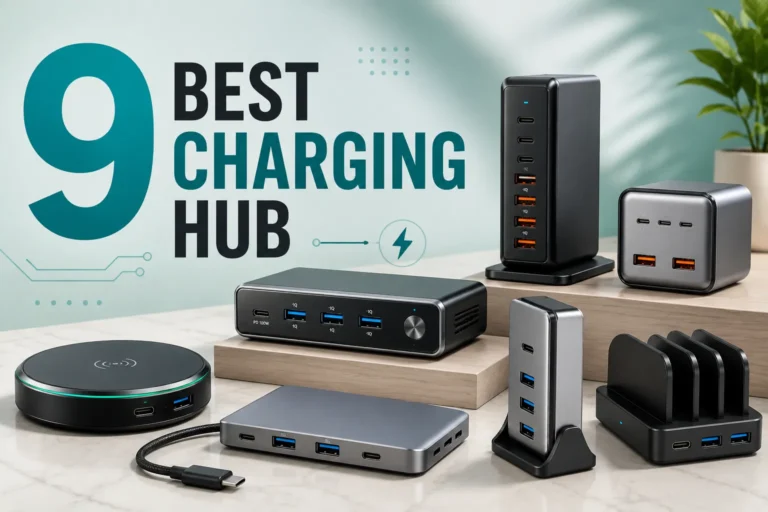
This type of all-in-one adapter is useful for a traveler who wants several international plug configurations and built-in USB charging in one compact unit.
The physical plug adapter should not reduce the charger’s rated USB output when all equipment is compatible and connected securely. A compatible 20W Apple adapter remains a 20W-class charger in Europe.
Actual charging can still become slower because of an old low-wattage adapter, a damaged cable, phone temperature, heavy device use, multi-port power sharing, or a low-output USB port built into a hotel desk, television, train seat, or lamp.
| Charging source | Likely result | Best action |
|---|---|---|
| Apple 20W charger with the correct plug adapter | Normal compatible fast charging | A simple setup for one recent iPhone. |
| Old 5W USB-A charger | Works but charges slowly | Use only when speed does not matter. |
| Hotel, train, or airplane USB port | Output may be low or inconsistent | Use your own charger in a normal wall outlet when possible. |
| Multi-port travel adapter | Available output may be divided | Disconnect unnecessary devices or use the highest-output USB-C port. |
| Wireless charger | Convenient but generally less efficient than wired charging | Keep the phone aligned and avoid excessive heat. |
- Keep a charger you already know and trust
- No voltage converter normally required
- A small plug adapter uses little luggage space
- A USB-C laptop charger may replace several smaller adapters
- Different regions can require different plug types
- Small adapter pieces can be lost
- Heavy universal adapters can wobble in worn sockets
- Third-party charger labels still need verification
- Use a normal bedroom outlet instead of a bathroom outlet marked “shavers only.”
- Check whether the outlet has an on/off switch.
- Some hotel rooms cut outlet power when the room key card is removed.
- Do not leave a heavy adapter hanging from a loose wall socket.
- Charge on a hard, open surface instead of a bed, pillow, or covered bag.
- Keep the charger and adapter away from sinks, showers, and wet counters.
| Problem | Likely cause | What to do |
|---|---|---|
| Nothing happens | Wrong plug type, switched outlet, room key-card power control, or loose connection | Check the outlet switch, key-card slot, adapter type, and another outlet. |
| Charging is very slow | Low-output hotel USB port, old charger, weak cable, or shared power | Use your own USB-C charger in a normal wall outlet. |
| The adapter wobbles | Wrong plug style, worn socket, or poor adapter fit | Stop using it and obtain the correct adapter. |
| The charger becomes unusually hot | Blocked airflow, damage, poor contact, or heavy load | Unplug it, let it cool, inspect every part, and replace faulty equipment. |
| The charger buzzes, smells, sparks, or melts | Electrical fault or unsafe equipment | Unplug immediately and stop using the charger, adapter, or outlet. |
| Only one device charges on a multi-port adapter | Power-sharing limits or an incompatible port | Use the main USB-C port and reconnect one device at a time. |
- Confirm the charger says 100–240V and 50–60Hz.
- List every destination and airport layover.
- Pack Type C/E/F support for much of mainland Europe.
- Add Type G for the UK, Ireland, Malta, or Cyprus when required.
- Add Type L coverage for Italy when required.
- Verify Type J compatibility for Switzerland.
- Bring the correct USB-C or Lightning cable.
- Pack one backup cable and consider a power bank.
- Keep charging equipment in carry-on luggage.
- Do not buy a voltage converter solely for a compatible Apple USB charger.
Do iPhone chargers work in Europe without a voltage converter?
Yes. Compatible Apple USB power adapters support 100–240V AC at 50–60Hz. You normally need only the correct plug adapter.
What adapter do I need for an iPhone charger in Europe?
Type C, E, and F cover much of mainland Europe. The UK and Ireland use Type G, Italy may use Type L, and Switzerland uses Type J.
Will a US Apple 20W charger work in Europe?
Yes. It supports the European input range. Connect it through the correct physical plug adapter.
Will my iPhone charge at the same speed?
The plug adapter should not reduce rated charger output, but actual speed can vary because of the charger, cable, temperature, device use, battery level, or shared power.
Can one adapter work everywhere in Europe?
Not reliably. A regional set or universal adapter is better when the itinerary includes mainland Europe, the UK, Ireland, Italy, or Switzerland.
Can I use a MacBook charger?
Yes, when the MacBook adapter supports 100–240V input and provides a compatible USB-C connection.
Can I use a hotel USB port?
You can, but its output may be low or inconsistent. Your own wall charger is generally more predictable.
Are travel adapters voltage converters?
No. A normal travel adapter changes only the plug shape. It does not change electrical voltage.
What should I do if the adapter is loose?
Stop using it. Verify the destination’s plug type and replace the adapter. Loose connections can overheat or arc.
Does this advice apply to a hair dryer?
No. Check every heating appliance separately. Many are single-voltage and may need a dual-voltage replacement or suitable converter.
Should I buy a universal adapter or separate plug adapters?
Separate adapters are smaller for a simple itinerary. A universal model is more convenient for frequent travel and several devices.
Can a third-party USB-C charger work in Europe?
Yes, when the actual charger label says 100–240V at 50–60Hz and the product follows relevant safety standards.
Keep your compatible Apple charger. Choose a regional Europe set when your route includes mainland countries, Italy, and the United Kingdom.
Check Europe Adapter Set