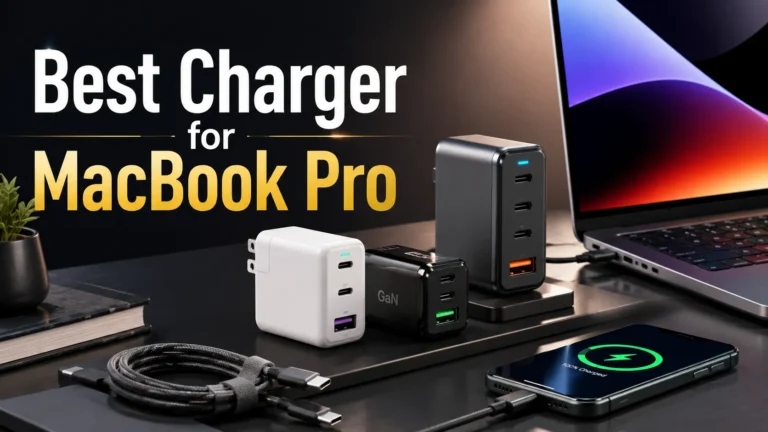
Best iPhone Chargers for Kids Safe Fast and Durable
For most families, a certified 20W-class USB-C wall charger with a durable cable is the best iPhone charger choice for kids. Focus on the correct connector, safe heat management, and sturdy build quality before worrying about extra features.
Choosing iphone chargers for kids comes down to three things: safe power delivery, a cable that can survive daily handling, and the right connector for the iPhone model in the house. For most families, a certified 20W-class USB-C wall charger with a reinforced cable is the best starting point.
- Best starting point: A reputable 20W-class USB-C wall charger works well for most kids’ iPhones.
- Safety first: Choose clear safety information, temperature protection, and a cable with strong strain relief.
- Compatibility matters: Match USB-C to Lightning or USB-C to USB-C to the child’s iPhone model.
- Durability pays off: Reinforced cables and sturdy plugs reduce replacements and daily frustration.
- Use matters: Keep chargers on open surfaces, away from water, and retire damaged gear immediately.
Best iPhone Chargers for Kids: What to Buy First
Quick answer: the safest picks balance low heat, durable cables, and the right USB-C or Lightning compatibility
If you want the simplest answer, buy a reputable USB-C wall charger in the 20W range and match it with the correct cable for the child’s iPhone. That combination is usually fast enough for everyday use without adding unnecessary bulk or complexity.
Who this guide is for: parents, guardians, and gift buyers choosing chargers for school, travel, or bedside use
This guide is for anyone buying a charger for a child or teen who needs a dependable setup at home, in a backpack, or on family trips. It also helps when you are replacing a lost cable, setting up a bedside charger, or choosing a shared family charging station.
How iPhone Chargers Work and What “Safe for Kids” Really Means
Charging basics: wattage, voltage, amperage, and why iPhones only draw what they need
An iPhone charger does not force power into the phone; the phone and charger negotiate how much power to use. That is why a higher-wattage charger is not automatically “too strong” for an iPhone, as long as it is from a trustworthy source and the cable is compatible.
In practical terms, wattage is the charger’s power capacity, while the phone decides how much to pull. For kids, the goal is not maximum wattage at all costs; it is a stable charger that delivers enough power for normal fast charging without running hot or creating clutter.
Safety priorities: certified power adapters, temperature control, short-circuit protection, and flame-resistant materials
For family use, look for chargers that clearly list safety and compliance information from the manufacturer. Verified certification, overcurrent protection, overtemperature protection, and short-circuit protection are all more meaningful than flashy marketing claims.
Flame-resistant housing and a well-fitted plug matter too, especially in bedrooms, dorm rooms, and travel bags where chargers may be handled often. If a listing is vague about certifications or the brand is hard to verify, it is better to skip it.
Stop using any charger that runs unusually hot, smells burnt, has a loose plug, or shows cracked insulation. Children should not charge devices under pillows, blankets, or other soft surfaces that trap heat.
Why cable quality matters more for kids: bend resistance, strain relief, and breakage prevention
Kids tend to unplug chargers quickly, wrap cables tightly, or toss them into bags. That makes cable construction a bigger deal than many buyers expect, because weak ends and poor strain relief are usually the first failure points.
Reinforced ends, thicker insulation, and braided exteriors can help, but the real win is a cable that resists repeated bending near the connector. If you want more options for affordable but dependable gear, see our guide to the best budget chargers for iPhone.
Key Specs to Compare Before You Buy
Wattage guide: when 12W, 20W, or higher is appropriate for iPhone charging
A lower-wattage charger can still work, but it may charge more slowly. A 20W-class charger is the sweet spot for most iPhones because it offers a practical speed boost without pushing you into oversized adapters that are more than a child usually needs.
Higher wattage can be useful for multi-device households or if the charger may also power tablets or other USB-C gear. For a child’s single-phone setup, though, bigger is not automatically better, especially if it adds cost or size without a real benefit.
Connector compatibility: USB-C to Lightning, USB-C to USB-C, and older USB-A options
Compatibility is the first thing to check because the wrong cable makes a charger useless. Many older iPhones use Lightning, while newer models may use USB-C, so the cable must match the phone’s port and the adapter’s output.
USB-A chargers can still work with some setups, but they are less future-friendly and often slower than USB-C options. If you are unsure which charger style fits a specific iPhone model, compare it with the recommendations in which charger for iPhone 17 or what budget chargers work with iPhone.
Cable length and durability: desk use, bedtime charging, travel bags, and reinforced braiding
Short cables reduce tangles and are easier for younger kids to manage at a desk or nightstand. Longer cables can be helpful for bunk beds, shared outlets, and travel, but they also create more slack to trip over or snag.
Braided cables often hold up better in backpacks and family charging bins, though braiding alone does not guarantee quality. The best choice is a cable with strong connector ends, a length that fits the room, and a jacket that does not feel flimsy.
Heat management and inspection checklist: what to look for in the adapter, plug, and cable
Before buying, check whether the adapter has a compact shape with enough room around the prongs and port. After purchase, inspect the charger regularly for discoloration, loose parts, or a cable that feels warm in a way that seems out of proportion to normal use.
- Confirm the iPhone connector type before ordering
- Choose a charger from a reputable brand with clear safety information
- Match cable length to the child’s room, backpack, or travel routine
- Retire any accessory that shows damage, looseness, or overheating
Best Charger Types for Kids by Use Case
Wall chargers: best for everyday home charging and stable power delivery
Wall chargers are the most practical choice for kids because they are simple, compact, and less prone to accidental movement than charging from a computer or power strip with multiple dangling cords. They also tend to provide the most consistent charging experience for bedtime or homework-time charging.
For a family buying one charger to cover the most situations, a wall adapter plus a durable cable is usually the most reliable setup. If you want a broader shopping list, compare it with our wall charger guide for iPhone.
Compact travel chargers: best for backpacks, sleepovers, and family trips
Compact chargers are helpful when a child needs a charger that fits in a school bag or carry-on without taking up much space. They are also easier to store in a drawer or travel pouch, which reduces the chance of losing parts.
The trade-off is that very small chargers may have fewer ports or less rugged housings than larger units. If the charger will live in a backpack, prioritize a sturdy plug and a cable that can handle repeated packing and unpacking.
Magnetic and wireless options: convenience trade-offs, alignment issues, and slower charging limits
Wireless charging can be convenient for older kids and teens who want a simple drop-and-go routine. The downside is that alignment matters, and charging can be slower or less efficient than a wired connection depending on the phone, case, and charger design.
For younger children, wireless pads can be easy to misplace or knock out of alignment. If you are considering this route, read our guide on whether wireless chargers are bad for your phone before deciding.
Multi-port chargers: when shared family charging makes sense and when it creates clutter
Multi-port chargers make sense in households where several devices charge from one outlet overnight or during travel. They can reduce outlet congestion and keep cords centralized, which is useful in shared bedrooms or family rooms.
They are less ideal when a child only needs one phone charger, because extra ports and cables can create clutter. If your family needs to charge multiple phones, tablets, or accessories from one station, start with our multi-port charger guide for iPhone.
Safety Guide: Limits of Safe Use and Common Mistakes to Avoid
Avoiding overheating: blocked vents, charging under pillows, and using damaged adapters
Heat is the biggest safety concern with any charger. Keep chargers on hard, open surfaces and away from blankets, pillows, and stuffed storage bins that can trap warmth.
Never use a charger with a damaged plug, bent prongs, or a cable that exposes internal wiring. If a charger becomes hot enough that it is uncomfortable to touch, stop using it and replace it.
Stop using damaged electronics, frayed cables, loose plugs, or chargers that overheat. Follow the manufacturer’s replacement guidance and check for current recall notices if a product seems unsafe.
Age-appropriate use: supervision, cord management, and keeping chargers away from water
Younger children usually need more supervision because cords can become tripping hazards or get pulled from outlets abruptly. A simple cable route along a nightstand or desk edge is safer than letting a cord run across the floor.
Chargers should also stay away from sinks, drinks, humid bathrooms, and any place where water exposure is possible. That rule matters just as much for teens as it does for younger kids.
Replacement guidance: when frayed cables, loose plugs, or warm-to-hot adapters should be retired
Replace a charger when the cable frays, the connector no longer fits securely, or the adapter makes buzzing, crackling, or excessive heat. Those are warning signs that the accessory is no longer dependable.
Even if the charger still works, a worn cable can fail unpredictably. It is usually cheaper and safer to replace it early than to wait for a complete breakdown.
What not to buy: no-name chargers, counterfeit certifications, and oversized wattage hype
Be cautious with chargers that promise huge wattage numbers but provide little proof of safety, compatibility, or build quality. Big claims do not matter if the charger lacks clear manufacturer support or if the listing looks suspicious.
Also avoid counterfeit-looking products that copy familiar branding or certification marks without proper verification. If a deal seems unusually cheap for a charger that claims premium safety and speed, it is worth double-checking the seller and the product details first.
Real-Use Benefits and Trade-Offs for Kids and Families
Why fast charging helps: shorter downtime before school, games, or travel
Fast charging is useful because kids rarely plan battery life around long charging windows. A quicker top-up before school or a short charge between activities can make the phone more dependable throughout the day.
That said, fast charging only helps if the phone, cable, and adapter all support it. If one part of the chain is outdated, the speed benefit may be smaller than expected.
Why durability matters: fewer replacements, less frustration, and better long-term value
Durable chargers save time because they do not need to be replaced as often. They also reduce frustration for families who are tired of cables failing in backpacks, under beds, or near bedside tables.
For many households, durability is the real value feature. A slightly better-built cable and adapter can be more economical over time than repeatedly buying the cheapest option.
Limitations to consider: bulkier adapters, higher cost, and wireless charging inefficiency
Better chargers can cost more and take up more space, especially if they include extra ports or stronger housings. Wireless charging also adds inefficiency and alignment issues, so it is not always the best answer for a child’s daily routine.
In other words, the best charger is not the one with the most features. It is the one that fits the child’s habits, the family’s outlet setup, and the phone’s actual charging needs.
Ideal user profiles: younger kids, teens, shared households, and frequent travelers
Younger kids usually need the simplest setup: one charger, one cable, and clear placement rules. Teens may appreciate faster charging and a cleaner bedside setup, especially if they use their phones heavily for school, messaging, and media.
Shared households and frequent travelers benefit most from a compact, well-built charger that can handle repeated packing and daily use. If portability matters most, compare options with our travel multi-port charger guide.
Setup, Care, and Storage Tips for Longer Charger Life
Best charging habits: unplugging safely, avoiding tight bends, and using the right outlet placement
Teach kids to unplug by holding the connector, not yanking the cable. That small habit can significantly reduce wear near the ends where most failures start.
Keep the adapter in a stable outlet with enough room around it so the cable does not bend sharply right away. Tight bends near the plug or phone port shorten cable life.
- Use a bedside or desk outlet that keeps the cable off the floor
- Choose a cable length that reaches comfortably without excess slack
- Label family chargers if several similar cables are in use
- Replace worn accessories before they become unreliable
Cable care: coiling methods, drawer storage, and protecting connectors from damage
When storing a cable, use a loose coil instead of a tight wrap around the adapter or your fingers. Tight wrapping creates stress points that can damage the internal wiring over time.
For drawers and travel bags, place the cable where the connectors will not rub against keys, coins, or sharp objects. A small pouch or organizer can help keep the ends clean and protected.
Routine inspection: checking for discoloration, cracking, loose fit, and exposed wiring
Make it a habit to inspect the charger every so often, especially if it is used by a child. Look for burn marks, cracked plastic, loose USB ports, or a cable that no longer seats firmly in the adapter or phone.
These issues are often easier to spot early than after the charger fails completely. If something looks off, stop using it and replace it rather than trying to keep it in rotation.
Cleaning and maintenance: keeping ports and plugs dust-free without using liquids
Dust and lint can collect in charging ports, especially in backpacks, bedrooms, and family charging drawers. Keep the charger unplugged while cleaning and avoid liquids unless the manufacturer specifically says otherwise.
A dry, gentle cleaning approach is safest for both the cable ends and the outlet area. If a port seems blocked or the connection feels loose, check the phone’s charging port and the cable ends before assuming the adapter is the problem.
Final Recommendation: The Best Balance of Safety, Speed, and Durability
Transparent verdict: prioritize certified 20W-class USB-C options with reinforced cables for most families
For most families, the best balance of safety, speed, and durability is a reputable 20W-class USB-C wall charger paired with the correct cable for the iPhone model. That setup is usually fast enough for everyday life, compact enough for kids to manage, and simple enough to keep safe with basic supervision.
If you want a broader buying path, start with a trusted budget option for a single device or move up to a stronger build if the charger will live in a backpack, shared bedroom, or travel kit.
Best value choice vs. premium choice: when to save money and when to pay more for stronger build quality
A value charger makes sense when the phone is mostly charged at home and you just need a dependable replacement. A premium option is worth considering when the charger will be used heavily, packed often, or shared among multiple family members.
Pay more for better cable reinforcement, clearer safety documentation, and a sturdier adapter housing. Save money only when the product still meets the compatibility and safety basics.
Closing buying advice: match charger type to the child’s age, charging location, and daily routine
The right charger for a child is the one that fits the routine. A younger kid usually needs a simple wall charger and a short, durable cable, while a teen may prefer a compact fast charger that can travel easily.
Before buying, confirm the iPhone connector, review the manufacturer’s support details, and choose the charger style that best fits where the phone will spend most of its time.
Frequently Asked Questions
A reputable 20W-class USB-C wall charger with the correct cable is the safest practical choice for most families. Look for clear safety information, solid build quality, and a cable that fits the child’s routine.
Not always, but fast charging can be helpful before school, travel, or bedtime. The iPhone will only draw the power it needs, so the key is matching the charger and cable correctly.
It depends on the iPhone model. Older iPhones typically use Lightning, while newer models may use USB-C, so check the phone’s port before buying a cable.
They can be convenient for older kids and teens, but they are usually slower and more sensitive to alignment. Wired charging is often simpler and more reliable for younger children.
Replace it if the cable is frayed, the plug is loose, the adapter runs unusually hot, or you see cracks or discoloration. Any damaged charger should be taken out of use right away.
Check the connector type, wattage, safety details, cable durability, and the seller’s product information. It is also smart to review the manufacturer’s warranty and current recall notices.