Can Crankshaft Position Sensor Cause Misfire
Yes, a crankshaft position sensor can cause misfire symptoms if its signal is weak, intermittent, or lost. But plugs, coils, injectors, wiring, and compression problems are often more common, so diagnosis should come before replacement.
A bad crankshaft position sensor can cause a misfire-like problem, and in some engines it can contribute to an actual misfire by disrupting spark timing or fuel delivery. But if the engine is misfiring, the sensor is only one possible cause, so the safest approach is to confirm the symptoms with codes and live data before replacing parts.
- Signal loss matters: A bad crank sensor can disrupt spark timing and make the engine stumble, stall.
- Symptoms overlap: Ignition, fuel, vacuum, and compression faults can look very similar to sensor failure.
- Scan data helps: OBD-II codes, freeze-frame data, and live RPM readings are the best starting points.
- Check the circuit: Wiring, connectors, heat damage, and contamination often cause the real problem.
- Fitment is critical: Verify exact vehicle compatibility before buying a replacement sensor.
Can a Crankshaft Position Sensor Cause a Misfire? Quick Answer and What It Means
Yes, a crankshaft position sensor can cause misfire symptoms, especially when its signal drops out, becomes noisy, or reaches the engine computer at the wrong time. In practice, that often shows up as rough running, hesitation, stalling, hard starting, or a flashing check engine light rather than a single clean “sensor failed” warning.
The important distinction is this: the sensor may be the root cause, or it may be one piece of a larger issue involving wiring, heat damage, ignition parts, or engine mechanical problems. That is why diagnosis matters more than guessing from the symptom alone.
How the Crankshaft Position Sensor Works in Modern Engines
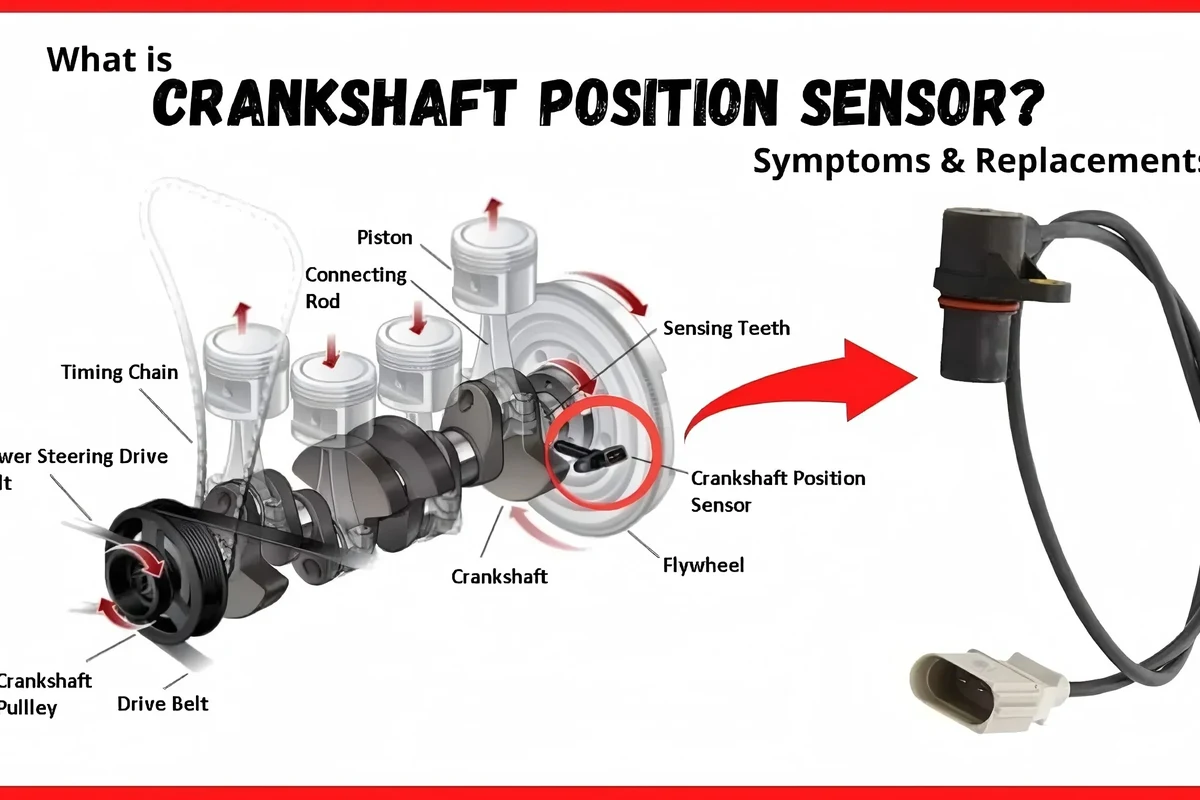
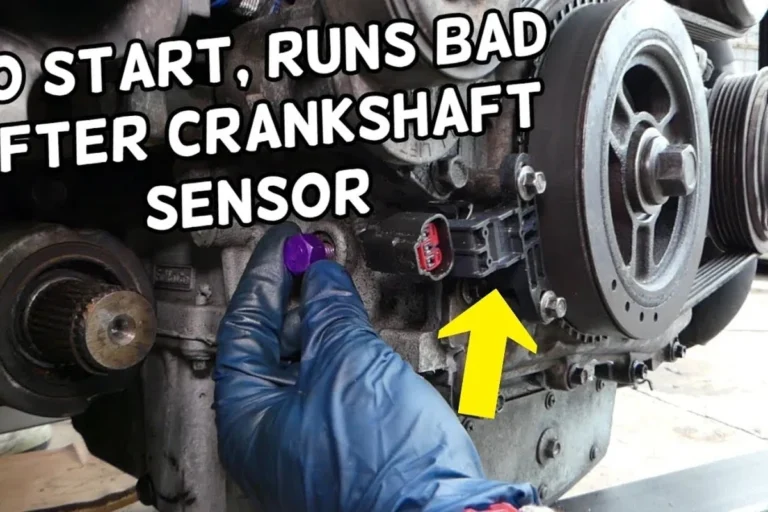
The crankshaft position sensor tells the engine control unit where the crankshaft is and how fast it is turning. The ECU uses that information to decide when to fire the spark plugs and, in many engines, when to deliver fuel.
Signal timing, engine speed, and ECU ignition control
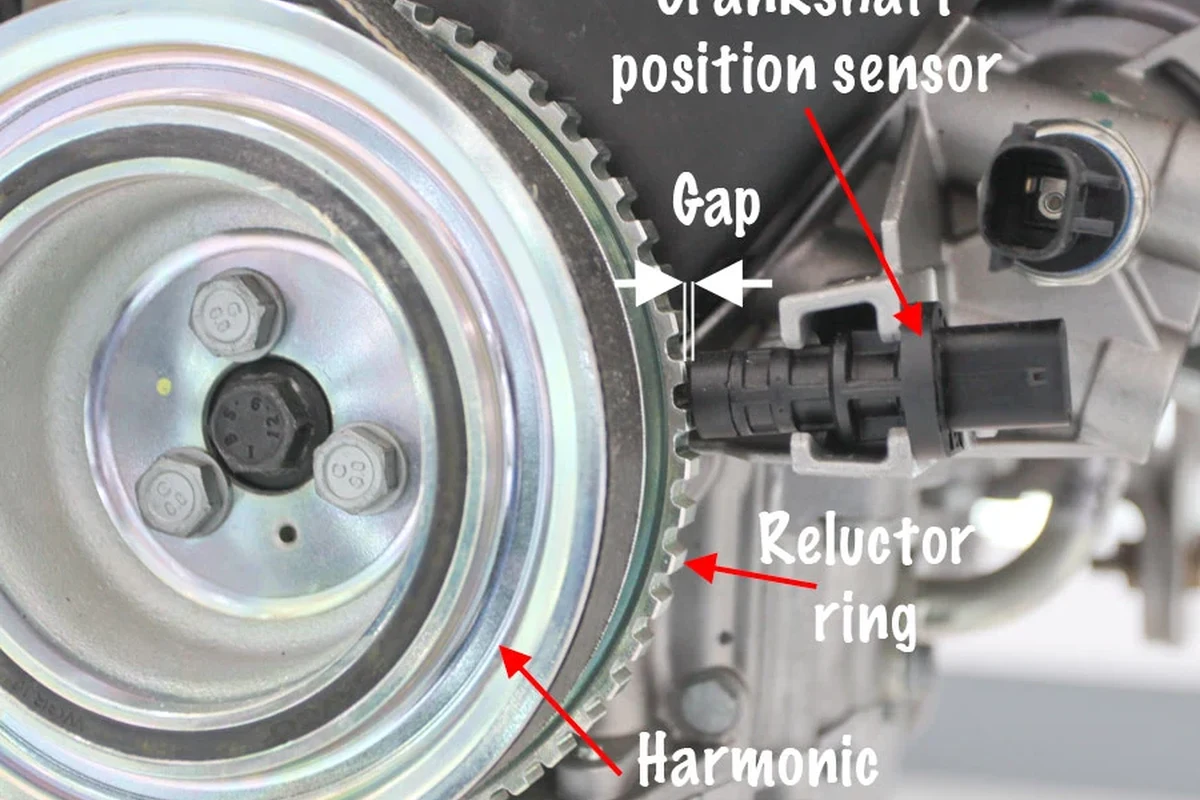
The sensor reads a toothed wheel or trigger pattern on the crankshaft and converts that motion into an electrical signal. If that signal is clean and consistent, the ECU can keep ignition timing and engine speed calculations accurate.
If the signal is weak, missing, or erratic, the ECU may lose track of crank position. That can lead to delayed spark, skipped spark events, or a brief shutoff of injector timing, all of which can feel like a misfire.
Why crankshaft data affects spark and fuel delivery
Many engines rely on crankshaft data not only for ignition timing but also for fuel injection timing and engine synchronization. If the ECU cannot trust the signal, it may enter a protective mode or cut power momentarily to prevent damage.
That is why a crank sensor problem can mimic ignition failure even when the spark plugs and coils are still in decent condition. The engine may stumble because the computer is working with bad timing information, not because the cylinder itself is mechanically weak.
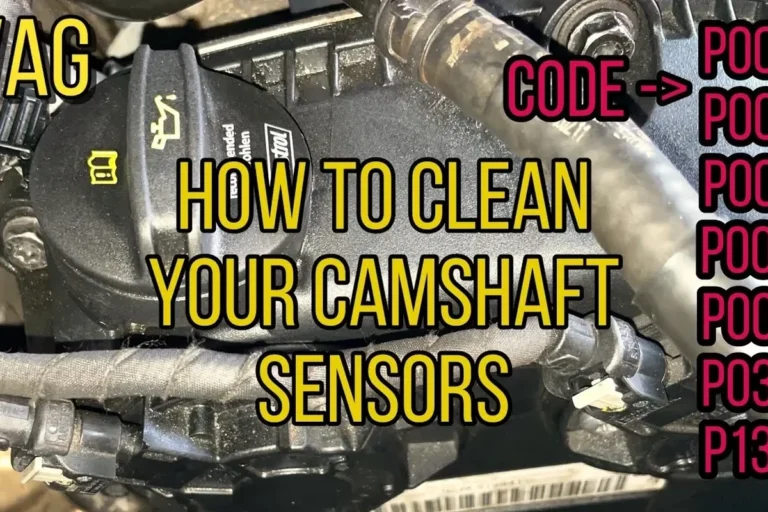
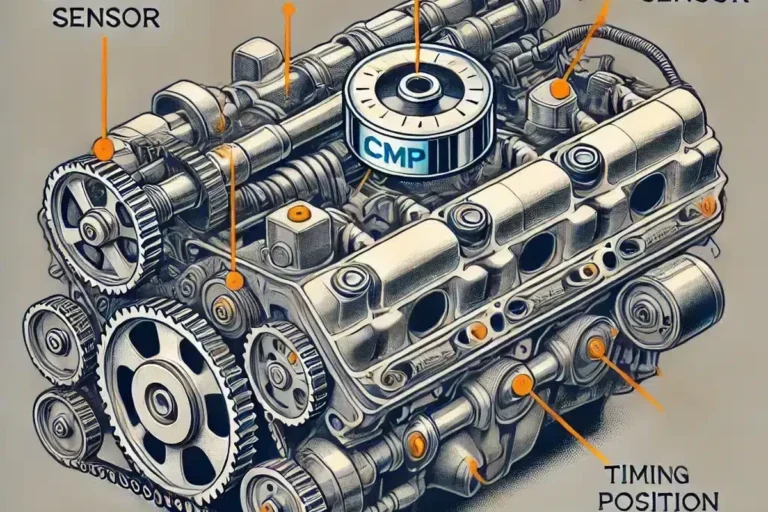
Some engines use both a crankshaft position sensor and a camshaft position sensor together to confirm engine timing and synchronization.
How a Faulty Crankshaft Position Sensor Can Mimic or Trigger Misfire Symptoms
A failing crank sensor does not always create a steady, obvious failure. More often, it acts up only when hot, under vibration, or at certain engine speeds, which makes the problem feel random and hard to pin down.
Intermittent signal loss, stalling, rough idle, and hesitation
Common symptoms include rough idle, hesitation during acceleration, sudden stalling, long crank time, and occasional no-start conditions. Some drivers also notice the tachometer acting strangely or the engine cutting out and restarting after cooling down.
Those symptoms can overlap with ignition or fuel issues, so the sensor should be considered a suspect rather than the automatic answer. If the problem appears and disappears with heat or bumps in the road, wiring and connector faults become especially important to check.
When the sensor is the cause vs. when it is only part of the problem
The sensor is more likely to be the main cause when the vehicle sets crankshaft-related trouble codes, loses signal in live data, or shows a repeatable hot-soak failure pattern. It is less likely to be the only cause if multiple cylinder misfire codes appear along with fuel trim problems, vacuum leak symptoms, or clear ignition component wear.
In some cases, a bad sensor is triggered by another issue, such as oil contamination, damaged wiring near the engine, or a loose connector. Replacing the sensor alone may help, but the underlying fault can still return if the real problem is not corrected.
If the engine stalls in traffic, runs extremely rough, or flashes the check engine light, avoid driving long distances until the cause is diagnosed. Intermittent stalling can create a safety risk.
Common Misfire Causes That Can Be Mistaken for a Crank Sensor Issue
Because misfires can come from several systems, it is easy to blame the crankshaft sensor too early. The more the symptoms fluctuate, the more important it is to check the full ignition, fuel, air, and compression picture.
Spark plugs, ignition coils, fuel injectors, vacuum leaks, and compression problems
Worn spark plugs and weak ignition coils are among the most common causes of true misfires. Fuel injector problems, clogged injectors, vacuum leaks, and low compression from internal engine wear can also produce rough running that feels similar to a sensor failure.
If one cylinder misfires consistently, the issue is often local to that cylinder rather than the crank sensor. If several cylinders misfire at once, the cause may be shared, such as a wiring issue, fuel pressure problem, or a sensor signal problem affecting the whole engine.
Wiring, connectors, heat damage, and ECU-related faults
Heat can damage sensor wiring insulation and connectors, especially on higher-mileage vehicles where harness routing is close to the exhaust or engine block. Corrosion, oil intrusion, and loose pins can interrupt the signal even when the sensor itself is still functional.
ECU faults are less common, but they are possible. Before assuming the computer is bad, verify power, ground, connector condition, and the sensor signal itself.
- Helps explain intermittent stalling and timing-related rough running
- Can be confirmed with codes and live data in many vehicles
- Symptoms overlap heavily with coils, plugs, injectors, and compression issues
- Replacing the sensor without diagnosis can waste time and money
How to Diagnose the Problem Safely and Accurately
Good diagnosis starts with the scan tool, then moves to a careful visual inspection. The goal is to find whether the crank sensor is actually failing or whether another system is causing the misfire codes.
OBD-II trouble codes, live data, and freeze-frame clues
Start by reading stored and pending OBD-II codes. Crank sensor issues may appear as crankshaft position sensor codes, cam/crank correlation codes, engine speed signal faults, or stalling-related codes, while true misfires usually show cylinder-specific P0301 through P0308 codes or a general P0300 code.
Freeze-frame data can be helpful because it shows the engine conditions when the code set. Pay attention to engine temperature, RPM, load, and vehicle speed, since many crank sensor failures happen only when the engine is hot or under certain operating conditions.
Visual inspection, multimeter checks, and when to use a scan tool
Inspect the sensor connector, harness routing, and nearby heat exposure first. Look for broken insulation, oil contamination, corrosion, bent pins, and signs that the harness has rubbed against moving parts.
A multimeter can help confirm basic power, ground, and continuity checks where the service information supports them. A scan tool with live data is often even more useful because it can show whether engine speed drops out, whether the signal is unstable, and whether the ECU is losing synchronization.
Compare the scan data with the symptom. If the engine stalls or misfires while the RPM signal suddenly falls to zero, that is a strong clue that the crank sensor circuit deserves closer attention.
Common diagnostic mistakes to avoid
One common mistake is replacing the crank sensor just because the engine misfires once or twice. Another is ignoring the wiring and connector because the sensor itself looks clean.
It is also easy to overlook basic ignition maintenance, such as worn plugs or oil-fouled coils, when a scan tool shows a sensor-related code. The best diagnosis checks both the code and the mechanical reality behind it.
Stop using damaged wiring, melted connectors, or sensors contaminated by oil or coolant until the fault is corrected. Heat and contamination often return the problem even after a new part is installed.
Who This Diagnosis Matters For: Daily Drivers, DIY Owners, and High-Mileage Vehicles
This issue matters most when a vehicle is still drivable but behaving unpredictably. Daily drivers, older cars, and high-mileage engines are especially likely to show overlapping symptoms that make the diagnosis confusing.
Signs that point to sensor failure in older or heat-stressed engines
Older or heat-stressed engines often show intermittent stalling after warm-up, delayed restart after a short stop, or rough running that improves once the engine cools. If the problem appears after long drives, hot weather, or stop-and-go traffic, the sensor or its wiring becomes more suspicious.
Vehicles with a history of heat-related wiring wear, oil leaks near the engine, or previous repairs around the timing cover may also be more vulnerable. Those clues do not prove sensor failure, but they raise the odds that the crank signal path is involved.
When professional diagnosis is the better value
If the vehicle has multiple codes, repeated no-start events, or a difficult-to-access sensor location, professional diagnosis can be the better value. A shop with the right scan tools and wiring diagrams can often separate a bad sensor from a bad harness or ECU issue faster than trial-and-error replacement.
That is especially true when the vehicle is your only transportation. Paying for accurate diagnosis can be cheaper than replacing several parts without solving the real issue.
Replacement Considerations, Compatibility, and What to Verify Before Buying
If diagnosis points to the crankshaft position sensor, fitment matters more than generic part descriptions. Sensors can look similar but differ in connector shape, mounting style, signal type, and vehicle-specific calibration needs.
Vehicle fitment, connector style, OEM vs. aftermarket quality, and warranty
Always verify the exact vehicle year, engine, trim, and sometimes transmission or emissions package before buying. The official parts catalog, manufacturer compatibility list, or VIN-based lookup is usually the safest way to confirm fitment.
OEM parts may offer simpler compatibility, while aftermarket parts can be a good value if the brand has a solid reputation and the listing clearly matches your application. Warranty terms vary by seller and region, so check them before purchase rather than assuming they are all the same.
- Confirm VIN-based fitment, connector style, and mounting location
- Check whether the sensor is magnetic, Hall-effect, or another type used by your engine
- Review return policy, warranty terms, and any required relearn or calibration steps
- Inspect the old connector and harness so the new part does not inherit the same fault
Durability, heat resistance, and installation access
Crank sensors often live in hot, cramped engine areas, so durability and heat resistance matter. A part that fits on paper may still be frustrating if access is poor or if the wiring lead is too short for the routing on your vehicle.
Before buying, check whether installation requires removing intake components, splash shields, or other parts. If access is difficult, the labor time may matter more than the part price.
Final Recommendation: When to Replace the Sensor and What to Check Next
Replace the crankshaft position sensor when the codes, live data, and inspection all point in the same direction. If the symptom pattern is intermittent, heat-related, or tied to a clear loss of engine speed signal, the sensor and its circuit deserve priority.
Best next steps based on symptom pattern and diagnostic evidence
If you have a single-cylinder misfire, start with plugs, coils, injectors, and compression checks before blaming the crank sensor. If the engine stalls, loses RPM signal, or sets crank/cam correlation codes, inspect the sensor, connector, and harness first.
After replacement, clear the codes and monitor whether the original symptom returns. If the problem persists, move back through the ignition, fuel, air, and mechanical checks rather than assuming the new sensor was defective.
Limits of the evidence and realistic expectations after replacement
Because misfire symptoms overlap across many systems, a crank sensor replacement is not a guaranteed fix unless the diagnosis is solid. The best expectation is improvement when the sensor truly is the cause, and no change when the real problem lies elsewhere.
That is why the most reliable answer to “can crankshaft position sensor cause misfire” is yes, but only after the rest of the system has been checked carefully. A good diagnosis saves money, reduces repeat repairs, and helps you avoid replacing parts that were never the problem.
Frequently Asked Questions
Yes, it can. A failing crank sensor may trigger misfire-like symptoms or related engine codes when the ECU loses accurate timing or RPM data.
Common signs include stalling, rough idle, hesitation, hard starting, and intermittent no-start conditions. Some vehicles also show erratic tachometer behavior or codes related to crankshaft signal loss.
Check OBD-II codes, freeze-frame data, and live RPM signal behavior first. If the signal drops out or the engine loses synchronization, the crank sensor circuit becomes a stronger suspect.
Worn spark plugs, weak ignition coils, bad injectors, vacuum leaks, compression problems, and damaged wiring can all mimic sensor issues. These are often more common causes of true misfires.
Not until you confirm the diagnosis. Replacing the sensor without checking wiring, connectors, and related ignition or fuel issues can waste money and leave the real problem unsolved.
Confirm exact vehicle fitment, connector style, sensor type, and any relearn requirements. It also helps to review warranty terms and inspect the harness so the new part does not inherit the same fault.