Best Neck Fan Lanyard for Hands Free Cooling Comfort
The best neck fan lanyard is the one that fits comfortably, runs quietly enough for your setting, and has battery life that matches your routine. For most people, a mid-range model with adjustable speeds and clear safety guidance is the safest value choice.
A neck fan lanyard is a practical hands-free cooling option for commuters, outdoor workers, travelers, parents, and anyone who wants personal airflow without holding a device. The best choice depends on fit, comfort, airflow strength, battery life, and how quietly it runs in the situations where you plan to wear it most.
- Fit matters most: A comfortable, adjustable design is usually more important than maximum airflow.
- Battery claims vary: Runtime depends on speed, heat, and usage pattern, so verify the manufacturer’s details.
- Noise is a trade-off: Stronger airflow often means more sound and faster battery drain.
- Safety comes first: Use approved charging gear and stop using any fan with heat, swelling, or cable.
- Best value: A mid-range cordless model usually offers the best balance for everyday users.
Best Neck Fan Lanyard for Hands Free Cooling Comfort: What to Know First
Quick answer: who should buy a neck fan lanyard and what makes a good one
A neck fan lanyard is worth considering if you want portable cooling for short bursts or all-day personal comfort in warm spaces. It tends to make the most sense for people who need airflow while keeping both hands free, but the best model is the one that balances comfort, battery life, and noise instead of chasing the strongest fan speed alone.
How neck fan lanyards work for hands-free cooling in 2026
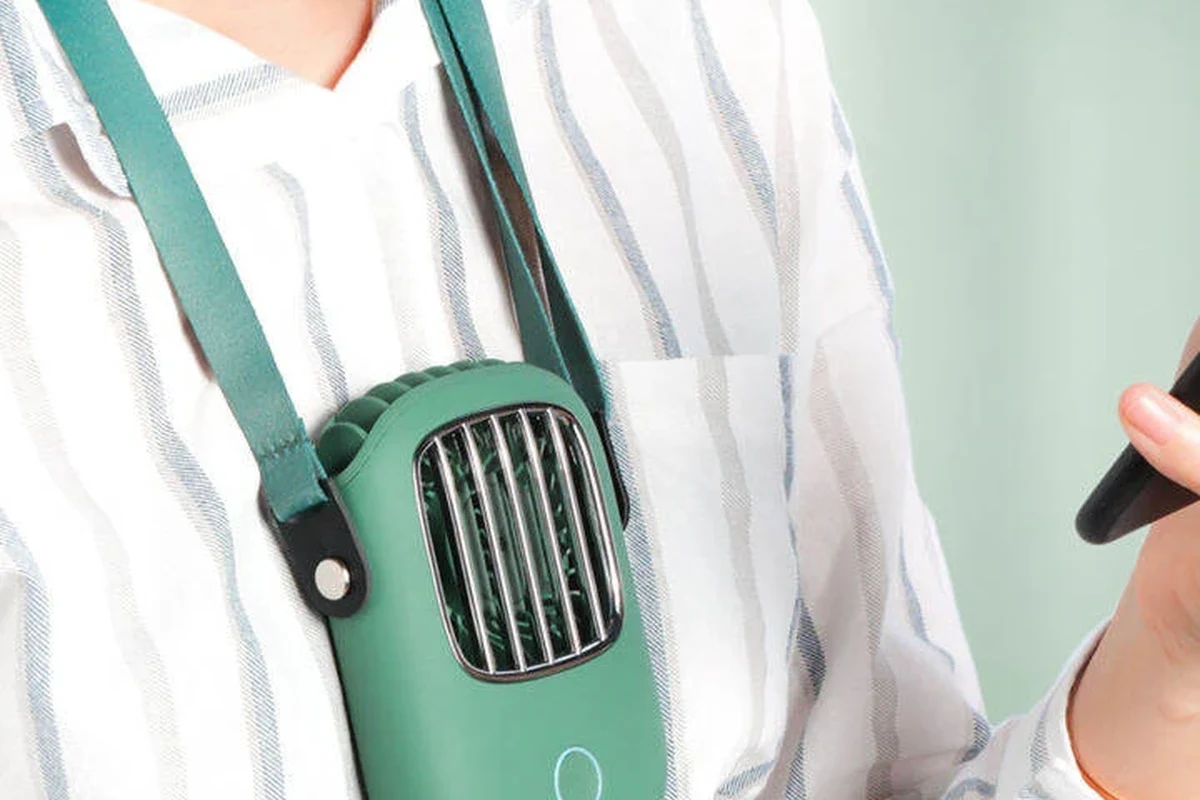
Most neck fan lanyards use small electric fans mounted near the collarbone or along a curved band that rests around the neck. They move air toward the face, jaw, and upper neck, which can help you feel cooler through evaporation even though they do not lower room temperature.
In 2026, buyers will still see a wide range of designs: some are rigid, some foldable, and some use bladeless-style air outlets that can feel less exposed around hair and clothing. Manufacturer claims vary by model, so the safest way to compare is to check the official product page and manual for airflow settings, battery specifications, charging method, and any temperature or runtime limits.
Personal fans feel most effective when they create airflow across skin that is already warm or slightly damp, because moving air helps sweat evaporate more quickly.
How to Choose the Right Neck Fan Lanyard
Fit, weight, and adjustability for different neck sizes
Fit matters more than many shoppers expect. If the lanyard sits too loosely, the airflow may miss your face; if it sits too tightly or rubs the collarbone, it can become annoying within minutes.
Look for adjustable length, a shape that matches your neck and shoulders, and a weight that feels manageable for your intended wear time. If the listing does not clearly state whether the band adjusts, check the manual or product images carefully before buying.
If you wear glasses, a mask, or a hat, check whether the fan’s airflow path will conflict with those items before choosing a model.
Airflow strength, fan speed levels, and noise trade-offs
Stronger airflow is helpful in heat, but it often comes with more noise, more battery drain, or both. A model with several speed settings is usually more useful than a single high-power mode because it lets you reduce noise indoors and increase airflow outdoors.
When comparing options, focus on whether the lowest setting is gentle enough for quiet spaces and whether the highest setting is actually useful in hot weather. Manufacturer airflow claims can be hard to compare across brands, so real value usually comes from balanced performance rather than a marketing number alone.
Battery life, charging time, and rated power limits to verify
Battery life is one of the most important practical limits on any neck fan lanyard. Runtime depends on fan speed, ambient heat, battery size, and how often the fan cycles between settings, so published numbers should be treated as best-case estimates unless the brand explains the test conditions clearly.
Before buying, verify charging method, cable type, and whether the device requires a specific adapter wattage or simply charges from standard USB power. If the product uses a rechargeable lithium battery, follow the manual for charging and storage guidance, and avoid assuming that faster charging is always better.
Use only the charging method and adapter type approved by the manufacturer. Stop using the fan if the battery swells, the housing gets unusually hot, or the cable or port shows damage.
Materials, comfort, and lanyard design for all-day wear
Comfort depends on more than padding. The surface material, edge shape, airflow direction, and how the fan rests against the skin all affect whether the device feels pleasant after an hour or becomes distracting.
Soft-touch plastics, rounded edges, and sweat-resistant surfaces can improve wearability, especially for office use, travel days, and outdoor events. If you expect longer sessions, prioritize a design that spreads weight evenly across the shoulders rather than concentrating pressure at one point on the neck.
Key Features That Matter Most in Real Use
Hands-free convenience for commuting, travel, work, and outdoor events
The main benefit of a neck fan lanyard is convenience. It can help during walks to transit, crowded platforms, theme parks, stadium events, warehouse work, or any situation where you cannot hold a handheld fan.
That convenience is most valuable when the device stays stable during movement and does not require constant adjustment. For commuters and travelers, compactness and easy packing may matter as much as cooling strength.
Directional airflow, cooling coverage, and sweat management
Good neck fans direct air toward the cheeks, jawline, and front of the neck, where the sensation of cooling is strongest. Some designs spread airflow more broadly, while others focus on a narrower path that can feel more intense but less even.
If you sweat easily, airflow that reaches the sides of the neck and under the chin can feel more effective than a fan that only blows straight forward. Coverage is one reason two models with similar specifications can feel very different in real use.
Portability, folding design, and storage when not in use
Portability matters if you plan to keep the fan in a bag, desk drawer, stroller basket, or carry-on. Foldable arms, protective covers, and compact shapes reduce the chance of snagging cables or pressing the controls accidentally.
Check whether the fan can sit flat without stressing the fan heads or outlets. If it includes a lanyard strap or case, confirm whether those accessories are part of the package or sold separately.
- Neck fan unit
- Charging cable and any included lanyard or storage accessory
- Manual, warranty card, and safety instructions
Build quality, safety grilles, and durability checkpoints
Durability is not just about whether the fan survives a drop. It also includes hinge strength, button feel, cable-port stability, and how well the housing resists flexing after repeated packing and unpacking.
For blade-style models, protective grilles matter because they reduce the chance of hair or fabric contact. For bladeless-style models, inspect the air outlets and intake areas so they remain unobstructed during wear.
Stop using damaged electronics, swollen batteries, frayed cables, overheating chargers, or unstable appliances and follow the manufacturer’s guidance.
Comparison Guide: Which Type of Neck Fan Lanyard Fits Your Needs?
Budget models vs mid-range vs premium cordless options
Budget models can be fine for occasional use, but they often make compromises in battery life, noise control, materials, or adjustability. Mid-range options usually offer the best balance for most buyers because they tend to improve comfort and runtime without becoming overly expensive.
Premium cordless models may be worth it if you expect frequent use, care about quieter operation, or need sturdier construction. The trade-off is that premium pricing does not guarantee better fit, so the design still needs to match your neck and use case.
| Option | Best For | Key Consideration |
|---|---|---|
| Budget | Occasional indoor or short outdoor use | Check comfort, runtime, and noise carefully |
| Mid-range | Most everyday buyers | Usually the best balance of features and wearability |
| Premium cordless | Frequent use and higher comfort expectations | Confirm fit, charging, and long-term durability |
Blade-style, bladeless-style, and hybrid designs
Blade-style fans often move air in a straightforward way and may be simpler or cheaper, but the exposed moving parts make design and safety details especially important. Bladeless-style models can feel more polished and may be easier around hair and clothing, though the airflow pattern varies widely by brand.
Hybrid designs try to combine compactness with more directed airflow. They can be appealing, but buyers should verify the actual layout, because “hybrid” is a marketing term rather than a universal standard.
Best use cases for office, exercise, parenting, travel, and hot climates
For office work, quieter operation and low-speed comfort matter most. For exercise, outdoor events, and hot climates, stronger airflow and a secure fit matter more than silent operation.
Parents and caregivers often benefit from hands-free convenience, especially when pushing a stroller or carrying bags. Travelers should prioritize foldability, battery safety, and easy storage in carry-on luggage.
Ideal user profiles and common drawbacks for each category
People who want light, occasional cooling may be satisfied with a simple model. Users who plan to wear a fan for longer periods should look for better ergonomics, lower noise, and more consistent battery performance.
A common drawback across all categories is expectation mismatch. A neck fan lanyard is a personal comfort device, not a replacement for shade, hydration, breathable clothing, or air conditioning.
- Hands-free cooling for daily routines and travel
- Useful in places where larger fans are impractical
- Can improve comfort in warm, humid conditions
- Cooling effect is personal, not room-wide
- Noise and battery life may limit comfort
- Fit and weight can be deal-breakers
Setup, Charging, and Safe Use
Initial charging steps, cable quality, and adapter wattage to check
Before first use, read the manual and confirm the charging port, cable type, and any adapter guidance. Some fans charge from basic USB sources, while others may have more specific power expectations that should be followed exactly.
Look for damage, loose connectors, or debris before plugging anything in.
Keep the fan away from heat, water, and soft materials while it charges.
Follow the stated charging method and stop if the unit becomes unusually hot.
Battery care, heat limits, and signs the unit needs inspection or replacement
Battery care is mostly about avoiding stress. Do not leave the fan in extreme heat, and do not continue using it if the battery swells, loses charge very quickly, or behaves unpredictably.
Visible damage, a burnt smell, repeated overheating, or charging that cuts in and out are signs to inspect the unit and consult the manufacturer’s support guidance. If the battery is not user-replaceable, replacement may mean retiring the whole device.
Safe wearing habits, hair/clothing precautions, and skin comfort tips
Keep long hair, scarves, drawstrings, and loose clothing away from moving parts or air intakes. If the fan presses too hard against your skin or collar, adjust the fit or switch to a lighter model.
For sensitive skin, shorter wear periods and lower speed settings can reduce irritation. If you feel heat buildup, pressure, or rubbing, treat that as a sign the design is not a good match for your body shape or clothing style.
What to avoid: overcharging, blocked vents, moisture exposure, and misuse
Avoid covering vents, placing the fan under a pillow or blanket, or using it in wet conditions unless the manufacturer explicitly allows that. Blocked airflow can increase heat and reduce performance.
Also avoid rough handling, charging with questionable cables, and using the fan for purposes it was not designed for. If the manual lists environmental limits, follow them instead of assuming the device can handle rain, steam, or heavy sweat exposure.
Do not use a neck fan lanyard near water unless the manufacturer specifically says it is safe to do so. Moisture and rechargeable batteries are a risky combination.
Maintenance and Storage Guide
Cleaning the fan housing, vents, and lanyard surfaces
Keep maintenance simple and gentle. Use the cleaning method listed in the manual, and avoid soaking the device unless the manufacturer specifically permits it.
Dust and lint can collect around vents and outlets, which may reduce airflow over time. Wipe the exterior carefully and remove visible buildup from openings without pushing debris deeper into the device.
Proper storage for battery health and shape retention
Store the fan in a cool, dry place where the lanyard or curved band will not be bent or crushed. If the model folds, follow the folding direction recommended by the manufacturer so hinges and joints do not wear out early.
For rechargeable models, long-term storage is usually better when the battery is not left empty for extended periods. Exact storage guidance varies by model, so check the manual rather than guessing.
Before storing the fan in a bag, make sure it is turned off fully and cannot be pressed on by books, chargers, or other heavy items.
When to replace the charging cable, battery, or entire unit
Replace the cable if it frays, bends sharply near the connector, or stops charging reliably. If the battery no longer holds a useful charge or the device heats up abnormally, the safest option may be replacement rather than continued use.
Some models do not offer practical battery replacement, which means the entire unit may need to be retired when the battery reaches end of life. Check the manual and warranty terms before you buy so you know what support is available later.
Warranty details and support terms to verify before buying
Warranty coverage can vary by seller, region, and product line. Before purchase, confirm the warranty length, what it covers, whether accessories are included, and how support handles battery or charging issues.
It is also smart to review return policy details and the manufacturer’s current support page. If the device has app features or firmware updates, verify whether those are supported long term or whether they may change after purchase.
Limitations, Value, and Buying Verdict
Evidence-based benefits and where cooling expectations should stay realistic
A neck fan lanyard can improve comfort by moving air across the skin, especially in warm indoor spaces and hot outdoor conditions. That said, it does not create true ambient cooling, and its effectiveness depends heavily on humidity, activity level, and fit.
Buyers should think of it as a personal comfort tool rather than a climate-control device. The best results usually come when the fan is part of a broader heat-management routine that includes hydration, shade, and breathable clothing.
Common mistakes buyers make when choosing a neck fan lanyard
One common mistake is choosing the strongest airflow without checking comfort or noise. Another is ignoring battery details and assuming every model will last long enough for a commute, shift, or outing.
People also sometimes overlook weight, neck size, and whether the fan shape works with their hairstyle or clothing. Those practical details often matter more than a flashy product description.
Best-value recommendation by user type and budget
For most buyers, the best value usually comes from a mid-range cordless model with adjustable speeds, a comfortable fit, and clearly stated charging and warranty information. Budget shoppers should prioritize safety, fit, and realistic runtime over extras they may not use.
Most everyday users: a mid-range neck fan lanyard with adjustable airflow, balanced comfort, and straightforward charging is the safest bet. If you need the quietest or most durable option for frequent wear, it may be worth moving up a tier and checking the manual, warranty, and support terms closely.
Final verdict: the best neck fan lanyard for hands free cooling comfort
The best neck fan lanyard is the one that feels light enough to wear comfortably, moves enough air for your environment, and matches your charging and storage habits. If you want the most dependable all-around choice, favor a well-built mid-range model with a secure fit, multiple speed settings, and clear manufacturer guidance over a bargain option that looks powerful but is hard to wear.
Choose a neck fan lanyard for personal cooling when hands-free convenience matters more than room-wide cooling. The smartest purchase is the model that balances fit, battery life, noise, and safety for your actual daily use, not the one with the biggest airflow claim.
Frequently Asked Questions
It is a good fit for commuters, travelers, outdoor event attendees, parents, and anyone who wants personal airflow without holding a fan. It works best as a comfort device for short or moderate wear times.
Look for adjustability, a shape that sits comfortably on your shoulders, and a weight you can wear without neck strain. If the listing does not clearly explain fit, check the manual or product images before buying.
Check the charging port, cable type, adapter guidance, and any stated runtime limits. Battery life varies by speed setting, heat, and usage pattern, so manufacturer claims should be treated as model-specific.
They can be comfortable for longer wear if the fit is right and the device does not overheat or rub your skin. Stop using the fan if it becomes unusually hot, the battery swells, or the housing is damaged.
Follow the manual for cleaning, and avoid soaking the device unless the manufacturer explicitly allows it. Store it in a cool, dry place where the band or hinges will not be crushed or bent.
It cools only the person wearing it, not the room, so expectations should stay realistic. Fit, noise, and battery life are the most common reasons a model feels better or worse in real use.