Where Should You Put a Humidifier in Your Bedroom for Best Sleep
Put a bedroom humidifier a few feet from the bed on a stable surface, with the mist aimed into open air. Keep it away from walls, bedding, and electronics so the room stays comfortable and safe.
If you’re wondering where should you put a humidifier in your bedroom, the best general answer is to place it a few feet from the bed on a flat, stable surface, with the mist directed into open air rather than at walls, curtains, or electronics. That setup usually gives you better moisture spread, less condensation, and a safer sleep environment.
The right spot still depends on room size, the type of humidifier, and how your bedroom is arranged. Below, Ethan Walker breaks down the practical placement rules that matter most for comfort, safety, and easier maintenance.
- Best spot: A stable nightstand or dresser a few feet from the bed usually works best.
- Aim the mist: Point it toward open space, not at pillows, curtains, or a wall.
- Safety first: Keep humidifiers away from outlets, cords, and electronics.
- Room size matters: Small rooms need gentler output; larger rooms may need a more central location.
Where Should You Put a Humidifier in Your Bedroom for Best Sleep?

Quick answer: the best placement for most bedrooms
For most bedrooms, put the humidifier on a nightstand, dresser, or other elevated surface 3 to 6 feet from the bed, ideally off to one side instead of directly beside your pillow. Aim the mist toward the center of the room so it can disperse before reaching bedding, walls, or wood furniture.
If the unit is a larger model or produces a strong mist output, floor placement can also work as long as the floor is level, dry, and away from carpet, outlets, and foot traffic. The main goal is even humidity without creating a damp zone near the bed.
Why placement matters for sleep comfort, moisture spread, and safety
Humidifier placement affects how quickly moisture reaches the air, how evenly it spreads, and whether it settles on nearby surfaces. Too close to the bed can leave your pillow or sheets feeling damp, while a poor corner can trap moisture and raise the chance of condensation.
Placement also matters for safety and long-term care. A humidifier sitting near electronics, cords, or wood furniture can create avoidable risk if it leaks, tips, or produces more moisture than the room can handle.
How a Bedroom Humidifier Works and What Placement Changes

How mist or vapor moves through a room
Humidifiers add moisture to the air as fine mist, warm vapor, or evaporated water depending on the design. That moisture does not stay exactly where the machine sits; it moves with air currents from vents, fans, door gaps, and normal room airflow.
Because of that, placement changes how fast the room reaches a comfortable humidity level. A humidifier hidden behind furniture or shoved into a corner may still run, but it often takes longer to affect the whole room evenly.
Distance from the bed, walls, and electronics
Keeping some distance from the bed helps prevent direct mist from landing on pillows, blankets, or your face. That matters for comfort, but it also reduces the chance of waking up to damp bedding or a cool draft from the mist stream.
Wall distance matters too. If the mist hits paint, wallpaper, curtains, or wood trim, moisture can collect where it should not. The same goes for electronics and charging gear; if you keep a charger or power strip nearby, it is worth reviewing general safety guidance like whether chargers should be unplugged when not in use and why chargers can still draw power in idle mode.
Room size, airflow, and humidity distribution
Bedroom size changes everything. A small room may need only modest output and a more central placement, while a larger bedroom may need the humidifier closer to the middle of the room or nearer the side with better circulation.
Airflow also matters. If your room has a ceiling fan, HVAC vent, or open door, the humidifier may distribute moisture better when placed where airflow can help mix the air instead of blasting the mist into a dead corner.
Humidifiers work best when the room air can circulate naturally; a blocked mist path often makes the room feel less evenly humid, even if the machine is running normally.
Best Humidifier Placement by Bedroom Layout
Small bedrooms and studio spaces
In a small bedroom, the best spot is often a dresser or small table several feet from the bed, with the mist aimed into open space. In very tight rooms, you may need to prioritize clearance from walls and bedding more than perfect symmetry.
For studio spaces, avoid placing the unit near clothing piles, fabric dividers, or a desk full of electronics. Even a small humidifier can create localized moisture if the room has limited airflow.
Medium bedrooms with one bed and one dresser
Medium bedrooms usually give you the most placement flexibility. A dresser across from the bed or a sturdy nightstand on the side of the room can work well if the mist is directed away from the mattress and not into the wall.
If one side of the room has better airflow from a vent or doorway, that side may be the better choice. The goal is to let the humidity move through the sleeping area without concentrating in one damp pocket.
Large bedrooms, shared rooms, and awkward corners
In larger bedrooms, a humidifier often works best in a central or semi-central location rather than tucked into a far corner. Shared rooms may also need a placement that avoids blowing mist directly toward another sleeper.
Awkward layouts can be tricky. If the only available surface is near a corner, make sure the mist has at least one open side to disperse into. A corner placement with no airflow can lead to condensation on the nearest wall.
Nightstands, dressers, floor placement, and elevated surfaces
Nightstands are convenient, but only if the surface is stable enough and there is enough room between the humidifier and your pillow. Dressers often provide better height and more open space, which can improve mist spread.
Floor placement is acceptable for many models, especially larger units, but keep them off carpet if possible and away from anything that can absorb moisture. Elevated placement is usually better for compact humidifiers because it helps the mist disperse before it settles.
If you are unsure where to start, place the humidifier on the most open stable surface in the room, then adjust after one night based on whether the bedding feels damp or the room still feels dry.
How to Choose the Right Humidifier for Your Bedroom
Cool mist vs. warm mist: which fits sleep and safety best
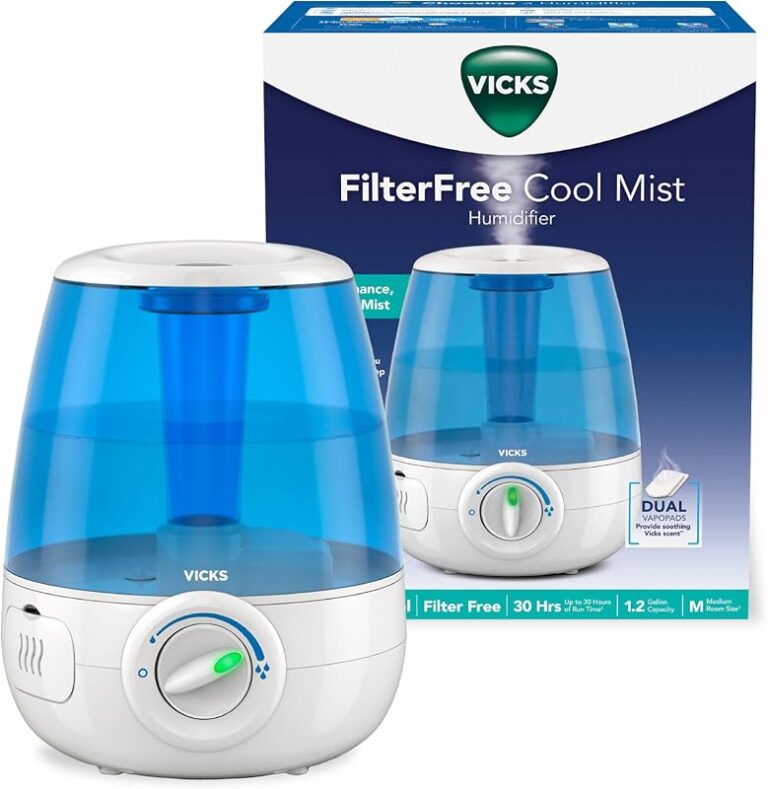
Cool mist humidifiers are often the easier fit for bedrooms because they avoid heating water and usually feel safer around children, pets, and close quarters. Warm mist units can feel more comfortable in some situations, but they also introduce heat and may need extra caution around placement and cords.
For sleep use, the right choice depends on your room, household, and tolerance for noise or maintenance. If safety and low heat are priorities, cool mist is usually the simpler option.
Tank capacity, runtime, and refill frequency
A larger tank can reduce how often you need to refill the unit, which is helpful if you want uninterrupted overnight use. But tank size alone does not guarantee better bedroom performance, since output level and room size matter too.
Before buying, check the manufacturer’s stated runtime and whether that runtime depends on a low, medium, or high setting. Real-world refill frequency varies with humidity level, output setting, and how dry your room is.
Noise level, auto shutoff, and adjustable output
Bedroom humidifiers should run quietly enough to avoid disturbing sleep. Fan noise, bubbling sounds, and mist output can all be noticeable, so adjustable settings are more useful than a single fixed mode.
Auto shutoff is especially helpful for overnight use because it stops the unit when the tank is empty. That feature does not replace good placement, but it does reduce the chance of dry running.
Coverage area, room size, and humidity controls
Coverage area is one of the most misunderstood specs because manufacturers may measure it differently. Treat it as a starting point, not a guarantee, and confirm whether the stated coverage matches your actual bedroom size and layout.
If your room tends to get dry in winter or from HVAC use, humidity controls can help prevent over-humidifying. A built-in humidistat or a separate room humidity monitor can be useful, especially in smaller bedrooms where moisture builds up faster.
- Check room size, tank capacity, output settings, and whether the unit is intended for bedside or floor placement
- Confirm noise level, auto shutoff, filter needs, and whether a humidistat or app control is included
- Review the manual for cleaning instructions, safety clearances, and any placement warnings
Safe Setup Tips: Where Not to Put a Humidifier
Avoiding walls, curtains, wood furniture, and bedding
Do not place the humidifier where the mist blows directly into a wall, curtain, headboard, or wooden furniture. Repeated moisture exposure can leave stains, warp finishes, or encourage mildew in fabrics and trim.
It is also a bad idea to aim the mist toward your blanket or pillow. Even if the room feels dry, direct mist can create a damp sleeping area that makes the bedroom less comfortable instead of more comfortable.
Keeping it away from outlets, power strips, and electronics
Keep humidifiers away from outlets, extension cords, power strips, speakers, chargers, and other electronics. Water and electricity should always be separated, and even a small amount of condensation can cause problems over time.
If you use bedside charging gear, place the humidifier on the opposite side of the room or far enough away that mist cannot drift onto cables or adapters. For more general charging safety context, see why chargers can overheat while charging and why a charger may stop working.
Preventing condensation, slips, and mold-friendly spots
Do not set a humidifier where condensation can collect on the floor, especially on tile, laminate, or wood. A damp floor can become slippery, and standing moisture is not good for the room or the appliance.
Also avoid placing the unit in a closed, stagnant spot such as behind a heavy curtain or inside a cramped shelf area. Those locations can trap moisture and make it easier for mold or mildew to form.
When elevated placement is better than floor placement
Elevated placement is usually better when the humidifier is small, the room is modest in size, or you want the mist to disperse before it reaches furniture. It can also help if the floor is carpeted or if you want to reduce the chance of accidental bumps.
Floor placement makes more sense for larger units designed for it, especially if the manufacturer recommends that setup. In that case, the key is still clear space around the unit and a dry, level surface.
Stop using any humidifier that leaks, tips easily, smells burnt, has a damaged cord, or shows unusual noise or overheating. Follow the manufacturer’s instructions and replace damaged parts before running it again.
Common Mistakes That Reduce Sleep Quality or Create Problems
Putting the humidifier too close to your face or pillow
A humidifier placed too close to the bed can make the air feel heavy or too wet near your face while the rest of the room remains dry. It can also leave the pillow, sheets, or nearby wall damp by morning.
If you wake up with a cool mist draft or notice condensation near the bed, move the unit farther away and aim it more toward open space.
Over-humidifying the room
More moisture is not always better. If the room becomes too humid, you may notice stuffiness, window condensation, or a musty smell, all of which can hurt sleep quality.
A separate humidity monitor can help you keep the room in a reasonable range, especially in small bedrooms where humidity rises quickly.
Using tap water without considering mineral buildup
Some humidifiers can run with tap water, but mineral content varies by location and can leave white dust or buildup in the machine and nearby surfaces. That issue is especially common with ultrasonic models, though results vary by water quality and model design.
Check the manual to see whether the manufacturer recommends distilled or demineralized water. If your water is hard, that guidance becomes more important.
Ignoring cleaning schedules and filter replacement
A humidifier that is not cleaned regularly can develop odor, scale, or residue that affects performance and hygiene. Filters, wicks, and cartridges also wear out and may need replacement according to the manufacturer’s schedule.
Cleaning is not optional maintenance; it is part of safe bedroom use. If you want the unit to stay helpful rather than annoying, follow the care steps in the manual instead of waiting for visible buildup.
Maintenance, Cleaning, and Storage for Bedroom Humidifiers
Daily and weekly cleaning routine
At a minimum, empty leftover water as directed, rinse the tank if the manual recommends it, and let the unit dry between uses when appropriate. Weekly care usually includes a more thorough wash of the tank and any removable parts that contact water.
Always check the model’s instructions first, because some parts are dishwasher-safe while others are not. A good routine matters more than a complicated one.
Filter, wick, or cartridge replacement guidance
If your humidifier uses a filter, wick, or cartridge, replacement timing depends on the model and water quality. Heavy use, hard water, and dusty rooms can shorten the useful life of consumables.
Before buying, verify how easy the replacement parts are to find and whether the manufacturer still supports the model. Consumable availability can affect long-term value more than the sticker price.
Descaling, drying, and off-season storage
Mineral scale often needs periodic descaling if the manual allows it. After cleaning, dry the tank and base thoroughly before storage to reduce odor and residue buildup.
For off-season storage, keep the humidifier in a clean, dry place with the cord neatly wrapped but not tightly bent. Store all removable parts together so you are not searching for a missing cap or filter later.
What warranty details and consumables to verify before buying
Before you buy, check the warranty terms, what parts are covered, and whether filters or cartridges are considered wear items. Some brands make ownership easier by listing replacement parts clearly, while others leave you guessing.
It is also worth checking the official manual, current support page, and any recall or safety notices before setup. That is especially important if you are buying a model with app control, since app features and firmware behavior can vary by version and region.
Smart humidifier features such as app scheduling, humidity sensing, and voice assistant support vary by model, firmware, and region. Confirm current compatibility in the official listing before relying on those functions.
Final Recommendation: The Best Bedroom Humidifier Placement for Better Sleep
Best placement summary by room type and user need
For most people, the best bedroom placement is a stable nightstand or dresser a few feet from the bed, with the mist aimed into open air. Small rooms usually benefit from a more central elevated spot, while larger rooms may do better with a location that helps airflow carry moisture across the sleeping area.
If the humidifier is large and designed for floor use, a dry, level floor area can work well as long as it stays away from bedding, walls, and cords.
Most sleepers who want simple, safe bedroom humidity control should choose a stable elevated surface a few feet from the bed, unless the manual specifically recommends floor placement for that model.
Who benefits most and when a humidifier may not be worth it
Humidifiers are most useful for people who wake up with dry nasal passages, dry skin, or a bedroom that feels harsh during heating season. They can also help remote workers, gamers, and light sleepers who spend long hours in air-conditioned or heated rooms.
If your room already feels damp, smells musty, or shows condensation on windows, a humidifier may make things worse rather than better. In that case, ventilation and moisture control matter more than adding humidity.
Value, limitations, and the safest practical setup
The safest practical setup is the one that balances comfort with clean airflow, dry surfaces, and easy maintenance. That usually means keeping the humidifier away from the bed, walls, electronics, and soft furnishings while following the manufacturer’s cleaning and refill guidance.
If you are still comparing models, focus less on gimmicks and more on room fit, noise, auto shutoff, cleaning access, and replacement part availability. Those details usually matter more for sleep than flashy features.
Frequently Asked Questions
A few feet away is usually best for most bedrooms. That distance helps keep mist off your pillow and bedding while still improving room humidity.
A nightstand or dresser often works well for smaller humidifiers because it helps the mist disperse. Floor placement can be fine for larger models if the manual allows it and the surface stays dry and level.
It is better to keep humidifiers away from chargers, power strips, speakers, and other electronics. Mist and condensation can create avoidable damage or safety issues over time.
Cool mist models are often the simplest choice for bedrooms because they avoid heat and are usually easier to place safely. The best option still depends on room size, noise tolerance, and maintenance needs.
Signs include window condensation, a damp feeling, or a musty smell. If you notice those issues, reduce output or stop using the humidifier and improve ventilation.
Check room coverage, tank size, noise level, auto shutoff, cleaning needs, and whether replacement filters or parts are easy to find. Also confirm any app, firmware, or smart-home compatibility directly with the manufacturer.