Best Commercial Handheld Vacuum for Easy Cleanup
A commercial handheld vacuum is best for fast spot cleaning in offices, vehicles, retail counters, and other tight spaces where a full-size vacuum is overkill. Prioritize durable attachments, easy filter maintenance, and the right power type for your workflow.
If you need fast cleanup for counters, cars, workstations, reception areas, or tight commercial spaces, the best commercial handheld vacuum is usually a compact model with strong airflow, durable attachments, easy filter access, and either reliable corded power or a replaceable cordless battery system. The right choice depends less on brand hype and more on where it will be used, how often it runs, what debris it handles, and how easy it is to maintain between shifts.
- Best use: Commercial handheld vacuums excel at quick, repeated cleanup of small dry messes.
- Power choice: Corded models offer steady performance, while cordless models improve mobility.
- Key specs: Check suction, runtime, dust capacity, weight, filtration, and parts availability.
- Main limits: Expect smaller bins, shorter runtime, and weaker deep-carpet performance than larger vacuums.
- Long-term value: Easy filter access and replacement battery or charger support matter more than flashy claims.
Best Commercial Handheld Vacuum for Easy Cleanup: Quick Answer and Top Use Cases

A commercial handheld vacuum is best for quick, repeated mess pickup where dragging out a full-size machine wastes time. Think front desks, retail shelves, vehicle interiors, upholstery touch-ups, break rooms, stair edges, keyboard dust, and dry debris around tools or packaging stations.
Choose a commercial handheld vacuum if your priority is fast spot cleaning, compact storage, and frequent short cleaning sessions. If you need long runtime, large debris capacity, or deep carpet cleaning across large floors, a larger vacuum style is usually the better fit.
What makes a handheld vacuum “commercial” in 2026
In 2026, “commercial” usually means the vacuum is built for repeated daily use rather than occasional home crumbs. That often includes tougher plastics, stronger latches, more secure nozzles, easier access to filters, longer-duty motors, and better parts support than many entry-level consumer handhelds.
Some models also fit into broader battery ecosystems used across janitorial or maintenance tools. That matters because battery availability, charger compatibility, and replacement packs can affect long-term value more than a flashy feature list.
Commercial does not always mean the most powerful vacuum in absolute terms. It often means a better balance of uptime, serviceability, durability, and predictable performance under regular use.
Who should choose one over a stick, canister, or shop vacuum
A handheld model makes sense when most messes are small, localized, and frequent. Offices, retail counters, salon stations, hotel rooms, delivery vehicles, and maintenance carts are common examples.
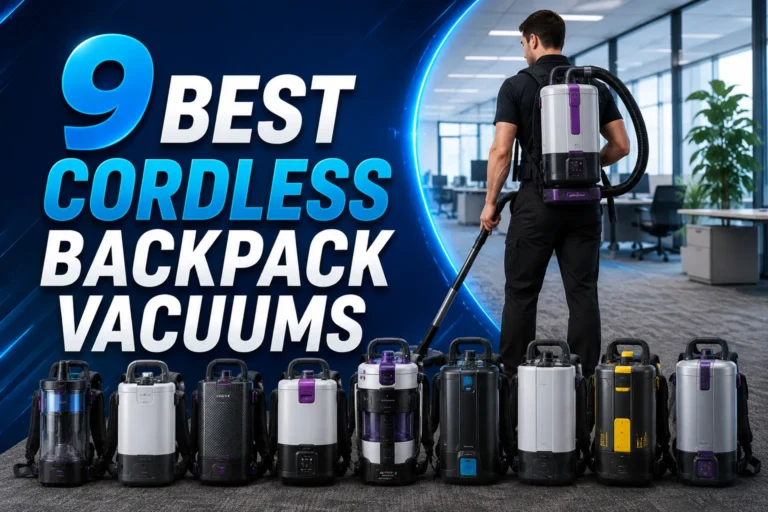
If you regularly clean large carpeted areas, a handheld will feel limiting. In that case, a cordless commercial upright vacuum can cover more floor faster, while a cordless backpack vacuum may be better for hallways, stairs, and multi-room routes.
For heavier dust, chips, or mixed debris in workshops and utility areas, a compact shop vacuum is usually more appropriate. Handheld commercial vacuums are best treated as fast-response cleaners, not all-purpose replacements for every cleaning job.
How a Commercial Handheld Vacuum Works and Where It Fits Best

Understanding the basic cleaning system helps you compare models more intelligently. Two vacuums can look similar on a product page yet behave very differently once airflow is restricted by a filter, crevice tool, or nearly full bin.
Core cleaning system: motor, airflow, suction, filtration, and attachments
A handheld vacuum uses a motor-driven fan to create airflow. That moving air carries dust and debris through the intake path and into a bin or dust cup, while the filter helps trap particles before air exits the machine.
Raw suction claims alone do not tell the full story. Real cleaning performance depends on how the vacuum maintains airflow through the nozzle, hose, bin, and filter over time. A model with decent suction but poor airflow path design can clog quickly or lose effectiveness as the bin fills.
Attachments matter more than many buyers expect. A crevice tool helps with seat rails, corners, and drawer tracks. A brush tool works better for vents, fabric, and delicate surfaces. A flexible hose can reduce wrist strain and improve reach under desks, inside vehicles, or around point-of-sale equipment.
HEPA-style wording and true HEPA performance are not always the same thing. Always verify the exact filtration claim in the official specifications or manual before assuming fine-dust performance.
Best-fit environments: offices, retail counters, vehicles, hospitality, and light industrial spaces
In offices, handheld vacuums are useful for dry spills, entry mats, chair creases, and dust around electronics. In retail, they help with checkout counters, shelving edges, and fitting-room debris where speed matters more than large-capacity collection.
Vehicle cleaning is one of the strongest use cases because handheld units are easier to maneuver around seats, pedals, cup holders, and trunk corners. Corded models can offer steady power, while cordless versions are more convenient when outlets are not nearby.
Hospitality settings benefit from quick pickup between guests, especially on upholstery, drapes, stair edges, and room perimeters. In light industrial spaces, handhelds can handle dry surface debris and fine dust in controlled tasks, but they should only be used within the manufacturer’s stated material and safety limits.
How We Compare the Best Commercial Handheld Vacuum Options
Because product listings vary widely in detail, the best comparison method is to focus on a few practical criteria that affect daily cleanup. This approach helps separate useful commercial features from marketing language.
Decision criteria: suction power, rated wattage, runtime, dust capacity, and weight
Suction and airflow are the first checkpoints, but they should be considered alongside rated wattage for corded models or battery platform details for cordless ones. Higher power does not automatically mean better cleaning, yet very low power often shows up quickly on upholstery, grit, and crevice work.
Runtime matters most when the vacuum is used across multiple rooms, vehicles, or shifts. For lighter duty, short burst cleaning may be enough. For route-based janitorial work, battery swaps or dock charging become more important.
Dust capacity affects workflow. A tiny bin may be fine for front-desk crumbs but frustrating in hospitality or vehicle detailing. Weight also matters because handheld vacuums are often used one-handed and at awkward angles.
Build quality factors: hose durability, cable quality, battery system, and attachment security
Commercial buyers should look closely at stress points. Flexible hoses can crack, power cords can kink near strain reliefs, and battery packs can become a long-term cost issue if replacements are hard to source.
Attachment security is easy to overlook until a nozzle starts falling off during quick cleanup. A positive click-fit system or firm friction fit is usually preferable to loose accessories that twist free under pressure.
If you are comparing cordless options beyond handhelds, our guide to a commercial vacuum cordless setup can help frame whether a small handheld or a larger battery-powered format makes more sense for your workflow.
Practical checks: dimensions, noise level, consumables, warranty terms, and replacement part access
Dimensions matter if the vacuum will live on a cart, under a counter, in a vehicle compartment, or in a wall-mounted charging area. Noise level also matters in customer-facing spaces, classrooms, and offices where cleanup may happen during business hours.
Check whether filters, charger bases, hoses, and nozzles are sold separately through official channels. A good warranty looks better when parts are actually available. Before buying, review the current manual, warranty terms, and replacement-part listings from the manufacturer or authorized seller.
Key Specifications to Check Before You Buy
The right specification list depends on your cleanup style. A vehicle detailer, front-office manager, and maintenance tech may all need a “commercial handheld vacuum,” but not the same kind.
Corded vs cordless: power consistency, charging time, and safe-use limits
Corded handheld vacuums usually offer more consistent power for longer sessions. They are a strong fit for fixed locations like lobbies, counters, reception desks, and service benches where an outlet is always nearby.
Cordless models are more flexible and faster to grab, especially for vehicles, stairs, and spot cleaning across multiple rooms. The trade-off is battery dependence, charging downtime, and performance that may vary by power mode and battery condition.
If you are deciding between formats, a broader cordless commercial vacuum cleaner guide can help you determine whether handheld portability or larger cordless coverage better matches your space.
Battery details to verify: chemistry, heat management, inspection signs, and replacement guidance
Battery chemistry and pack design affect runtime, charging speed, and long-term replacement cost. Many modern cordless vacuums use lithium-based battery systems, but pack quality, thermal management, and charger behavior still vary by brand and model.
Look for clear guidance on charging indicators, storage temperature, and replacement part availability. If a battery becomes swollen, unusually hot, physically damaged, or starts losing charge rapidly, stop using it and follow the manufacturer’s safety instructions.
Only use the charger and battery combination approved for your vacuum model. Do not charge damaged packs, leave overheating batteries in service, or use the vacuum near water unless the manufacturer specifically states it is safe for that environment.
Filtration and bin design: HEPA claims, fine dust handling, and emptying mess-free
Filtration matters more in commercial settings than in occasional home cleanup because the vacuum may encounter printer dust, fine debris, hair, lint, and repeated daily use. If fine dust control is important, confirm the exact filter type, sealed-system claims, and replacement schedule in official documentation.
Bin design affects how clean the cleanup process really is. A vacuum that empties from the bottom or uses a simple release can reduce contact with debris, while awkward lids and exposed filters can create a second mess.
For pet-heavy environments, fur and dander can load filters quickly. If that is a concern, it may also help to review broader guidance on which cordless vacuum is best for pet hair to understand brush and filtration priorities.
Portability and storage: grip comfort, carry weight, onboard tool storage, and footprint
Grip shape affects fatigue during repetitive use, especially when cleaning overhead vents, seat backs, or stair edges. A balanced body design often feels lighter in practice than a poorly balanced model with the same listed weight.
Storage is another overlooked factor. Some handhelds fit neatly into a dock or wall mount, while others need loose accessory storage and more shelf space. In commercial spaces, a vacuum that stores cleanly is more likely to be used consistently.
- Check whether the vacuum is intended for dry debris only or has any wet-cleaning limitations.
- Confirm battery, charger, filter, and attachment availability before choosing a less common model.
- Measure the storage area, vehicle compartment, or janitorial cart space where it will live.
- Review the official manual for maintenance intervals, safe-use limits, and warranty exclusions.
Real-World Benefits and the Main Limitations to Expect
Commercial handheld vacuums solve a very specific problem: they reduce the friction between seeing a mess and cleaning it immediately. That convenience is their biggest advantage.
Where handheld commercial vacuums save time during daily cleanup
They save time when a full-size vacuum would be excessive. Instead of delaying cleanup until later, staff can remove crumbs, dust, hair, and dry debris in seconds. That is especially useful in customer-facing spaces where appearance matters throughout the day, not just after hours.
They also reduce setup time. No large body to wheel out, no long hose to unwind, and no bulky machine to store again after a 30-second task. In vehicles and tight interior spaces, that convenience becomes even more valuable.
Common trade-offs: runtime, deep-carpet performance, noise, and small-bin interruptions
The biggest trade-off is limited scope. Handheld vacuums are not ideal for deep-cleaning broad carpet areas, handling heavy material loads, or running continuously for long sessions unless the model is specifically designed for that duty.
Noise can also be sharper than expected because the motor sits close to the user’s hand and ear. Small bins fill quickly, and strong suction can drop fast if the filter loads up with fine dust.
- Fast for spot cleaning and repeated small messes
- Easy to store on carts, shelves, or in vehicles
- Useful in tight spaces where full-size vacuums struggle
- Lower setup friction encourages more frequent cleanup
- Limited runtime or reach compared with larger vacuums
- Small bins need frequent emptying
- Not the best choice for deep carpet cleaning
- Fine dust can reduce performance if filters clog quickly
Setup, Safe Use, and Common Mistakes to Avoid
Even a good vacuum can disappoint if it is set up poorly or used outside its intended limits. A few simple checks can prevent weak suction, overheating, and premature wear.
Initial setup: charging, attachment fit, filter check, and workspace prep
Before first use, confirm that the filter is seated correctly, the bin is latched, and the attachment locks in firmly. For cordless models, complete the initial charge as directed in the manual rather than assuming a partial factory charge is enough.
Clear oversized debris, strings, or packaging scraps that could jam the intake immediately. In commercial spaces, it also helps to assign a storage location so the vacuum is easy to find and recharge after use.
Safe operation: heat, wet-vs-dry limits, extension cord cautions, and battery charging habits
Only use the vacuum for the debris types listed by the manufacturer. Many handheld commercial vacuums are dry-use machines and should not be used on liquids, damp material, hot ash, sharp metal fragments, or hazardous dust unless explicitly approved.
For corded units, avoid undersized or damaged extension cords and keep cable paths clear of foot traffic. For cordless models, charge on a stable surface with ventilation and avoid covering the charger or battery while heat is dissipating.
Mistakes that shorten lifespan: overfilling, blocked airflow, wrong nozzle choice, and poor storage
Overfilling the bin is one of the fastest ways to reduce suction and stress the motor. So is running the vacuum with a packed filter or blocked intake path.
Using the wrong nozzle can also hurt performance. A wide opening may be slower on embedded debris, while a narrow crevice tool can choke airflow on larger particles. Poor storage, especially in hot vehicles or damp utility closets, can shorten battery and plastic component life.
Make sure the filter is clean, dry if washable, and seated properly before each shift or route.
Use a crevice tool for corners and seat rails, and a brush tool for vents, fabric, and delicate surfaces.
Do not wait until the bin is packed. Frequent emptying usually maintains better airflow and cleaner operation.
Maintenance, Consumables, and Troubleshooting for Long-Term Value
Long-term value depends heavily on upkeep. A commercial handheld vacuum may be used many times a day, so small maintenance habits make a real difference.
Routine care: filter cleaning, bin sanitation, intake inspection, and exterior wipe-down
Empty the bin regularly and inspect the intake for hair, paper, or debris buildup. Clean or replace filters according to the official schedule, especially if suction drops or dust starts escaping.
Wipe down the exterior, handle, and vents so grime does not build up around controls and airflow openings. If the vacuum is used in hospitality, shared workspaces, or vehicles, routine sanitation matters just as much as suction performance.
When to replace filters, batteries, belts, or chargers
Replacement intervals vary by model, usage frequency, and debris type. Filters may need earlier replacement in dusty environments, while batteries usually show decline through shorter runtime, slower charging behavior, or inconsistent output.
Some handheld vacuums do not use belts, while others may have powered accessory components that do. Always check the parts diagram in the manual rather than assuming compatibility from similar-looking models.
What to do if suction drops, charging fails, overheating starts, or noise increases
Start with the safest checks: empty the bin, inspect the nozzle, clean the filter, and verify that all seals and attachments are seated correctly. For charging issues, confirm outlet power, charger status lights, and battery placement.
If overheating, burning smell, unusual vibration, or rising noise continues after basic maintenance, stop using the vacuum and consult the manufacturer’s troubleshooting guide or service support. Avoid opening battery packs or modifying electrical parts.
Stop using damaged electronics, swollen batteries, frayed cables, overheating chargers, or unstable appliances and follow the manufacturer’s guidance.
Best Commercial Handheld Vacuum Buying Advice: Value, Alternatives, and Final Recommendation
The best commercial handheld vacuum is the one that fits your mess size, cleaning frequency, storage space, and maintenance tolerance. Premium models usually make more sense when the vacuum will be used daily across staff or shifts, while budget models can work for occasional front-desk or vehicle touch-up duty if parts and filters are still easy to find.
Who gets the best value from premium vs budget models
Premium models tend to offer better durability, more secure attachments, stronger battery ecosystems, and easier access to replacement parts. That matters most for businesses, property managers, hospitality staff, and anyone who cannot afford frequent downtime.
Budget models can still be reasonable when the workload is light and expectations are realistic. The key is to verify consumables, warranty coverage, and safe charging support before buying.
When a backpack, canister, or compact shop vacuum is the smarter alternative
If your cleaning route covers large floor areas, a handheld will quickly feel too small. Backpack and upright formats are better for broad coverage, while compact shop vacuums are better for heavier debris and more demanding utility cleanup.
Handhelds win on convenience, but they are not the smartest choice for every environment. Match the vacuum format to the actual mess, not just the smallest storage footprint.
Transparent verdict: the features most worth prioritizing for easy cleanup
Prioritize reliable suction under load, easy filter access, secure attachments, comfortable handling, and a power system that suits your workflow. For most buyers, those factors matter more than chasing the highest marketing claim on the box.
For easy cleanup, a commercial handheld vacuum is the right pick when you need fast dry debris removal in tight spaces, frequent short cleaning sessions, and compact storage. Choose corded if you want steady power in a fixed location, choose cordless if mobility matters more, and move up to a backpack, upright, or shop vacuum when your cleanup area, debris load, or runtime needs outgrow the handheld format.
Frequently Asked Questions
It is best for quick dry-mess cleanup in tight spaces like counters, cars, upholstery, stairs, and workstations. It works best as a spot-cleaning tool rather than a full replacement for a larger floor vacuum.
Choose corded if you need consistent power in one location and do not want to manage charging. Choose cordless if you need faster grab-and-go cleaning across rooms, vehicles, or stairs.
Focus on suction and airflow design, runtime or duty cycle, dust bin size, weight, filter type, and replacement-part availability. Also verify charger compatibility, attachment security, and intended-use limits in the official manual.
Some can, but performance depends on the filter system, airflow path, and attachment design. If fine dust or pet hair is a priority, verify the exact filtration claim and maintenance schedule before buying.
That varies by model and workload. Replace filters when cleaning no longer restores airflow, and replace batteries when runtime drops sharply, charging becomes unreliable, or the pack shows heat or physical damage.
It is the wrong choice when you need long continuous runtime, deep carpet cleaning, or large debris capacity. In those cases, a backpack, upright, canister, or compact shop vacuum is usually the better fit.