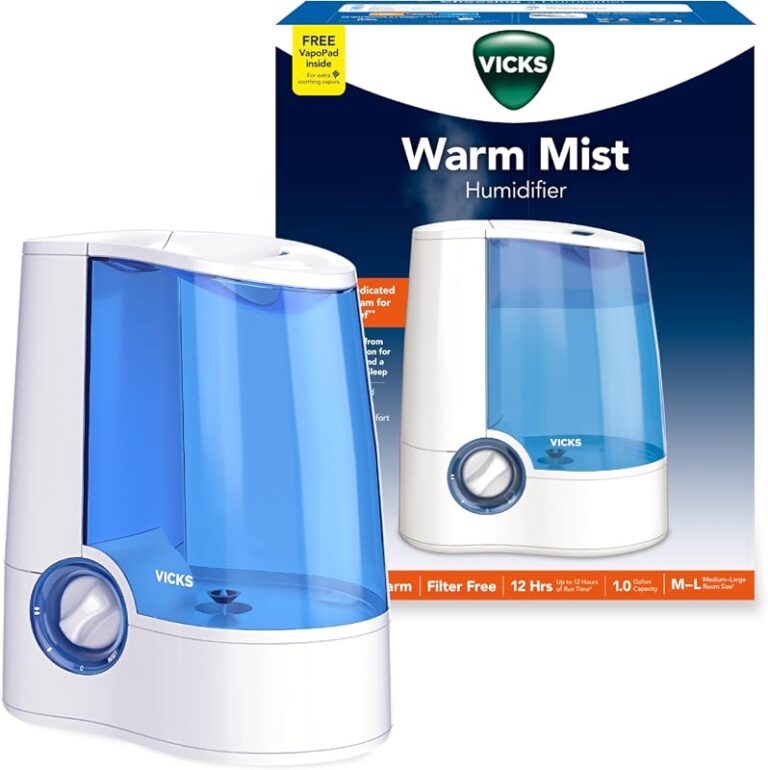
What Does a Warm Mist Humidifier Do
A warm mist humidifier adds moisture to dry indoor air by heating water into steam and releasing it into the room. It can improve comfort in winter or in dry bedrooms, but it also uses more power and requires careful handling because the steam is hot.
A warm mist humidifier adds moisture to dry indoor air by heating water until it becomes steam and then releasing that warm vapor into the room. In practical terms, it can make a space feel less dry, which may help with comfort during cold months or in heated rooms.
- What it does: Heats water into steam to raise indoor humidity.
- Best fit: Dry bedrooms, winter use, and small spaces where warm vapor feels comfortable.
- Main trade-off: Quieter, cozy output comes with heat, burn risk, and higher energy use.
- Buying priority: Check room size, tank capacity, cleaning needs, and safety features first.
What Does a Warm Mist Humidifier Do? The Simple Answer

A warm mist humidifier increases humidity by turning water into a warm vapor and dispersing it into the air. People usually buy one to make dry rooms feel more comfortable, especially when indoor heating leaves air parched.
If you are comparing humidifier types for a bedroom, office, or small living space, it helps to understand how the warm mist process differs from cool mist models and what that means for safety, noise, cleaning, and energy use. For more general buying context, our guide on what budget chargers do I need for my phone shows the same kind of model-by-model thinking that matters here: the right choice depends on the room, setup, and intended use.
How a Warm Mist Humidifier Works
Warm mist models use heat to convert water into steam. That steam is then cooled slightly as it leaves the unit, but it still feels warmer than the output from a cool mist humidifier.
Heating water into steam
Inside the unit, a heating element warms the water in the tank or reservoir until it boils or nears boiling, depending on the design. The machine then vents the steam into the room, increasing the amount of moisture in the air.
Check the official manual for fill instructions, warm-up time, and cleaning steps before first use. Model details vary, and some units have separate mineral filters or demineralization features.
Because the water is heated, warm mist humidifiers can reduce the amount of visible white dust that sometimes comes from minerals in tap water. That said, the exact result depends on water quality and the specific model. If you want a broader look at appliance-style setup and maintenance, our article on what laptop charger do I need is a useful example of why compatibility and specification checks matter before buying anything powered.
How warm mist differs from cool mist
Cool mist humidifiers release room-temperature moisture, usually through ultrasonic vibration or evaporation. Warm mist humidifiers heat the water first, so the output feels warmer and may be more comfortable in winter, but the device also uses more electricity and creates a burn risk.
- Warm output can feel soothing in cold, dry rooms
- Often quieter than fan-heavy cool mist designs
- May be less likely to spread visible mineral dust
- Hot water and steam create safety concerns
- Usually uses more power than cool mist models
- Needs regular cleaning to limit scale and buildup
Who a Warm Mist Humidifier Is Best For in 2026
The best fit is usually a person who wants added moisture and a slightly warmer feel in a dry indoor space. It is especially relevant in winter, in heated apartments, and in bedrooms where comfort matters more than rapid whole-home coverage.
Dry indoor air, winter use, and bedroom comfort
Warm mist humidifiers are often a strong match for bedrooms, home offices, and small-to-medium rooms that feel dry from forced-air heat. The warmer vapor can feel more pleasant at night, especially when the room temperature is already low.
Indoor humidity comfort is often more about balance than maximum moisture. Too little humidity can feel dry, but too much can encourage condensation and mold problems.
If you are also setting up a bedroom or work-from-home space, room conditions matter as much as the device itself. Placement, airflow, and noise can affect comfort more than a spec sheet suggests.
Households with congestion, coughs, or throat irritation
People often choose warm mist because moist air can feel soothing when they have a dry throat, nasal irritation, or a cough caused by dry indoor air. The key word is “feel”: the humidifier may improve comfort, but it is not a cure for illness.
If a humidifier is being considered for symptom relief, follow medical advice for persistent congestion, fever, wheezing, or breathing trouble. Humidifiers can support comfort, but they do not replace treatment.
For readers comparing home devices with practical fit and safety in mind, our guide to does a charger overheat while charging covers a useful general principle: heat is not automatically a problem, but it must stay within the device’s intended operating range.
When a warm mist model may not be the best fit
Warm mist is usually not ideal for homes with small children, curious pets, or crowded spaces where a hot appliance could be knocked over. It may also be a poor choice if you want the lowest possible energy use or if you need humidification for a larger area.
Do not place a warm mist humidifier where it can be tipped, blocked, or reached by children or pets. Hot water and steam can cause burns, so stable placement matters.
Key Buying Criteria: What to Check Before You Choose One
Warm mist humidifiers vary a lot by tank size, output style, cleaning burden, and safety features. The right model is the one that fits your room, your maintenance habits, and your tolerance for heat and power use.
- Check room size coverage, tank size, runtime, and whether the unit is meant for a bedroom, office, or larger room
- Confirm safety guidance, cleaning needs, warranty terms, and whether replacement parts are easy to get
Tank capacity, runtime, and room size coverage
Tank size affects how often you refill the humidifier, while runtime affects how long it can operate before shutting off. Coverage claims can be helpful, but they are not universal; room layout, ceiling height, and ventilation all change real-world performance.
Look for the manufacturer’s room-size recommendation, then treat it as a starting point rather than a guarantee. A small bedroom, for example, may need much less output than a drafty living room.
Wattage, energy use, and heat output
Warm mist units use electricity to heat water, so wattage matters more here than it does for many passive humidifiers. Higher wattage can mean faster steam generation, but it also means more heat and potentially higher energy use.
Noise level, controls, and ease of cleaning
Many warm mist humidifiers are fairly quiet because they do not rely on a strong fan, but noise levels still vary by model. Controls also vary, from a simple dial to timers or humidity settings, depending on the unit.
Cleaning is one of the biggest ownership factors. If the tank and heating chamber are awkward to reach, scale can build up faster and the humidifier may become annoying to maintain.
Build quality, cord safety, and replacement parts
Because warm mist humidifiers combine water, heat, and electricity, build quality matters. Look for a stable base, a cord that can be routed safely, and clear instructions for descaling or replacing parts such as filters, caps, or mineral cartridges if the model uses them.
Before buying, check whether the manufacturer still offers replacement parts and whether the warranty terms are easy to find. If you also want a broader example of checking compatibility and ownership details before a purchase, our article on what iPhone charger do I need shows how small details can affect long-term usefulness.
Real-World Benefits and Limitations of Warm Mist Humidifiers
Warm mist humidifiers can be genuinely useful, but they are best understood as comfort appliances with trade-offs. The benefits are real, yet they depend heavily on your room, climate, and maintenance habits.
Comfort, perceived relief, and quieter operation
Many users like warm mist because the output feels soothing, especially in winter. Some models also run quietly enough for bedrooms, which can make them a better nighttime fit than noisier fan-based devices.
The warmth can also make the moisture feel more noticeable right away, which some people interpret as quicker relief from dryness. That perception is valid as a comfort experience, even if the effect is not the same as treating an underlying condition.
Trade-offs: heat, power use, and mineral buildup
The biggest downside is heat. Steam can burn skin, and a tipped unit can create a scalding hazard, so placement and supervision matter.
Warm mist humidifiers also tend to use more electricity than cool mist models because they must heat water. In addition, mineral buildup from tap water can collect in the tank or heating area, which makes regular cleaning important.
Stop using any humidifier that shows cracks, leaks, overheating, damaged cords, unstable housing, or a faulty shutoff. Follow the manufacturer’s instructions and replace worn parts before continued use.
Evidence limits and what a humidifier cannot do
A humidifier can improve indoor comfort, but it cannot clean the air, remove allergens, or cure respiratory illness. It also cannot fix a room that has poor ventilation, active mold, or a bigger moisture problem.
If you need air cleaning, look for an air purifier instead. If you suspect a humidity or mold issue, the right solution may involve ventilation, dehumidification, or building repairs rather than any humidifier at all.
Safe Use, Setup, and Common Mistakes to Avoid
Warm mist humidifiers are simple to operate, but they still need careful setup because they involve heat and water. A few basic habits can reduce risk and help the unit work as intended.
Placement, fill level, and stable surfaces
Place the humidifier on a flat, stable surface where it cannot be knocked over easily. Keep it away from the edge of tables, from cords that can be tugged, and from materials that could be damaged by moisture or heat.
- Use the fill line exactly as directed in the manual.
- Leave space around the unit so steam can disperse safely.
- Set it where the mist will not hit walls, electronics, or bedding directly.
Safe handling of hot water and steam
Let the unit cool before refilling or moving it if the design requires that. Never open a hot tank or chamber without checking the manual, and keep children and pets away from the steam path.
If the model has a top-fill design, confirm whether the manufacturer allows refilling while warm. That detail varies by model and is worth verifying before routine use.
Over-humidifying, blocked vents, and poor water habits
Too much humidity can create condensation on windows, walls, and furniture. If that happens, reduce runtime, lower output settings if available, or move the unit to a smaller or better-ventilated area.
Also avoid blocked vents and dirty water habits. Stale water, dust, and mineral buildup can affect performance and may create odors or residue. Clean water and regular maintenance are the simplest fixes.
Maintenance, Cleaning, and Storage Tips
Maintenance is what separates a useful humidifier from a frustrating one. Warm mist units need routine cleaning because heat can leave mineral deposits behind, especially if you use hard tap water.
Daily rinsing and descaling schedules
Many owners rinse the tank daily and descale the heating chamber on a schedule recommended by the manufacturer. The exact frequency depends on water hardness, usage time, and how quickly scale appears.
Use only cleaning methods approved by the manual. Some models tolerate vinegar or descaling solutions, while others specify different care instructions.
Filterless vs. filter-based care requirements
Some warm mist humidifiers are filterless, while others use wicks, cartridges, or mineral filters. Filterless designs may be simpler, but they still need cleaning; filter-based models add recurring replacement costs and another maintenance step.
Filter availability can change by model and region, so verify replacement part numbers before you buy. If the unit relies on a consumable filter, long-term ownership cost matters as much as the purchase price.
Off-season storage and when to replace worn parts
Before storing the humidifier, empty it fully, dry all surfaces, and keep the tank open so moisture does not linger. Store it in a clean, dry place with the cord neatly arranged to avoid damage.
Replace worn parts if the manual recommends it or if you notice cracks, persistent odors, poor heating, or unreliable shutoff behavior. A humidifier that no longer seals properly or heats as expected is usually not worth pushing into another season.
Final Recommendation: Is a Warm Mist Humidifier Worth It?
For the right user, yes. A warm mist humidifier is worth considering if you want a quieter, cozy-feeling way to ease dry indoor air in a bedroom, office, or small living space and you are comfortable with the extra heat and maintenance.
Best use cases, value considerations, and final verdict
The best candidates are people dealing with winter dryness, heated rooms, or a preference for warm vapor at night. The main limitations are safety, power use, and cleaning, so the value depends less on a feature list and more on whether the unit fits your room and routine.
If you want simple comfort and can manage regular maintenance, a warm mist model can be a smart choice. If you need the safest option around kids and pets, the lowest energy use, or humidification for a larger area, a cool mist or another approach may be the better fit.
Frequently Asked Questions
It adds moisture to dry indoor air by heating water into steam and releasing it into the room. The goal is usually comfort, not air cleaning or medical treatment.
It depends on your needs. Warm mist can feel cozier and may be quieter, while cool mist usually uses less energy and avoids hot-steam burn risk.
It may help the air feel more comfortable when dryness is irritating your throat or nose. It is not a cure for illness, so persistent symptoms should be checked by a clinician.
Check room-size coverage, tank capacity, power use, safety features, cleaning requirements, and availability of replacement parts. Also confirm the manual and warranty terms before purchase.
They can be used safely with careful placement, but the hot water and steam create a burn risk. Keep the unit stable, out of reach, and away from edges or traffic paths.
Cleaning frequency depends on the model and water hardness, but regular rinsing and scheduled descaling are important. Follow the manufacturer’s manual for the exact care routine.