Air Purifier for Large Rooms: A Practical Home Gadget Guide
Choosing an air purifier for large rooms can feel confusing because every brand talks about room coverage, HEPA filters, smart sensors, odor control, and quiet operation. But for a living room, open floor plan, large bedroom, basement, or family room, the most important question is simple: can the purifier move enough clean air for the space?
This guide explains how large room air purifiers work, what features actually matter, and how to avoid wasting money on a unit that looks powerful but underperforms in real use. You will learn how to compare CADR, HEPA filtration, filter cost, noise level, placement, energy use, and smart features in plain language.
Quick Answer
An air purifier for large rooms should have a strong CADR rating, a true HEPA filter, good airflow, affordable replacement filters, and enough room coverage for your actual square footage. For large spaces, do not rely only on marketing claims. Match the purifier to room size, ceiling height, and your main concern, such as dust, pets, smoke, or allergies.
What Makes an Air Purifier Good for Large Rooms?
A large room air purifier is not just a bigger-looking machine. It needs a stronger fan, better filter area, and enough clean air output to handle more air volume. A small purifier may work well in a bedroom but struggle in a 500-square-foot living room.
The key measurement is CADR, which stands for Clean Air Delivery Rate. CADR tells you how much filtered air the purifier can deliver. According to the AHAM air filtration standards, higher CADR numbers mean the unit filters air faster for pollutants like smoke, dust, and pollen.
For most homes, a good large room air purifier should have:
- True HEPA filtration for fine particles like dust, pollen, and pet dander.
- Strong CADR that matches the room size.
- Multiple fan speeds for quiet use and faster cleaning when needed.
- Replacement filters that are easy to find and reasonably priced.
- Good airflow design so the unit can pull in dirty air and push out clean air efficiently.
Understand Room Size Before Buying
The first step is measuring the room. Do not guess. A purifier listed for “large rooms” may be suitable for 300 square feet, 600 square feet, or over 1,000 square feet depending on the brand and test method.
How to Measure Your Room
Use this simple formula:
- Measure the room length in feet.
- Measure the room width in feet.
- Multiply length by width.
For example, a 20-foot by 25-foot living room is 500 square feet. If the room has high ceilings, an open staircase, or connects to a kitchen or hallway, choose a more powerful purifier than the basic square footage suggests.
Important: Many room coverage claims assume ideal conditions. Real homes have furniture, open doors, pets, cooking odors, dust, and airflow obstacles. It is usually smarter to choose a purifier with a little extra capacity instead of buying one that barely meets the room size.
CADR: The Number Homeowners Should Not Ignore
CADR is one of the most useful numbers when comparing air purifiers. It is more helpful than vague marketing phrases like “powerful air cleaning” or “covers large rooms.”
The ENERGY STAR air cleaner guidance explains that CADR measures how quickly a room air cleaner delivers filtered air. A higher CADR usually means faster particle removal and better performance in larger rooms.
| Room Size | Minimum CADR to Consider | Best Use Case |
|---|---|---|
| 300 sq. ft. | About 195 CFM | Large bedroom or small office |
| 400 sq. ft. | About 260 CFM | Medium living room |
| 500 sq. ft. | About 325 CFM | Large living room or family room |
| 600 sq. ft. | About 390 CFM | Open living area or large basement room |
| 700+ sq. ft. | 400+ CFM or multiple units | Open floor plans and very large rooms |
This table is a practical starting point. If your room has high ceilings, heavy pet dander, smoke exposure, or open connections to other rooms, look for a higher CADR or consider using two purifiers.
True HEPA vs HEPA-Type Filters
A true HEPA filter is designed to capture very small airborne particles. This matters for dust, pollen, pet dander, and fine particles that can stay suspended in the air.
Some products use terms like “HEPA-type,” “HEPA-style,” or “HEPA-like.” These may not perform the same as a true HEPA filter. They may still help with larger particles, but they are not always equal to a properly rated HEPA filter.
For large rooms, choose a purifier that clearly states it uses a true HEPA filter or a verified high-efficiency filter. The EPA guide to air cleaners in the home is a helpful resource for understanding how portable air cleaners and HVAC filters can reduce indoor particles when properly selected and used.
Activated Carbon Filters for Odors, Smoke, and Pets
HEPA filters are good for particles, but they are not the best tool for odors and gases. That is where activated carbon can help.
An activated carbon filter can reduce some household odors from pets, cooking, smoke, and musty smells. However, carbon filters have limits. A thin carbon layer may not do much in a large room with strong odors. For better odor control, look for a purifier with a larger carbon filter or dedicated odor filter.
Good uses for activated carbon include:
- Pet smells near litter boxes or dog beds.
- Cooking odors in open kitchen and living spaces.
- Light smoke or wildfire smoke particles and smells.
- General stale air in closed rooms.
Warning: An air purifier cannot remove the source of an odor. If you have mold, water damage, gas leaks, or persistent chemical smells, fix the source first and get professional help when needed.
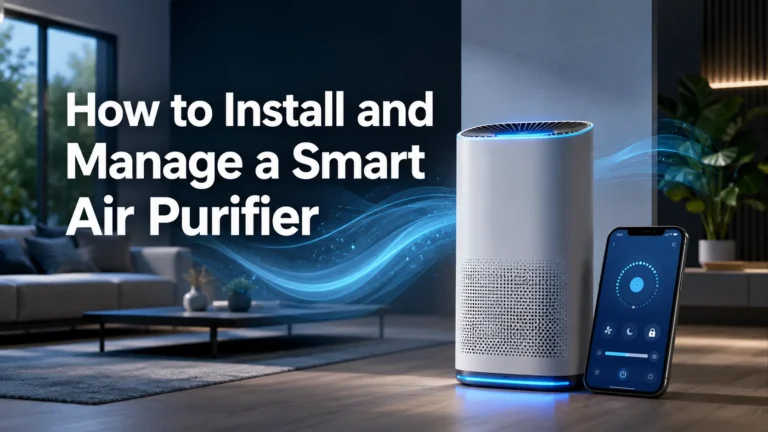
[IMAGE PLACEHOLDER 1]
Placement: After the section explaining CADR and HEPA filtration.
Purpose: Helps readers visually understand what a large room air purifier looks like in a modern living room.
Caption: A large room air purifier should be sized for the actual space, not just the product label.
Alt Text: Air purifier for large rooms placed in a modern living room with clean airflow space.
Image Prompt: Realistic premium Tech & Gadget blog image showing a sleek white air purifier in a spacious modern living room, bright natural light, clean furniture, no people, no logo, no watermark, professional home appliance photography style.
Recommended Size: 1200×675 px
Suggested File Name: air-purifier-for-large-rooms-living-room.jpg
Suggested Surrounding Text: Place the purifier where it has enough open space to pull in air and push clean air back into the room.
Air Changes per Hour: Why It Matters
Air changes per hour, often called ACH, means how many times the purifier can filter the air in a room within one hour. More air changes usually mean faster cleaning.
For everyday dust and allergy control, many homeowners look for several air changes per hour. For smoke, heavy pollen, or pet dander, faster air cleaning may be useful. This is why a purifier that technically “covers” 800 square feet may still feel weak if it only cleans that space slowly.
Simple rule: If you want quieter performance, buy more power than the minimum. A stronger purifier can often run on a lower speed while still cleaning effectively.
Best Placement for a Large Room Air Purifier
Placement can make a big difference. Even a strong purifier will not work well if it is blocked behind furniture or pushed tightly into a corner.
Use these placement tips:
- Keep several inches of open space around the intake and outlet vents.
- Place it near the area where pollutants are common, such as near a pet area or main seating zone.
- Avoid hiding it behind sofas, curtains, cabinets, or large plants.
- Keep it on a stable surface if it is a tabletop model.
- Do not place it where children or pets can easily knock it over.
ENERGY STAR also recommends reading the product manual and keeping airflow unobstructed, especially around curtains and furniture. This is a small step, but it can improve real-world performance.
Air Purifiers for Pets, Allergies, Dust, and Smoke
For Pets
If you have cats or dogs, look for a purifier with a washable pre-filter and a true HEPA filter. The pre-filter captures larger hair and lint before they reach the main filter. This can help extend filter life.
An air purifier can reduce airborne pet dander, but it will not remove pet hair from carpets, furniture, or bedding. You still need regular vacuuming and cleaning.
For Allergies
For pollen, dust mites, and dander, prioritize true HEPA filtration and proper room size. Keep windows closed during high pollen days, run the purifier longer, and replace filters on schedule.
For Dust
An air purifier can reduce floating dust, but it cannot stop dust from settling completely. Dust comes from fabric, skin cells, outdoor air, pets, and foot traffic. A purifier works best as part of a cleaning routine.
For Smoke
Smoke is harder to manage because it includes fine particles and odors. Look for strong smoke CADR and a meaningful carbon filter. During wildfire smoke events, run the purifier continuously and keep outdoor air leaks as low as practical.
Noise Level: Do Not Ignore It
Large room air purifiers move more air, so they can be louder on high speed. This is normal. The problem is when a purifier must run on high all the time just to keep up.
For bedrooms, offices, and TV rooms, check noise ratings if available. Many models have sleep mode, but sleep mode often reduces fan speed. That means less air cleaning.
Best choice: Buy a purifier powerful enough for the room so you can run it on medium or low most of the time.
Filter Replacement Cost and Maintenance
The purchase price is only part of the cost. Replacement filters can become expensive, especially for large room models.
Before buying, check:
- How often the HEPA filter needs replacement.
- How much the replacement filter costs.
- Whether the carbon filter is separate or combined with the HEPA filter.
- Whether the pre-filter is washable.
- Whether genuine filters are easy to find.
Cheap off-brand filters may fit the machine but perform poorly. Some can reduce airflow or fail to seal properly. For allergy, smoke, or pet use, filter quality matters.
Energy Use: Large Purifiers Can Run All Day
Many homeowners run air purifiers for long hours, especially during allergy season, wildfire smoke, or heavy pet shedding. This makes energy use important.
ENERGY STAR notes that room air cleaners can use a meaningful amount of electricity when operated continuously. A more efficient model may cost more upfront but save money over time.
Look for:
- ENERGY STAR certification.
- Auto mode with a reliable air quality sensor.
- Efficient CADR-to-watt performance.
- Timer settings if you do not need 24-hour operation.
Are Smart Features Worth It?
Smart features can be useful, but they should not replace core performance. A purifier with weak CADR and a nice app is still a weak purifier.
Helpful smart features include:
- Air quality sensor with automatic fan adjustment.
- Filter life indicator.
- App control for scheduling.
- Quiet night mode.
- Child lock or pet lock.
Less important features include colorful lights, voice control you may never use, and decorative modes that do not improve filtration.
Expert Tip:
Choose the air purifier by CADR and filter quality first, then compare smart features. A strong basic purifier usually beats a stylish smart model that is too small for the room.
When to Choose a Larger Air Purifier or Ask an Indoor Air Quality Professional
Most homeowners can choose a large room air purifier by checking square footage, CADR, HEPA filtration, and filter cost. But some situations need a bigger solution or professional advice.
Choose a larger purifier or multiple units if:
- Your room has high ceilings.
- The area connects to a kitchen, hallway, or open staircase.
- You have multiple pets.
- You are dealing with wildfire smoke or frequent smoke exposure.
- The purifier must run on high all day to make a difference.
Ask an indoor air quality professional if you notice persistent mold smells, moisture problems, chemical odors, carbon monoxide concerns, or symptoms that do not improve. The CDC guidance on improving air cleanliness explains that filtration can come from central HVAC systems or portable room air cleaners, but some building-related issues need more than a plug-in appliance.
Safety warning: Do not use an air purifier as a substitute for smoke alarms, carbon monoxide alarms, mold remediation, proper ventilation, or medical advice.
Ozone and Electronic Air Cleaners: Be Careful
Some air cleaners use ionizers, ozone generation, or other electronic technologies. These can be confusing for buyers because they are often marketed with strong claims.
For most homes, a mechanical filter-based purifier with HEPA and carbon filtration is the safer, simpler choice. If you are considering an electronic air cleaner, check whether it meets safety rules for ozone emissions. The California Air Resources Board certified air cleaning device list is one resource homeowners can use to check air cleaner certification status.
Important: Avoid any product that intentionally produces ozone for occupied living spaces. Ozone can irritate the lungs and is not something you want to breathe indoors.
[IMAGE PLACEHOLDER 2]
Placement: After the section about placement, maintenance, or buying mistakes.
Purpose: Shows readers the correct and incorrect way to place a large room air purifier.
Caption: Proper placement helps a large room air purifier move air without blocked intake or outlet vents.
Alt Text: Large room air purifier placement guide showing open airflow in a home living room.
Image Prompt: Realistic comparison-style Tech & Gadget image showing a modern air purifier correctly placed in open space in a living room, with subtle visual airflow lines, clean bright home interior, no people, no logos, no watermark, professional editorial style.
Recommended Size: 900×600 px
Suggested File Name: large-room-air-purifier-placement-guide.jpg
Suggested Surrounding Text: Even the best purifier performs poorly when the airflow is blocked by furniture or curtains.
Common Warning Signs Your Air Purifier Is Too Small
A purifier that is too small may still turn on, make noise, and move some air. But it may not clean the room effectively.
Watch for these signs:
- The room still smells stale after several hours of use.
- Dust builds up quickly on surfaces.
- Allergy symptoms are worse in that room compared with smaller rooms.
- The unit needs to run on high speed constantly.
- The air quality sensor stays poor for long periods.
- Pet odors return quickly after cleaning.
If this happens, check the filter first. If the filter is clean and properly installed, the purifier may not have enough CADR for the room.
Common Mistakes Homeowners Should Avoid
- Buying only by square footage: Always check CADR, not just room coverage claims.
- Choosing a purifier that is too small: Large rooms need stronger airflow.
- Ignoring filter cost: A cheap machine can become expensive if filters cost too much.
- Blocking the vents: Curtains, furniture, and walls can reduce performance.
- Confusing humidifiers with air purifiers: A humidifier adds moisture. An air purifier filters airborne particles. They are not the same product.
- Expecting it to clean surfaces: Air purifiers help with airborne particles, not dust already settled on furniture.
- Trusting “HEPA-like” claims too quickly: Look for true HEPA or verified filtration details.
- Forgetting maintenance: A dirty filter can reduce airflow and performance.
How to Choose the Right Air Purifier for a Large Room
Use this simple buying process before you spend money:
- Measure the room. Know the square footage before comparing models.
- Check CADR. Make sure the purifier has enough clean air output for the space.
- Choose true HEPA. This is important for dust, pollen, and pet dander.
- Add carbon if odors matter. This helps with pets, cooking, and smoke smells.
- Check noise ratings. Especially for bedrooms, offices, and TV rooms.
- Review filter prices. Calculate the yearly maintenance cost.
- Check safety features. Avoid ozone-producing products for normal home use.
- Buy slightly more capacity if unsure. This gives better performance at lower fan speeds.
Large Room Air Purifier Feature Checklist
| Feature | Why It Matters | What to Look For |
|---|---|---|
| CADR | Shows how fast the purifier delivers clean air | Match CADR to room size and ceiling height |
| True HEPA Filter | Helps capture fine particles | Clear true HEPA or verified filtration claim |
| Carbon Filter | Helps reduce odors and some gases | Useful for pets, cooking, and smoke smells |
| Noise Level | Affects comfort in bedrooms and living rooms | Quiet low/medium settings and strong high setting |
| Filter Cost | Impacts long-term ownership cost | Easy-to-find filters at reasonable prices |
| Energy Efficiency | Important for daily use | ENERGY STAR certification or efficient operation |
| Smart Sensor | Can adjust fan speed automatically | Useful, but not more important than CADR |
FAQs
What size air purifier do I need for a large room?
Measure your room first, then choose a purifier with enough CADR for that square footage. For a 500-square-foot room, a CADR around 325 CFM is a practical starting point. Choose more power for high ceilings, open layouts, pets, or smoke.
Is a HEPA air purifier good for large rooms?
Yes, a HEPA air purifier can be good for large rooms if it has enough airflow and CADR. The filter matters, but the purifier also needs a strong fan to move clean air through the full space.
Where should I place an air purifier in a large room?
Place it where airflow is not blocked. Keep it away from curtains, walls, and large furniture. A central location or a spot near the main pollution source, such as a pet area, often works well.
Can an air purifier help with pet hair and pet odors?
It can help with airborne pet dander and some odors, especially if it has a pre-filter, true HEPA filter, and activated carbon filter. It will not remove pet hair already on floors, sofas, or bedding.
How often should I replace air purifier filters?
Most filters need replacement every few months to one year, depending on the model, use level, air quality, and pets. Always check the manual and filter indicator. Heavy dust, smoke, or pet dander can shorten filter life.
Do air purifiers use a lot of electricity?
Some large air purifiers can use noticeable electricity if they run all day. Energy-efficient models may cost less to operate. Look for ENERGY STAR certification and use auto mode when appropriate.
Can one air purifier clean an open floor plan?
One powerful purifier may help in an open floor plan, but performance depends on square footage, ceiling height, layout, and airflow. For very large or divided spaces, two purifiers may work better than one undersized unit.
Conclusion
The best air purifier for large rooms is not always the most expensive or the most stylish. It is the one that fits your room size, has enough CADR, uses reliable filtration, runs at a comfortable noise level, and has replacement filters you can afford.
For most homeowners, a true HEPA purifier with strong CADR, activated carbon for odors, efficient energy use, and smart placement will deliver the best results. Avoid vague marketing claims, check real performance numbers, and think about long-term filter cost before buying.
If your room has serious smoke, moisture, mold, chemical odors, or ventilation problems, do not rely on an air purifier alone. Fix the source of the problem and get professional help when needed. For everyday dust, pets, pollen, and cleaner indoor air, a properly sized large room air purifier can be a smart and practical home gadget upgrade.