Best Rechargeable Fan Solar Options for Cool Savings
The best rechargeable fan solar option is the one with enough battery life, realistic solar charging, and airflow that matches your space. For most buyers, a mid-size model with wall charging backup offers the best balance of value and flexibility.
If you want backup cooling without leaning on the grid, a rechargeable fan solar setup can be a smart buy. The best options balance battery size, solar input, airflow, and portability so you get useful runtime when the power goes out or when you need a quiet fan outdoors.
- Battery first: Runtime depends on capacity, speed setting, and battery health, not just the headline spec.
- Solar is supplemental: Charging speed changes with sun angle, clouds, and panel placement.
- Match the use case: Compact fans suit personal cooling; mid-size fans fit rooms; larger models suit outages and.
- Check the manual: Verify connector type, wattage limits, included accessories, and storage guidance before buying.
Best Rechargeable Fan Solar Options for Cool Savings: What to Buy in 2025
Quick answer: the best rechargeable fan solar models balance battery capacity, solar input, airflow, and portability for off-grid cooling
For most buyers, the best rechargeable fan solar choice is the one that can hold a charge long enough for your routine, accept solar charging at a realistic rate, and move enough air without being too loud. If you are comparing models, focus on battery capacity, charging flexibility, and whether the fan is meant for personal cooling, a room, or emergency use.
Who this guide is for: homeowners, renters, campers, and backup-power shoppers
This guide is for anyone who wants a fan that can keep working when outlets are limited or unavailable. That includes apartment renters, homeowners preparing for outages, campers, RV users, students in shared rooms, and shoppers building a practical emergency kit.
- Check the battery type, charging method, and whether the solar panel is included or sold separately.
- Confirm the fan size, airflow style, noise level, and whether it is meant for a desk, room, or outdoor use.
- Review the manual for adapter limits, cable compatibility, warranty terms, and storage guidance.
How a Rechargeable Solar Fan Works and Why It Saves Money
Solar panel input, battery storage, and DC fan operation explained
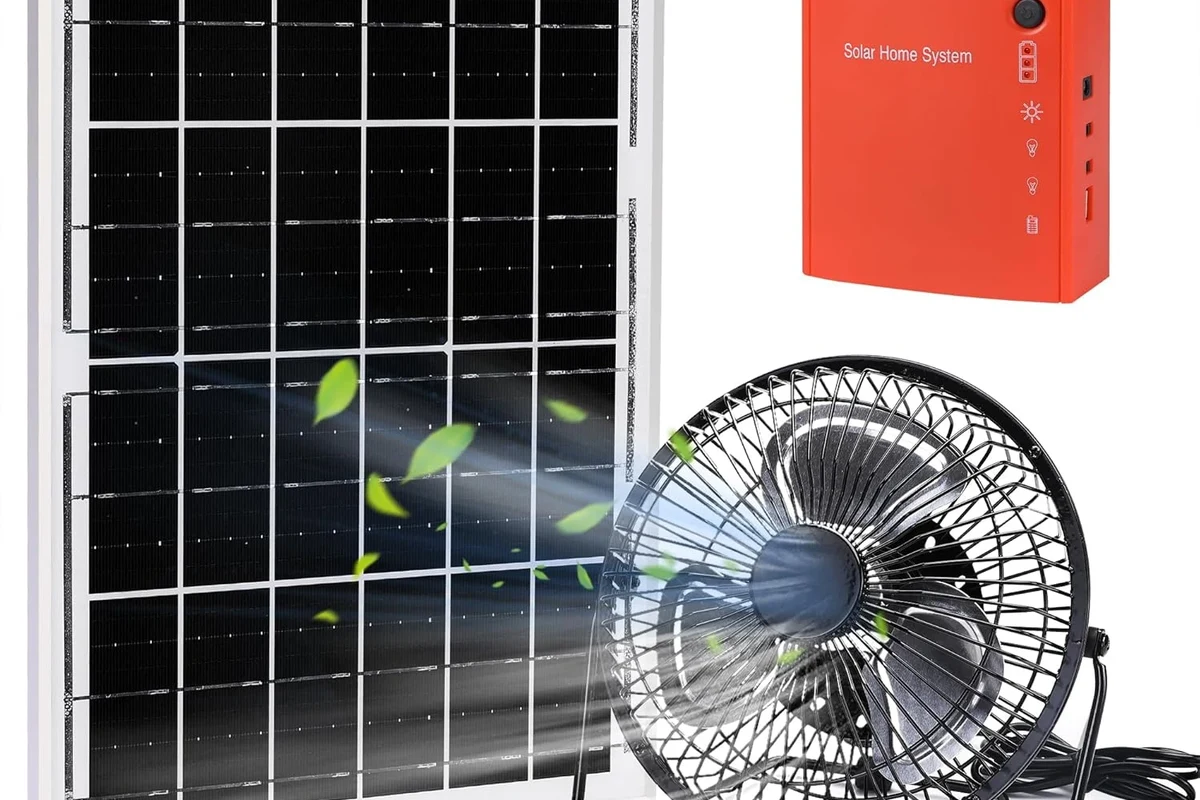
A rechargeable solar fan usually combines three parts: a solar panel, an internal battery, and a low-power DC fan motor. The panel collects sunlight, the battery stores that energy, and the DC motor uses it efficiently so the fan can run without continuous wall power.
Some models use an integrated panel, while others rely on a detachable panel or a separate solar charging kit. In both cases, the real-world result depends on panel placement, sunlight quality, battery size, and how much power the fan needs at each speed.
Why these fans can reduce grid use during outages, summer peaks, and outdoor use
These fans can lower electricity use because they shift part of the charging load away from the grid, especially if you charge them during sunny hours. They are also useful during outages, when a fan can make a room feel more comfortable without needing a generator or a large power station.
For everyday use, the savings are usually modest but practical. The bigger value is flexibility: you can keep air moving in places where an outlet is inconvenient, unavailable, or expensive to run all day.
Where they fit best: bedrooms, patios, garages, RVs, and emergency kits
Rechargeable solar fans fit best in spaces where cooling needs are localized. Bedrooms, patios, garages, workshops, RVs, and emergency kits are all strong use cases because they do not require whole-home cooling to be useful.
DC fans often use less power than similar AC fans, which is one reason they are common in battery-powered and solar-friendly designs.
Key Specs to Compare Before You Buy
Battery capacity, runtime, and recharge time
Battery capacity is one of the most important specs, but it does not tell the whole story. Runtime depends on fan speed, oscillation, battery health, and whether the manufacturer’s claim is based on the lowest setting or a more realistic mixed-use pattern.
Recharge time matters just as much. A large battery can be frustrating if it takes too long to refill from solar or from a wall adapter, especially when you need the fan ready again before evening.
Solar panel wattage, charging efficiency, and real-world weather limits
Solar panel wattage gives you a starting point, but actual charging speed varies with sun angle, cloud cover, heat, shading, and panel quality. A panel that looks powerful on paper may charge slowly if it is small, poorly positioned, or used in weak sunlight.
If a model includes a detachable panel, check the cable length and connector type. For buyers comparing solar charging gear more broadly, our guide to whether solar power banks are worth it for everyday use can help you think through realistic charging expectations.
Fan size, airflow, speed settings, oscillation, and noise level
Fan size and blade design affect how much air reaches you, but the best choice depends on where you plan to sit or sleep. Personal fans can be compact and quiet, while room fans usually need more airflow and may include oscillation to spread air more evenly.
Speed settings are useful because they let you trade airflow for battery life. Noise level also matters more than many shoppers expect, especially for bedrooms, study spaces, and overnight outage use.
Build quality, carry handle, weight, and storage footprint
A rechargeable solar fan should be easy to move, but not so light that it feels flimsy. Look for a sturdy carry handle, a stable base, and a shape that fits the shelf, closet, or emergency bin where you plan to store it.
If you plan to move the fan between indoor and outdoor spaces, prioritize a base that feels stable on uneven surfaces and a design that keeps the controls easy to reach.
Wired charging options, cable quality, connector type, and safe wattage limits
Most rechargeable fans can also charge from a wall adapter, USB port, or power bank, but the exact input type varies by model. Check the connector type, the included cable quality, and the rated charging limits in the manual so you do not exceed what the unit is designed to accept.
Do not assume every USB-C cable, adapter, or solar panel is a safe match. Use only the charging method and wattage range listed by the manufacturer, and stop using any cable that runs hot, frays, or feels loose.
Best Rechargeable Fan Solar Types for Different Needs
Compact desk and bedside models for personal cooling
Compact fans are best when you want a small, quiet breeze aimed at one person. They are a good fit for desks, nightstands, dorm rooms, and travel bags, especially when portability matters more than room-wide airflow.
These models usually trade power for convenience, so they are not the best pick if you want to cool a large shared room.
Mid-size oscillating fans for rooms and shared spaces
Mid-size fans are the balanced option for many households because they offer more airflow without becoming too bulky. Oscillation can help move air across a bedroom, living room, or small apartment more evenly, which makes them more practical for everyday use.
Most buyers should start with a mid-size model if they want a good mix of runtime, airflow, and portability. The trade-off is that it may be heavier and louder than a compact personal fan.
High-capacity emergency and outdoor models for longer runtime
High-capacity models are worth considering if outages are a serious concern or if you need a fan for long stretches outdoors. They often have larger batteries, broader speed ranges, and more charging options, but they also tend to cost more and take up more space.
If your main goal is backup cooling, look for a model that is easy to recharge from both solar and wall power so you are not dependent on one method.
Portable kits with detachable panels versus integrated solar designs
Detachable-panel kits are usually more flexible because you can place the panel where sunlight is strongest while keeping the fan in the shade. Integrated solar designs are simpler and sometimes more convenient, but they may charge more slowly or need more direct exposure.
If you are also comparing solar charging accessories, our roundup of solar power bank options and the guide on solar power banks for camping can help you decide whether a separate charging setup makes more sense.
| Option | Best For | Key Consideration |
|---|---|---|
| Compact desk fan | Personal cooling | Small size, lower airflow, easy storage |
| Mid-size oscillating fan | Bedrooms and shared rooms | Balanced airflow and runtime |
| High-capacity outdoor model | Outages and camping | More weight, longer recharge time |
Real-Use Benefits and Trade-Offs You Should Expect
Lower energy cost, better outage readiness, and quieter DC operation
The biggest benefit is flexibility. A rechargeable solar fan can help you avoid running a plug-in fan all day, keep air moving during outages, and provide cooling in places where access to outlets is limited.
Many DC-based models are also quieter than larger plug-in fans, which can make them more appealing for sleep, study, or backup use overnight.
Limitations: slower solar charging, reduced power on cloudy days, and lower airflow than plug-in fans
The main limitation is that solar charging is usually slower than wall charging. Cloud cover, short winter days, indoor window placement, and poor panel angle can all reduce charging performance.
Also, many battery-powered fans cannot match the airflow of a strong plug-in fan. That is not a defect; it is the normal trade-off for portability and off-grid operation.
Noise, durability, and battery aging as the main long-term trade-offs
Over time, battery capacity will decline, and that affects runtime. Durability also depends on how often the fan is moved, stored, charged, and cleaned, plus whether the housing and ports are protected from dust and moisture.
- Solar charging is best treated as backup or supplemental charging, not always as the fastest option.
- Battery size and fan speed together determine real runtime.
- Durability and battery aging matter as much as the original spec sheet.
Safety Guide: Using Rechargeable Solar Fans Without Risk
Inspect batteries, ports, and cables for swelling, heat, fraying, or corrosion before use
Before each season of use, inspect the battery area, charging ports, and cables for visible damage. Swelling, corrosion, unusual heat, or a loose port are signs to stop using the fan and check the manufacturer’s guidance.
Stop using damaged electronics, swollen batteries, frayed cables, overheating chargers, or unstable appliances and follow the manufacturer’s guidance.
Follow rated wattage and charging limits for adapters, panels, and power banks
Use only adapters, solar panels, and power banks that fall within the fan’s stated charging limits. If the manual gives a maximum input rating, treat that as the ceiling rather than a suggestion.
Keep units dry, ventilated, and away from direct heat or flammable materials
Keep the fan and its charging gear away from standing water, wet floors, and direct contact with heat sources. Good airflow around the unit helps prevent overheating, especially during long charging sessions.
When to replace batteries, cords, or the whole unit
Replace cords if they are damaged, loose, or inconsistent during charging. If the battery no longer holds a meaningful charge, charges abnormally fast, or shows swelling, the safest path is usually to replace the battery only if the manufacturer supports it, or replace the whole unit if it does not.
Setup, Maintenance, and Storage Tips for Longer Battery Life
First-charge setup, solar panel placement, and best angle for charging
Follow the first-charge instructions in the manual, since some models need a full initial charge before normal use. For solar charging, place the panel where it gets the strongest available sunlight and adjust the angle if the design allows it.
Use the recommended adapter or panel and let the battery reach the level suggested in the manual.
Keep it out of shade and recheck placement as the sun moves across the day.
Cleaning blades, vents, and panels without damaging components
Use a soft, dry cloth or a gentle brush for dust on vents, blades, and solar panels. Avoid soaking the unit or using harsh cleaners unless the manual explicitly allows them.
Cleaning the panel regularly can help maintain charging performance, especially if the fan is used outdoors where dust and pollen build up quickly.
Storage guidance for off-season use, including charge level and cool, dry placement
For off-season storage, keep the fan in a cool, dry place and follow the manufacturer’s recommended storage charge if one is listed. If no guidance is provided, avoid storing it fully drained for long periods.
Common mistakes that shorten lifespan, such as deep discharge and poor cable handling
Frequent deep discharge, rough cable handling, and storing the fan in hot locations can shorten battery life. So can leaving the unit plugged in with damaged accessories or repeatedly forcing a connector that does not fit correctly.
Final Verdict: Which Rechargeable Fan Solar Option Delivers the Best Value in 2025
Best overall pick criteria for most buyers
The best overall value usually comes from a mid-size rechargeable solar fan with a reliable battery, a realistic solar input method, multiple speed settings, and a stable design. That combination gives most buyers the broadest usefulness without making the fan too large or too specialized.
Best budget choice, best for outages, and best for outdoor portability
Budget buyers should look for a simple compact model with clear charging specs and a known connector type. For outages, prioritize battery capacity, wall charging flexibility, and a design that can run quietly for long periods. For outdoor portability, choose a lighter model with a detachable panel or a charging setup that is easy to reposition.
If you want a deeper comparison of solar battery gear before deciding, our article on the most reliable solar power banks may help you compare battery-focused options with similar backup goals.
Transparent recommendation based on specs, not unsupported claims
The safest recommendation is to buy based on verified specifications, the manual, and the charging setup that fits your space. If a model does not clearly list battery details, input limits, and replacement guidance, it is better to keep looking than to guess.
A rechargeable fan solar option is best when you want practical cooling, lower grid dependence, and backup readiness in one device. Choose the model that matches your space, charging habits, and portability needs, and verify the manual before buying if the solar input or battery specs are unclear.
Frequently Asked Questions
A compact or mid-size fan is usually best for a bedroom, depending on how much airflow you want. Choose a quieter model with multiple speed settings and check the runtime claims in the manual.
They can still work, but solar charging is usually slower in cloudy conditions. For dependable use, choose a model that can also charge from a wall adapter or power bank.
Battery capacity, charging options, solar input limits, airflow, noise level, and weight are the most important specs. The best choice depends on whether you need personal cooling, room cooling, or outage backup.
Avoid deep discharge when possible, store it in a cool dry place, and follow the manufacturer’s charging instructions. Inspect the battery, ports, and cables regularly for swelling, heat, or damage.
Detachable panels are often more flexible because you can place them in stronger sunlight while keeping the fan in the shade. Built-in panels are simpler, but they may be less flexible in real-world placement.
Check the manual for battery details, connector type, charging limits, warranty terms, and storage guidance. Also confirm whether the solar panel is included or sold separately.