9 Best Wall Charger for Tesla: Top-Rated Home Chargers, Installation Tips, and Buying Guide
Affiliate disclosure: As an Amazon Associate, Gadget Makers Blog may earn from qualifying purchases. This does not change the price you pay.
Electric vehicle owners often install a wall charger to charge at home faster and more conveniently than using a standard outlet. Wall chargers deliver higher power, support scheduled charging, and can connect to apps or home energy systems. They come in hardwired or plug-in models and vary by power level, cable length, and smart features.
Buyers should focus on power (measured in kilowatts), compatibility with the Tesla model or adapter, installation type, and safety certifications. Choosing the right power level and ensuring the unit is certified and professionally installed will affect charging speed, long-term reliability, and safety. The guide below reviews top wall chargers, shows where to buy them, and explains what to look for when choosing one.
9 Best Wall Chargers for Tesla
This list shows the top wall chargers that work well with Tesla vehicles. It helps buyers compare power, ease of use, and safety to pick the best charger for their needs.
Tesla Universal Wall Connector

It is a solid choice for buyers who want a reliable, high‑power home charger that works with Tesla and most other North American EVs.
Pros
- Strong build and long cable for easy parking.
- Works with both NACS and J1772 cars, so it covers future vehicle changes.
- Adjustable amperage fits different home electrical setups.
Cons
- Higher price than many generic chargers.
- Some users report setup or support delays.
- Not all advanced app features found on other brands.
The Tesla Universal Wall Connector delivers fast Level 2 charging and a flexible plug design. It offers up to 48A output so owners get more range per hour than standard chargers.
Installation may need a qualified electrician to set amperage and breaker size. Homes with limited service might choose lower output options without rewiring.
Owners value the 24-foot cable and sturdy feel, which makes daily use easier. The device includes power management and a multi‑year residential warranty for peace of mind.
EVDANCE 40A Tesla Charger
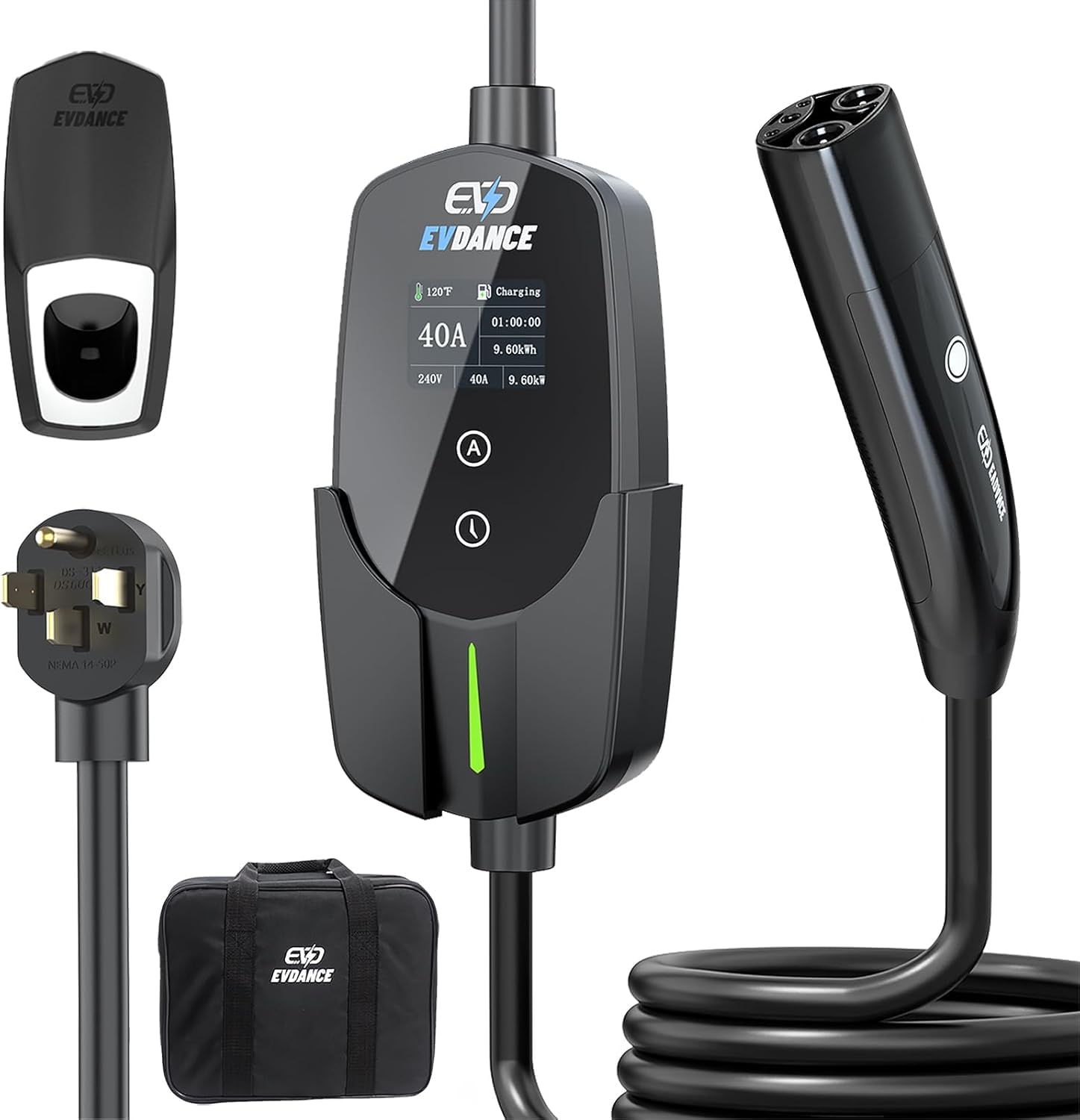
It is a strong, affordable home charger that suits Tesla owners who want faster charging and flexible settings.
Pros
- Charges faster than standard Level 1 chargers.
- Adjustable amperage and delayed start for cost savings.
- Long 25 ft cable and portable design for flexible use.
Cons
- Requires a NEMA 14-50 outlet or adapter.
- No dedicated mobile app for remote control.
- One-year warranty may feel short to some buyers.
The EVDANCE charger delivers up to 40A and uses the NACS plug, so it works directly with current Tesla models. Buyers can change the charging current and set a delayed start to run during off-peak hours, which helps control home circuit load and lower bills.
A bright 2.4″ screen shows charging stats and LED lights give quick status updates. The unit claims multiple safety protections and an IP66 rating, which suggests it can handle typical outdoor use.
Its 25-foot cable and included holders and carry bag make it useful both as a wall-mounted station and a mobile charger for travel. Owners of non-NACS EVs will need a J1772 adapter to use it with other brands.
EVIQO NACS Charger
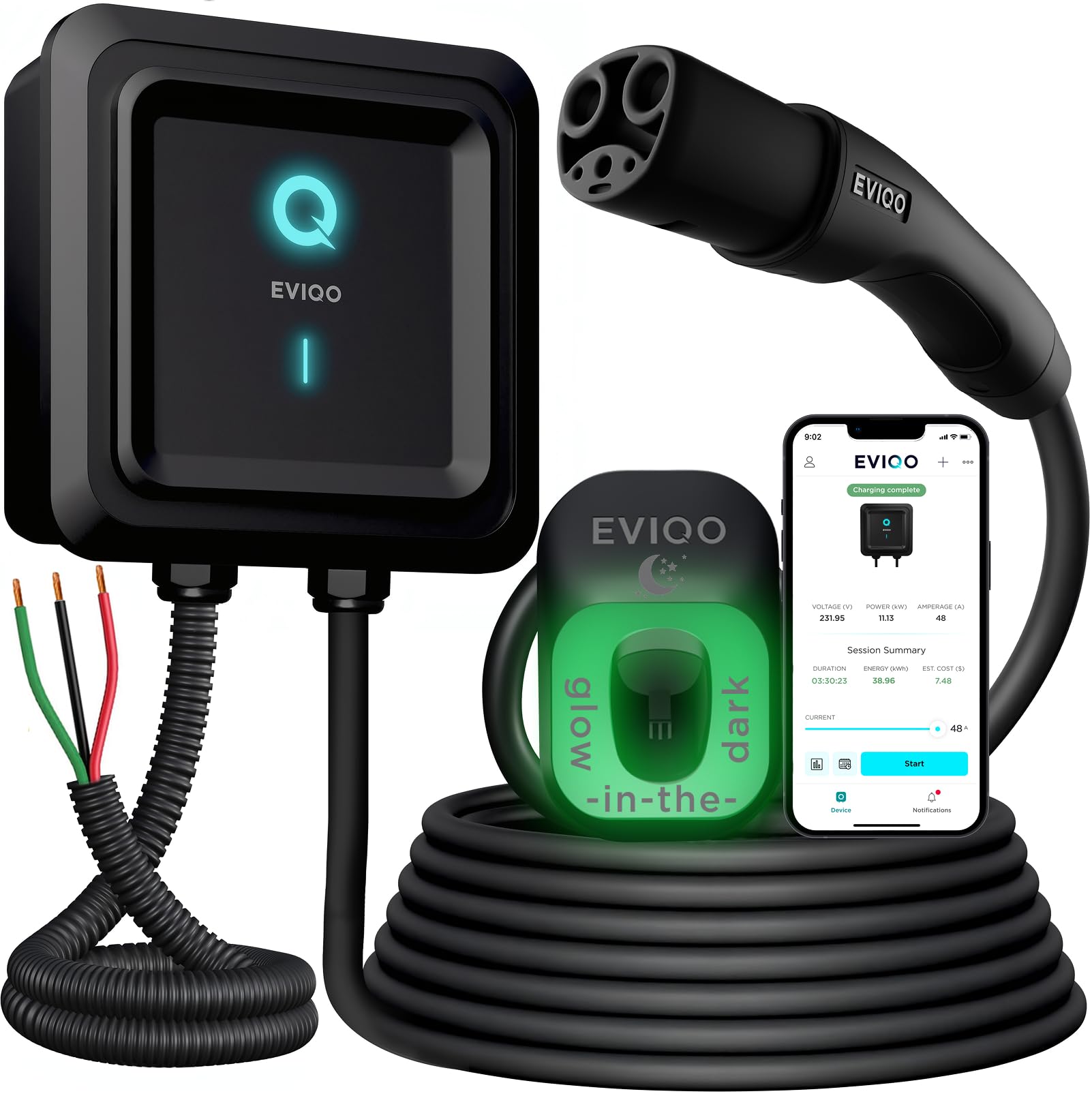
This charger is worth buying for Tesla owners who want a reliable, weatherproof Level 2 wall charger with smart app control and a long cable.
Pros
- Native NACS plug for Tesla models and adapter support for other EVs
- App control with scheduling and adjustable amperage
- Weatherproof build and glowing holster for easy night use
Cons
- Hardwired installation requires a licensed electrician
- Maximum output needs a specific circuit if set to 50A
- App needs 2.4 GHz Wi-Fi to use smart features
EVIQO targets Tesla owners who want a steady home charging solution. The charger connects directly to Tesla’s NACS port and offers flexible current settings through its app, so users can change charging speed from their phone.
The unit is built for outdoor use and includes a bright, glow-in-the-dark holster that helps find and stow the plug at night. A 25-foot cable gives plenty of reach across most garages and driveways.
Installation is hardwired and requires a proper circuit and electrician, which adds cost and planning. The app-driven features depend on a 2.4 GHz Wi-Fi network, so remote locations with weak signal may limit functionality.
Overall, it fits owners who want a capable home charger with smart features and weather protection, as long as they plan for professional installation and proper home wiring.
SEGUMA Tesla Charger (Level 1/2)
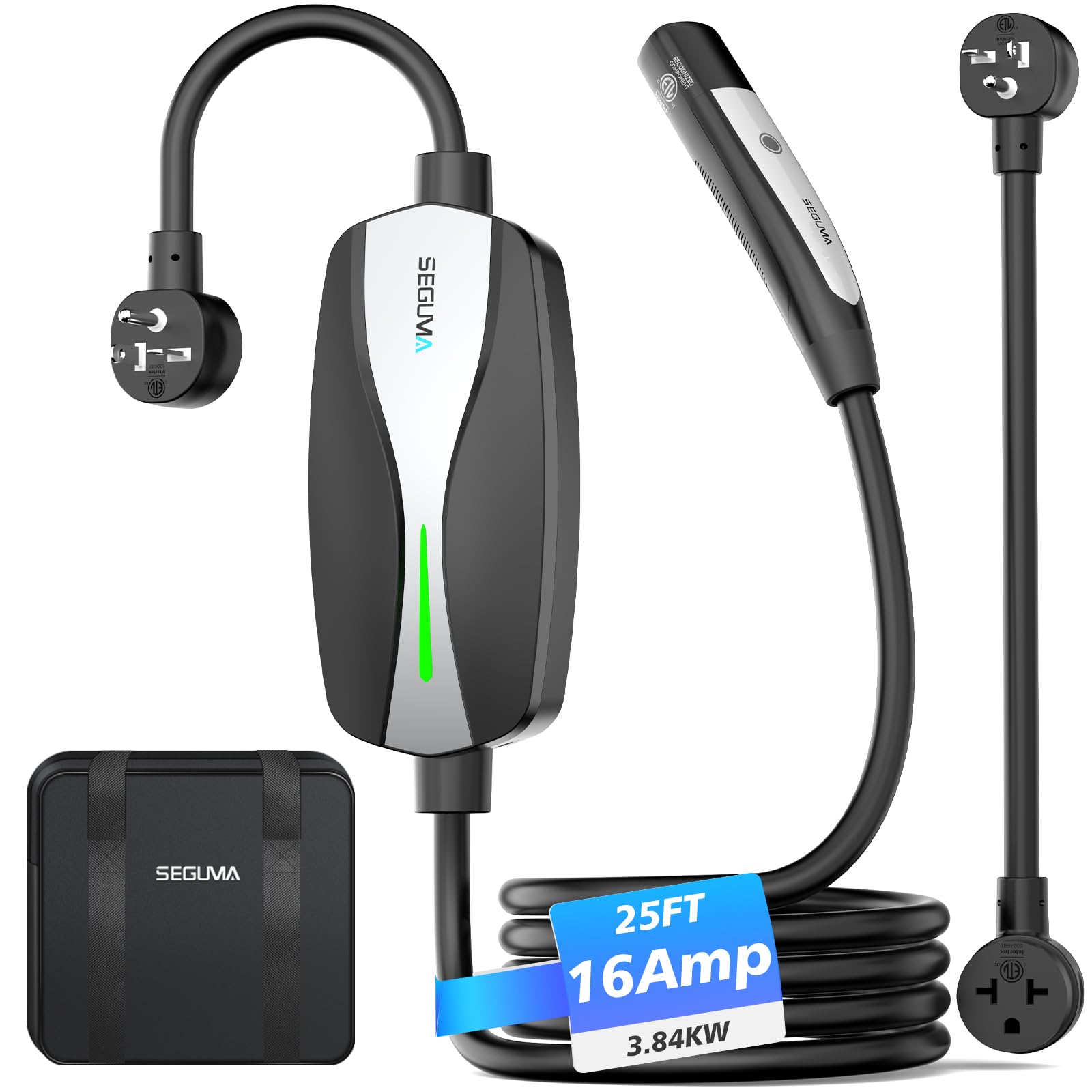
It is a solid portable option for Tesla owners who want flexible Level 1 and Level 2 charging without hardwiring.
Pros
- Works with standard Tesla NACS connector and both 120V and 240V outlets.
- Long 25 ft cable and travel bag make it easy to move between home and trips.
- Built-in safety features and LED indicators simplify monitoring.
Cons
- Slower than a dedicated hardwired Level 2 station.
- Requires the right outlet (NEMA 6-20) for full 16A power.
- Some users may want a sturdier wall-mounted solution.
The charger gives Tesla drivers a simple way to charge at home or on the road. It switches between Level 1 and Level 2 using included adapters, so it fits common outlets. LEDs show charging status at a glance.
It includes a wireless door-open button on the connector to make plugging in easier. The cable is long enough to reach typical garage and driveway locations without awkward stretching.
Safety features like overcurrent and overheating protection aim to reduce risk during use. The unit is built to be weather-resistant and ships with a carrying bag for travel convenience.
Seven Sparta Cable Holder

It is a simple, sturdy wall mount that keeps a Tesla charging cable off the floor and neatly stored, but buyers should confirm connector size before ordering.
Pros
- Keeps cable tidy and lifted off the ground
- Simple, quick installation
- Made from fire-resistant ABS plastic
Cons
- May not fit non‑US or larger international charger heads
- Mounting plate can feel a bit thin
- Not a charger — only a holder for the cable
The holder offers a clean solution for anyone who uses a Mobile Connector and wants the cable organized in a garage or parking spot. It fits common Tesla plugs used in the U.S. and secures the charger head into a notched slot so the plug stays put.
Installation takes only minutes with basic tools. The plastic build meets fireproof testing and supports heavy cables, but the small mounting plate can wobble if screws aren’t tight or if placed on weak drywall.
International users should be careful. Several buyers report the hole is too small for larger European, Australian, or other regional plugs, so check plug dimensions before buying.
Aimiler 32A NACS Home Charger
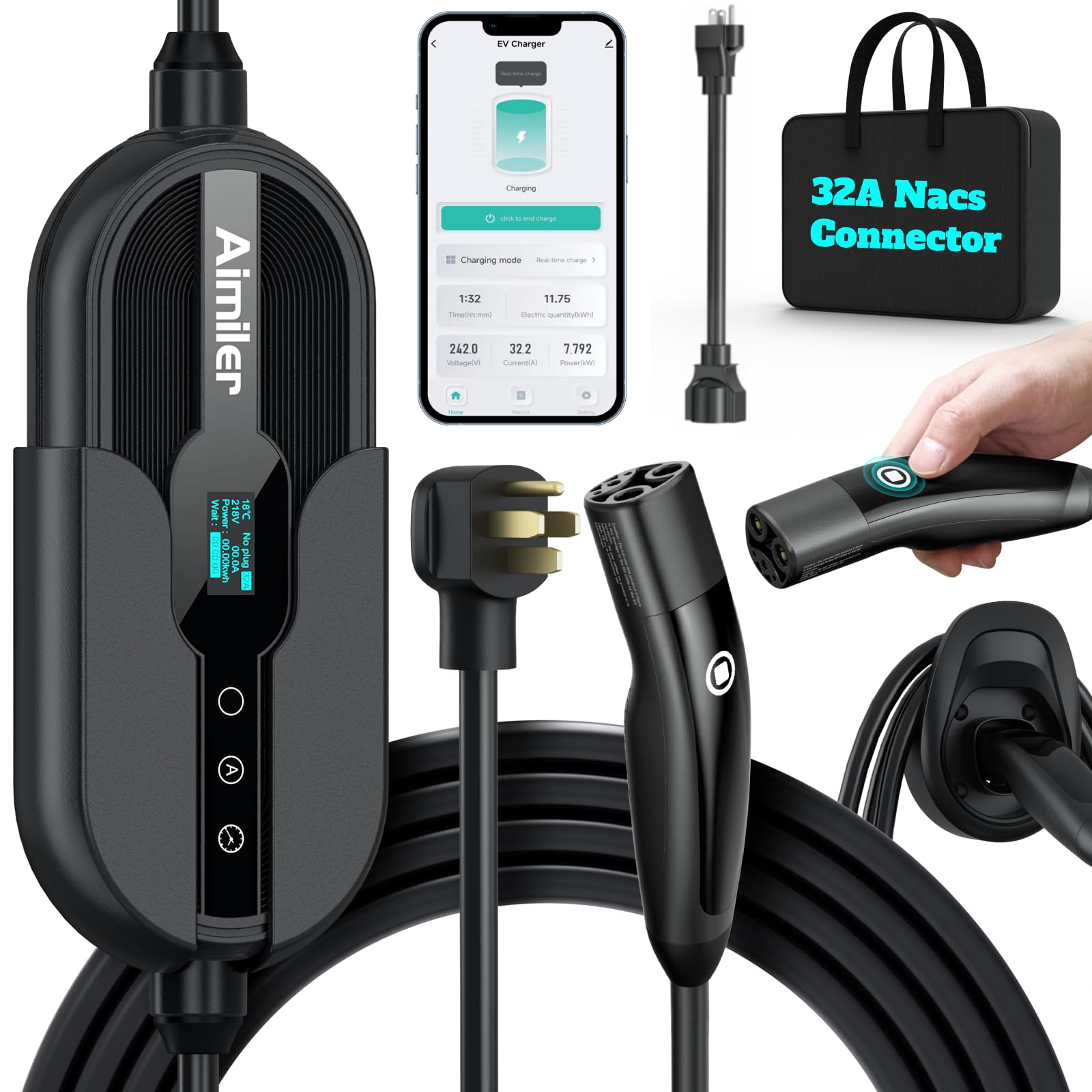
It is a solid choice for Tesla owners who want faster home charging with smart controls and a long cable.
Pros
- Fast charging up to 32A on a 40A circuit.
- Built-in Wi‑Fi app and touchscreen for scheduling and monitoring.
- Long 25 ft cable and weather-resistant housing.
Cons
- Requires NEMA 14-50 outlet or correct adapter to use 240V.
- App setup can need router set to 2.4 GHz for first connection.
- Some vehicles may need a Tesla-to-J1772 adapter for non-NACS cars.
The Aimiler unit aims to make Level 2 charging simple and flexible. It uses a NACS plug for Tesla cars and offers adjustable amperage so users can match home circuit capacity.
Its touchscreen and app let owners set charging times, view history, and change current. The charger reports basic info like amperage and input voltage and includes a factory reset option if setup stalls.
Safety features include ETL/FCC approvals and built-in anti-leakage protection so no extra GFCI breaker usually sits between the outlet and the charger. The 25 ft military-grade cable gives extra reach for garage or driveway installs.
Overall, it suits Tesla drivers who want a portable wall-mountable charger with smart features and a long cable, as long as they have or install the proper NEMA 14-50 outlet.
DREAMDASH 40A NACS Tesla Charger
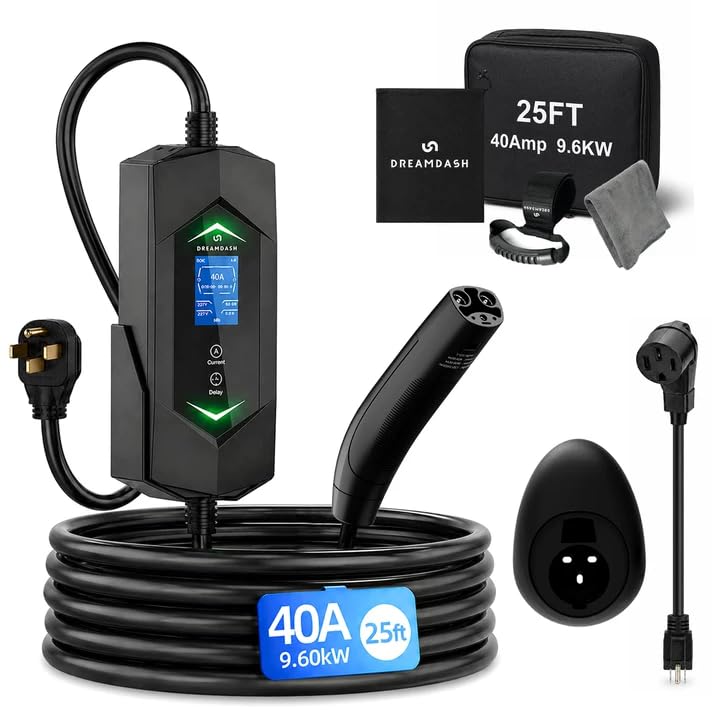
It is a solid budget-friendly Level 2 charger for Tesla owners who want faster home charging and adjustable current control.
Pros
- Fast charging up to 9.6 kW for quicker at-home top-ups
- Adjustable amps and delay timer let users match home circuits and schedules
- IP66 housing and safety protections for outdoor use
Cons
- Heavy 25 ft cable can be hard to handle
- Requires a NEMA 14-50 outlet or adapter to work
- Some buyers may prefer a known brand or broader support network
The charger uses a NACS connector and works with all Tesla models without an adapter. It offers a clear LCD touch screen to show charging data and to set current or delay timers.
Users can set charging current between 6A and 40A to avoid tripping home breakers. The unit is rated for outdoor use and includes safety features like overvoltage and short-circuit shutoff.
It comes with a 25-foot cord and a portable bag for storage. Buyers should plan for a dedicated NEMA 14-50 circuit and expect a heavy cable that takes effort to coil and clip.
Overall, it suits Tesla owners who want lower cost per kW than some OEM options and value adjustable settings and weather resistance.
ApexCharger Mach 1 NACS 48A
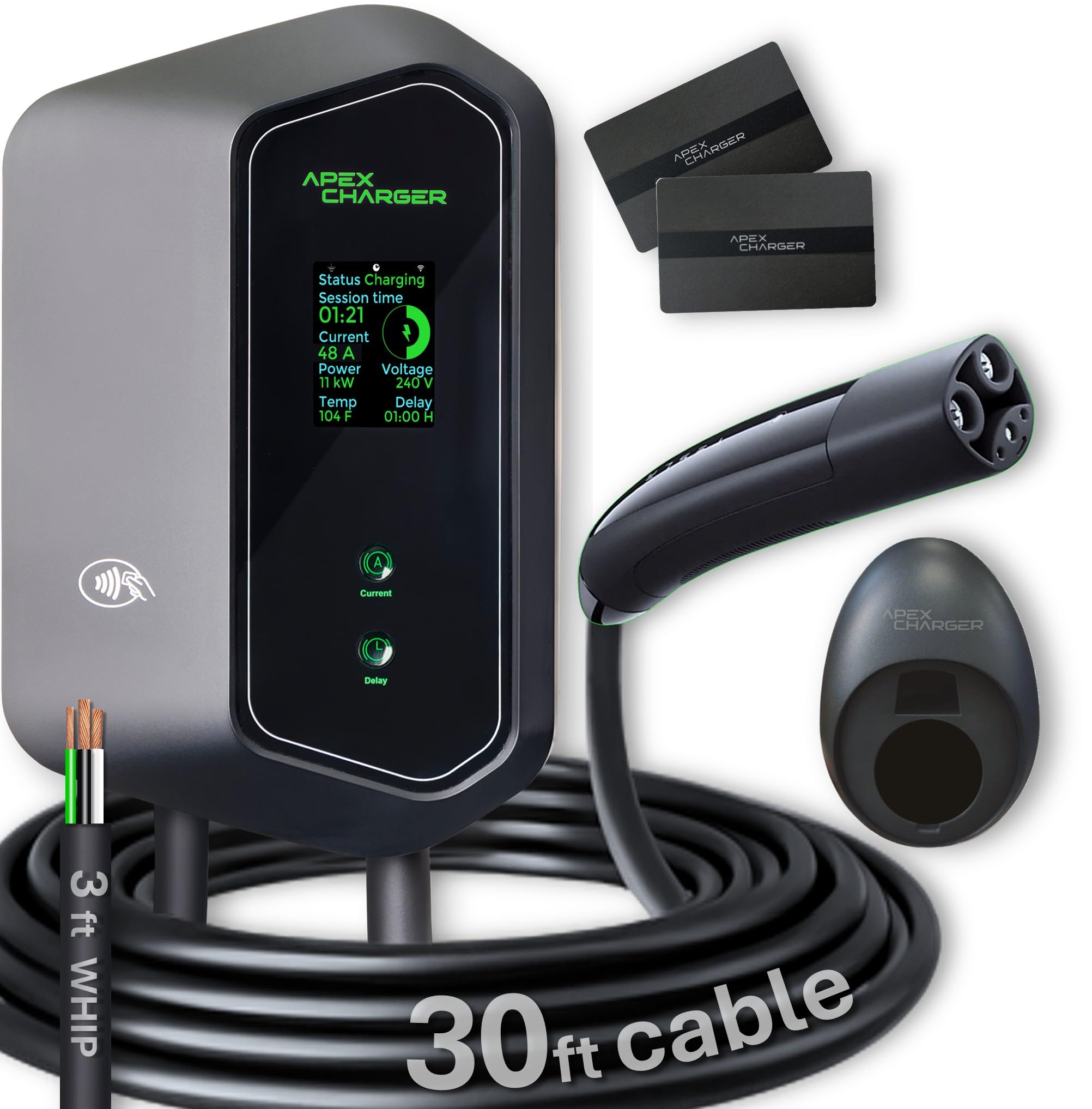
It is a solid choice for Tesla and NACS vehicles when someone wants a fast, outdoor-ready hardwired home charger.
Pros
- Fast 48A charging for quicker home fills
- Outdoor rated with theft-resistant fittings
- Smart features like Wi‑Fi, Bluetooth, and an app
Cons
- Hardwired install usually needs an electrician
- NACS-only connector limits non-NACS cars without an adapter
- Heavier unit and long cable may need sturdy mounting
The ApexCharger Mach 1 focuses on speed and durability. It delivers up to 11.5 kW on a 240V line, so charging times will be shorter than with basic Level 2 units.
It includes smart controls, a display, and two RFID cards that help with access and monitoring. Buyers get a five-year warranty and outdoor protection for driveway or parking use.
Installation requires a 60A breaker and hardwiring, which adds cost if a pro is needed. The NACS connector fits Tesla and newer NACS EVs, but other brands may need an adapter.
Overall, it suits homeowners who want a robust, smart wall charger and are prepared for a hardwired setup and NACS compatibility.
Rippleon Level 2 Charger
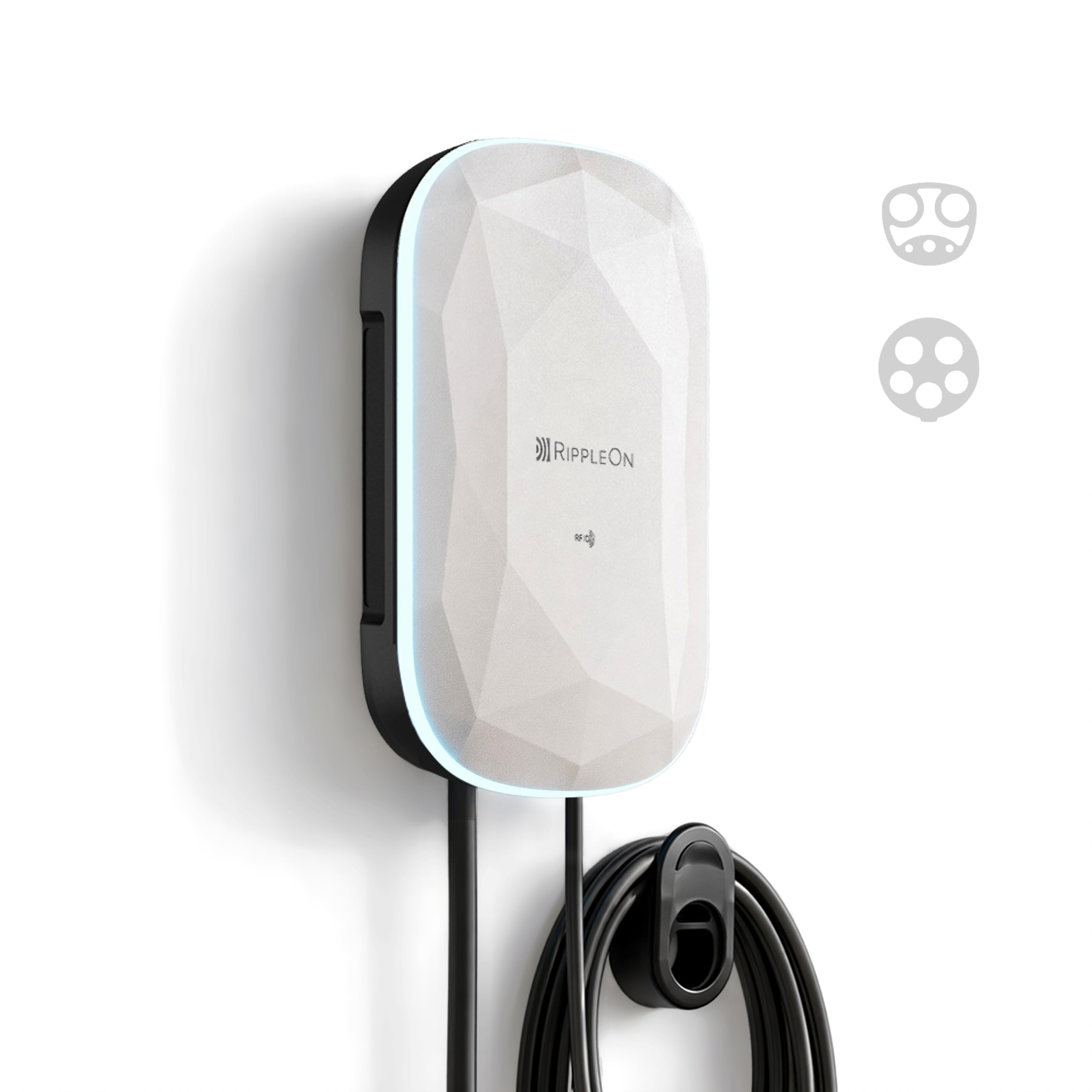
It is a solid, versatile home charger that offers fast charging, smart controls, and wide EV compatibility, making it a good buy for many Tesla owners who want a balance of speed and features.
Pros
- Fast charging speed for shorter top-up times.
- Smart app and scheduling to save on energy costs.
- Includes Tesla adapter and works with many EVs.
Cons
- Some users report mixed customer support experiences.
- May require professional installation for full power.
- A few reports of compatibility issues with specific plug types.
The Rippleon unit aims to deliver strong charging performance with a 48A option and a plug or hardwired install choice. It includes Wi‑Fi app control and an RFID option for simple access control.
Owners can schedule charging to use cheaper off‑peak electricity and monitor energy use from the app. The 25ft cable and weatherproof rating let it sit in a garage or outside without fuss.
Despite good safety certifications, professional installation is advised to reach the highest amperage safely. Some buyers noted setup or support hiccups, so expect to check local installer requirements before purchase.
Buying Guide
Choose a charger that matches the vehicle’s maximum charging rate and the home’s electrical capacity. Verify the circuit breaker size and panel space before buying.
Look for charging speed, measured in kW or amps. Faster chargers reduce charging time but may need a 240V circuit and higher amperage.
Consider connector type and cable length. A longer cable adds reach. Confirm the plug fits the car without adapters.
Check for installation requirements and whether a licensed electrician is needed. Installation costs can add significantly to the total price.
Evaluate safety features like ground-fault protection, overcurrent protection, and a weatherproof enclosure for outdoor use. These reduce risk and improve reliability.
Think about smart features such as scheduling, Wi‑Fi, and app control. They help manage charging during off‑peak hours and monitor energy use.
Look at build quality and warranty. A robust casing and a multi‑year warranty indicate durability. Warranties vary, so compare terms.
Compare costs including charger price, installation, and possible panel upgrades. Balance upfront cost with long‑term convenience and energy savings.
Use a simple checklist before purchase:
- Confirm vehicle charging rate
- Verify circuit capacity and panel space
- Decide on cable length and mounting location
- Check safety ratings and weather resistance
- Compare warranty and total cost
They should get estimates from electricians and prioritize safety and compatibility over low price.
Editor’s Choice
The editor picks the NEMA 14-50 Tesla Wall Connector as the top choice for most owners. It balances charging speed, reliability, and ease of installation. It works well for daily use and long trips.
Key reasons for the selection:
| Feature | Why it matters |
|---|---|
| Charging power | Up to 44 miles/hour on most Tesla models for faster home charging. |
| Build quality | Durable housing and weather resistance for garage or outdoor use. |
| Smart features | Wi‑Fi and load sharing let users monitor and manage charging. |
| Installation | Compatible with common 240V circuits; many electricians are familiar with it. |
The editor notes the Connector fits single-car and multi-car homes with adjustable power settings. It supports firmware updates and occasional remote diagnostics. That helps keep charging efficient and secure.
They also highlight cost and availability. The unit costs more than basic chargers but offers better long-term value. Replacement parts and support are widely available, which simplifies maintenance.
Where to Buy – Best Amazon Deals
They can find many Tesla-compatible wall chargers on Amazon with fast shipping and easy returns. Amazon often lists Tesla Wall Connector and popular third-party Level 2 chargers from brands like JuiceBox, ChargePoint, and Lectron.
Look for deals by filtering Prime-eligible items and sorting by “Price: Low to High” or “Top Rated.” Reviews and answered questions help confirm real-world performance and fit for specific Tesla models.
Buyers should check for included NEMA plugs, cable length, and whether the charger is hardwired or comes with a NEMA 14-50 adapter. These details impact installation costs and station placement at home.
Use Amazon’s coupons, daily deals, and Lightning Deals to save on higher-priced units. Warranty information is often in the product description, but they should confirm manufacturer warranty and return policy before purchase.
Compare similar models using a quick checklist:
- Price and discounts
- Power output (amps/kW)
- Cable length and connector type
- Warranty and support
They should also verify seller ratings and look for listings sold or fulfilled by Amazon to reduce risk of counterfeit or missing accessories.
Conclusion
The best wall charger for a Tesla depends on charging speed, budget, and installation limits. Buyers should match charger power to the car’s onboard capacity and home electrical panel.
Many owners choose a 48–48-amp hardwired unit for faster home charging. Others prefer a 40-amp or portable plug-in model for lower cost and easier installation.
Safety features matter: look for UL listing, ground-fault protection, and a reliable cable. Smart features like Wi‑Fi, scheduling, and load management add convenience and may save money on energy bills.
Installers should verify circuit capacity and local code before buying. A licensed electrician can recommend the right breaker size and wiring to avoid problems.
A final check list:
- Confirm Tesla’s onboard charger amps.
- Choose charger amperage that fits the electrical panel.
- Verify safety certifications.
- Decide between hardwired or plug-in models.
Buyers who weigh these factors will find a charger that fits their needs, home, and budget.
FAQs
Who can install a Tesla wall charger?
A licensed electrician should install the charger. They check the home’s electrical panel and run the right wiring. This keeps the installation safe and code-compliant.
How fast will a wall charger charge a Tesla?
Charging speed depends on the charger amperage and the Tesla model. A 48A charger adds about 30–44 miles of range per hour for most models. Lower amperage chargers add range more slowly.
Is a wall charger compatible with non‑Tesla EVs?
Some Tesla wall chargers work with other EVs using an adapter. Level 2 chargers with a J1772 plug work with most EVs natively. Always check plug type and adapter requirements before buying.
What power circuit is needed?
Most home chargers use a 240V circuit. Common breakers are 40A–60A depending on desired charging current. The electrician will size the circuit to match the charger and local code.
Are there safety features to look for?
Look for ground-fault protection, temperature monitoring, and overcurrent protection. Built-in cable management reduces tripping hazards. UL or ETL listing shows the unit met safety tests.
Should one choose a hardwired or plug‑in wall charger?
Hardwired chargers are more permanent and often allow higher amperage. Plug-in units are easier to move and may fit existing dryer outlets. The decision depends on flexibility and local code.