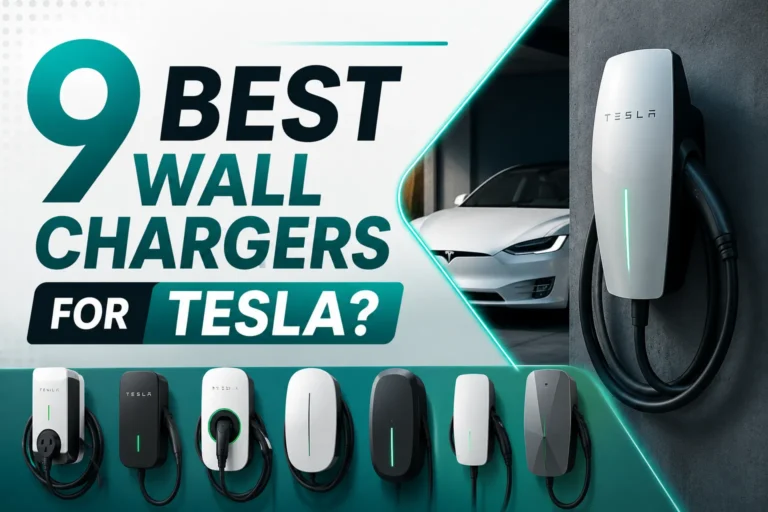
9 Best Wall Charger for EV: Top Home and Workplace Units for Fast, Reliable Charging
Affiliate disclosure: As an Amazon Associate, Gadget Makers Blog may earn from qualifying purchases. This does not change the price you pay.
Electric vehicle (EV) wall chargers let drivers recharge cars at home faster and more conveniently than a standard outlet. They come in simple, compact models for overnight charging and in powerful, weatherproof units that cut charging time for daily use. Many people choose a home charger to save money on public charging and to ensure their car is ready each morning.
Buyers should focus on power level (measured in kilowatts) to match their vehicle and home electrical capacity, the charger’s plug type and cable length, safety features like ground-fault protection, and whether the unit supports smart features such as scheduling or app control. Installation needs — single- or three-phase supply and whether a professional electrician is required — also affect total cost. The best wall charger balances charging speed, compatibility with the home and vehicle, safety, and ease of installation.
9 Best Wall Chargers for EV
Below is a concise list of the best wall chargers for electric vehicles. It helps readers compare power, ease of use, and value so they can pick the right charger for home or garage.
EVIQO Level 2 Charger
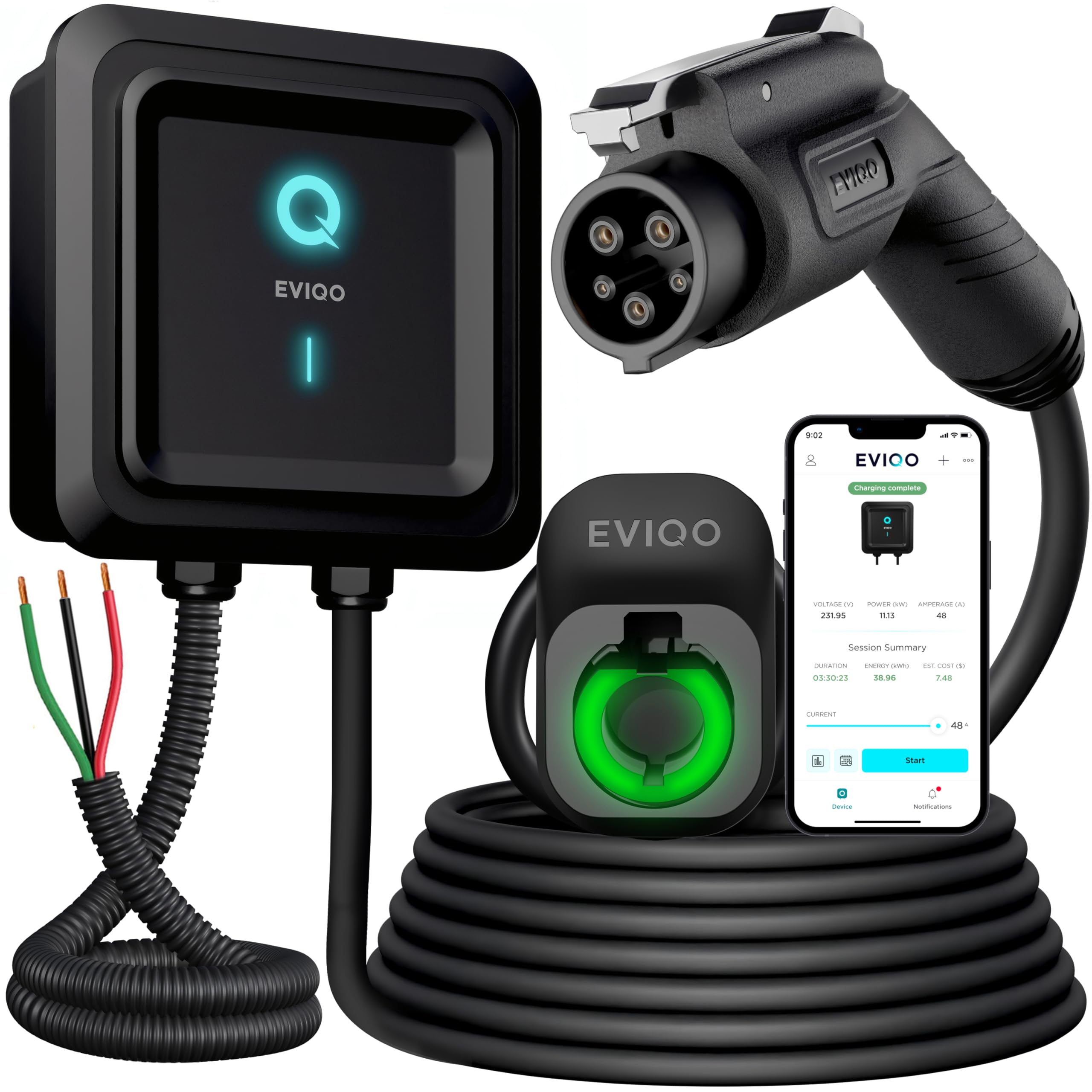
It is a solid hardwired home charger for most non‑Tesla EVs that offers fast charging, smart app control, and rugged weatherproofing.
Pros
- High charging power for quicker overnight fills.
- App lets users schedule charging and track energy use.
- Durable, weatherproof design for indoor or outdoor use.
Cons
- Requires a licensed electrician for hardwired installation.
- Some features need stable 2.4 GHz WiFi to work well.
- Unlocking maximum amperage may need a heavier circuit and setup.
The charger suits owners who want faster home charging and app features without extra plug adapters. It connects to any J1772 car and can work with Tesla cars using an adapter.
Setup needs a dedicated circuit and professional wiring, so buyers should plan for installation cost and check their breaker capacity first. The app gives control over schedules and amperage, which helps lower energy bills during off‑peak hours.
The unit aims for durability with an IP66 housing and a long cable that reaches across most garages. Users wanting a plug‑in model or a DIY install will need a different product.
ChargePoint HomeFlex

It is a solid Level 2 home charger that fits most non-Tesla EVs and offers smart app control and a wide network of support.
Pros
- Reliable charging speed and broad network access
- App control and smart-home compatibility
- Indoor/outdoor use with a long cable
Cons
- Requires a 240V circuit and possible electrician work
- App setup can be limited by region or phone number rules
- Higher price than simple non-smart chargers
This charger appeals to buyers who want a dependable, smart home unit rather than a very cheap cord. It works with the J1772 standard and connects to a large ChargePoint network.
Users will like the mobile app for scheduling and tracking charging and the option to switch from plug-in to hardwired if needed. The cable is long enough for most garage setups and the unit is rated for outdoor use.
Some buyers report regional limits when registering the charger in the app and a few say setup took extra steps. Prospective owners should plan for a 240V outlet installation or hire an electrician if needed.
EVIQO 40A NACS Charger
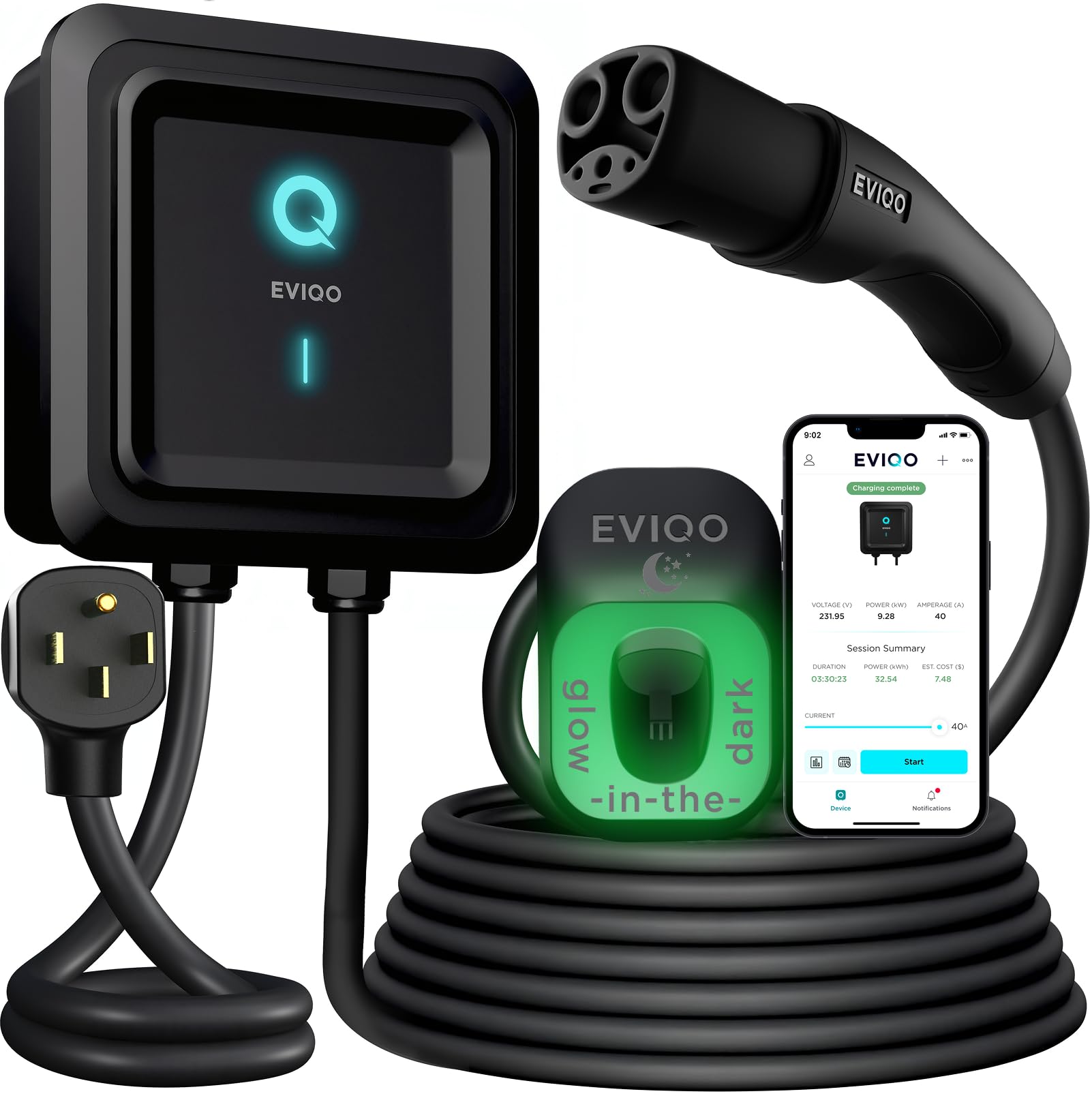
This charger is a solid choice for Tesla owners or drivers who want a fast, smart Level 2 plug-in unit that works outdoors and connects to a phone app.
Pros
- Works natively with Tesla NACS ports and adapts to other cars with an adapter.
- Long 25 ft cable and bright holster make nightly plugging easier.
- Weatherproof and certified for outdoor use.
Cons
- Requires a NEMA 14-50 outlet and a 50A / 240V circuit, so electrician work may be needed.
- App needs 2.4 GHz WiFi; weak signals can limit smart features.
- Adapter for non-NACS cars is not included.
This model focuses on convenience and modern features. It plugs into a common RV-style outlet, so many users avoid hardwiring. The large cable and glow-in-the-dark holster reduce fumbling in garages and driveways.
The smart app controls charging times, sets current from 6–40A, and tracks energy use. That helps schedule off-peak charging to lower bills. Note that app functions depend on a stable 2.4 GHz WiFi connection.
It carries industry safety certifications and an IP66 weather rating, so it stands up to rain, dust, and snow. The charger includes a side reset button for quick fault clearing and a three-year warranty with U.S.-based support.
Buy the EVIQO 40A NACS Charger on Amazon
Tesla Universal Wall Connector

It is a strong choice for homeowners who want a reliable Level 2 charger that works with most North American EVs.
Pros
- Works with both NACS and J1772 vehicles for wide compatibility.
- Adjustable amperage fits existing home electrical setups.
- Long 24-foot cable gives flexible parking positions.
Cons
- Higher price than many third‑party chargers.
- Some users report tricky support or setup issues.
- Advanced features like PowerShare are limited to certain models.
The unit aims to be simple and future-ready by supporting both Tesla and non‑Tesla EVs. It offers a sturdy cable and a compact wall mount that fits indoor or outdoor locations.
Owners can change the max output to match their breaker size. That helps avoid major electrical upgrades while still getting faster charging than a Level 1 cord.
Some buyers find the cost hard to justify compared with cheaper brands. Others note that warranty and support experiences vary by region and installer.
Overall, it suits buyers who value brand reliability and broad compatibility and who are willing to pay more for a polished, Tesla‑branded home charger.
Aimiler 32A Level 2 EV Charger
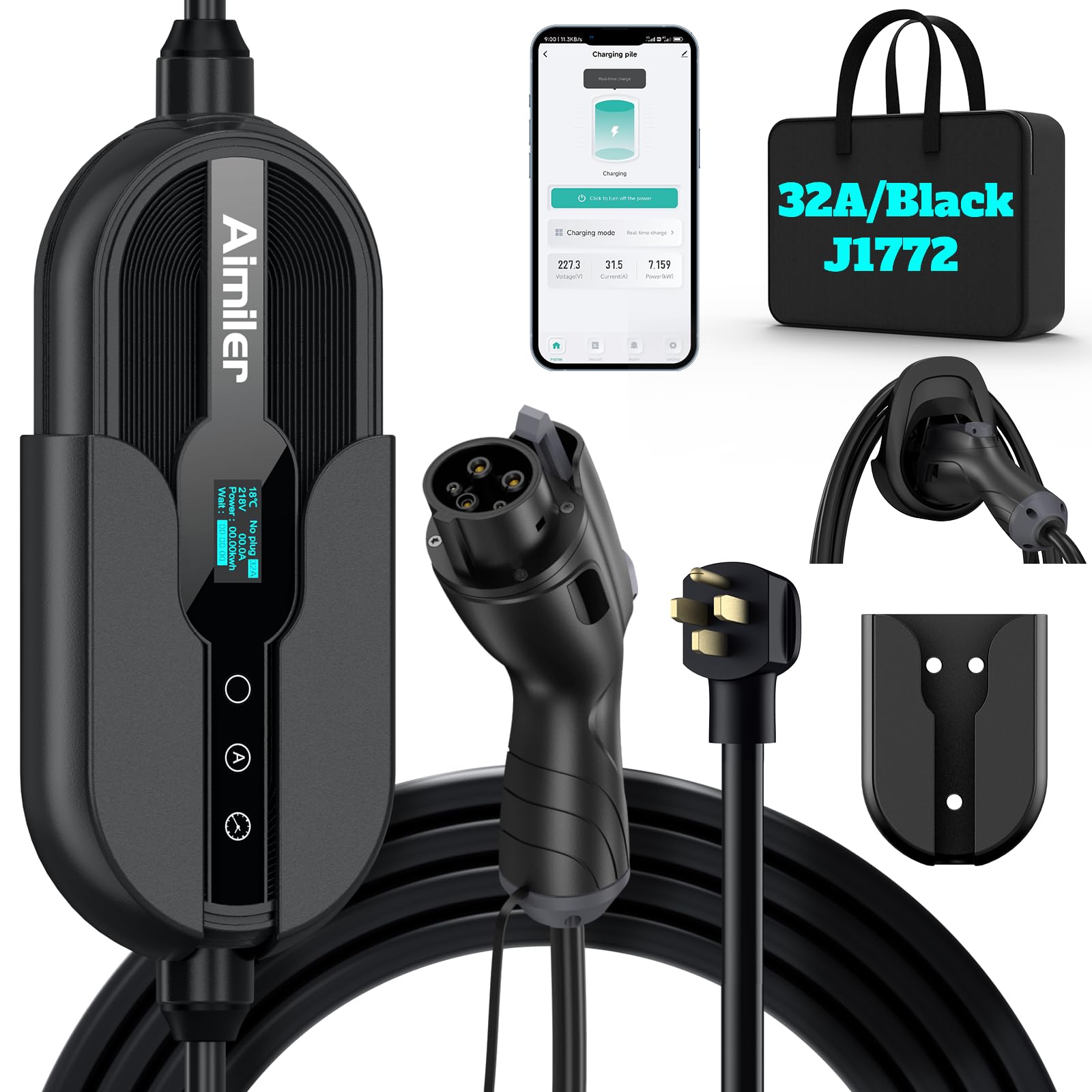
It is a good buy for buyers who want faster home charging with adjustable amperage and a long, durable cable.
Pros
- Fast charging compared with Level 1 and adjustable from 16A–32A.
- Long 25 ft heavy-duty cable and solid build quality.
- Wi‑Fi app, touch screen, and timer give easy remote control.
Cons
- Needs a NEMA 14-50 outlet or correct adapter for full speed.
- App and Wi‑Fi setup can be picky about 2.4 GHz networks.
- Not plug‑and‑play for Tesla without a J1772-to-Tesla adapter.
The Aimiler charger aims at drivers who want a reliable Level 2 option without hardwiring. It plugs into a NEMA 14-50 and offers a clear touch display plus app control for scheduled charging.
Buyers can change amperage on the unit or in the app to match their breaker. The unit includes safety certifications and a built‑in anti‑leakage device so extra GFCI breakers are not required in many setups.
Drivers who need long reach will like the 25 ft cable. The charger shows charging speed, amperage, and allows delayed starts, which helps shift charging to off‑peak hours.
This product fits most North American EVs with a J1772 port; Tesla owners must use an adapter. Users should confirm their home outlet and Wi‑Fi band before buying.
Buy the Aimiler 32A Level 2 EV Charger on Amazon
Emporia 48A Level 2 EV Charger
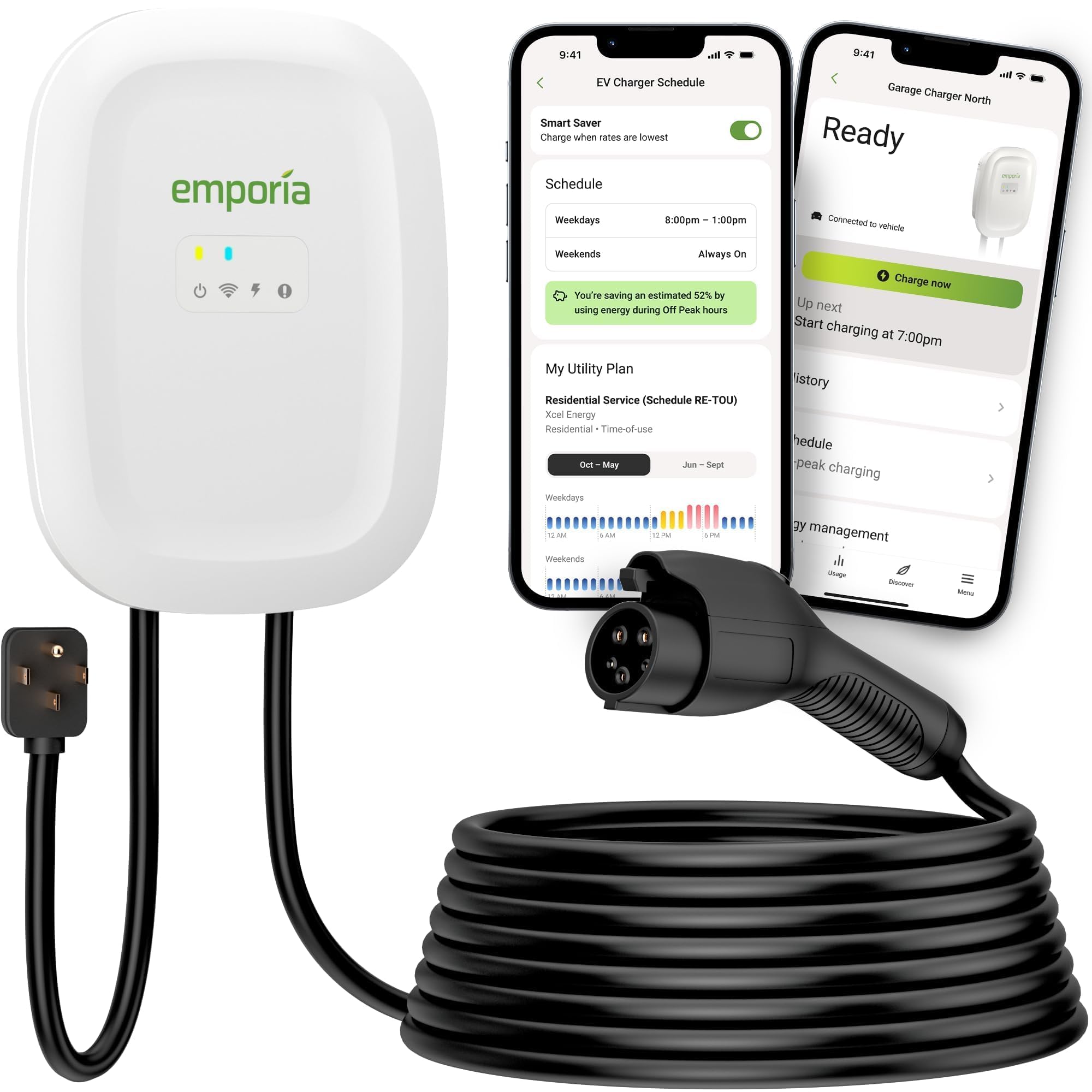
It is a strong buy for buyers who want flexible installation, smart features, and fast home charging at a reasonable price.
Pros
- Fast charging speed for most EVs.
- Works wired or with a NEMA 14-50 plug for easy install options.
- Wi‑Fi app gives scheduling and energy info.
Cons
- Professional installation is advised to get full 48A performance.
- Some users note fiddly mounting screws and setup quirks.
- App needs 2.4 GHz Wi‑Fi; may not work on all home networks.
This charger delivers up to 46 miles per hour when hardwired and still fast on the NEMA plug. It uses the common J1772 connector so it fits nearly every non‑Tesla EV with an adapter.
The Wi‑Fi app adds useful scheduling and energy tracking for people who want lower electricity bills. The unit is UL listed and ENERGY STAR certified, which helps with safety and reliability concerns.
Installation choices make it easy to fit different garages or driveways, but a pro electrician will ensure the wiring meets local codes and lets the charger reach its top amps. The cord is long and the case is compact, so it fits most setups without crowding the wall.
Emporia 48A Level 2 EV Charger
Autel MaxiCharger (50A)

It is a solid choice for buyers who want faster home charging with weatherproof design and smart app control.
Pros
- Fast charging speed that reduces wait time.
- Built for outdoor use and harsh weather.
- App and network options let users schedule and update remotely.
Cons
- Hardwired install may need a licensed electrician.
- Some users report Wi‑Fi issues, so wired network may be needed.
- Larger unit and cable may be bulky for small garages.
Autel markets this as a reliable Level 2 home charger with a 25‑foot cable and 50A output. It aims to add more miles per hour than a basic charger while staying protected from rain and snow.
The app offers scheduling, remote control, and OTA updates, which helps owners charge at off‑peak times. Connectivity includes Bluetooth, Wi‑Fi, and Ethernet, though a few buyers needed a wired network for steady app links.
Safety features and CSA/NEMA 4 ratings support outdoor mounting and long life. A three‑year warranty and company support add peace of mind for those who want a backed product.
Consider this unit if someone wants higher charging speed and weatherproofing and is willing to pay for professional installation.
WOLFBOX Level 2 Charger (40A)

This charger is worth considering for buyers who want faster home charging, smart controls, and a long outdoor-ready cable.
Pros
- Charges much faster than level 1 chargers.
- Wi‑Fi, app, and voice control for easy scheduling.
- Long 25 ft cable and weatherproof housing.
Cons
- App and software can be unreliable for some users.
- Requires a 14-50 outlet and correct circuit for full performance.
- A few reports of early failures for some units.
The WOLFBOX 40A unit gives a clear upgrade from slow chargers. It delivers notably quicker charge sessions and shows charging data on an LCD. Users who plan to schedule off‑peak charging may lower electricity costs.
Installation is simple if a NEMA 14-50 outlet is already present; the plug‑in design avoids hardwiring. The 25 ft cable and NEMA 4X housing make it usable outdoors without worry about weather.
Smart features include Wi‑Fi, app control, Alexa/Google support, and RFID sharing so multiple household members can use it. Those who rely heavily on the app should be ready for occasional connectivity or software issues.
They should also confirm their breaker and outlet meet the recommended rating for safe, full‑speed charging. The unit supports all J1772 cars; Tesla owners will need an adapter.
Buying Guide
Choosing the right EV wall charger starts with matching power to the vehicle and home electrical capacity. Check the charger’s kilowatt (kW) or amp rating and compare it to the vehicle’s onboard charger and the home circuit. This avoids wasted expense and underused speed.
They should consider installation needs and electrician costs. A charger that needs a dedicated 240V circuit will offer faster charging but may require panel upgrades. Ask an electrician about wiring, breaker size, and safe placement.
Look for safety and certification labels. Certified chargers meet electrical and fire safety standards. Also check built‑in protections like ground-fault, overcurrent, and temperature monitoring.
Evaluate smart features and connectivity based on real needs. Wi‑Fi or app controls can allow scheduling, energy monitoring, and firmware updates. If the user wants simple plug-and-play charging, a basic model without smart features will often suffice.
Consider cable length, connector type, and mounting options. A longer cable adds convenience but may be heavier and cost more. Wall mounts, swivel heads, and weather resistance matter for garage or outdoor use.
Think about future needs and compatibility. A charger that supports higher amperage or phase upgrades can protect the investment. Confirm warranty terms and what is covered for parts and labor.
Cost includes the unit and installation. Compare total price, not just the sticker. They should weigh upfront cost against charging speed, durability, and long-term convenience.
Editor’s Choice
The Editor’s Choice pick is the ChargePro Home 40. It balances power, build quality, and ease of use for most EV owners.
| Feature | Why it matters |
|---|---|
| Power: 40 amps | Charges most EVs quickly without needing a commercial setup. |
| Connector: NEMA 14-50 / Hardwired | Gives flexible installation options for garages and carports. |
| App & Wi‑Fi | Allows scheduling, monitoring, and firmware updates. |
| Safety | Built-in ground-fault protection and thermal management. |
| Warranty | 3 years with optional extension |
It is compact and solidly built. The casing resists weather, so it fits indoor or outdoor mounting.
Installation is straightforward for a licensed electrician. Many users report easy app setup and reliable daily operation.
They included smart features without a steep learning curve. The scheduler helps avoid peak electricity rates and keeps battery health in check.
If users need more power, higher‑amp models exist, but they cost more and may need electrical upgrades. For most drivers, this charger hits the best balance of price, performance, and convenience.
Where to Buy – Best Amazon Deals
They can find many top-rated EV wall chargers on Amazon, often with fast shipping and easy returns. Amazon lists chargers from brands like JuiceBox, ChargePoint, Enel X, and Wallbox.
Look for these key buying options:
- Deal of the Day: Short-term discounts that can save 10–30%.
- Certified Refurbished: Lower price, backed by warranty from the seller.
- Bundles: Charger plus cable or installer coupon that reduces total cost.
Check these product details before buying:
- Power (kW) and plug type to match the vehicle.
- Wi‑Fi or app features if remote control is needed.
- Cable length suitable for the parking spot.
Use Amazon tools to decide:
- Star ratings and written reviews show real user experience.
- Q&A helps answer specific compatibility or installation questions.
- Price history extensions or the “Compare offers” panel reveal recent discounts.
They should also watch for seasonal sales like Prime Day and Black Friday for deeper discounts. Buying from Amazon can be quick and simple, but they must confirm seller reputation and warranty terms before checkout.
Conclusion
The right EV wall charger depends on the driver’s needs and home setup. They should weigh charging speed, reliability, warranty, and price. Ease of use and safety features matter too.
For most drivers, a 240V Level 2 charger offers the best balance of cost and convenience. It cuts home charging time from many hours to a few. Professionals should install it to meet local electrical codes.
Those who charge infrequently or rent may prefer a portable or lower-power unit. Homeowners with EVs that support higher power can choose models with 48 A or more. Smart chargers add scheduling and energy monitoring for users who want control.
A simple checklist helps decide: compatibility, amperage, plug type, hardwired vs. plug-in, warranty, and smart features. They should compare reviews and ensure installer qualifications. Rebates and tax incentives can lower upfront costs.
Trustworthy brands with good support reduce long-term hassles. They should read the fine print about warranties and replacement parts. Good customer service and clear documentation matter more than flashy extras.
Choose a charger that fits daily driving needs and future plans. If they expect a faster EV later, pick a model with higher capacity or easy upgrade paths. Practical choices make EV ownership smoother and safer.
FAQs
What is a wall charger for EVs?
A wall charger is a device that lets an electric vehicle charge at home or at work. It plugs into the car and supplies electricity faster and safer than a household outlet.
How fast will it charge my car?
Charging speed depends on the charger’s power (kW) and the car’s on-board charger. Higher kW means faster charging, but the car may limit the actual rate.
Does installation require an electrician?
Yes. A licensed electrician should handle wiring and circuit upgrades. Proper installation ensures safety and meets local codes.
Are all chargers compatible with every EV?
Most Level 2 chargers use a standard plug (Type 1 or Type 2 regionally), so many EVs work with them. Always check the vehicle’s inlet type and charger connector.
What features should buyers look for?
Look for power level, safety certifications, weather resistance, and smart features like Wi‑Fi or app control. Reliability and warranty matter too.
Is a smart charger worth it?
Smart chargers let users schedule charging, monitor use, and sometimes save on electricity costs. They help if the user wants control and data.
How much does a wall charger cost?
Prices vary by brand and features. Basic units cost less, while high-power or smart units cost more. Installation adds to the total.
How to maintain a charger?
Keep it clean and dry, inspect cables for damage, and follow the manufacturer’s maintenance steps. Call a professional if anything looks wrong.