Why Is Apple Changing the iPhone 18 Charger Explained
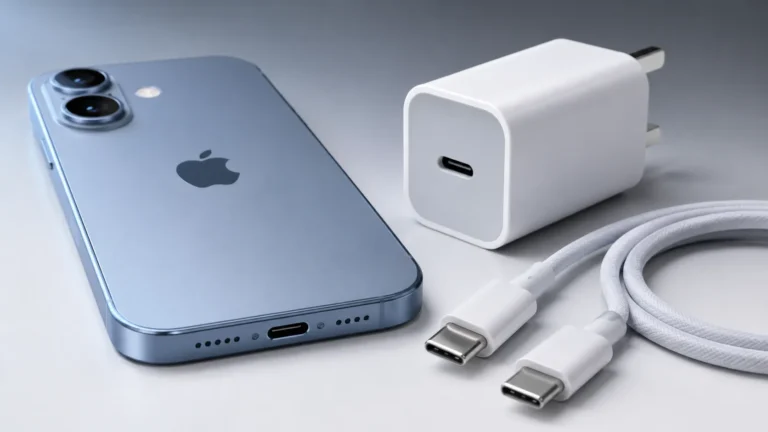
Apple is likely changing the iPhone 18 charger to improve charging speed, heat control, and USB-C compatibility. The main thing buyers should check is whether their cable and adapter support the phone’s required charging standard and wattage.
Affiliate disclosure: As an Amazon Associate, Gadget Makers Blog earns from qualifying purchases. This does not increase your price. Availability and listing details can change.
Apple is expected to change the iPhone 18 charging setup to improve charging speed, manage heat better, and align the phone with newer USB-C power standards. In practical terms, that usually means the phone may work best with newer cables and adapters, even if some older accessories still connect.
- Main reason: Better power delivery and thermal control are the most likely goals.
- Compatibility: USB-C alone is not enough; wattage and charging profile matter too.
- Buyer focus: Match the phone with a certified cable and reputable adapter.
- Safety: Replace frayed, hot, loose, or damaged charging gear immediately.
Why Apple Is Changing the iPhone 18 Charger: The Short Answer
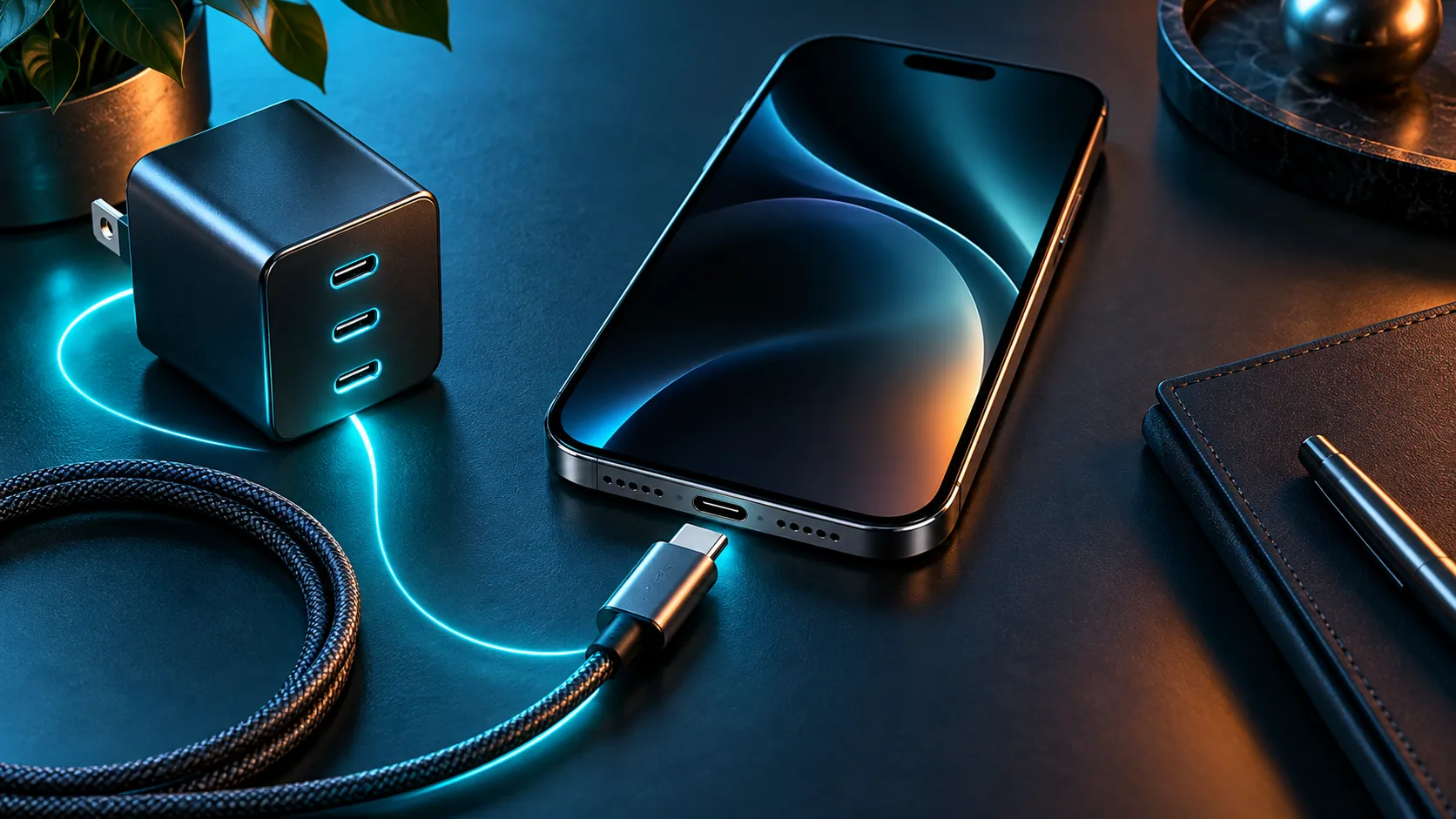
The short answer is that Apple’s charger changes are likely about faster, more efficient power delivery and a cleaner accessory ecosystem. For buyers, the main impact is less about “needing a whole new charger” and more about confirming which cable, adapter, and wattage combination actually supports the fastest and safest charging behavior.

Anker Prime 160W 3-Port GaN Charger
Short verdict: The best overall option here for Apple users who want one compact premium charger for a phone, tablet, and USB-C laptop.
- 160W maximum combined output
- Three USB-C charging ports
- Multi-device GaN format
Best for: iPhone, iPad, and MacBook users.
Skip it if: You only need a basic single-phone charger.
View Anker Prime 160W →Verify device compatibility, required cables, included accessories, and seller details. iPhone 18 support is not confirmed.| Product | Best for | Key feature | Trade-off | Amazon |
|---|---|---|---|---|
| Anker Prime 160W | Portable multi-device charging | Three USB-C ports | Excess capacity for phone-only use | View listing → |
| Anker Prime 250W | Desktop charging | Six-port station | Not pocket-sized | View listing → |
| Anker Prime Qi2.2 3-in-1 | Wireless Apple travel setup | Foldable design | Compatibility must be checked | View listing → |
What’s Actually Changing in the iPhone 18 Charging System?
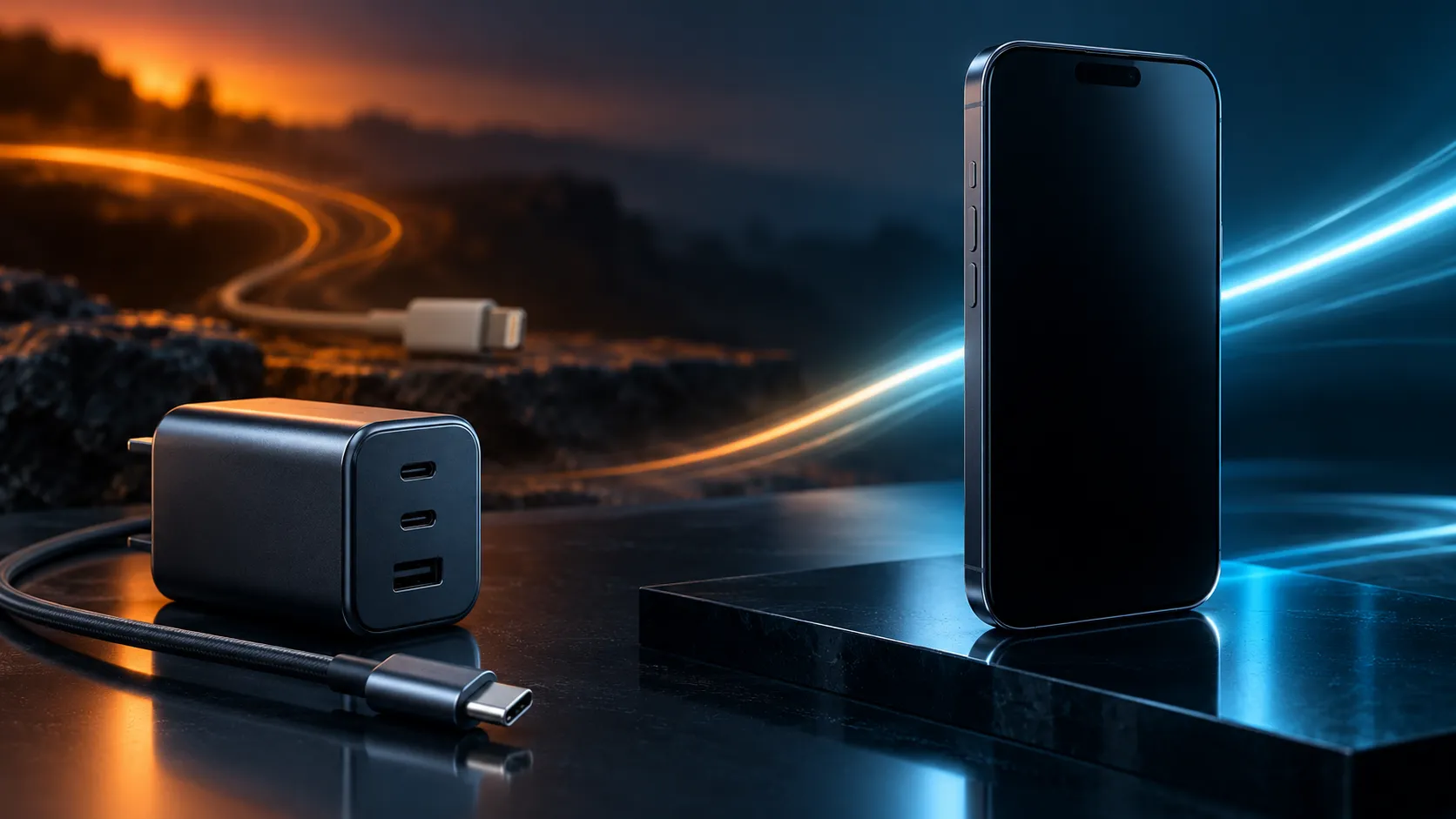
Apple has not always changed charging in a single dramatic step. More often, it adjusts the power profile, cable requirements, accessory authentication, thermal behavior, or supported charging standards so the phone can charge more efficiently without overheating or slowing down under load.
New connector or new charging standard?
The most likely change is not a return to a brand-new physical connector, but a shift in charging behavior or support for a newer USB Power Delivery profile. That matters because two phones can both use USB-C and still charge differently depending on the negotiated wattage, cable rating, and charger quality.
In plain English: the plug may look familiar, but the charging “language” between the phone, cable, and adapter may be updated. If Apple adds a stricter requirement for certified cables or better power negotiation, older accessories may still work, just not at the top speed or most efficient setting.
Exact charging behavior can vary by model, region, firmware version, and the accessory maker’s implementation of USB-C Power Delivery.
Expected wattage, cable requirements, and accessory compatibility
Apple typically does not make every charging detail identical across devices, so the actual wattage ceiling for the iPhone 18 should be confirmed in the official specifications before buying accessories. If the phone supports a higher charging profile, the charger and cable both need to support that profile for you to benefit from it.
How the New Charger Works in Real Use
Real-world charging is shaped by more than the phone’s advertised capability. Ambient temperature, battery level, background activity, case thickness, cable quality, and whether the phone is being used while charging can all affect speed and heat.
Charging speed, heat management, and power delivery behavior
A better charging system is not just about peak speed. It also needs to keep heat under control, because heat is one of the main reasons phones slow charging as the battery fills up. If Apple changes the iPhone 18 charger system, the goal is likely to make the early part of charging faster while keeping the battery within safe thermal limits.
USB Power Delivery lets the phone and charger negotiate how much power to send, instead of forcing a fixed output all the time.
That negotiation is why a higher-watt charger does not always mean the phone will charge faster. The phone decides how much it can safely accept, and the charger must support that request cleanly. If the cable or adapter is low quality, charging may become slower, warmer, or less consistent.
What users should know about cable quality and certified accessories
For everyday buyers, cable quality matters as much as charger wattage. A well-made, certified cable is more likely to handle power reliably, resist wear, and maintain a secure connection over time.
Stop using chargers or cables that run unusually hot, smell burnt, spark, or show frayed insulation, bent connectors, or loose ports.
- Use the cable type Apple officially lists for the iPhone 18 charging mode you want.
- Choose adapters from reputable brands with clear wattage and safety markings.
- Avoid charging on beds, under pillows, or inside tight spaces that trap heat.
Who the iPhone 18 Charger Change Will Affect Most
Some users will barely notice the transition. Others, especially people with older charging gear or multiple devices from different brands, may need to update a cable, wall adapter, or power bank to avoid slow charging or compatibility confusion.
Best fit for everyday users, travelers, and power users
Everyday users mainly benefit if the new system makes charging simpler and more consistent. Travelers benefit when one reliable USB-C setup can cover a phone, earbuds, tablet, and laptop with fewer bricks in the bag. Power users, creators, and gamers care most about whether the phone can sustain better charging performance without excessive heat during heavy use.
Users who want a future-proof USB-C setup with a certified cable, a reputable adapter, and fewer accessory headaches.

Anker Prime 250W 6-Port GaN Charging Station
Short verdict: A high-ticket option for families and workspaces charging several USB-C devices from one organized station.
- 250W maximum combined output
- Six charging ports
- Desktop multi-device design
Best for: Families, creators, offices, and MacBook users.
Skip it if: You mainly charge one phone while traveling.
Check Anker 250W Availability →Confirm port allocation, cable requirements, included parts, seller, and current availability.Who may need to replace cables, adapters, or power banks
You may need replacements if your current gear is older, underpowered, or not clearly labeled for the charging standard the iPhone 18 uses. That is especially common with generic cables, aging power banks, and multiport chargers that split output across several devices.
- Check the iPhone 18 charging standard in Apple’s official specs.
- Confirm your cable is rated for the needed power and connector type.
- Verify your charger or power bank can deliver the required wattage on the right port.
- Make sure your accessory has a return policy in case compatibility is limited.
Key Specs and Buying Criteria to Check Before Upgrading
If you are buying for the iPhone 18, the most important specs are not just brand names or packaging claims. Focus on output rating, supported standards, cable build quality, and whether the accessory is designed for safe long-term use.
Rated wattage, USB-C compatibility, and fast-charging support
Start with the charger’s rated wattage and the exact USB-C charging standard it supports. A charger that is technically USB-C may still be too weak, too slow, or missing the right power profile for the iPhone 18’s best charging mode.
If you use a multi-device charger, check how power is shared across ports. Some chargers only deliver their full output when a single port is used, while others reduce power when multiple devices are connected.
Build quality, durability, and heat-safe materials
Good charging accessories should feel secure, fit tightly, and show clear labeling. Look for sturdy strain relief on cables, solid connector housings, and materials that are designed to handle repeated plug-in cycles and normal heat from charging.
Durability matters because charging gear is handled constantly: plugged in, unplugged, coiled, packed, and carried. A cheaper cable may work at first but fail sooner if the connector loosens or the outer jacket cracks.
When comparing accessories, read the label for output details instead of relying only on “fast charge” marketing language.
Benefits, Trade-Offs, and Limitations of the New Charger
Any charger change is a mix of upside and inconvenience. The upside is usually better speed, less heat, and more efficient power delivery. The downside is the transition period, when older accessories may still work but not as well as newer ones.
Faster charging, better efficiency, and reduced clutter
A well-designed charging update can reduce the need for multiple proprietary cables and make it easier to share one charger across several devices. That is especially useful for home offices, dorm rooms, travel kits, and family charging stations.
- Potentially faster and more stable charging
- Better compatibility with modern USB-C gear
- Fewer separate charging ecosystems to manage
- Older cables or adapters may not deliver full speed
- Accessory labels can be confusing
- Transition costs may add up if you replace multiple items

Anker Prime 25W Qi2.2-Certified 3-in-1 Foldable Charger
Short verdict: A compact premium alternative for Apple users who want an organized wireless setup alongside USB-C.
- Qi2.2-certified positioning stated in the supplied title
- Palm-sized foldable 3-in-1 format
- Magnetic alignment for compatible devices
Best for: Travelers carrying compatible iPhone, Apple Watch, and earbuds.
Skip it if: Maximum wired efficiency matters most.
Check Wireless Compatibility →Do not assume iPhone 18 support. Verify compatible models, case requirements, power supply, and listing details.Common drawbacks, transition costs, and accessory mismatch risks
The biggest limitation is mismatch risk. A cable may fit but not support the right power level. A charger may advertise high wattage but split output across ports. A power bank may be portable but not optimized for the phone’s charging profile.
That is why it helps to think in terms of a complete charging chain: wall adapter, cable, port type, and the phone’s own support. If one link is weak, the whole setup can feel slower than expected.
Safe Use, Inspection, and Maintenance Tips for iPhone 18 Charging
Charging safety is mostly about inspection, heat control, and replacing damaged gear before it becomes a problem. Good habits also help accessories last longer, especially if you charge daily.
How to inspect cables, adapters, and ports for wear or damage
Check cables for kinks, exposed wire, crushed ends, or looseness near the connector. Inspect the adapter for discoloration, cracked plastic, or a plug that no longer sits firmly in the outlet. Also look inside the phone’s charging port for lint or debris, which can interfere with a solid connection.
Stop using damaged electronics, swollen batteries, frayed cables, overheating chargers, or unstable power accessories and follow the manufacturer’s guidance.
If the port looks dirty, use only manufacturer-approved cleaning guidance. Avoid sharp metal tools, liquids, or aggressive poking that could damage the contacts.
Safe-use limits, replacement guidance, and storage best practices
Do not cover charging gear with blankets, pillows, or clutter that traps heat. Unplug accessories when not in use if they are warm, unstable, or part of a crowded outlet strip. Store cables loosely coiled rather than tightly bent, and keep them away from pets, moisture, and sharp edges.
- Replace a cable at the first sign of fraying or intermittent charging.
- Use surge protection if you rely on a charging station with multiple devices.
- Keep charger vents and surrounding surfaces clear for airflow.
Should You Buy New Charging Accessories for the iPhone 18?
In many cases, yes — but only if your current setup does not clearly match the iPhone 18’s charging requirements. The best purchase is the one that fits the phone’s supported standard, your daily routine, and your safety expectations without forcing you to overbuy.
Best-value options versus premium accessories
Best-value options are usually reputable USB-C chargers and cables that clearly list their wattage, safety compliance, and compatibility. Premium accessories make sense if you need multiport charging, rugged cables, travel-friendly folding plugs, or a power bank that can also handle a tablet or laptop.
Final recommendation based on compatibility, safety, and long-term value
If you are buying for the iPhone 18, prioritize verified compatibility first, then choose the safest and most durable accessory you can reasonably afford. For most people, that means a certified USB-C cable and a reputable charger that matches the phone’s charging profile instead of chasing the highest watt number on the box.
- The iPhone 18 charger change is likely about better charging behavior, not just a different plug.
- Wattage, cable rating, and USB-C power delivery matter as much as the charger itself.
- Older accessories may still work, but they may not deliver the best speed or heat control.
- Inspect cables and adapters regularly and replace damaged gear immediately.
Final Product Recommendation
- Choose Anker Prime 160W for the best balance of portability and multi-device USB-C charging.
- Choose Anker Prime 250W for a permanent high-capacity desktop setup.
- Choose Anker Prime Qi2.2 3-in-1 for compact wireless convenience after checking compatibility.
Frequently Asked Questions
Apple is likely changing the iPhone 18 charging system to improve charging speed, heat management, and accessory compatibility. The exact change may be in the charging standard, power profile, or cable requirements rather than the connector alone.
It may work, but it may not support the fastest or most efficient charging mode. Check the cable’s power rating and Apple’s official compatibility guidance before relying on it.
Only if the iPhone 18 supports a higher charging profile and your current adapter is below that level. The phone will only draw the power it can safely accept, so the charger and cable both need to match the supported standard.
Look for clear wattage labeling, reputable brand support, and certified cable or adapter information. Stop using any charger that overheats, smells burnt, sparks, or shows physical damage.
Check the charging standard, wattage, cable rating, port type, and whether the accessory is compatible with the iPhone 18. Also confirm warranty terms, return policy, and any official manufacturer notes.
Replace it if the cable is frayed, the connector is loose, the adapter is cracked, or charging becomes intermittent. If the accessory runs unusually hot, stop using it and follow the manufacturer’s guidance.