Are Neck Fans Allowed on Planes Travel Rules Explained
Yes, neck fans are usually allowed on planes when they follow airline battery rules and are packed safely. Carry it in your hand luggage, verify the battery details, and be ready to switch it off if crew instructions require it.
If you’re wondering are neck fans allowed on planes, the short answer is usually yes, as long as the fan follows airline battery rules and does not create a safety issue during screening or flight. Most travelers can bring one in a carry-on, but the final call can depend on the battery type, the airline, and how the device is packed.
That means the safest approach is to treat a neck fan like other small rechargeable electronics: verify the battery details, keep it accessible, and check your airline’s current policy before you fly. If you also travel with chargers or power banks, it helps to review related rules such as whether wall chargers are allowed on planes, whether laptop chargers can go on planes, and whether chargers are allowed in check-in baggage.
- Carry-on is best: Battery-powered neck fans are usually easier to screen and safer to pack in the.
- Battery details matter: Check the watt-hour rating, battery type, and manufacturer guidance before flying.
- Comfort varies: Weight, noise, and fit determine whether a neck fan is actually useful on a.
- Damaged devices are a no-go: Stop using fans with swelling, heat, frayed cables, or charging problems.
- Airline rules can differ: Confirm your carrier’s policy before international or long-haul travel.
Are Neck Fans Allowed on Planes? Short Answer for Travelers
In most cases, yes. A neck fan is generally treated as a personal electronic device, so it is usually allowed in the cabin if its battery and construction meet airline and security requirements.
The main limitation is that rules can vary by carrier and by battery design. If your fan uses a removable lithium-ion battery, a large built-in battery, or any damaged charging cable, it may face extra inspection or be refused.
How Neck Fans Work and Why Airlines May Care
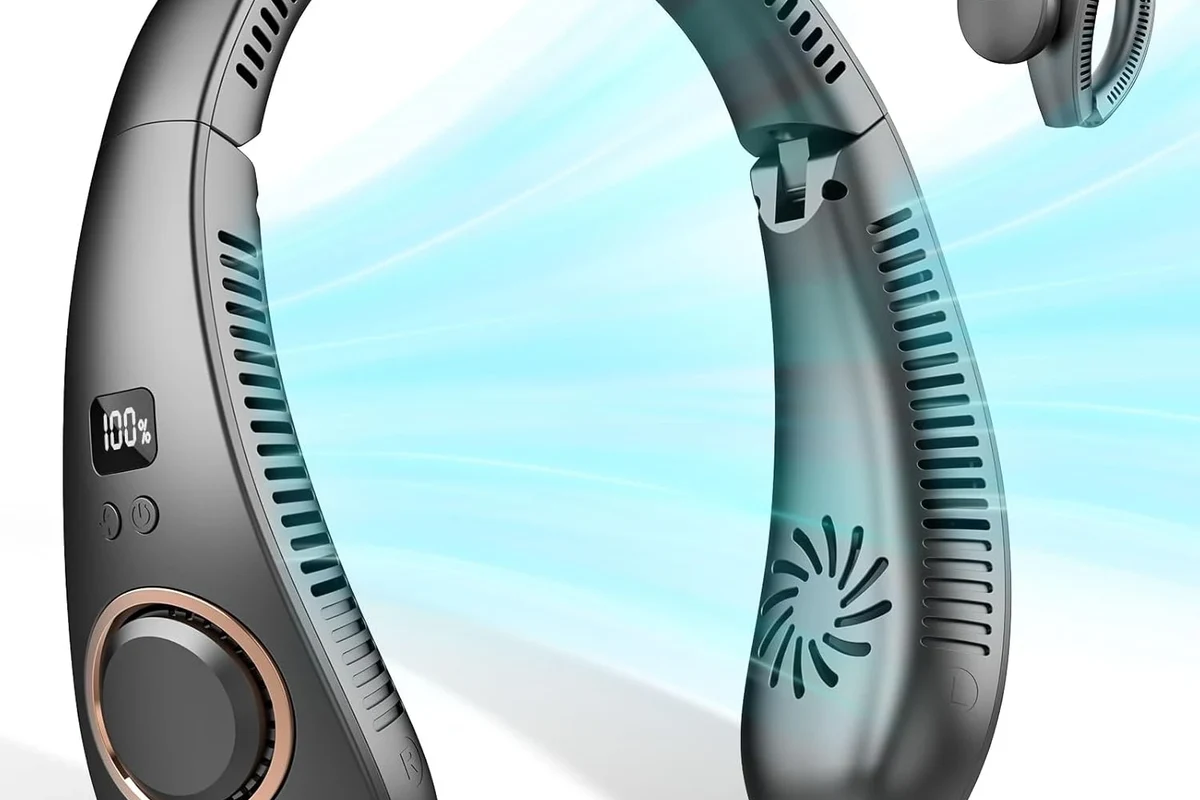
Neck fans are wearable fans that sit around the neck and blow air toward the face and upper body. Many models are battery powered, which makes them convenient for airports, layovers, and hot destinations, but also puts them under the same safety lens as other rechargeable electronics.
Battery type, airflow design, and noise levels
Most travel neck fans use rechargeable lithium batteries because they are lightweight and compact. The airflow may come from small turbine-style openings, dual fan heads, or a flexible ring design, and that design can affect both comfort and noise.
Airline staff typically care less about the styling and more about whether the fan contains a battery that can overheat, short-circuit, or accidentally turn on in a bag. Noise can also matter on board, especially if you plan to use it near other passengers.
Why lithium batteries and moving parts matter in flight
Lithium batteries are common in travel gadgets because they hold a lot of energy in a small package. That same benefit is why airlines and the TSA pay close attention to them, especially if the device is damaged, swollen, or not clearly labeled.
Moving parts are less of a regulatory issue than the battery, but they still matter for safe packing. A fan that can spin freely in a crowded bag may switch on unexpectedly, drain the battery, or get damaged during transport.
TSA, FAA, and Airline Rules: What’s Usually Allowed in 2026
For U.S. travel, the practical rule is that small personal electronics are usually allowed, but battery safety rules still apply. The TSA focuses on what is safe to bring through screening, while airlines may add their own restrictions for onboard use or battery capacity.
Carry-on versus checked bag guidance
For a neck fan, carry-on is usually the better choice. That keeps the device accessible for inspection and reduces the chance of damage, activation, or battery-related problems in checked baggage.
Checked bag rules can be stricter for battery-powered devices, especially if the battery is lithium-based and not removable. If you are unsure, check the airline’s dangerous goods page before you pack.
Battery capacity, watt-hours, and inspection checks to expect
Airline and security rules often refer to battery capacity in watt-hours, or Wh. Many small wearable fans fall well below the limits that create problems, but you should still confirm the rating on the product label or in the manual if you plan to travel often.
Battery limits can vary by airline, country, and whether the battery is built in or removable. If the product page does not clearly list watt-hours, check the manual, packaging, or manufacturer support page before flying.
At screening, officers may ask you to remove the fan from your bag if it needs closer inspection. A clearly labeled device, a protected charging port, and a tidy cable setup can make that process smoother.
When a neck fan may be refused or restricted
A neck fan may be restricted if the battery appears damaged, if the device is oversized, if it uses an unapproved battery pack, or if the airline has route-specific rules. Some carriers may also limit in-flight use if the fan is noisy, distracting, or blocks the aisle during boarding.
If your fan has a detachable battery or unusual power setup, confirm the model details before you travel. That is especially important for international flights, where security practices can differ from one airport to another.
Who a Neck Fan Fits Best: Travel Styles, Comfort, and Use Cases
Neck fans are most useful when you need personal cooling without holding a handheld fan. They are popular with travelers who face hot terminals, outdoor transfers, long layovers, theme parks, or public transit with weak air conditioning.
Best for hot climates, long layovers, and crowded transit
If you are moving through humid airports, waiting in boarding lines, or walking between gates, a neck fan can be a practical comfort upgrade. It can also help people who get overheated easily but do not want to carry a larger handheld fan.
Many travel gadgets are easier to carry on board when they stay under the airline’s attention threshold for batteries and do not require a separate power brick.
Who may find neck fans uncomfortable or impractical
Neck fans are not ideal for everyone. Some people find them bulky, warm around the neck, or awkward with long hair, scarves, glasses, or headphones.
If you are sensitive to noise or prefer not to wear anything around your neck, a compact handheld fan or a small rechargeable desk fan may be a better fit. Travelers who already pack heavily may also prefer a simpler cooling option that takes less space.
What to Look for Before You Buy a Travel Neck Fan
If you want a neck fan mainly for flights, the best model is not necessarily the strongest one. The right choice is usually the one that balances battery clarity, comfort, low noise, and easy packing.
Battery life, charging cable quality, and rated power
Battery life claims can vary by speed setting, room temperature, and how hard the fan has to work. Look for a model that clearly lists its battery capacity and charging method, and make sure the included cable feels sturdy enough for travel.
If the fan charges through USB-C, that can be convenient, but you should still confirm the exact cable and adapter requirements in the manual. For charging guidance on other travel electronics, see our guide on laptop chargers in hand luggage.
- Confirm the battery type and watt-hour rating in the manual or product listing
- Check whether the fan folds, locks, or powers off securely for packing
- Verify charging cable type, port quality, and replacement availability
- Review airline and airport rules for battery-powered wearables
Weight, fit, airflow settings, and adjustable design
Weight matters because you may wear the fan for long stretches while standing or walking. A good travel model should feel balanced, not front-heavy, and should stay in place without squeezing the neck.
Multiple airflow settings are helpful because you may want a lower mode on a plane and a stronger mode outside the terminal. Adjustable nozzles or flexible arms can also improve comfort, but only if they stay stable during movement.
Noise, portability, and foldability for packing
Noise is one of the biggest comfort factors on a plane. A fan that sounds fine at home can feel much louder in a quiet cabin, so quieter operation is usually worth prioritizing over maximum airflow.
Foldable or compact designs are easier to store in a personal item, especially if you want quick access during layovers. A rigid fan can still work well, but it should have a safe storage position that protects the controls and blades or vents.
Build quality, warranty coverage, and replacement parts
Travel gear gets bumped, compressed, and packed repeatedly, so build quality matters more than flashy features. Look for a fan with a solid hinge, protected vents, and a battery compartment or charging port that does not feel loose.
Warranty terms are worth checking before purchase because travel use can expose weak points quickly. If replacement cables, pads, or filters are available from the manufacturer, that can improve long-term value.
- Hands-free cooling during travel
- Useful in hot terminals and outdoor transfers
- Usually compact enough for carry-on packing
- Battery rules can vary by airline
- Some models are noisy or bulky
- Comfort depends heavily on fit and weight
Safe Use on Planes: Practical Tips, Limits, and Common Mistakes
Even if a neck fan is allowed, safe use on a plane is mostly about being considerate and avoiding battery issues. A little planning can prevent delays at security and reduce the chance of accidental activation in your bag.
How to pack it, store it, and avoid accidental activation
Pack the fan where you can reach it quickly, such as a personal item or the top of a carry-on. If the device has a power button that can be pressed easily, lock it or place it in a protective pouch before boarding.
- Turn the fan off before placing it in your bag.
- Keep the charging cable separate so it does not snag the controls.
- Store it where security can inspect it without unpacking everything.
When to switch it off during boarding, takeoff, and turbulence
Follow crew instructions at all times. If the flight attendant asks you to stop using the fan during boarding, takeoff, landing, or turbulence, switch it off immediately and stow it.
Even when use is permitted, it is smart to pause during busy cabin moments. That reduces distractions and helps you avoid bumping other passengers while moving around the seat area.
Heat, battery swelling, damaged cables, and other warning signs
Stop using the fan if it becomes unusually hot, the battery swells, the charging port looks damaged, or the cable frays. Those are warning signs that should be handled according to the manufacturer’s safety guidance, not ignored for convenience.
Do not fly with a visibly damaged battery device if you can avoid it. If a fan smells burnt, charges inconsistently, or shows swelling, follow the manufacturer’s instructions and replace it rather than trying to keep using it.
Care, Cleaning, and Storage for Frequent Flyers
A travel neck fan lasts longer when you clean it gently and store it correctly between trips. Dust buildup, loose cables, and poor charging habits can shorten battery life and make the fan less reliable when you need it most.
Cleaning the vents, wiping the body, and protecting the battery
Use the manufacturer’s cleaning guidance first, especially if the fan has narrow vents or a sealed battery compartment. In general, a soft dry cloth or lightly damp cloth is safer than spraying liquid directly into the device.
Keep moisture away from the charging port and let the fan dry fully before plugging it in. If the vents collect lint or dust, clean them carefully so airflow does not get blocked.
Long-term storage, charging habits, and travel-ready maintenance
For storage between trips, keep the fan in a cool, dry place and avoid crushing it under heavy items. If the battery is rechargeable, follow the manufacturer’s advice for storage charge level and periodic charging.
A quick pre-trip check is also smart: test the power button, inspect the cable, and confirm the battery still holds a charge. If you travel often, that simple routine can prevent last-minute surprises at the airport.
Final Verdict: Is a Neck Fan Worth Bringing on a Plane?
For most travelers, a neck fan is a reasonable and often convenient carry-on gadget, especially if you fly through hot climates or spend a lot of time in crowded terminals. The key is to choose a model with clear battery information, a comfortable fit, and a quiet enough motor for shared spaces.
If your airline allows battery-powered wearables and the fan is in good condition, it is usually worth bringing. If your route has stricter battery checks, you prefer silent cabin gear, or you want a simpler option, a small handheld fan or non-battery cooling accessory may be the better choice.
Best alternatives if your airline or route has stricter rules
If you want to avoid battery concerns altogether, consider a manual cooling towel, a non-powered neck cushion, or a small handheld fan that you can easily inspect and store. For travelers who mainly need charging gear rather than cooling gear, our guides on wall chargers and chargers in checked baggage can help you pack more confidently.
Final recommendation based on comfort, safety, and value
Bring a neck fan if you value portable cooling and the model has clear battery specs, good build quality, and easy carry-on storage. Skip it if the fan feels bulky, the battery information is unclear, or you are flying with an airline that gives you reason to expect extra restrictions.
Frequently Asked Questions
Usually yes, as long as the battery and device meet airline rules. Carry-on is generally the safer choice because the fan stays accessible for inspection.
Sometimes, but carry-on is usually preferred for battery-powered devices. Check your airline’s policy first, especially if the fan uses a lithium battery.
Check the battery type and watt-hour rating in the manual or product listing. If the information is unclear, confirm it with the manufacturer before you travel.
It depends on the airline and crew instructions. Switch it off whenever asked, and avoid using it during boarding, takeoff, landing, or turbulence if the crew prefers it stowed.
Focus on comfort, battery clarity, quiet operation, and secure packing. A model with a sturdy build and reliable charging cable is usually better for frequent travel.
Stop using it and follow the manufacturer’s safety guidance. Do not try to fly with a damaged battery device if you can avoid it.