Maxcio Smart Plug Setup Guide for Easy Home Control
If you want a simple way to add app control, schedules, and voice commands to a lamp or small appliance, the Maxcio smart plug setup is usually straightforward: plug it in, connect it through the Maxcio app, and pair it to 2.4 GHz Wi-Fi. The main things to verify first are outlet fit, device wattage, and whether your router and phone are compatible with the app.
- Check compatibility, model number, app requirements, dimensions, and intended use
- Confirm safety guidance, warranty, return policy, privacy settings, and update support
- Setup basics: Install the app, reset the plug if needed, and pair it on 2.4 GHz.
- Best use: Great for lamps, fans, and simple routines, not high-draw appliances.
- Compatibility: Confirm voice assistant support, app requirements, and outlet size before buying.
- Safety first: Match the device’s wattage rating and stop using it if you notice heat or.
Maxcio Smart Plug Setup: Quick Answer, What You Need, and Who It’s Best For
Most Maxcio smart plug setups follow the same basic pattern: install the app, put the plug into pairing mode, connect it to a 2.4 GHz Wi-Fi network, then name it and add it to a room or voice assistant. The process is usually beginner-friendly, but success depends on your router settings, phone permissions, and the type of device you want to control.
What the setup process usually involves
In practical terms, you are giving the plug access to your home network so it can respond to app commands, schedules, and assistant requests. That means a stable Wi-Fi connection matters more than the plug itself in many cases.
Best use cases and ideal users
A Maxcio smart plug is a good fit for people who want to automate lamps, fans, holiday lights, coffee makers with simple on/off control, or other low-to-moderate draw devices. It is especially useful for renters, students, remote workers, and anyone building a budget-friendly smart home one outlet at a time.
If you are comparing broader smart-home options, it can help to read about smart light bulbs for Google Home or smart light switches to see whether a plug, bulb, or switch makes more sense for your room.
How the Maxcio Smart Plug Works in a Smart Home
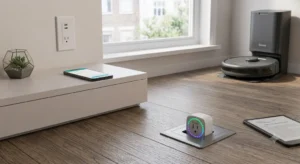
A smart plug acts like a remote-controlled power switch. It does not make the appliance “smart” in a deep sense; it simply lets you turn power on or off from an app, schedule, or voice assistant when the plug is online and supported by the platform.
App control, Wi-Fi pairing, and voice assistant compatibility
After pairing, the plug typically appears in the Maxcio app as a controllable device. Depending on the exact model and current app support, you may also be able to link it to Alexa or Google Assistant for voice control.
What “smart control” can and cannot do
Smart control usually includes remote on/off switching, timers, and schedules. What it cannot do is reduce the power draw of a device that is already on, repair a weak appliance, or make an unsupported high-wattage device safe to use.
If you want deeper automation across a room or home, smart plugs can be part of a larger setup with lighting and routines. For more ideas, see our guides to smart lights for home automation and smart lighting compatibility with Alexa.
Before You Start: Specs, Compatibility, and Safety Checks
Before you plug anything in, check the manufacturer’s specifications for the exact Maxcio model you own or plan to buy. Smart plugs differ in outlet shape, depth, maximum load, and supported app features, so the details matter.
Wi-Fi requirements, app requirements, and supported devices
Most smart plugs in this category require a 2.4 GHz Wi-Fi network, a compatible smartphone, and the official app listed by the manufacturer. If you use a guest network, mesh system, or router with separate 2.4/5 GHz names, make sure the plug can complete pairing without band steering issues.
Dimensions, outlet fit, load limits, and rated wattage to verify
Even if a plug is technically compatible, it may block adjacent outlets on a crowded power strip or duplex wall outlet. Check the plug’s physical dimensions, outlet orientation, and whether its body will interfere with nearby cords or furniture.
Safety notes for lamps, heaters, kitchen gadgets, and other high-draw devices
Use extra caution with heaters, air fryers, microwaves, kettles, irons, and other high-draw appliances. A smart plug should never be used beyond its rated load, and some appliances with motors, compressors, or heating elements may not be ideal even if they appear to work.
Step-by-Step Maxcio Smart Plug Setup Guide
The exact screens can differ by app version, but the setup flow is usually consistent. If a step looks different on your phone, follow the official manual for your model rather than guessing.
Unboxing, placement, and initial inspection
- Smart plug unit
- Quick-start guide or manual
- Any model-specific safety or pairing information
Inspect the plug for cracked plastic, bent prongs, loose parts, or damage from shipping. Place it in a dry indoor outlet with enough clearance so cords do not press against the body or block ventilation.
Connecting to the Maxcio app and pairing to 2.4 GHz Wi-Fi
- Keep your phone close to the plug during pairing.
- Turn off VPNs or unusual network filters if the app cannot discover the device.
- If pairing fails, restart the app and try again before resetting repeatedly.
Naming the plug, assigning rooms, and linking Alexa or Google Assistant
Give the plug a clear name like “Bedroom Lamp” or “Desk Fan” so voice commands are easy to remember. Then assign it to the correct room and, if supported, connect it to Alexa or Google Assistant through the official linking process in the app.
For readers planning a larger voice-controlled setup, our guides on what smart lights work with Alexa and what smart lights work with Google Home can help you build a more consistent ecosystem.
Real-World Benefits, Limitations, and Value
The appeal of a smart plug is convenience. You can automate everyday devices without rewiring anything, which makes it one of the simplest entry points into smart home control.
Automation, scheduling, remote access, and energy-saving potential
Schedules can help you turn lights on before you get home, shut off a fan after bedtime, or cut standby power to certain accessories. That said, actual energy savings depend on what you plug in and how often you would have left it on manually anyway.
Common limitations: Wi-Fi dependence, app friction, and outlet blocking
Smart plugs depend on your network, so outages, weak signal, or router changes can make them unavailable. Some users also find app setup slower than expected, especially when permissions, account creation, or 2.4 GHz network separation gets in the way.
Physical size is another common tradeoff. A bulky plug can block neighboring outlets, which matters in bedrooms, kitchens, and home offices where power strips are already crowded.
How Maxcio compares on value against similar smart plugs
Without verified current pricing, the safest way to judge value is by features, reliability, and compatibility rather than price alone. Maxcio can be a practical choice if it supports the devices and platforms you already use, but alternatives may be better if you need Matter support, tighter ecosystem integration, or a slimmer design.
Common Setup Mistakes and Troubleshooting Tips
Most setup problems come from network settings, app permissions, or a plug that was not fully reset before pairing. Start with the easiest checks before assuming the device is defective.
Pairing failures, reset steps, and network issues
If pairing fails, confirm that your router is broadcasting a 2.4 GHz network, the password is correct, and your phone has Bluetooth, location, or nearby-device permissions enabled if the app asks for them. Then reset the plug according to the manual and try again.
Power cycling problems, offline status, and app permissions
If the plug shows offline status after setup, check your Wi-Fi signal at the outlet, restart the router if needed, and confirm the app still has the permissions it needs. Some devices reconnect automatically after a brief power outage, while others need a manual refresh or re-linking after network changes.
When to stop using the plug and check for damage or overheating
Do not continue using the plug if it feels unusually hot, emits a smell, sparks, or shows discoloration around the body or prongs. If the connected appliance behaves unpredictably or the plug repeatedly drops connection under normal conditions, verify the load and consult the manual before trying again.
Maintenance, Cleaning, Storage, and Long-Term Care
Smart plugs are low-maintenance, but they still need occasional inspection. Dust, heat, and repeated plugging and unplugging can affect long-term reliability.
Keeping the plug dust-free and inspecting for wear
Wipe the outside with a dry cloth when the plug is unplugged and fully cool. Avoid liquids, sprays, or abrasive cleaners, and check the prongs, body, and outlet fit for signs of wear every so often.
Safe unplugging, storage, and replacement guidance
When you store the plug, keep it in a dry place away from heavy objects that could stress the prongs. Replace the unit if the housing cracks, the socket loosens, or the plug no longer seats securely in the outlet.
Warranty details to verify before buying
Warranty terms can vary by seller, region, and model, so verify the official warranty period and return policy before purchase. Also check whether firmware updates, app support, and replacement procedures are still active for the exact version you plan to buy.
Final Recommendation: Is the Maxcio Smart Plug Worth Setting Up in 2026?
The Maxcio smart plug is worth considering if you want a simple, affordable way to add app control and scheduling to compatible low-draw devices. It is best for users who value easy automation more than advanced home-automation features.
Best-fit buyer profile and practical verdict
Choose it if you are comfortable using an app, have a reliable 2.4 GHz network, and mainly need schedules, timers, and remote switching. The setup is usually simple enough for beginners, but the experience depends heavily on router quality and the exact app version.
When to choose an alternative instead
Pick a different smart plug if you need ultra-compact sizing, broader platform support, or a specific ecosystem feature that Maxcio does not verify for your model. You should also look elsewhere if your intended appliance is high-draw or if you want a device built around a newer smart-home standard that your current setup already uses.
- Maxcio smart plug setup usually means pairing the plug in the official app over 2.4 GHz Wi-Fi.
- Check outlet fit and load limits before using it with lamps or appliances.
- It is a practical budget-friendly option, but network dependence and physical size can be drawbacks.
Frequently Asked Questions
You usually need the official app, a compatible smartphone, and a 2.4 GHz Wi-Fi network. It also helps to confirm the plug’s load limit and outlet fit before you begin.
The most common causes are using a 5 GHz network, entering the wrong password, or missing app permissions. Reset the plug using the manual, then try again on a stable 2.4 GHz network.
Many models support Alexa or Google Assistant, but compatibility can vary by model, firmware, and region. Check the current manufacturer compatibility list before buying or linking the device.
Smart plugs are best for lamps, fans, and other low-to-moderate draw devices that stay within the rated wattage and amperage. Avoid using them with appliances that exceed the rating or show heat, smell, or damage.
Check the plug’s dimensions and compare them with your outlet or power strip layout. If it blocks adjacent sockets or forces cords into awkward angles, a slimmer model may be a better choice.
Replace it if the housing cracks, the prongs loosen, the plug overheats, or it stops working reliably after troubleshooting. Also verify the warranty and support terms for the exact model before buying.