Have Smart Lights for Home Best Picks and Buying Guide
Smart lights can make daily life easier, safer, and more flexible. With the right setup, you can control brightness, color, and schedules from your phone or voice assistant. This guide explains what to look for, how smart lights perform, and which features matter most for a home that feels modern and simple to use.
Have Smart Lights for Home Best Picks and Buying Guide
Have smart lights for home become one of the easiest ways to make a house feel more modern. You do not need a full home makeover. You do not need new wiring in most cases. You just swap a bulb, open an app, and suddenly your lights can dim, change color, and turn on by schedule.
That simple upgrade solves a lot of small daily problems. Maybe you forget to switch off lights when you leave. Maybe you want softer light at night. Maybe you want your bedroom to wake you up gently instead of blasting you with bright white light. Smart lights for home can handle all of that with very little effort.
In this guide, we will look at what smart lights for home can do, which features matter, and how to choose the right setup. If you want a deeper look at setup basics, you can also read can you have smart lights for home and smart lights for home automation. Both help explain how this tech fits into a real home.
- Point 1: Smart lights for home give you remote control, voice control, and custom schedules.
- Point 2: The best smart lights for home should match your ecosystem, like Alexa, Google Home, or Apple Home.
- Point 3: Brightness, color range, and dimming quality matter more than flashy app features.
- Point 4: Wi-Fi smart bulbs are easy to start with, while hubs can offer more stable whole-home control.
- Point 5: Smart lights for home can improve comfort, save energy, and help with routines like bedtime or wake-up lighting.
- Point 6: Before buying, check bulb base type, wattage, app support, and whether the light works without a hub.
📑 Table of Contents
- What Smart Lights for Home Actually Do
- Key Specs to Check Before You Buy
- Best Features That Matter in Daily Use
- Best Use Cases for Smart Lights for Home
- How Different Smart Light Options Compare
- Buying Tips for the Best Smart Lights for Home
- Are Smart Lights for Home Worth It?
- Conclusion: The Smart Lighting Setup I’d Recommend
What Smart Lights for Home Actually Do
Simple control with big convenience
Smart lights for home connect to your phone, voice assistant, or smart home hub. That means you can turn them on from the couch, dim them from bed, or switch off every light before you leave the house. This is the biggest reason people like them. They remove tiny daily annoyances.
Many smart lights for home also let you build scenes. For example, you can create a “movie night” scene with warm dim light, or a “focus” scene with bright white light. That makes your home feel more flexible without buying extra gear.
More than just color
Some buyers think smart lights are only about RGB color. That is not the full story. The best smart lights for home also give you better control over brightness, color temperature, and timing. White light can be warm in the evening and cool in the morning. That is useful for comfort and routine.
For bedrooms, soft warm light is often the best choice. If you want ideas for that space, check out best smart lights for bedroom. Bedroom lighting is one of the easiest places to feel the benefit of smart control.
Key Specs to Check Before You Buy
Connectivity: Wi-Fi, Bluetooth, or hub
When you have smart lights for home, the connection type matters a lot. Wi-Fi bulbs are the easiest to set up. They connect directly to your router and usually work without extra hardware. That makes them a good pick for beginners.
Bluetooth bulbs are simpler but often work best only when you are close to them. They are fine for one room, but they are less practical for a whole home. Hub-based systems can be more reliable for larger setups. They often handle more lights with less lag, but they cost more at the start.
Brightness and color temperature
Brightness is measured in lumens. For most rooms, smart lights for home should offer enough brightness for daily tasks. A living room often needs more light than a hallway. A good smart bulb should also dim smoothly without flicker.
Color temperature is just as important. Warm white feels cozy. Cool white feels clean and alert. If you plan to use smart lights for home in a kitchen, office, or study, look for bulbs that can shift across a wide range of white tones.
App quality and voice support
The app is part of the product. A poor app can make smart lights for home feel frustrating fast. Look for easy scheduling, scene control, and fast response time. If the app is clumsy, the bulb may still work, but it will not feel smart.
Voice support is also helpful. Many people want smart lights for home that work with Alexa, Google Assistant, or Apple Home. If you already use one platform, choose lights that fit it well. That keeps setup simple and daily use smooth.
Best Features That Matter in Daily Use
Dimming without a harsh jump
Good smart lights for home dim smoothly. Cheap ones can jump from bright to too dark in a weird step. That feels bad in real life. Smooth dimming matters most in bedrooms, living rooms, and dining spaces where mood lighting is part of the experience.
Schedules and automation
Schedules are one of the best reasons to have smart lights for home. You can set lights to turn on at sunset, dim at bedtime, or wake you up slowly in the morning. This is useful for both comfort and security. A home that lights up at set times looks occupied, even when you are away.
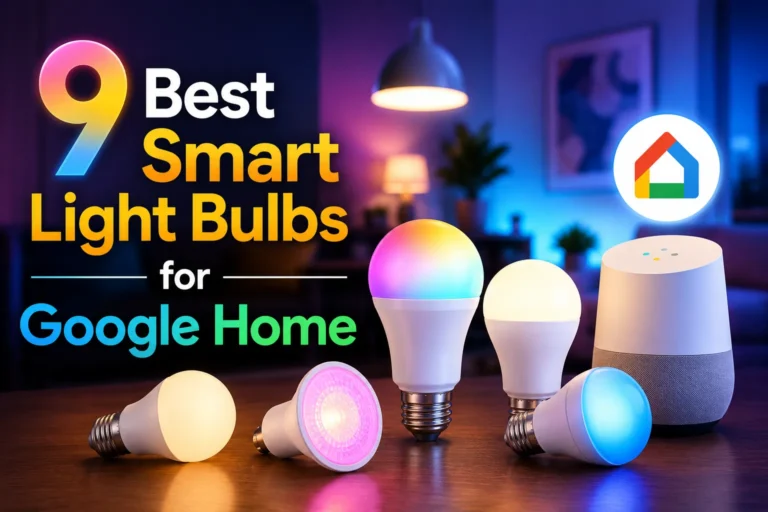
If you want to go deeper into voice and ecosystem support, see what smart lights work with Google Home. Compatibility can make or break your experience.
Color scenes and presets
Color scenes are fun, but they are also practical. A warm reading scene, a bright cleaning scene, and a soft evening scene can all live in the same app. That means you do not need to adjust settings every time. One tap can change the whole room.
For people who like accent lighting, smart light strips are also worth a look. They work well behind TVs, desks, and shelves. You can explore smart light strips if you want a more decorative setup.
Best Use Cases for Smart Lights for Home
Living room comfort
In the living room, smart lights for home help with movie time, guests, and relaxed evenings. You can use brighter light for cleaning and softer light for watching TV. This is where smart lighting feels most useful because the room changes purpose often.
Bedroom routines
In the bedroom, smart lights for home can support sleep habits. A soft warm schedule at night can help you wind down. A gentle morning routine can make waking up less stressful. This is a strong reason to buy smart lights even if you only start with one room.
Kitchen and workspace lighting
In kitchens and workspaces, bright white light is often better. Smart lights for home let you switch from task lighting during the day to softer light later. That helps the same room do more without feeling harsh all the time.
Entryway and security
Entryways are another smart spot for smart lights for home. You can schedule them to turn on at dusk and off late at night. That makes your home easier to navigate and adds a small security benefit. It is a simple upgrade that can feel surprisingly useful.
How Different Smart Light Options Compare
Smart bulbs vs smart switches
Smart bulbs are the easiest starting point. You install them like normal bulbs and control them through an app. Smart switches are better if you want to control many regular bulbs at once. They also keep wall switches functional in a more natural way.
If you rent, smart bulbs are usually the better choice. If you own your home and want a more permanent setup, smart switches may be worth the extra effort. Both can work well, but they solve slightly different problems.
Budget vs premium models
Budget smart lights for home are fine if you mainly want on/off control, dimming, and a few scenes. Premium models usually give better color quality, stronger app support, and smoother performance. The difference is most obvious when you use them every day.
If you are shopping on a tighter budget, this roundup of smart lights under 50 can help you find solid options without overspending. You do not need the most expensive bulb to get a good experience.
One room vs whole home
For one room, Wi-Fi bulbs are usually enough. For a whole home, you may want to think about stability, app quality, and ecosystem support more carefully. The more lights you add, the more important it becomes to avoid lag and connection issues.
That is why many buyers start small. They test one room first. If the experience feels good, they expand. That is the safest way to have smart lights for home without wasting money.
Buying Tips for the Best Smart Lights for Home
Check compatibility first
Before you buy smart lights for home, make sure they fit your fixtures. Check bulb base type, bulb shape, and size. Also confirm whether the bulb works with your smart assistant. A great bulb is useless if it does not match your setup.
Think about your daily habits
Buy for the way you live. If you mostly want bedtime routines, pick warm dimmable bulbs. If you want bright task lighting, focus on white light quality. If you enjoy mood lighting, choose full color. The best smart lights for home are the ones you will actually use every day.
Do not ignore reliability
Performance matters more than flashy features. A bulb that connects fast and responds every time is better than one with lots of effects but slow control. Look for strong reviews about app stability, Wi-Fi connection, and dimming behavior.
If you use Alexa often, it may help to compare options in smart lights that work with Alexa. Matching your assistant can make setup much easier.
Start with one room
The best way to have smart lights for home is to begin with one room. Try the bedroom or living room first. Learn the app, test the schedules, and see how the lights behave. Once you like the result, add more bulbs later.
Are Smart Lights for Home Worth It?
For most homes, yes
Smart lights for home are worth it if you want more comfort and control. They are one of the easiest smart home upgrades to understand. They do not need a big learning curve. They also add value every single day, not just once in a while.
They are especially useful if you forget lights, want better bedtime routines, or like changing the mood in a room. Even one or two bulbs can make a real difference.
When they may not be worth it
If you only need basic lighting and never adjust it, smart lights for home may feel unnecessary. They also cost more than standard bulbs. So if your goal is only to save money, regular bulbs are still the cheapest choice.
But for many people, the convenience is worth the extra cost. Once you get used to voice control and schedules, it is hard to go back.
Conclusion: The Smart Lighting Setup I’d Recommend
If you want the best balance of value and ease, start with smart lights for home in one high-use room. A bedroom or living room is usually the best first pick. Choose Wi-Fi bulbs if you want simple setup. Pick bulbs with strong app support, smooth dimming, and good voice compatibility.
For most buyers, the sweet spot is a reliable white-and-color bulb from a trusted brand, plus a few scenes and schedules. That gives you the biggest benefit without making things complicated. So yes, smart lights for home are a smart buy for modern living. They are easy to use, helpful every day, and one of the clearest upgrades you can make to a home.
Frequently Asked Questions
Not always. Many smart lights for home connect directly over Wi-Fi and work without a hub. Hub-based systems can still be better for larger homes or more stable performance.
Yes, but the savings are usually modest. Smart lights for home help most by making it easier to turn lights off when not needed and by supporting schedules and dimming.
No, most are very easy to install. You usually screw in the bulb, open the app, and follow a few steps to connect it. The hardest part is often choosing the right app and ecosystem.
Some will, but features may be limited. Bluetooth models may still work locally, while Wi-Fi models often need internet for remote control and voice features. Basic on/off may still work in some setups.
Bulbs are better for easy setup and renters. Switches are better if you want to control several lights at once and keep the wall control feeling normal. The best choice depends on your room and how you live.
Yes, many smart lights for home support Alexa and Google Home. Always check compatibility before buying, because not every bulb works with every assistant. Matching your ecosystem makes setup and daily use much smoother.

Tech & Gadget Reviewer
Ethan Walker is a tech enthusiast and gadget reviewer with over 8 years of hands-on experience testing consumer electronics, smart home devices, and cutting-edge accessories. He helps readers make smarter buying decisions through honest, in-depth reviews.