Can One iPhone Charge Another A Simple Guide
Can one iPhone charge another? Yes, in some cases, but it depends on the iPhone model, cable type, and charging method. This guide explains the real-world limits, safety tips, and the best ways to share power between iPhones.
Can One iPhone Charge Another A Simple Guide
Running low on battery is never fun. It gets worse when two people are out together and only one iPhone has any charge left. So the big question comes up fast: can one iPhone charge another?
The short answer is yes, but only in some cases. It is not as simple as plugging in any two iPhones and watching power move from one to the other. The answer depends on the iPhone model, the cable, and the charging method. Some setups can share power in a small way. Others cannot do it at all.
If you have ever asked whether your iPhone can save a friend’s phone in an emergency, this guide will make it clear. We will cover how it works, what to expect, what does not work well, and when another charger is the better choice. If you also want to understand related charging options, see our guides on whether an iPhone can charge AirPods and whether an iPhone can charge an Apple Watch.
- Point 1: One iPhone can charge another only in limited ways, and not every model supports direct power sharing.
- Point 2: USB-C iPhones have the best chance of charging another iPhone with the right cable and power setup.
- Point 3: Charging is slow, so it works best for emergency top-ups, not full battery fills.
- Point 4: Battery drain on the charging iPhone can be fast, so use this method only when needed.
- Point 5: Cable type matters a lot. USB-C to USB-C is usually the most useful option.
- Point 6: Safety is important. Heat, low battery, and bad cables can make the process unreliable.
- Point 7: For better results, a power bank is usually a smarter choice than using one iPhone to charge another.
📑 Table of Contents
How Can One iPhone Charge Another?
It depends on the iPhone model
Not every iPhone can charge another iPhone in the same way. Newer iPhones with USB-C ports have more flexibility. Older Lightning-only iPhones are much more limited. In most cases, the charging iPhone must have the right port and enough battery to share power.
Apple has not made iPhones into full power banks. So even when one iPhone can charge another, the feature is basic. It is meant for small emergency help, not for regular charging.
The cable matters
The cable is a big part of the story. A USB-C to USB-C cable is the most useful setup for iPhone-to-iPhone charging. If one phone only has Lightning and the other has USB-C, the setup may not work the way you expect. Some cables only support charging in one direction, and some do not support power sharing at all.
This is why many users ask broader questions like can multi port chargers work with iPhone or whether a wall charger can be used for iPhone. The charging gear matters just as much as the phone.
The phone with more power becomes the source
When one iPhone charges another, the phone with the stronger battery acts like the source. That source phone loses battery while the other gains a little. This sounds simple, but it means the donor iPhone can drain faster than you think.
That is why this method is best for emergencies. It is not a smart daily habit.
What iPhone Features Make This Possible?
USB-C gives iPhone more flexibility
USB-C changed the game for many Apple users. It allows faster data transfer and easier accessory support. It also makes power sharing more practical. If your iPhone has USB-C, it may be able to send power to another device more easily than older models.
This is especially useful if you are traveling or have forgotten your charger. Still, the output is not huge. So do not expect fast charging like you would from a wall adapter or a strong power bank.
Battery management still controls the process
iPhones are smart about battery health. They try to protect the battery from heat and stress. That means the phone may slow down or stop sharing power if it gets too warm or too low on battery.
In real use, this can make iPhone-to-iPhone charging feel inconsistent. One minute it works, and the next minute it stops. That is normal. The phone is trying to stay safe.
Wireless features are not the same thing
People often mix up wireless charging and reverse charging. They are not the same. Wireless charging usually means a phone receives power from a pad. Reverse charging means one device gives power to another.
Apple has not made iPhones into full reverse-wireless chargers for other phones in the way some Android devices do. So if you are hoping to place one iPhone on another and watch it charge, that is not how it works.
When Does Charging One iPhone From Another Make Sense?
Emergency top-ups on the go
The best use case is a quick emergency boost. Maybe a friend needs 5% to make a call, open maps, or get a ride home. In that case, even a small amount of power can help.
Think of it as a backup move, not a main charging plan. It can buy time. It cannot replace a real charger.
Travel and outdoor situations
If you are on a trip, at a concert, or out hiking, you may not have easy access to a wall outlet. In those moments, one iPhone charging another can be useful if the right hardware is available.
Still, a dedicated battery pack is usually better. For example, if you want more reliable backup gear, our guide on what fast charging power banks work with iPhone is a better long-term solution.
Helping a second phone briefly
Sometimes you do not need a full charge. You just need enough battery to send messages, scan a QR code, or unlock a rideshare app. That is where this feature can shine. It is a small but useful rescue tool.
Performance Limits You Should Know
Charging speed is very slow
Do not expect fast results. One iPhone charging another is usually slow. It may only add a few percent over a short time. If the source phone is also low, the process may not even be worth it.
This is why many people prefer a proper charger. If you want better speed and stability, a wall adapter or power bank is the smarter choice. You can compare options in our guide to budget chargers that work with iPhone.
The source phone drains quickly
When one iPhone gives power to another, it loses battery fast. That can be a bad trade if the charging phone is also needed for calls, maps, or two-factor codes. You may help one person and then create a problem for yourself.
This is one reason the feature is not ideal for daily use. It is a rescue tool, not a battery-sharing system for every day.
Heat can become an issue
Any time a phone is charging another device, heat can rise. Heat is not good for battery health. If the phones feel warm, charging may slow down or stop.
Keep both devices in a cool place. Remove thick cases if needed. Do not leave them in a hot car or direct sunlight.
Better Alternatives to Charging iPhone to iPhone
A power bank is the best option
If you want reliable backup power, a power bank is much better than using one iPhone to charge another. It is made for this job. It usually gives more power, faster charging, and less stress on your phone battery.
If you want something small and easy to carry, MagSafe models are worth a look. You can also read about what MagSafe power banks work with iPhone for better wireless-friendly options.
Multi-port chargers help in shared spaces
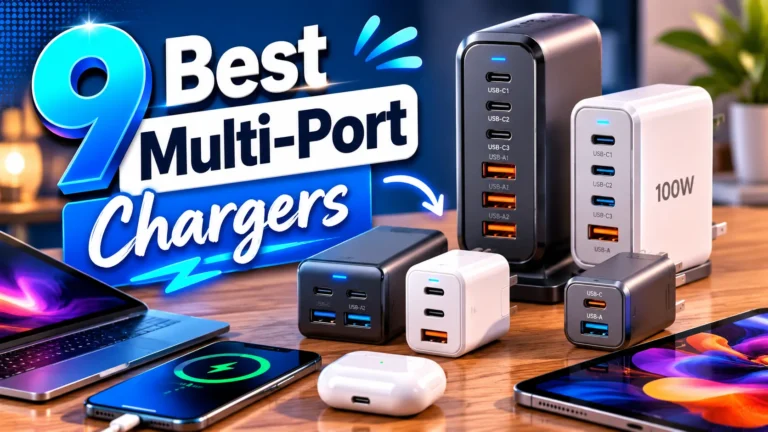
If you are at home, in an office, or traveling with family, a multi-port charger is often the best fix. It lets you charge more than one device at once without draining any phone battery.
That is much better than making one iPhone act like a charger. For more on this, see can multi port chargers be used for multiple devices.
Wireless charging pads are convenient
Wireless charging is not as fast as wired charging, but it is simple. If your goal is convenience, a pad can be useful at home or on a desk. It is also safer for battery sharing than trying to force one iPhone to power another.
If you are comparing charging styles, this is one area where a dedicated accessory clearly wins.
Buying Tips If You Want the Best Charging Setup
Check your iPhone port first
Before buying any cable or charger, check whether your iPhone uses Lightning or USB-C. That one detail changes everything. It affects cable choice, charging speed, and whether iPhone-to-iPhone charging is even possible in your setup.
Choose certified cables
Cheap cables can be unreliable. Some do not carry power well. Others fail fast. Use quality cables from trusted brands, especially if you plan to share power between devices.
Good cables also reduce heat and connection problems. That matters a lot when you are trying to save battery in a hurry.
Look for real-world convenience
The best charging gear is not always the fastest. It is the gear you will actually carry. A small power bank, a compact wall charger, or a short USB-C cable can be more useful than a fancy setup that stays at home.
For shoppers who want a dependable everyday pick, our article on budget chargers compatible with iPhone is a good place to start.
Think about your use case
If you only need emergency backup, then iPhone-to-iPhone charging may be enough. If you travel often, a power bank is better. If you share chargers with family, a multi-port wall charger is smarter. Match the tool to the job.
So, Can One iPhone Charge Another?
The simple answer
Yes, one iPhone can charge another in some setups, but it is limited. It works best with newer hardware, the right cable, and a small emergency need. It is not a full replacement for a charger or power bank.
My recommendation
If you already have the right cable and a USB-C iPhone, this can be a handy backup trick. But if you want something dependable, buy a real charging accessory. A power bank or wall charger will always be the better choice for speed, safety, and battery life.
So, can one iPhone charge another? Yes, but only as a backup plan. For most people, it is a neat feature to know about, not the best way to keep devices powered every day.
Frequently Asked Questions
Yes, in some cases it can, especially if both phones support the right USB-C setup. The process is usually slow and best used for small emergency top-ups.
Usually no, not in a useful way. Older Lightning models are much more limited, and they are not built for practical power sharing like newer USB-C iPhones.
Yes, it can drain very quickly. The source phone loses battery while the other gains power, so this is not a good option if both phones are already low.
It is generally safe if the devices and cables are compatible, but heat and battery stress can still be issues. If the phones get warm, it is better to stop and use a proper charger.
No, not in the way many people expect. iPhones do not work like full reverse-wireless charging phones for sharing power with another iPhone.
A power bank is the best choice for most people. It is made for charging, gives more reliable results, and does not drain your main phone battery.

Tech & Gadget Reviewer
Ethan Walker is a tech enthusiast and gadget reviewer with over 8 years of hands-on experience testing consumer electronics, smart home devices, and cutting-edge accessories. He helps readers make smarter buying decisions through honest, in-depth reviews.