

Best Smart Plug in Diffuser for Easy Home Fragrance
A smart plug in diffuser is a simple way to add scheduled home fragrance without managing candles or manual sprays. The best choice depends on outlet fit, app compatibility, scent coverage, and how comfortable you are relying on smart-home controls.
- Fit first: Check outlet clearance, plug orientation, and whether the unit blocks a second socket.
- Compatibility matters: Verify Wi-Fi, app support, and voice assistant integration before buying.
- Refills add cost: Cartridge, oil, or pad replacements can change the long-term value.
- Safety is essential: Follow the manual, inspect cords, and stop using damaged parts.
Best Smart Plug in Diffuser for Easy Home Fragrance: What It Is and Who It’s For
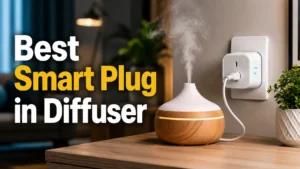
A smart plug in diffuser combines a plug-in fragrance device with app-based or voice-controlled scheduling. It’s a good fit for people who want a low-effort scent routine in a bedroom, bathroom, entryway, or office, but it is less ideal if you need strong fragrance coverage for a large open room.
Quick answer: the best smart plug in diffuser is the one that matches your outlet layout, app ecosystem, fragrance coverage needs, and safety expectations
That usually means checking the plug orientation, whether the diffuser blocks the second outlet, and whether the app works reliably with your phone and smart speaker setup. You should also confirm the refill type and manufacturer safety guidance before buying.
How this guide helps you choose the right smart plug in diffuser in 2026
This guide focuses on the practical details that matter after the product arrives: setup, compatibility, maintenance, and ongoing refill costs. It also highlights the limits of manufacturer claims so you can compare models more realistically.
- Check compatibility, model number, app requirements, dimensions, ports, wattage, and intended use
- Confirm safety guidance, warranty, return policy, privacy settings, and update support
How a Smart Plug in Diffuser Works with Your Home Setup
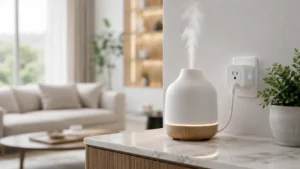
Most smart plug in diffusers follow the same basic idea: a fragrance reservoir, pad, or cartridge releases scent, while the smart portion lets you control timing, intensity, or on/off schedules from an app. Some models also support voice assistants or routines, which can make them feel more like part of a larger smart home rather than a standalone fragrance gadget.
Plug-in design, smart controls, and scent delivery basics
The plug-in design matters because it determines where the diffuser can sit and whether it can leave the second outlet open. Scent delivery also varies by model, so one unit may use timed bursts while another runs continuously at a lower output.
Connectivity options to verify: Wi-Fi, Bluetooth, app pairing, and voice assistant support
Some diffusers connect directly over Wi-Fi, while others use Bluetooth for setup and then rely on the app for local control. If the product claims Alexa, Google Home, or other assistant support, verify it on the current app listing and compatibility page before you buy.
If you already use smart lighting or home routines, it can help to think of the diffuser the same way you would a connected light accessory: the platform matters as much as the hardware. For a broader look at home automation compatibility, see our guides to smart lights that work with Alexa and smart lights that work with Google Home.
Typical dimensions, outlet clearance, and placement considerations for small spaces
Compact size is important because a diffuser that sticks out too far can interfere with furniture, cords, or a second receptacle. In small spaces, placement near airflow can help scent spread more evenly, but it should still follow the manufacturer’s ventilation and clearance instructions.
Key Buying Criteria: Specs That Matter Before You Buy
For a smart plug in diffuser, the most useful specs are the ones that affect scent performance, safety, and convenience. A long feature list is less important than whether the device fits your room, your outlet, and your routine.
Fragrance coverage, refill type, mist output, and runtime settings
Coverage claims are often based on ideal conditions, so treat them as directional rather than guaranteed. Refill type also matters: some devices use oils, some use cartridges, and others use pads or proprietary inserts that may be easier or harder to replace.
Power details to check: rated wattage, adapter quality, and safe-use limits
Any plug-in device should be used within the power limits listed by the manufacturer. If the diffuser includes an adapter, inspect it for proper labeling and use only approved accessories; never assume a third-party adapter is safe just because it fits.
App requirements, scheduling features, automation support, and firmware updates
App requirements can be the biggest hidden trade-off. Some models need a cloud account, some work locally after setup, and some depend on firmware updates for stable scheduling, so it’s smart to check the app store listing, privacy settings, and update history before committing.
If you care about automation, look for simple scheduling, scene integration, and routine support rather than complicated setup. The more your diffuser depends on app reliability, the more important it is to choose a brand that updates software consistently and documents changes clearly.
Noise level, indicator lights, and night-mode performance for bedrooms and offices
Even a quiet diffuser can be distracting if its LEDs are bright or its fan cycles are noticeable at night. For bedrooms and offices, look for a dimmable indicator, a night mode, or a way to disable lights and alerts during scheduled runs.
Best Use Cases: Which Homes and Lifestyles Benefit Most
Smart plug in diffusers are best for people who want a consistent scent routine without remembering to turn a device on and off. They are especially useful in smaller rooms where a modest amount of fragrance can make a noticeable difference.
Ideal for apartments, bathrooms, entryways, bedrooms, and home offices
These spaces often benefit from shorter, scheduled bursts rather than constant heavy scent. That makes the format appealing for apartment dwellers, roommates, and remote workers who want a lighter touch.
Best for users who want low-effort scent control and routine automation
If you already use smart plugs, smart lights, or home routines, a diffuser can fit naturally into daily automation. It’s also a good choice for people who prefer to set a schedule once and then make only occasional adjustments.
Who should skip it: large open-plan spaces, fragrance-sensitive households, or users avoiding app dependence
Large rooms may need a stronger standalone diffuser or a different fragrance solution altogether. Households with sensitivities should be cautious with any scented product, and users who want fully manual control may prefer a basic plug-in diffuser without an app.
Real-World Benefits and Practical Trade-Offs
The biggest benefit of a smart plug in diffuser is convenience. Once it’s set up correctly, it can keep a room smelling consistent without daily attention, which is useful for busy households, remote work setups, and guest-facing spaces.
Convenience, consistency, and hands-free scheduling for daily fragrance control
Scheduling helps reduce overuse and can make scent feel more predictable across the week. That matters if you want fragrance in the morning, after cleaning, or during a specific work block rather than all day.
Energy use, refill costs, and ongoing consumables to factor into value
Even if the device itself is affordable, ongoing consumables can shape the real value. Refill bottles, cartridges, or pads may cost more over time than buyers expect, especially if the diffuser uses a proprietary format.
- Hands-free scheduling
- Compact for small rooms
- Can fit into existing smart-home routines
- Refills add ongoing cost
- App quality varies by brand
- Coverage may be modest in larger spaces
Limitations to understand: scent strength variability, outlet placement, and app ecosystem lock-in
Scent strength depends on room airflow, ceiling height, and where the diffuser is placed, so two homes can get very different results from the same model. Some devices also work best inside a specific app ecosystem, which can make switching brands inconvenient later.
Evidence limits in product claims and why independent verification still matters
Manufacturers may describe coverage, runtime, or smart features in ideal terms, but those claims can vary with firmware, room layout, and refill type. Before buying, check the manual, current app listing, and warranty terms, and look for recent recall or safety notices if the brand has had issues.
For a broader perspective on whether connected home gear is worth the cost, it can help to compare the diffuser’s convenience against other smart accessories, such as the options covered in our smart lighting buying guides like smart lights for bedroom use and smart lights for home automation.
Setup Guide: How to Install and Use a Smart Plug in Diffuser Safely
Setup is usually straightforward, but safety and placement still matter. The goal is to get reliable fragrance without overheating, blocking outlets, or creating avoidable maintenance problems.
Step-by-step setup from unboxing to first scent cycle
App installation, account creation, Wi-Fi setup, and pairing checks
When pairing fails, the most common causes are weak signal, outdated app versions, or a phone permission issue. If the brand requires an account, use a strong password and enable two-factor authentication when available.
Safe placement rules: ventilation, heat clearance, upright positioning, and cord inspection
Keep the diffuser upright if the manual requires it, and do not place it where liquid can spill into the outlet. If the model uses a cord, inspect it regularly and avoid pinching it behind furniture or running it under rugs.
Common setup mistakes to avoid, including overloaded outlets and poor signal locations
Do not overload the outlet with multiple high-draw devices, and avoid using a loose power strip if the manufacturer discourages it. Also, avoid hiding the diffuser in a dead Wi-Fi zone if the app requires a stable connection for schedules and automation.
Maintenance, Cleaning, and Replacement Guidance
A smart plug in diffuser is only low-maintenance if you stay ahead of cleaning and refill management. The exact routine depends on the model, but regular care helps prevent clogs, weak scent output, and premature wear.
How often to clean the reservoir, nozzle, or scent path to prevent clogs
Follow the manufacturer’s cleaning schedule, since some devices need only occasional wiping while others benefit from more frequent maintenance. If scent output drops or the unit sounds different, a clogged nozzle or residue buildup may be the cause.
Consumables to track: refill bottles, pads, cartridges, or essential oil compatibility
Check whether the diffuser supports standard essential oils or only branded refills. Proprietary consumables can simplify compatibility, but they may also limit choice and increase long-term cost.
Storage tips for unused refills, seasonal downtime, and travel or move handling
Store refills according to the label, away from heat and direct sunlight. If you pack the diffuser for a move or seasonal break, empty it if the manual says to do so and keep parts organized so reassembly is simple later.
Warranty details to verify, plus signs it’s time to replace the unit or adapter
Warranty terms vary widely, so check what is covered, whether consumables are excluded, and how long support lasts. Replace the unit or adapter if it becomes unstable, repeatedly disconnects, overheats, or no longer follows schedules reliably.
Final Verdict: Best Value, Best for Beginners, and Final Recommendation
The best smart plug in diffuser is the one that feels almost invisible in daily use: easy to place, easy to schedule, and easy to maintain without creating extra hassle. For most buyers, the safest and most satisfying option is a compact model with clear app support, modest but reliable scent output, and readily available refills.
Transparent recommendation based on ease of use, safety, app reliability, and ongoing cost
If you want the best overall value, prioritize simple controls, a well-documented app, and a refill system you can afford to keep using. If you want the most polished experience, look for a model with stable automation support, dimmable indicators, and a footprint that fits your outlet layout cleanly.
Best-value buyer profile versus premium-feature buyer profile
Best-value buyers usually want dependable scheduling and low maintenance more than advanced automation. Premium-feature buyers may care more about voice control, app scenes, and more refined output settings, but they should still verify refill cost and long-term support.
Bottom line for 2026 smart home shoppers looking for easy home fragrance
For easy home fragrance, a smart plug in diffuser makes sense when you want convenience without a bulky device. Confirm compatibility, safety guidance, and consumable costs first, and you’ll have a much better chance of choosing a model that fits your room and routine.
Frequently Asked Questions
It’s best for people who want scheduled fragrance in small to medium rooms without daily manual control. It works especially well in bedrooms, bathrooms, entryways, and home offices.
Check outlet clearance, app compatibility, refill type, and any required voice assistant support. Also confirm the manual’s safety guidance, warranty terms, and whether the device needs cloud access.
Some do, but support varies by model and app version. Always verify current compatibility on the manufacturer’s page and app listing before buying.
Clean the scent path or reservoir on the schedule in the manual and replace refills before they run completely dry. Keep the unit upright and inspect the cord and adapter for wear.
They should only be left plugged in when used exactly as the manufacturer instructs. Stop using the device if it overheats, smells burnt, or has damaged parts.
Scent strength can vary by room size, airflow, and placement, and refill costs can add up over time. Some models also depend on a specific app ecosystem, which can create lock-in.



One Comment