Is the iPhone 18 Charger Real What You Need to Know
No special official “iPhone 18 charger” category has been verified. Treat future-model labels as marketing until the connector, power standard, safety information, and final Apple specifications can be confirmed.
Short answer: there is no verified, official “iPhone 18 charger” to buy as a special product category, and many listings using that name are likely rumors, placeholders, or generic USB-C chargers marketed with a future-phone label. If you are shopping today, focus on the charger’s real specs, cable type, and safety certifications instead of the name on the listing.
- Reality check: “iPhone 18 charger” is usually a rumor, placeholder, or generic listing name.
- What matters: USB-C, MagSafe, wattage, and USB Power Delivery are more important than the label.
- Safety first: Avoid chargers or cables that overheat, fray, buzz, or hide their specifications.
- Compatibility: Match the charger to your current phone, cable, and charging standard, not a future-model.
Is the iPhone 18 Charger Real? The Short Answer for 2026 Buyers
If you are seeing “iPhone 18 charger” online, treat it as a claim that needs verification rather than a confirmed accessory category. In most cases, the phrase is being used to describe a charger that may work with a future iPhone, not an officially announced charger made specifically for one model.
For buyers, the practical question is not whether the name sounds real, but whether the charger is a legitimate USB-C or MagSafe-compatible accessory from a reputable brand with clear specifications. That is what determines whether it will charge safely and at a useful speed.
What People Usually Mean by “iPhone 18 Charger”
The phrase can mean three different things: a rumor about a future Apple charger, a placeholder listing used by sellers, or a generic charger that someone believes will work with the next iPhone. Those are not the same thing, and only one of them may be a real product listing.
Rumor, placeholder name, or unofficial accessory listing
Some online stores use future-model names to catch search traffic before a phone is officially announced. Others may be referring to a standard USB-C power adapter, a cable, or a MagSafe-style wireless charger that has nothing unique to do with “iPhone 18” specifically.
Because naming can be vague, the safest approach is to look for the actual product family, connector, and power delivery standard. If the listing does not clearly identify the charger type, it is not a trustworthy purchase page.
How to tell whether a charger claim is legitimate
Check whether the seller provides a model number, brand name, input/output ratings, cable details, and a support page or manual. A legitimate listing should explain what device the charger is for and how it charges, not just repeat a future phone name.
- Check compatibility, model number, cable type, wattage, and intended use
- Confirm safety guidance, warranty, return policy, and update support where relevant
If the page is missing those basics, or if it relies on vague claims like “fastest ever” without technical details, move on. That is especially important for chargers, where poor-quality electronics can create heat and long-term battery stress.
How iPhone Charging Works in 2026
Modern iPhone charging is based on standard power delivery methods, not a phone-specific charger that only works with one model. In practice, the charger must match the cable and the phone’s supported charging method.
USB-C, MagSafe, and charging wattage basics
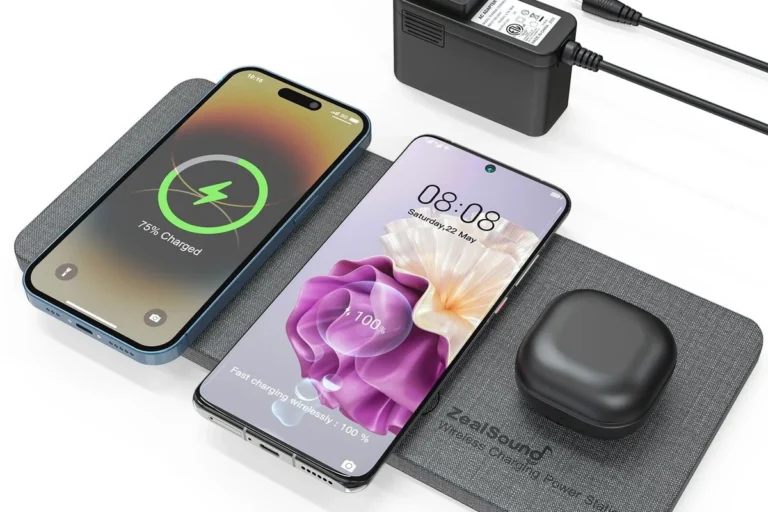
For wired charging, USB-C is the key connector to look for. For wireless charging, MagSafe-compatible chargers or other Qi-based chargers may be relevant, depending on the phone model and accessory support.
That means a charger marketed for a future iPhone is only useful if it supports the same charging standard the phone actually uses. The name alone does not guarantee faster charging.
What rated wattage actually matters for fast charging
Wattage tells you how much power the charger can supply, but the phone decides how much power it will draw. A charger with more wattage than the phone needs can still be fine, as long as it is from a reputable brand and uses the correct standard.
The useful question is whether the charger can deliver stable power within the phone’s supported range. That matters more than chasing the biggest number on the box.

A future-ready choice for readers who want one premium charger for a phone, tablet, and laptop. Its value comes from multi-device flexibility—not from making one iPhone accept more power than it supports.
Check Current Price on Amazon
Verify the current listing, seller, specifications, and final iPhone 18 requirements before purchase.
Compatibility: Who a So-Called iPhone 18 Charger Would Fit
A charger labeled for “iPhone 18” would likely fit any device that supports the same connector and charging standard, not just one model. In other words, compatibility is about the interface, not the marketing name.
Device and cable requirements to check before buying
Check the phone’s port type, whether it supports wired fast charging, and whether it needs a specific cable for best results. Some chargers require a separate USB-C cable, while wireless chargers may need a compatible power adapter to perform correctly.
If you use cases, magnetic mounts, or thick accessories, make sure they do not interfere with wireless charging alignment. Small placement issues can reduce charging speed or cause intermittent charging.
Portability, travel use, and charging multiple devices
For students, commuters, and travelers, a compact charger with foldable prongs or a small footprint can be more useful than a bulky high-watt unit. If you charge a phone, earbuds, and a tablet, consider whether the charger has one port or multiple ports and how power is shared.
Multi-device charging is convenient, but the total output may be divided across ports. That means the charger’s headline wattage may not be available to every device at once.

This premium station makes sense for a home office or family desk that charges several devices every day. You are paying for total capacity, port selection, and organization—not extra speed for one phone.
View Today’s Amazon Availability
Check how power is shared across ports and verify final iPhone 18 specifications after Apple publishes them.
Key Specifications to Verify Before You Trust Any Charger Listing
This is the part most shoppers skip, but it is the most important. A real charger listing should give you enough technical detail to judge safety, speed, and fit.
Wattage, voltage, amperage, and PD support
Wattage is only one piece of the puzzle. Voltage and amperage help explain how power is delivered, and USB Power Delivery support is often a sign that the charger is designed for modern phones and laptops.
If a listing hides these numbers or uses confusing language, that is a warning sign. Quality charger listings are usually clear about output modes and supported devices.
Cable quality, connector type, and build inspection
Even a good adapter can perform poorly with a weak cable. Check that the cable is rated for the charging standard you need, has a secure connector, and is long enough for your desk, nightstand, car, or travel setup.
Inspect the housing, plug blades, and strain relief for loose parts or poor finishing. A charger that feels flimsy out of the box is not a good sign, especially if it is supposed to handle fast charging.
Heat, certification marks, and safety labeling
Chargers naturally get warm, but they should not become uncomfortably hot during normal use. Excessive heat, buzzing, discoloration, or a burning smell means you should stop using the charger and follow the manufacturer’s guidance.
Look for safety labeling that is appropriate for your region and verify it with the manufacturer’s documentation when possible. If the listing makes safety claims but offers no documentation, that is not enough to trust.
Real-World Value: Benefits, Trade-Offs, and Limitations
The value of any charger comes from convenience, consistency, and safety, not from the phone model name printed in the title. A well-made charger can be useful across multiple devices for years.
Charging speed, convenience, and everyday usability
A good charger should give you predictable performance at home, at work, and on the road. That means stable charging, a cable that fits your setup, and enough power for the devices you actually own.
- Can work across multiple compatible devices
- May offer fast, convenient charging when specs are honest
- Useful for desks, travel bags, and bedside charging
- Marketing labels can be misleading
- Wireless charging can be slower or more position-sensitive
- Low-quality listings may hide weak safety or build quality
For many users, the best charger is the one that matches daily habits: a compact single-port adapter for travel, a multi-port unit for a family room, or a magnetic pad for a nightstand.

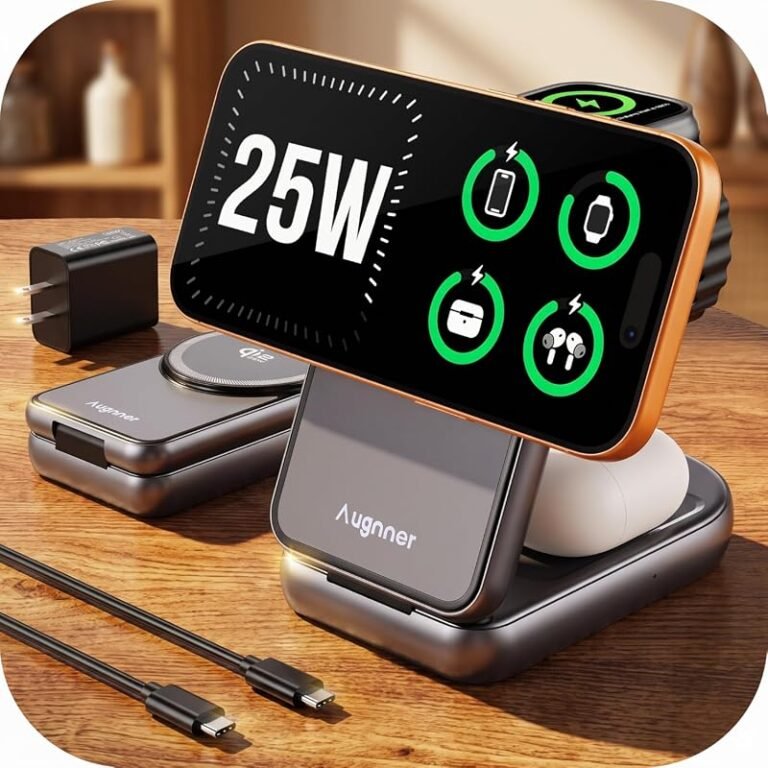
A polished option for an Apple-focused setup that combines phone, watch, and earbuds charging in a foldable design. It is a more useful premium purchase than an unverified accessory carrying only an “iPhone 18” label.
See Product Details on Amazon
Confirm device compatibility, included accessories, seller, and current availability on Amazon.
Where misleading listings fall short
Misleading listings often exaggerate speed, omit output details, or imply compatibility without proof. Some also use future model names to create urgency even though the product is just a generic charger.
If the listing cannot explain what makes it different from a standard USB-C or MagSafe charger, the “iPhone 18 charger” label is probably just marketing noise. That is a good reason to keep your purchase criteria technical and practical.
Safe Use, Care, and Replacement Guidance
Chargers last longer and work better when they are handled carefully. Good habits also reduce heat, cable wear, and the chance of electrical problems.
How to avoid overheating, frayed cables, and battery stress
Use the charger in open air whenever possible, not under blankets or in tightly packed spaces. Keep cables untwisted, avoid sharp bends near the connector, and unplug gear by the plug rather than yanking the cord.
- Keep charging gear off soft surfaces that trap heat
- Use the correct cable for the charging standard and port type
- Do not continue using a charger that sparks, smells odd, or runs unusually hot
For battery health, avoid constant heat and do not ignore repeated charging interruptions. If a charger no longer seats properly or the cable only works at certain angles, it is time to replace the faulty part.
Storage, maintenance, and when to replace the charger
Store chargers in a dry place with the cable loosely coiled. Avoid wrapping the cord tightly around the adapter for long periods, since that can stress the cable and connector over time.
Replace a charger if the casing cracks, the cable frays, the plug loosens, or the charger starts making unusual noises. When in doubt, consult the manufacturer’s support page, warranty terms, or recall notices before using the accessory again.
Premium Charging Options at a Glance
| Product | Best For | Main Premium Value | Important Limitation | Amazon |
|---|---|---|---|---|
| Anker Prime 160W | Travel and compact multi-device use | Three USB-C ports in a compact GaN charger | Overkill for one phone | Check price |
| Anker Prime 250W | Complete desk or family setup | Six ports, high total capacity, display | Large and premium-priced | View listing |
| Anker Prime Qi2.2 3-in-1 | Wireless Apple-device setup | Foldable three-device convenience | iPhone 18 support is unconfirmed | See details |
Verdict: Should You Buy an “iPhone 18 Charger” Now?
Buy the charger only if the listing clearly identifies the real charging standard, connector type, output ratings, and safety information. If it does not, skip the “iPhone 18” branding and choose a reputable USB-C or MagSafe-compatible charger that matches your current device and charging habits.
Best alternatives, buyer priorities, and final recommendation
For most people, the best alternative is a well-documented charger from a known brand with clear USB Power Delivery support, a quality cable, and a safety track record you can verify. Travelers should prioritize compactness, desk users may want multi-port convenience, and wireless users should focus on alignment and heat management.
There is no reason to chase a vague “iPhone 18 charger” label unless the underlying specs are real and verifiable. Choose the charger that matches your device, cable, and safety needs, and treat any future-model marketing claim with caution until Apple or the manufacturer confirms it.
Choose the 160W model for compact multi-device charging, the 250W station for a complete desk, or the Qi2.2 model for a foldable wireless setup. For phone-only charging, a simpler certified USB-C PD adapter may offer better value.
Verify the Amazon seller, current price, availability, included accessories, and Apple’s final iPhone 18 charging requirements.
Frequently Asked Questions
Usually, the phrase is a marketing label, rumor, or placeholder rather than a confirmed official product category. Check the brand, model number, and specs before trusting the listing.
Look for a reputable USB-C charger with USB Power Delivery for wired charging, or a compatible MagSafe or Qi charger for wireless use. The right choice depends on your phone model and charging habits.
The best wattage depends on the phone and charger standard, since the device controls how much power it draws. A higher wattage charger can be fine, but it does not force faster charging if the phone does not support it.
Look for clear output ratings, a known brand, appropriate safety labeling, and documentation from the manufacturer. Avoid listings that hide specifications or make vague speed claims without technical details.
Replace it if the cable frays, the plug loosens, the charger overheats, the casing cracks, or charging becomes inconsistent. Stop using it immediately if you notice burning smells, sparks, or discoloration.
Yes, if it supports the needed charging standard and has enough output for your devices. Multi-device charging may split power across ports, so check the specs before relying on it for fast charging.