Will iPhone 18 Use USB-C – What to Expect in 2026
iPhone 18 is expected to use USB-C, but Apple’s final official specs should be checked before buying accessories. If you plan ahead, choose quality USB-C chargers and cables that match your other devices too.
Affiliate disclosure: As an Amazon Associate, Gadget Makers Blog earns from qualifying purchases. This does not increase your price. Availability and listing details can change.
Apple has not officially confirmed the iPhone 18’s charging port as of the current editorial year, so the safest answer is: it is expected to use USB-C, but readers should verify the final specifications before buying accessories. For most people, that means the best move is to plan around USB-C now while keeping an eye on Apple’s product page and compatibility notes.
- Most likely answer: USB-C is the expected port, but official confirmation still matters.
- Best buying strategy: Choose USB-C accessories that work with multiple devices, not just one phone.
- Key caution: Charging speed depends on the charger, cable, and phone limits.
- Safety first: Stop using damaged, overheating, or unstable charging gear.
- Smart next step: Verify Apple’s specs, then match your cable and adapter to the exact model.
The Direct Answer About will iPhone 18 use USB-C
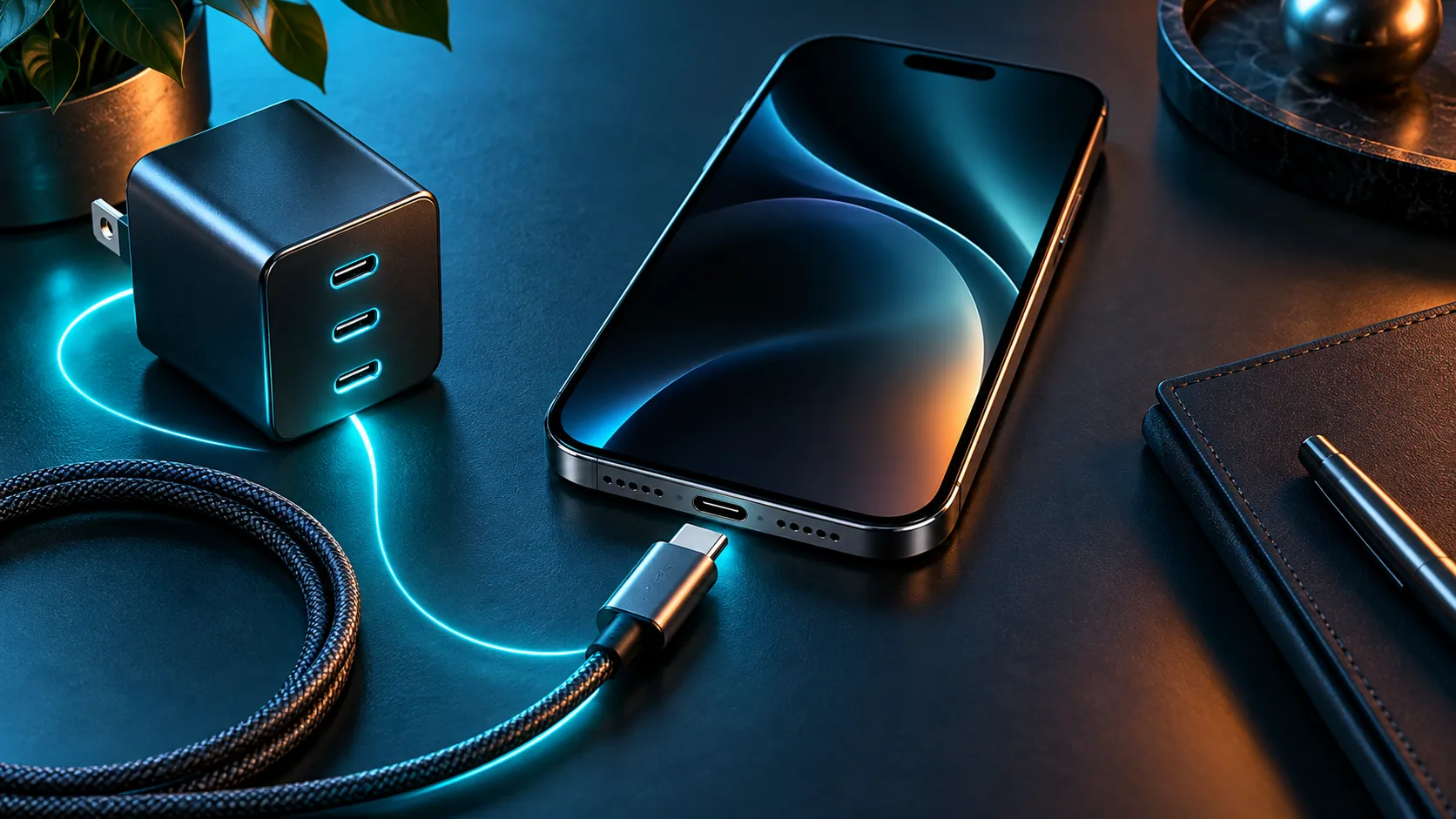
Based on Apple’s recent charging direction and the broader industry shift, USB-C is the most likely port for the iPhone 18. That said, until Apple publishes the final hardware specs, any answer remains an informed expectation rather than a guaranteed fact.
If you are shopping for chargers, cables, power banks, car adapters, or docking accessories, assume USB-C compatibility first and then confirm the exact cable and power requirements once the phone is announced. That is especially important if you are trying to reuse older Lightning accessories, since those may no longer be relevant.

Anker Prime 160W 3-Port GaN Charger
Short verdict: The best overall option here for an iPhone user who also charges a USB-C tablet or laptop.
- 160W maximum combined output
- Three USB-C charging ports
- Multi-device format for current phones, tablets, and laptops
Best for: Apple users carrying an iPhone, iPad, and MacBook.
Skip it if: You only need a low-cost single-phone charger.
View Anker Prime 160W →Verify current device compatibility, cable requirements, included accessories, and seller details. iPhone 18 support is not yet confirmed.| Product | Best for | Key feature | Main trade-off | Amazon |
|---|---|---|---|---|
| Anker Prime 160W | Portable multi-device use | Three USB-C ports | Excess capacity for phone-only use | View listing → |
| Anker Prime 250W | Desktop charging | Six-port station | Not pocket-sized | View listing → |
| Anker Prime Qi2.2 3-in-1 | Wireless Apple travel setup | Foldable 3-in-1 format | Compatibility must be checked | View listing → |
How It Works and Who It Is For
USB-C is a reversible connector used across phones, laptops, tablets, earbuds, game consoles, and power banks. For iPhone users, the practical benefit is simpler cable sharing, fewer proprietary accessories, and easier travel packing if your other devices already use USB-C.
This matters most for people who charge in multiple places: at home, in a car, at a desk, or while traveling. It also helps students, remote workers, creators, and families who want one cable standard instead of a drawer full of mixed connectors.
For buyers with older Lightning accessories, the shift can be mixed. You may gain convenience overall, but some existing cables, docks, and charging stands may need to be replaced if they are not USB-C compatible.
If you already own USB-C chargers for a laptop, tablet, earbuds, or handheld console, check their output ratings first. A compatible port does not automatically mean every charger is ideal for fast, safe charging.
Key Features, Fit, and Specifications to Check
When evaluating whether the iPhone 18 will use USB-C, the connector itself is only part of the story. The more important details are charging speed support, cable quality, data transfer behavior, and whether the phone supports the accessories you already own.
Fit is also about how you charge in daily life. If you use a bedside stand, a MagSafe-style charger, a desktop hub, or a vehicle charger, make sure the cable length and connector placement work with your setup. Some cases can also affect how neatly a cable sits, especially on tight charging stands.
- iPhone 18 handset
- USB-C charging cable, if included by region or model
- Setup guide and safety paperwork
Benefits, Limitations, and Real-World Trade-Offs
The biggest advantage of USB-C is convenience. One standard can reduce clutter, make it easier to borrow a charger in a pinch, and simplify accessory buying because USB-C is now common across a wide range of consumer electronics.

Anker Prime 250W 6-Port GaN Charging Station
Short verdict: The high-ticket choice for households and workspaces that regularly charge several USB-C devices together.
- 250W maximum combined station output
- Six-port layout for multiple devices
- Desktop format designed to consolidate chargers
Best for: Families, creators, offices, and MacBook users.
Skip it if: Portability or charging one phone is your priority.
Check Anker 250W Availability →Confirm port allocation, cable requirements, included components, seller, and current availability on Amazon.There are still trade-offs. A USB-C port does not guarantee the same charging speed across every adapter, cable, or power bank. In real use, charging performance depends on the phone’s internal limits, the charger’s output, cable quality, and whether the accessory is designed for the right power profile.
- Easier to share cables with other modern devices
- More flexible for travel, desks, and cars
- Better long-term accessory compatibility than older proprietary setups
- Older Lightning accessories may become less useful
- Charging speed still depends on the charger and cable
- Some accessories may need model-specific confirmation
For most buyers, the trade-off is worth it if they already use USB-C elsewhere. If your home setup is heavily built around older Apple accessories, the transition may require a short replacement period before everything feels seamless again.
USB-C is a connector shape, not a guarantee of speed. Two USB-C cables can look the same and still support very different charging or data capabilities.

Anker Prime 25W Qi2.2-Certified 3-in-1 Foldable Charger
Short verdict: A compact premium alternative for Apple users who prefer an organized wireless setup alongside USB-C charging options.
- Qi2.2-certified positioning stated in the supplied title
- Foldable palm-sized 3-in-1 design
- Magnetic alignment for compatible phones
Best for: Travelers carrying compatible iPhone, Apple Watch, and earbuds.
Skip it if: Maximum wired efficiency is more important than wireless convenience.
Check Wireless Compatibility →Do not assume iPhone 18 compatibility. Verify supported models, case requirements, included power supply, and listing details.Safety, Setup, and Common Mistakes
With any phone charger, safety starts with the cable and adapter condition. Use certified or manufacturer-approved accessories when possible, and stop using anything that is frayed, bent, loose, discolored, or unusually warm during charging.
Do not use damaged cables, swollen batteries, overheated chargers, or accessories that spark, smell burnt, or disconnect repeatedly. If a charger gets hot enough to be uncomfortable to touch, unplug it and follow the manufacturer’s guidance.
Common mistakes include assuming every USB-C charger is equally safe, using bargain cables with unknown ratings, and plugging a phone into a weak hub that cannot deliver stable power. Another frequent issue is expecting fast charging from a laptop port, monitor port, or power bank without checking output specifications.
Look up the iPhone 18’s port type, charging guidance, and any accessory limits on Apple’s official product page or manual.
Use a cable that supports the needed power and data functions for your setup, not just the right connector shape.
If the phone, cable, or adapter becomes excessively warm or charging cuts in and out, stop using that accessory and inspect it.
Replace any cable or adapter that shows physical wear, loose connectors, or repeated charging failures. If you are unsure whether a charger is appropriate, confirm the model details with the manufacturer before continuing to use it.
Care, Maintenance, Storage, or Replacement
USB-C accessories last longer when they are handled gently. Avoid yanking cables from the cord, bending them sharply near the connector, or stuffing them tightly into bags where the ends can be crushed.
Keep ports clean and dry, especially if the phone is used in a kitchen, workshop, gym bag, or travel environment. Dust, pocket lint, and moisture can interfere with a solid connection and cause intermittent charging.
For storage, loosely coil cables and keep them away from heat sources, pets, and sharp edges. If a cable starts to feel stiff, the connector housing cracks, or the phone only charges at certain angles, it is usually time to replace the accessory rather than keep forcing it.
- Store one short USB-C cable in your bag and one longer cable at home for flexibility.
- Label chargers by room or device to avoid mixing up underpowered adapters.
- Inspect cables monthly if you travel often or charge in a car.
Value, Alternatives, and Final Recommendation
If you are deciding whether to wait for the iPhone 18 or buy accessories now, the best value approach is to invest in quality USB-C gear that works across multiple devices. That usually gives you more flexibility than buying phone-specific accessories too early.
Good alternatives include USB-C chargers from reputable brands, multi-port desktop chargers, and certified cables that support the wattage and data needs of your current devices. If you still rely on Lightning accessories, keep only the ones that are still useful today and avoid overbuying replacement hardware before Apple confirms the final phone details.
Buyers who want the most practical answer: plan on USB-C for the iPhone 18, but confirm the final port, charging speed, and accessory requirements before making a full upgrade.
My recommendation is simple: expect USB-C, but verify the exact iPhone 18 specifications before you commit to cables, docks, or charging stands. That approach gives you the benefits of preparation without assuming details Apple has not officially confirmed yet.
Final Product Recommendation
- Choose Anker Prime 160W for the strongest balance of portability and multi-device USB-C charging.
- Choose Anker Prime 250W for a permanent high-capacity desktop charging setup.
- Choose Anker Prime Qi2.2 3-in-1 for compact wireless convenience after checking every device on the compatibility list.
Frequently Asked Questions
USB-C is the most likely port based on Apple’s recent direction, but the final answer should be confirmed on the official iPhone 18 specifications page. Until then, treat it as a strong expectation rather than a guaranteed fact.
You can buy quality USB-C chargers and cables now if you already use other USB-C devices. Just avoid locking into a specific accessory until the final iPhone 18 specs are published.
No. Charging speed and stability depend on the charger’s output, the cable quality, and the phone’s supported charging limits. A USB-C plug alone does not guarantee fast charging.
Look for a USB-C cable that matches your charging and data needs, and confirm it is rated for the adapter or device you plan to use. If possible, choose a reputable brand with clear specifications.
Unplug it and stop using it if the heat is excessive, persistent, or paired with damage, odor, or charging interruptions. Follow the manufacturer’s guidance before using it again.
Check whether the accessory uses USB-C and review the manufacturer’s compatibility notes. Older Lightning-only accessories may not be useful with a USB-C iPhone.