Are the iPhone 18 Charger Rumors Real What to Know
Some iPhone 18 charging rumors are plausible, but the specific claims are still unconfirmed. Buy charging gear for your current phone and verify official specs before upgrading.
Affiliate disclosure: As an Amazon Associate, Gadget Makers Blog earns from qualifying purchases. This does not increase your price. Availability and listing details can change.
The short answer: some iPhone 18 charging rumors may be directionally plausible, but most of the specific claims are still unconfirmed and should be treated as speculation until Apple’s official specs are published. If you need a charger now, buy for today’s iPhone compatibility and avoid making assumptions about a future port, cable, or wireless-only design.
- Rumor status: The general charging direction may be believable, but the details are not confirmed.
- Smart buying: Choose chargers and cables for current devices, not future speculation.
- Safety first: Heat, fraying, and unstable charging are signs to replace gear.
- Best focus: Certification, cable quality, and compatibility matter more than hype.
- Practical move: Wait for official specs if you plan a major accessory upgrade.
Are the iPhone 18 Charger Rumors Real? The Short Answer for 2026 Buyers
For GadgetMakersBlog readers, the most useful way to think about the iPhone 18 charger rumors is this: the broad idea of Apple continuing to simplify charging is believable, but the exact details are not something you should plan around yet. Rumors often mix real supply-chain hints, analyst guesses, and concept-level speculation, so the safest move is to separate confirmed Apple information from internet chatter.
What the iPhone 18 Charging Rumors Actually Claim
The rumor cycle around a future iPhone usually centers on three things: whether Apple changes the charging port, whether the phone becomes more wireless-focused, and whether the box contents change again. Those topics matter because they affect what cables, adapters, and charging pads buyers should keep or replace.
Rumored port changes, wireless-only talk, and accessory bundle changes
Some rumors suggest Apple could keep pushing toward a cleaner design with fewer physical ports, while others speculate about a fully wireless future. There is also recurring talk that Apple may continue shipping fewer accessories in the box, which would leave buyers responsible for sourcing their own power adapter and cable.
Accessory bundles, port decisions, and charging standards can vary by region, model, and release cycle. Always confirm the final product page and official comparison chart before buying new gear.
What is confirmed versus what is still speculation
What is generally confirmed in Apple’s product strategy is the company’s preference for controlled accessory ecosystems, USB-C on recent iPhones, and wireless charging support. What is not confirmed is whether the iPhone 18 will remove a port, change its charging behavior, or require a new class of charger. Until Apple publishes official specs, those claims remain unverified.
- Check the exact iPhone model, region, and release documentation before assuming charger compatibility.
- Confirm the cable standard, adapter wattage, and wireless standard listed by the manufacturer.
- Review warranty terms, return policy, and safety guidance for any new charging accessory.
How iPhone 18 Charging Would Work If the Rumors Are True
If a future iPhone leans harder into wireless charging or changes its port strategy, the charging experience would still be shaped by the same basic rules: the phone decides the actual charging speed, heat management matters, and accessory quality matters more than marketing claims.
Wired charging expectations: cable type, rated wattage, and speed limits
If Apple keeps wired charging in the lineup, the phone would likely still depend on a USB-C cable and a compatible power adapter. The important detail is that charger wattage is only part of the story; the phone negotiates how much power it accepts, and faster charging can slow down as the battery fills or the phone warms up.

Anker Prime 160W 3-Port GaN Charger
Short verdict: The strongest all-around option here for buyers who want one compact premium charger for an iPhone, iPad, and USB-C laptop.
- 160W maximum combined output across three USB-C ports
- Multi-device design for phone, tablet, and laptop setups
- GaN construction helps deliver high output in a compact format
Best for: Apple users carrying an iPhone plus a MacBook or iPad.
Skip it if: You only need a small single-device phone adapter.
View Anker Prime 160W →Confirm current device compatibility, cable requirements, included accessories, and seller details on Amazon.| Product | Best for | Key feature | Main trade-off | Amazon |
|---|---|---|---|---|
| Anker Prime 160W | Travel and multi-device charging | Three USB-C ports | More output than phone-only users need | View listing → |
| Anker Prime 250W Station | Premium desktop setup | Six charging ports | Not pocket-sized | View listing → |
| Anker Prime Qi2.2 3-in-1 | Wireless Apple travel setup | Foldable 3-in-1 design | Compatibility must be verified | View listing → |
Wireless charging expectations: MagSafe-style alignment, heat, and efficiency
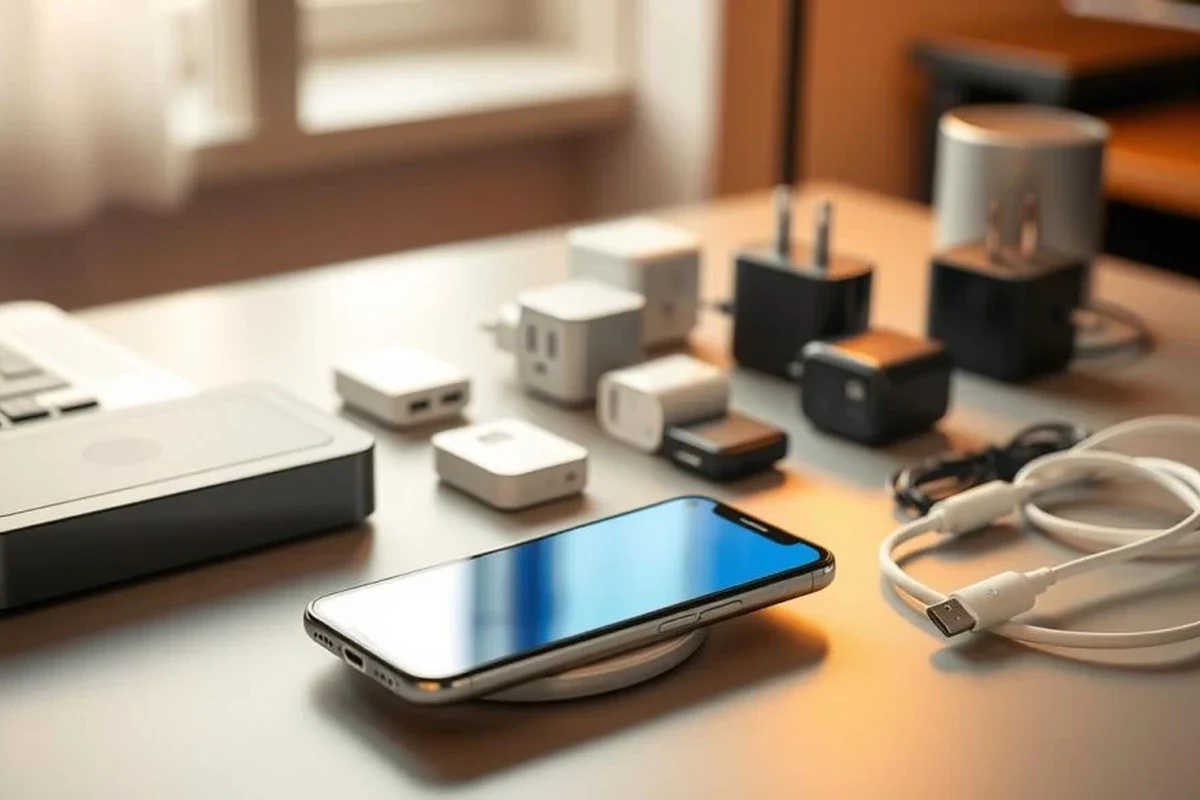
If Apple pushes wireless charging more aggressively, alignment would matter even more. Magnetic alignment can help reduce wasted energy and improve consistency, but wireless charging is still typically less efficient than a cable and may create more heat, especially if the phone is used while charging.
Extra heat is a normal concern with wireless charging. Stop using any charger that becomes unusually hot, smells burnt, makes noise, or causes the phone to warn about temperature.

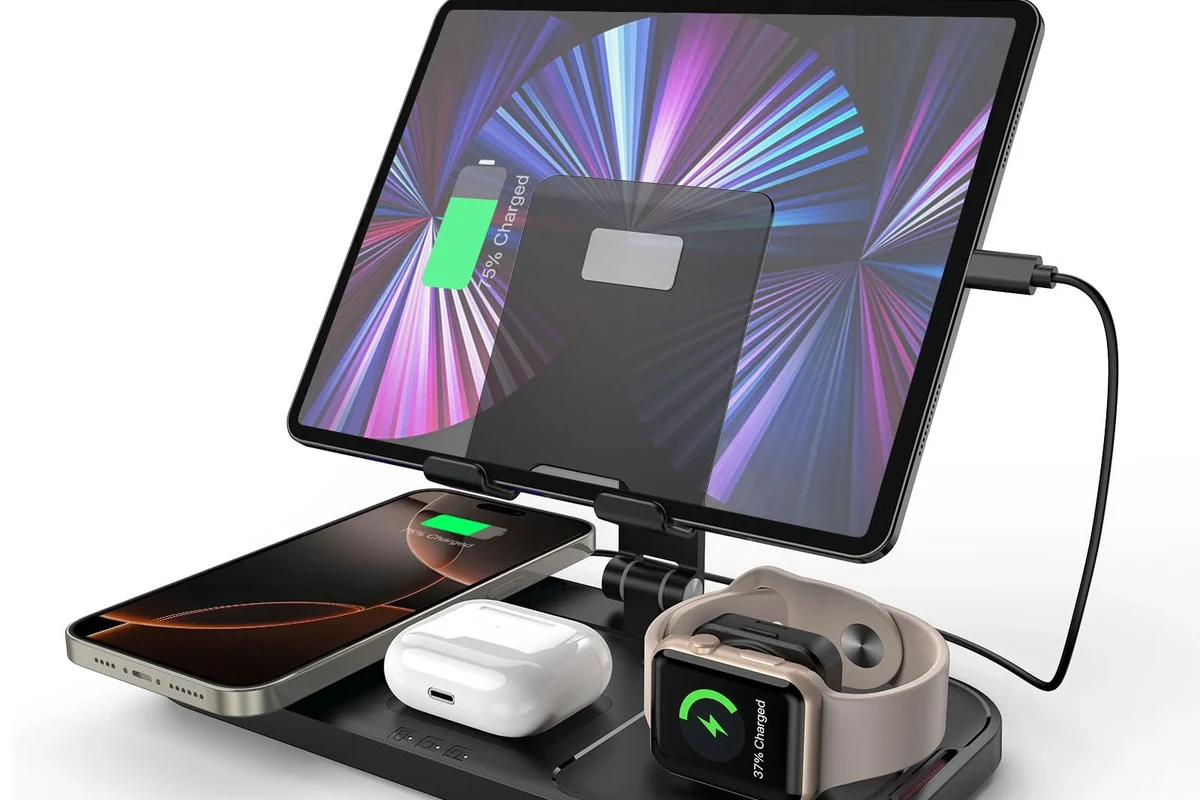
Anker Prime 25W Qi2.2-Certified 3-in-1 Foldable Charger
Short verdict: A premium palm-sized option for Apple users who want a cleaner foldable charging setup for multiple compatible devices.
- Qi2.2-certified positioning stated in the supplied product title
- Foldable 3-in-1 design for travel or bedside use
- Magnetic alignment intended to simplify phone placement
Best for: Travelers carrying compatible iPhone, Apple Watch, and wireless earbuds.
Skip it if: You prefer maximum wired efficiency or do not own multiple compatible devices.
Check Wireless Compatibility →Do not assume iPhone 18 compatibility. Verify supported models, included power supply, case requirements, and current listing information.Who These Rumors Matter Most For
Not everyone needs to care about iPhone 18 charger rumors right away. They matter most to people deciding whether to buy a new adapter, replace a cable, or wait for the next iPhone announcement before spending money on charging gear.
Current iPhone users deciding whether to upgrade chargers now
If you already have a recent iPhone, the safest approach is usually to keep charging with verified accessories that match your current device. A rumor alone is not a good reason to replace a working charger, especially if your present setup already supports your daily routine at home, at work, or in the car.
Frequent travelers, power users, and anyone relying on fast top-ups
Travelers, students, remote workers, gamers, and creators tend to feel charging changes first because they depend on fast, reliable top-ups throughout the day. If that sounds like you, prioritize a compact, certified charger and a durable cable that works across your current devices, rather than waiting on an unconfirmed future accessory shift.
- Keep one known-good cable at home, one in a bag, and one at a desk to reduce wear from constant unplugging.
- Use a charger that matches your daily routine instead of chasing the highest advertised wattage.
- Replace any accessory that bends, frays, overheats, or disconnects intermittently.
Key Specs and Buying Criteria to Watch Before You Upgrade
When buying charger gear in a rumor-heavy year, the smartest move is to focus on measurable criteria. That means checking wattage, cable quality, safety certification, and how the charger fits your space and travel habits.
Charger wattage, USB-C cable quality, and certification to verify
Wattage tells you how much power a charger can supply, but it does not guarantee the phone will charge at that rate. For USB-C accessories, cable quality matters just as much as the adapter, and buyers should confirm the cable is built for the intended power level and use case.
Battery health, heat management, and safe-use limits
Fast charging is convenient, but battery health is affected by heat, long charging sessions, and poor accessory quality. If a charger or cable causes repeated warmth, erratic charging, or visible wear, it is better to replace it than keep relying on it.
Stop using damaged cables, swollen batteries, loose ports, or chargers that overheat. Follow the manufacturer’s guidance and replace questionable gear rather than trying to “push through” the problem.
Portability, charging speed, and value trade-offs
Small chargers are easier to carry, while higher-output units can be better for multi-device setups. The right choice depends on whether you want one compact travel charger, a desk charger for several devices, or a spare adapter for a backpack or car.
- Better planning for travel and multi-device charging
- Less guesswork when choosing a safe, compatible adapter
- More confidence if Apple changes the charging approach later
- Rumors can tempt buyers into unnecessary upgrades
- Higher-output chargers may cost more and run warmer
- Not every accessory will be useful if the final iPhone specs differ

Anker Prime 250W 6-Port GaN Charging Station
Short verdict: The high-ticket choice for a permanent desk where several phones, tablets, laptops, and accessories need organized charging.
- 250W maximum combined station output
- Six-port layout for a multi-device workspace
- Desktop format designed to consolidate several chargers
Best for: Families, creators, and MacBook users charging multiple devices at one desk.
Skip it if: Portability or one-phone charging is your main priority.
Check Anker 250W Availability →Confirm port allocation, cable needs, included components, compatibility, seller, and current availability on Amazon.Real-World Benefits and Practical Drawbacks of a New Charging Direction
If Apple moves further toward a simplified charging ecosystem, there are real benefits. But there are also trade-offs that matter to everyday users, especially anyone who depends on predictable charging at work, in the car, or while traveling.
Convenience, accessory simplification, and ecosystem consistency
A cleaner charging direction can reduce clutter and make it easier to standardize around fewer accessories. For households with multiple Apple devices, that can mean less cable confusion, fewer mismatched adapters, and a simpler bag setup for school or travel.
USB-C and magnetic wireless systems can both support power delivery, but the actual charging speed still depends on the device, cable, charger, and thermal conditions.
Limitations: slower charging, extra heat, and replacement costs
The downside is that wireless-first charging can be less efficient, which may mean more heat and slower top-ups compared with a good wired setup. It can also create replacement costs if your old cables, docks, or power bricks no longer fit the new direction Apple chooses.
If you are building a charging setup for the long term, buy accessories with clear certification, sturdy strain relief, and a return policy you trust.
Common Mistakes to Avoid with iPhone Charging Gear in 2026
The biggest charging mistakes are usually simple: buying the wrong cable, assuming the highest wattage is automatically best, or ignoring signs that an accessory is wearing out. These mistakes matter even more when rumors create pressure to “future-proof” too early.
Using low-quality cables, oversized adapters, or worn-out accessories
Cheap cables often fail first, especially at the connector ends. Oversized adapters are not automatically harmful, but they are unnecessary if your phone cannot use the extra output, and worn-out accessories can create unstable charging or excess heat.
Ignoring inspection, storage, and replacement guidance
Charging gear lasts longer when it is stored without sharp bends, kept dry, and checked regularly for fraying or discoloration. If an accessory has been dropped, pinched, overheated, or exposed to moisture, it is safer to replace it than continue using it.
- Rumors about iPhone 18 charging may be plausible, but the specific claims are still unconfirmed.
- Buy chargers and cables based on current verified compatibility, not on speculation.
- Heat, cable quality, and certification matter more than marketing claims about speed.
Safe Use, Care, and Final Recommendation for GadgetMakersBlog Readers
The best strategy is simple: use safe, certified charging gear now, keep an eye on official Apple specifications when they arrive, and avoid replacing good accessories just because the rumor mill is active. If your current charger works well, there is usually no need to panic-buy a new one.
How to charge safely, store accessories properly, and know when to replace them
Charge on a stable surface, keep adapters ventilated, and avoid covering them with blankets, pillows, or clutter. Store cables loosely coiled, inspect them regularly, and replace anything that shows fraying, loose connectors, discoloration, or overheating.
Confirm whether your phone, cable, and adapter already meet your daily charging needs safely.
Wait for official Apple specs or a trusted compatibility list before buying new accessories for a rumored port change.
Stop using accessories that overheat, fray, or behave unpredictably, and follow the manufacturer’s guidance.
Bottom-line verdict: wait, prepare, or buy now
If you are asking whether the iPhone 18 charger rumors are real, the most honest answer is that the broad direction may be believable, but the details are not ready for shopping decisions yet. Wait if you are planning a major charger upgrade, prepare by buying one reliable certified cable or adapter for your current devices, and buy now only if your existing charging gear is already worn out or unsafe.
Final Product Recommendation
- Choose the Anker Prime 160W for the best balance of portability, USB-C power, and multi-device flexibility.
- Choose the Anker Prime 250W Station for a high-capacity permanent desktop setup.
- Choose the Anker Prime Qi2.2 3-in-1 for a compact wireless Apple-device setup after confirming current compatibility.
Frequently Asked Questions
Some broad charging rumors may be plausible, but the specific iPhone 18 claims are still unconfirmed. Treat them as speculation until Apple publishes official specs.
Usually no, unless your current charger is damaged or no longer meets your needs. Buy for the phone you have now and verify final compatibility later.
Use the wattage recommended by the manufacturer or a reputable compatibility guide. Higher wattage is not always faster because the phone controls how much power it accepts.
Wireless charging can create more heat than wired charging, and heat is the main factor to watch. Good alignment and proper ventilation help reduce unnecessary warmth.
Choose a certified USB-C cable from a reputable brand and confirm it matches your current device’s needs. Avoid low-quality cables with unclear specifications.
Stop using it if it frays, overheats, smells burnt, disconnects randomly, or shows physical damage. Replace questionable accessories instead of trying to keep using them.