Can Maf Sensor Cause Limp Mode
Yes, a faulty MAF sensor can cause limp mode when the ECU no longer trusts the airflow reading. But vacuum leaks, wiring issues, boost leaks, and other faults can create the same symptom, so diagnosis matters.
Yes, a bad MAF sensor can absolutely trigger limp mode if the engine computer sees airflow data that is too far off to trust. The catch is that limp mode is a protection strategy, so a MAF fault is only one of several possible causes and should be confirmed before parts are replaced.
- Yes, it can happen: Bad MAF data can make the ECU limit power to protect the engine.
- Symptoms overlap: Rough idle, hesitation, stalling, and poor fuel economy can also come from other intake.
- Check before replacing: Scan codes, inspect hoses and connectors, and review live data first.
- Cleaning is not always enough: It may help with contamination, but not with electrical failure or wiring damage.
- Drive carefully in limp mode: Use it only to reach a safe place or repair shop if the car.
Can a MAF Sensor Cause Limp Mode? Quick Answer and What It Means
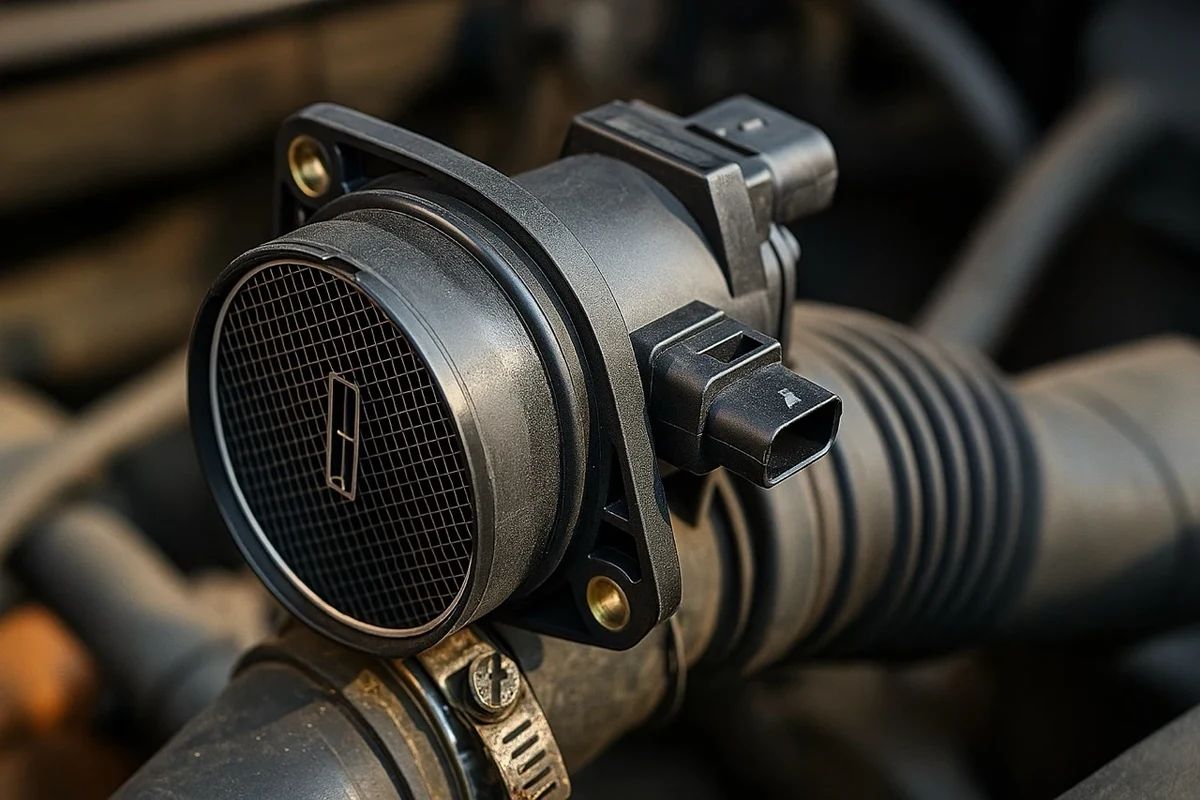
In many modern vehicles, the mass air flow sensor is one of the inputs the ECU uses to decide how much fuel to inject and how aggressively the engine can operate. If the signal becomes implausible, intermittent, or inconsistent with other sensor data, the ECU may reduce power to protect the engine, transmission, or emissions system.
That said, limp mode does not automatically mean the MAF sensor is the root cause. Vacuum leaks, dirty throttle bodies, boost leaks, wiring faults, clogged air filters, failing MAP sensors, or even transmission issues can create similar symptoms, so the diagnosis should start with the whole air-intake system.
How a MAF Sensor Works in Modern Engines
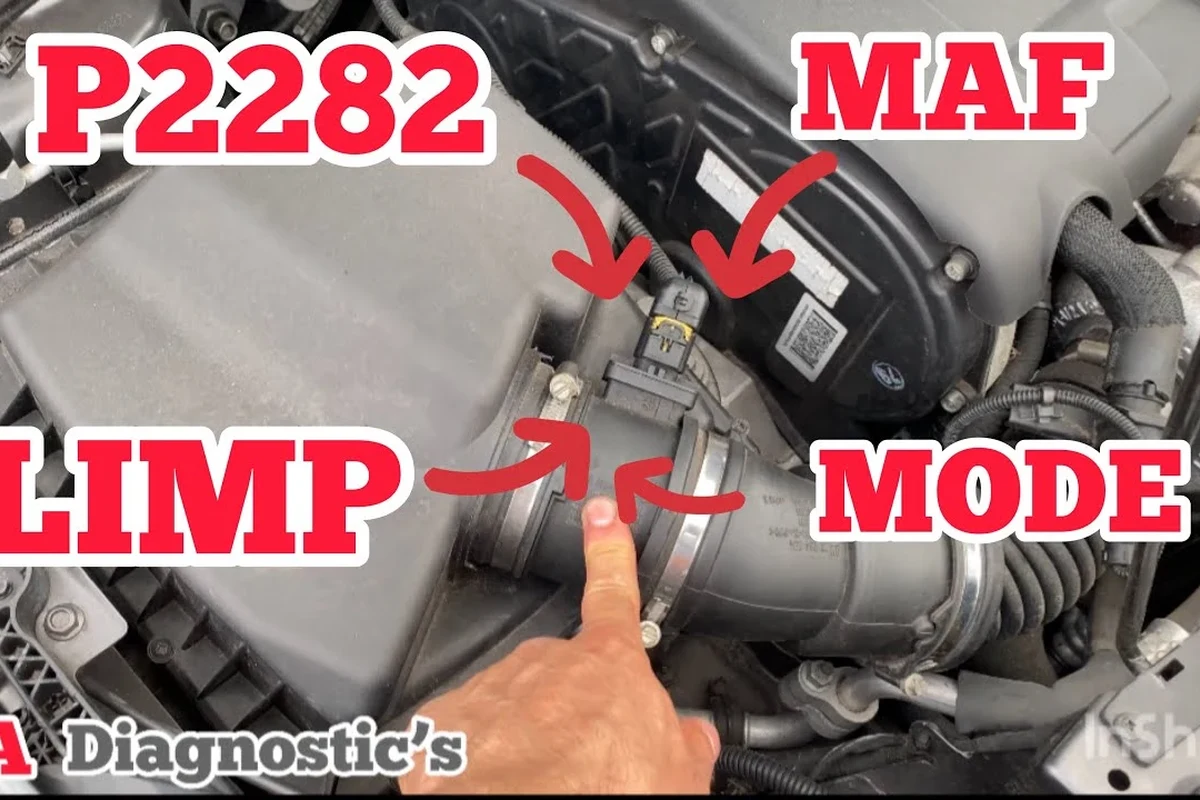
The MAF sensor sits in the intake path and measures the amount of air entering the engine. Most systems use that information along with temperature, throttle position, oxygen sensor feedback, and engine load data to help the ECU calculate the correct fuel mixture.
What the Mass Air Flow Sensor Measures
A MAF sensor does not usually measure “power” or “engine health” directly. It measures airflow, often by sensing how much air passes over a heated element or film, then translating that airflow into a signal the ECU can interpret.
If that signal is too low, too high, delayed, or unstable, the ECU may think the engine is receiving less or more air than it actually is. That can lead to rough running, poor fuel economy, hesitation, and in some cases a protection mode.
How the ECU Uses MAF Data to Protect the Engine
The ECU uses MAF data to keep the air-fuel ratio within a safe range. If the mixture is too lean, the engine can misfire or run hot; if it is too rich, it can waste fuel and damage emissions components like the catalytic converter.
When the ECU sees airflow readings that do not match expected values, it may limit throttle response, cap engine speed, or reduce boost on turbocharged vehicles. That is the basic logic behind limp mode: reduce risk until the fault is diagnosed.
Why a Faulty MAF Sensor Can Trigger Limp Mode
A faulty MAF sensor can trigger limp mode because the ECU depends on accurate airflow data to manage combustion. When the reading becomes unreliable, the computer may default to a conservative strategy that sacrifices performance to prevent damage.
Common Sensor Failures That Distort Airflow Readings
Several problems can make a MAF sensor send bad data. Contamination from dust, oil from aftermarket filters, moisture intrusion, damaged wiring, connector corrosion, and internal sensor aging can all distort the reading.
Sometimes the sensor is not fully failed; it is just drifting enough to be wrong under certain conditions, such as acceleration, cold starts, or higher engine loads. That kind of intermittent fault can be harder to diagnose because the car may feel normal for part of the drive.
How the ECU Responds to Bad Data
When the ECU detects a serious mismatch, it may store a diagnostic trouble code and reduce engine output. On some vehicles, the dashboard warning may be obvious; on others, the car simply feels sluggish and refuses to accelerate normally.
The ECU may also compare MAF data with throttle position, manifold pressure, and oxygen sensor feedback. If those signals disagree enough, the computer may assume the airflow reading is unsafe to trust and switch to a backup strategy.
Limp mode behavior varies by make, model, engine type, and software calibration. Two vehicles with the same sensor fault may react very differently.
Symptoms That Point to the MAF Sensor vs. Other Causes
MAF-related limp mode often comes with drivability problems that show up before the car fully limits power. The challenge is that many intake, fuel, and boost problems create overlapping symptoms.
Typical MAF Sensor Warning Signs
Common signs include rough idle, hesitation on acceleration, poor fuel economy, stalling, hard starting, and a check engine light. Some drivers also notice the engine runs better when the MAF sensor is unplugged, though that is not a repair and should only be treated as a clue, not a solution.
If the problem gets worse when the air filter is dirty or after an oiled filter has been serviced, the MAF sensor should move higher on the suspect list. A contaminated sensor often causes inconsistent readings rather than a total no-start condition.
When Limp Mode Is More Likely Caused by Another Component
If the vehicle enters limp mode mainly under boost, a turbo leak, intercooler hose issue, or wastegate problem may be more likely than the MAF itself. If the engine idles poorly but airflow readings look reasonable, a vacuum leak, throttle body issue, or fuel delivery problem may be the better place to look.
Transmission-related limp mode is another possibility. In those cases, the engine may seem fine, but the gearbox limits itself because of a separate fault code or sensor issue.
- Check the exact trouble codes before replacing parts.
- Inspect the intake tract for loose clamps, cracked hoses, and air leaks.
- Review live data at idle and under light acceleration, not just stored codes.
How to Diagnose the Problem Safely and Accurately
Start with the simplest checks first. A careful inspection and scan tool review can save time and prevent unnecessary part replacement.
Basic Visual Checks and Scan Tool Data to Review
Look for a dirty or incorrectly installed air filter, loose intake tubing, cracked hoses, damaged wiring, and corrosion at the MAF connector. If the sensor housing is contaminated, that alone may explain unstable readings.
Use a scan tool to check stored codes, pending codes, and live data. Compare MAF readings against engine speed, load, and throttle position, and watch for values that jump around, flatline, or look implausible for the driving condition.
Read the codes and freeze-frame data before clearing anything, so you can see what the ECU detected.
Check the air filter, ducting, clamps, and sensor connector for anything loose, dirty, or damaged.
Look for airflow readings that do not match the engine’s operating condition.
Common Mistakes to Avoid During Troubleshooting
One common mistake is replacing the MAF sensor immediately because the code mentions airflow. Another is cleaning the sensor with the wrong product, which can damage delicate sensing elements.
It is also risky to ignore air leaks. A perfectly good MAF sensor can still report misleading values if unmetered air is entering the engine downstream of the sensor.
Stop driving and seek professional help if the vehicle has severe misfiring, flashing warning lights, overheating, fuel smell, or repeated limp mode events. Those symptoms can point to a more serious problem than a dirty sensor.
Repair, Cleaning, or Replacement: What Makes Sense in 2026
The right fix depends on whether the sensor is contaminated, electrically faulty, or simply incompatible with the engine’s needs. In many cases, the best choice is not the cheapest one, but the one that restores stable airflow data and matches the vehicle specification.
When Cleaning May Help and When Replacement Is Smarter
Cleaning may help if the sensor is only dirty and the manufacturer allows it. That said, cleaning will not repair broken wiring, internal drift, or a sensor that has already failed electrically.
Replacement makes more sense when the sensor has persistent code returns, visibly damaged terminals, or unstable live data after the intake system has been checked. If the vehicle uses a sensitive calibration, a poor-quality replacement can create new problems, so quality matters.
Use only a cleaner and procedure approved by the vehicle or sensor manufacturer. Some sensors are easy to damage with the wrong chemical or by touching the sensing element.
Fitment, Compatibility, and Quality Criteria to Verify
Before buying a replacement, confirm the exact engine code, model year, connector shape, and sensor part number or approved equivalent. Compatibility can differ even within the same vehicle line.
Also verify return policy, warranty terms, and whether the part is calibrated for the specific engine application. If the seller does not clearly identify fitment, treat that as a warning sign.
- Check the exact vehicle fitment, engine code, and connector style
- Confirm whether cleaning is allowed before replacing the sensor
- Review warranty, return policy, and manufacturer guidance
- Verify that intake leaks, filter issues, and wiring faults have been ruled out
Driving in Limp Mode: Safety, Limits, and Short-Term Risk
Limp mode is designed to let you move the vehicle with reduced risk, not to make normal driving safe. The car may still operate, but it is intentionally limiting performance because the ECU has detected something it does not trust.
What Is Safe to Do and What to Avoid
It is usually reasonable to drive only enough to get home, to a repair shop, or to a safe place for diagnosis, provided the vehicle is not overheating, misfiring badly, or showing severe warning signs. Keep speed low, avoid hard acceleration, and do not tow heavy loads.
Avoid long highway trips, steep grades, and repeated full-throttle attempts. Those conditions can make a small problem worse, especially if the underlying issue is fueling, boost, or transmission related.
How Long You Can Realistically Keep Driving
There is no universal time limit. Some limp mode events are temporary and disappear after a sensor connection is fixed, while others return quickly and get worse with continued driving.
If the vehicle repeatedly drops into limp mode, treat it as a sign that the fault is still active. The longer you keep driving without diagnosis, the more likely you are to create secondary damage or end up stranded.
If the car loses power suddenly in traffic, overheats, or begins shaking violently, pull over safely and shut it down if the owner’s manual says to do so. Do not keep forcing the vehicle to drive normally when the ECU is clearly limiting output.
Final Recommendation: What Ethan Walker Would Advise Owners to Do
If you are asking whether a MAF sensor can cause limp mode, the practical answer is yes, but only after the ECU decides the airflow data is unreliable enough to protect the vehicle. The smartest next step is to confirm the trouble codes, inspect the intake system, and review live data before buying parts.
If the sensor is dirty and the manufacturer allows cleaning, that is a reasonable first attempt. If the sensor is electrically unstable, the wiring is damaged, or the readings do not recover after the rest of the intake system checks out, replacement with the correct OEM-spec part is usually the safer long-term fix.
- A faulty MAF sensor can trigger limp mode when airflow data becomes unreliable.
- Many other issues can mimic MAF failure, including vacuum leaks, boost leaks, and wiring faults.
- Scan data and a visual intake inspection should come before replacement.
- Drive gently only if necessary, and stop if the vehicle shows severe warning signs.
Frequently Asked Questions
Yes. If the ECU sees airflow data that is implausible or unstable, it may limit power to protect the engine or emissions system.
Common signs include rough idle, hesitation, poor fuel economy, stalling, and a check engine light. Some vehicles also feel much slower because the ECU reduces engine output.
Yes. A dirty filter, cracked hose, loose clamp, or vacuum leak can make MAF readings look wrong even if the sensor itself is fine.
Only if the manufacturer allows cleaning and the sensor is simply contaminated. Cleaning will not fix broken wiring, internal failure, or a bad replacement part.
Usually only long enough to reach a safe place or repair shop, as long as the car is not overheating or misfiring badly. Avoid hard acceleration, towing, and long trips.
Confirm the exact vehicle fitment, engine code, connector style, and approved part number or equivalent. Also check warranty, return policy, and manufacturer guidance.