Durango CO Cameras Guide for Live Views and Updates
Affiliate disclosure: As an Amazon Associate, Gadget Makers Blog may earn from qualifying purchases. This does not change the price you pay.
Use live camera feeds to check local roads, snow, visibility, and outdoor conditions—then choose the right premium camera gear for driving, adventures, or private-property monitoring.
Durango CO cameras are most useful for checking current road, weather, and visibility conditions before you travel or head outdoors. The best feeds are current, credible, and paired with official alerts when safety matters.
If you are searching for durango co cameras, the most useful feeds are the ones that show current road, weather, and visibility conditions from trusted public or local sources. They are best used as a planning tool, not as a replacement for official alerts, road reports, or emergency updates.
- Best use: Live views help confirm snow, rain, fog, traffic, and visibility in real time.
- Source matters: Official or well-maintained feeds are usually more dependable than reposted images.
- One view is not enough: Compare multiple cameras and road updates for safer planning.
- Check the feed type: A snapshot that refreshes periodically is not the same as a true live stream.
- Use responsibly: Treat camera feeds as support, not as the only source for travel or safety.
Choose the Right Camera Gear for Your Need
These products do different jobs. Pick the one that matches what you want to record or monitor.
| Product | Best Use | Why Choose It | Setup Type |
|---|---|---|---|
| THINKWARE U3000 PRO | Driving | Records your own road and parking events | Vehicle installation |
| DJI Osmo Action 6 | Outdoor trips | Portable stabilized adventure capture | Handheld or mounted |
| REOLINK 16CH 4K | Private property | Multi-camera local monitoring and storage | Wired PoE system |
Durango CO Cameras: What They Are and the Best Ways to Use Live Views
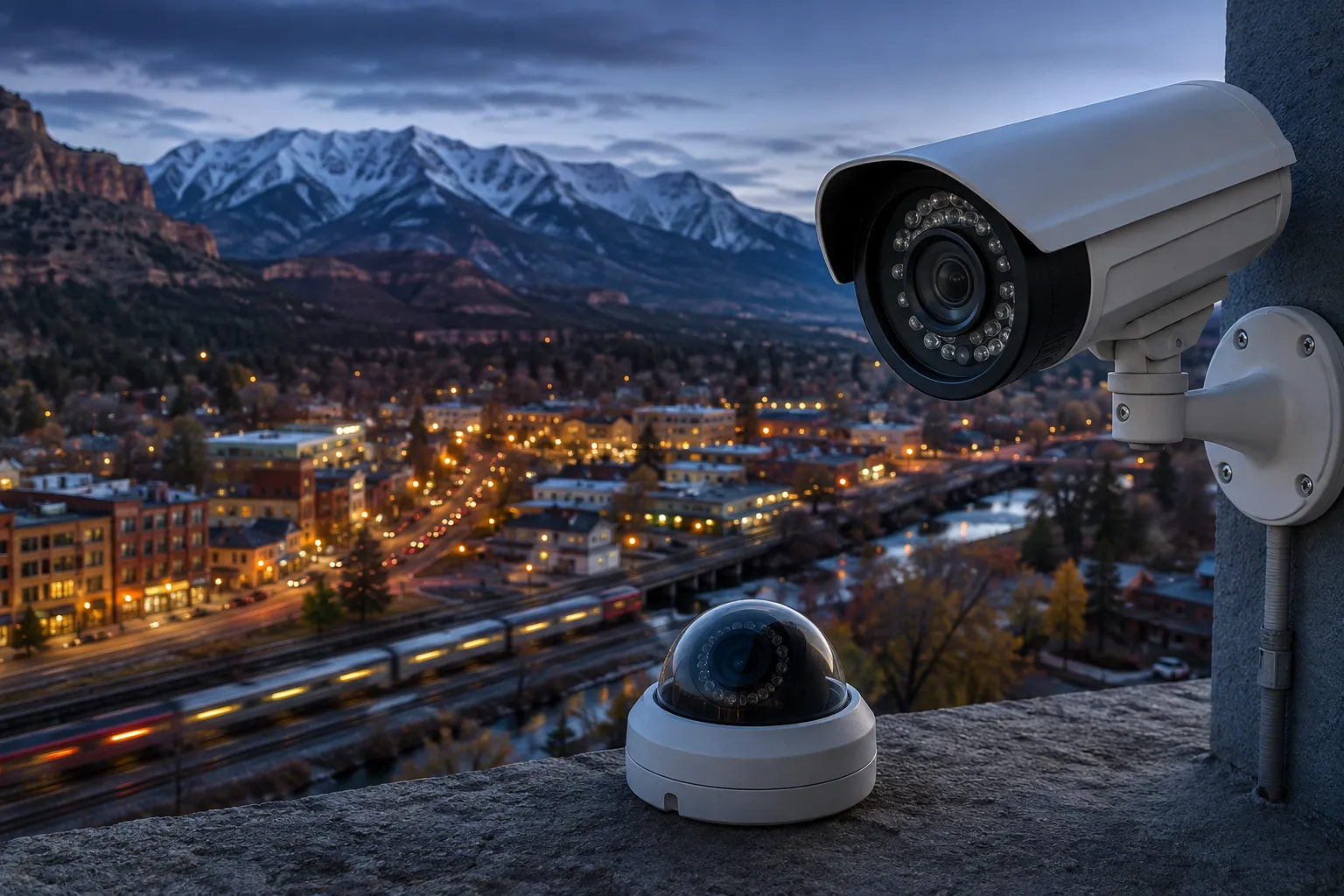
Durango camera feeds usually refer to publicly accessible live views or regularly updated snapshots that show parts of the city, nearby roads, mountain passes, trailheads, or business areas. For smart-home-minded readers, they function like a real-time window into local conditions, helping you decide whether to leave now, wait, or change plans.
Quick answer: where these cameras help most for weather, traffic, and local visibility
Durango CO cameras are most helpful when you need a quick look at snow, rain, fog, road surface conditions, or congestion before commuting or traveling. They are also useful for outdoor planning when weather apps give a forecast, but you want to see what is happening right now.
How live camera feeds work in Durango, CO and what users can realistically expect
Some feeds are true live streams, while others refresh at intervals or display a still image that updates periodically. That difference matters because a feed that looks “live” may still lag behind current conditions by several seconds or several minutes, depending on the source and connection.
Users should expect camera quality and uptime to vary by provider, weather, season, and maintenance schedule. A feed may be blurry in snow, blocked by glare, or temporarily offline, so it is smart to treat it as one input among several.
Camera access, image quality, and update frequency can vary by municipality, DOT site, tourism page, business owner, or app version. Always confirm the source and refresh behavior before making a time-sensitive decision.
Who Durango CO Cameras Are Best For in 2026
These camera feeds are useful for anyone who needs a better read on local conditions than a forecast alone can provide. They are especially valuable in areas where weather and traffic can change quickly.
Commuters, travelers, homeowners, outdoor planners, and local business owners
Commuters can use live views to check whether roads are moving normally or if weather is slowing traffic. Travelers benefit from seeing pass conditions, parking availability, and visibility before they commit to a route.
Homeowners may use nearby feeds to judge storm intensity or neighborhood conditions, while outdoor planners can compare trailhead, road, or mountain views before heading out. Business owners may also monitor customer-facing areas or nearby traffic patterns when public or authorized feeds are available.
- Bookmark the specific feed you use most instead of searching every time.
- Check more than one camera if your route crosses different elevations or road types.
- Combine camera views with official alerts for the safest planning.
When live cameras are more useful than weather apps or road reports
Live cameras are often more useful when conditions are changing fast, such as during snowfall, heavy rain, or fog. A forecast may say conditions are improving later, but a camera can show whether the road is still slick or visibility is still poor right now.
They are also helpful when you need visual confirmation of crowding, lighting, or surface conditions that text-based reports do not describe well. That said, road reports and weather alerts still matter because cameras show only one angle and may miss hazards outside the frame.
Key Features to Check Before Relying on a Durango Camera Feed
Not every camera feed is equally useful for planning. Before you depend on one, check the image quality, how often it updates, and whether the source is credible enough for the decision you are making.
Video quality, refresh rate, night visibility, and field of view
Clear image quality makes it easier to judge snow buildup, lane visibility, and traffic flow. A wide field of view is often better than a tight close-up because it shows more of the road, intersection, or landscape around the camera.
Night visibility matters too, especially in winter or early morning travel. If the feed becomes too dark, washed out, or grainy after sunset, it may not be reliable for late-day planning.
App or browser access, device compatibility, and connectivity requirements
Some camera sources work best in a browser, while others depend on a mobile app or embedded map page. If you want quick access on a phone, tablet, or smart display, confirm that the feed loads properly on your device and does not require extra plugins or logins.
Connectivity also matters. A feed may open slowly on a weak connection, and if you are checking it from the road, a heavy page can be less practical than a lightweight snapshot page.
Reliability factors: uptime, update frequency, and source credibility
Uptime tells you whether the feed is usually available when you need it. Update frequency tells you whether the image is current enough to trust for a time-sensitive decision.
Source credibility is just as important. Official government, transportation, or well-maintained local sources are usually more dependable than random reposts because they are more likely to document the camera location, update behavior, and maintenance status.
If a feed is frozen, heavily distorted, or clearly outdated, do not treat it as current evidence. Confirm with another source before driving, hiking, or making a safety-related decision.
How to Compare Durango CO Camera Options and Live-View Sources
The best camera for you depends on what you are trying to verify. A road camera, a downtown view, and a tourism feed can all be useful, but each answers a different question.
Government, DOT, tourism, business, and community camera feeds
Government and DOT feeds are often best for road conditions, traffic flow, and weather-related visibility. Tourism feeds can be helpful for scenic areas, downtown activity, or visitor planning.
Business and community feeds may offer a more localized view of a storefront, parking area, or neighborhood, but their usefulness depends on how consistently they are maintained. For any source, the key is to know who controls it and how often it is updated.
What makes one feed more useful than another for real-world planning
A useful feed shows the exact place you need to evaluate, updates often enough to be current, and stays online reliably. It should also be easy to access on the device you actually use, whether that is a phone, laptop, or smart display.
If you are comparing feeds, prioritize relevance over image polish. A slightly lower-resolution camera that shows the correct road segment is often more useful than a beautiful scenic view that does not help with your route.
| Option | Best For | Key Consideration |
|---|---|---|
| DOT or government feed | Drivers and commuters | Usually strongest for route and weather checks |
| Tourism feed | Visitors and planners | May show scenic or downtown areas better than roads |
| Business or community feed | Local spot checks | Coverage and uptime can vary more widely |
Limitations to watch for: lag, weather obstruction, angle bias, and dead feeds
Lag can make a camera look current when it is actually behind by a meaningful amount. Weather obstruction is another issue: snow, rain, glare, fog, or ice can block the lens and make the image less useful exactly when you need it most.
Angle bias matters too. A camera pointed at one lane, one direction, or one intersection may hide problems just outside the frame. Dead feeds are also common, so it is wise to have a backup source ready.
Real-World Benefits of Using Durango CO Cameras
Used well, local live views can save time and reduce uncertainty. They are not magic, but they can make your planning more grounded in actual conditions.
Planning safer drives, trail trips, and local errands with current conditions
Before a drive, a camera can help you judge whether the road looks clear, crowded, wet, or snow-covered. Before a trail trip, it can show whether parking lots are full, whether access roads are plowed, or whether weather is changing quickly.
For errands, live views can help you decide whether to leave now or wait for conditions to improve. That can be especially useful when you are trying to avoid icy roads or congested downtown areas.
Reducing guesswork for snow, rain, visibility, and congestion checks
Forecasts are valuable, but they do not always answer the simple question: what does it look like right now? Camera feeds help reduce that guesswork by showing visibility, precipitation intensity, and traffic buildup in real time.
A camera can be more useful than a forecast when you need to know whether a road is currently passable, because it shows present conditions instead of predicted ones.
How live views can support smarter timing for work, travel, and recreation
When you check a feed before leaving, you may be able to shift your departure by a few minutes or choose a different route. That small adjustment can improve safety, reduce stress, and help you avoid sitting in weather or traffic you could have seen ahead of time.
For recreation, the same idea applies to timing. A quick look at a camera can help you decide whether to go early, delay a trip, or change your destination entirely.
Common Mistakes People Make When Using Local Camera Feeds
Camera feeds are easy to overtrust because they feel visual and immediate. The biggest mistakes usually come from assuming too much about what one feed can tell you.
Assuming a single camera represents the whole area
One camera only shows one angle, one location, and one moment. A road may look fine at one point and still have problems a mile away, especially in mountain weather or during heavy traffic changes.
To avoid this mistake, use multiple feeds when possible and compare them with official road or weather updates.
Ignoring time delays, seasonal changes, and camera maintenance gaps
Some feeds update less often during off-hours or maintenance periods. Seasonal changes also affect how useful a camera is, because snow, fog, low sun, and darkness can all reduce visibility in different ways.
If a feed looks unusually stale, assume it may be delayed until you confirm otherwise.
Overlooking privacy, public-use limits, and source verification
Not every camera is intended for the same kind of use. Public feeds are generally meant for awareness and planning, not for tracking people or making personal security judgments from a distance.
It is also important to verify the source before sharing a camera link or using it for a decision with safety consequences. If the source is unclear, treat the feed cautiously.
Safe and Responsible Use of Durango CO Cameras
The safest way to use camera feeds is to treat them as supporting evidence, not a final authority. That approach keeps you from overreacting to one blurry image or ignoring a more serious official warning.
Using public feeds without misinterpreting safety conditions
Public feeds can help you observe conditions, but they cannot confirm everything. A road may look clear in the frame while black ice, wind, or hazards outside the camera view still create risk.
Use the image as a clue, then confirm with other sources when the decision matters.
Respecting privacy, local rules, and the limits of camera-based decisions
Respect the intended purpose of the feed and avoid using it in ways that invade privacy or go beyond normal public awareness. If a feed is restricted, private, or tied to a business policy, follow the provider’s rules and terms of use.
Camera-based decisions should also stay within common sense limits. If conditions look questionable, delay travel or check a more authoritative source instead of assuming the camera tells the full story.
When to confirm with official alerts, road reports, or emergency updates
Always confirm with official alerts when weather is severe, roads are being closed, or emergency conditions are possible. The same applies if you are traveling with children, pets, or anyone who may be more affected by delays.
Road reports, local transportation updates, and emergency notices are especially important when a camera is offline, obscured, or showing only partial visibility.
- Use Durango camera feeds for real-time road, weather, and visibility checks.
- Choose trusted sources with clear update behavior and a useful camera angle.
- Always back up camera views with official alerts when conditions affect safety.
Best Value Recommendation for Different Types of Users
The best choice depends on how often you need the feed and how much accuracy matters to your routine. In general, the most valuable option is the one that is easiest to access, most current, and most relevant to your exact route or location.
Best choice for daily commuters and weather-watchers
Daily commuters should prioritize official or transportation-focused feeds that update reliably and show the roads they actually use. Weather-watchers may prefer feeds with wide views and strong visibility so they can judge snow, rain, and fog more quickly.
Daily commuters and weather-watchers should choose the most reliable official or DOT-style feed available, because it usually offers the clearest route-focused planning. The tradeoff is that it may be less scenic or less detailed for non-road uses.
Best choice for occasional visitors and trip planners
Occasional visitors usually benefit from a feed that is easy to open, clearly labeled, and tied to the place they plan to visit. If you are planning a one-time trip, convenience and quick readability may matter more than advanced features.
For this group, a tourism or downtown camera can be useful, but it is still smart to confirm road conditions separately if the route crosses mountain or winter-prone areas.
Best choice for business, property, or smart-home monitoring needs
For business or property use, the best option is the one that clearly fits the provider’s rules, access controls, and maintenance expectations. If you need a camera for monitoring rather than just viewing, verify app support, login security, storage options, and update support in the official documentation.
Because features vary widely by model and platform, confirm the exact camera, app, and warranty terms before depending on it for daily operations.
If a camera feed is frozen, damaged, or clearly out of date, do not use it as your only source for travel or safety decisions. Verify with official alerts, road reports, or emergency services when needed.
Frequently Asked Questions
Commuters, travelers, homeowners, and outdoor planners benefit most because they need current local conditions. Business owners can also use public or authorized feeds for route and area awareness.
Check whether the source is official or clearly maintained, and look for update behavior, uptime, and a useful camera angle. If the image looks frozen or heavily delayed, confirm with another source before relying on it.
They are better for seeing what conditions look like right now, especially for snow, fog, rain, or traffic. Weather apps are still useful for forecasts, so the two work best together.
Confirm that the feed works in your browser or app, loads quickly on your connection, and is easy to view on your device. Also check whether it is a live stream or a periodically refreshed snapshot.
No, a single camera only shows one angle and one location. Use multiple feeds and official road updates when the decision affects safety or travel timing.
Use them as one input, not the final authority, and confirm with official alerts when weather or road conditions are severe. Respect privacy rules and do not use a feed beyond its intended public purpose.