Aqua Vu Underwater Fishing Camera Review and Guide
An Aqua Vu underwater fishing camera is best for anglers who want live visual confirmation of fish, bait, and structure in clear water. It is less useful in murky conditions, so compare the exact model’s screen, cable, battery, and durability before buying.
If you want to see what is happening below the surface instead of guessing, an aqua vu underwater fishing camera can be a smart tool. It is especially useful for anglers who want live visual feedback on fish activity, bait presentation, and bottom structure, but it is not the best fit for every water condition or every fishing style.
- Best fit: Clear-water anglers, especially ice and targeted boat fishing users.
- Main limitation: Visibility drops fast in stained water, weeds, and low light.
- Buy-smart criteria: Verify screen quality, cable length, battery setup, and depth rating.
- Care matters: Dry the unit, protect connectors, and use only approved charging gear.
Aqua Vu Underwater Fishing Camera Review: Is It Worth Buying in 2026?
The biggest reason people choose an underwater fishing camera is simple: it shows what sonar cannot always explain. That makes Aqua-Vu-style cameras appealing for anglers who want more confidence when scouting spots, learning fish behavior, or confirming whether a lure is actually in the strike zone.
Quick verdict: who it’s best for, and who should skip it
An aqua vu underwater fishing camera is best for anglers who fish in clearer water, like to observe fish behavior directly, or want a visual learning tool for ice, boat, or dock fishing. It is less compelling for people who mostly fish muddy water, need long-range scanning, or want a faster, less fiddly tool than a camera system.
Anglers who value live visual confirmation, especially for ice fishing, bait checking, and structure scouting. If your water is usually stained or you want broad-area detection first, sonar may be the better primary tool.
What this guide covers and what evidence limits to keep in mind
This guide explains how the camera system works, what specs matter most, who it suits, and how to set it up and maintain it safely. Because model names, screen sizes, cable lengths, battery claims, and included accessories can vary by product version and retailer bundle, confirm the exact listing and official manual before buying.
Model-specific features, app support, battery runtime, and included accessories may differ across Aqua-Vu versions, firmware revisions, and retailer bundles. Always verify the exact model number and current manufacturer specs.
How the Aqua Vu Underwater Fishing Camera Works
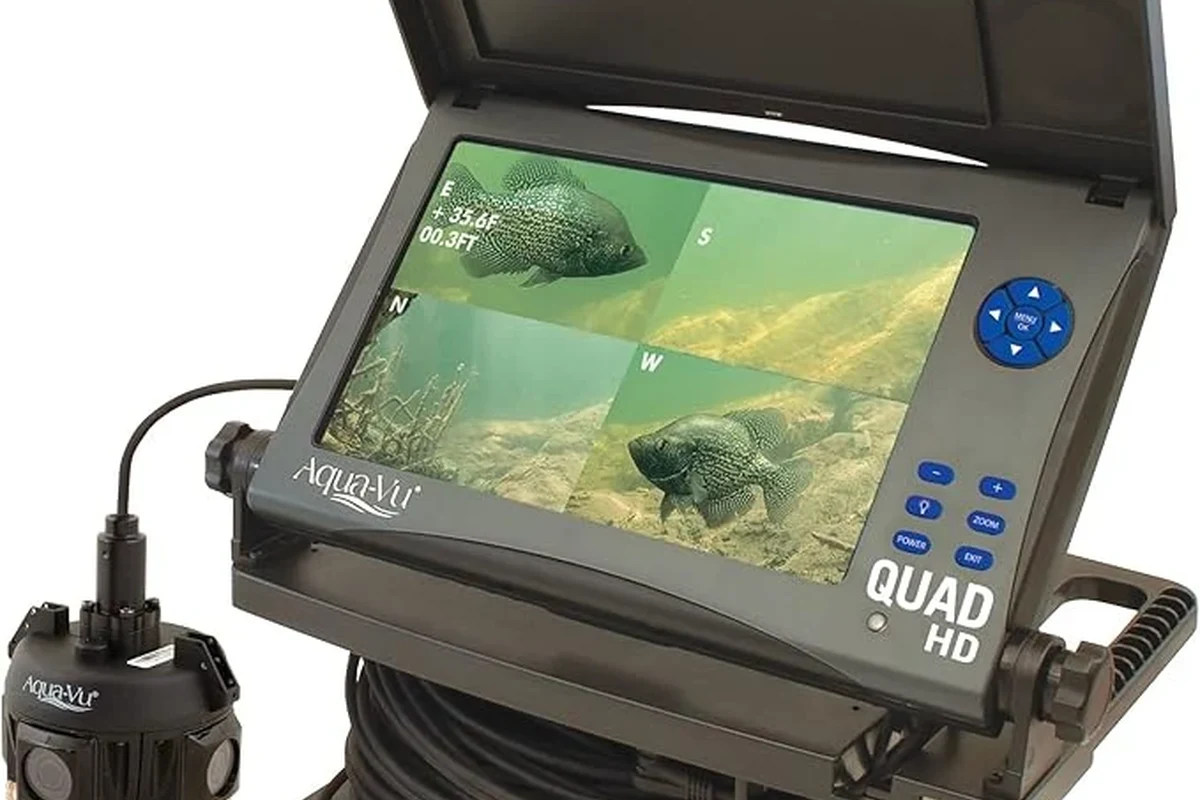
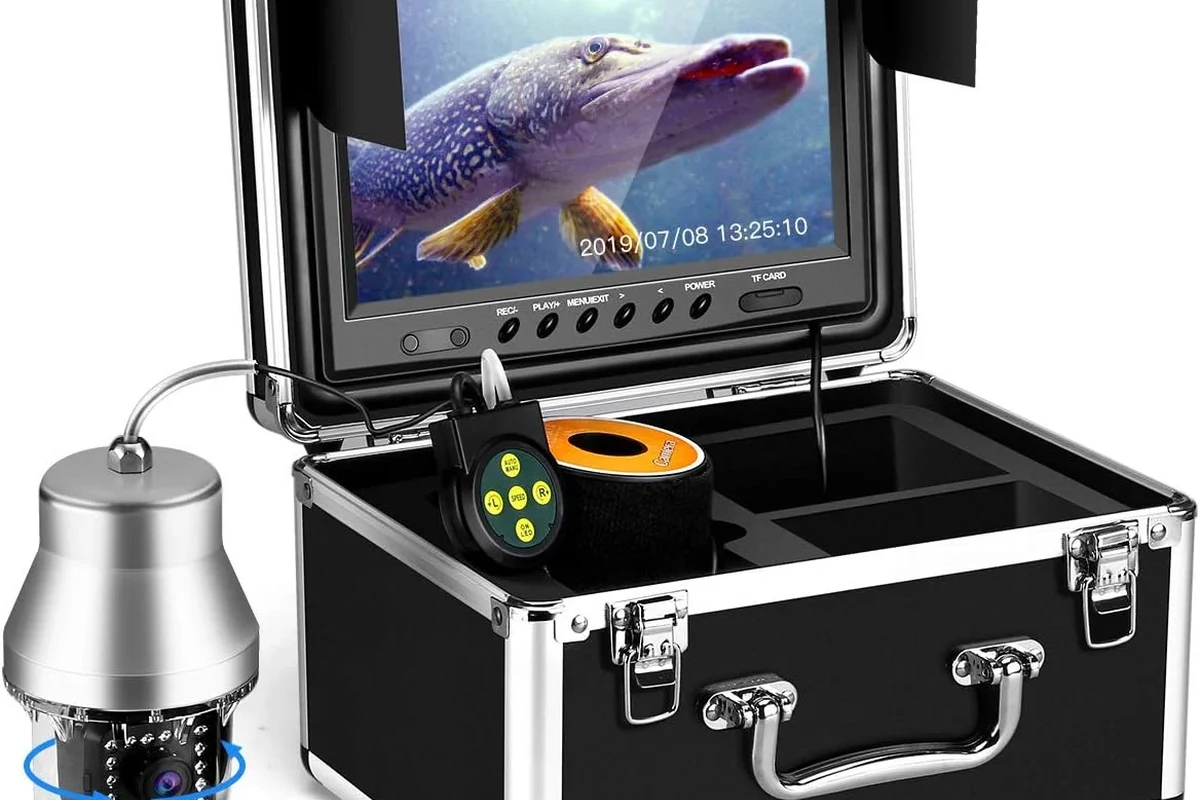
At a basic level, the system is a live underwater video setup. A camera lowers into the water on a cable, sends the image to a display, and often uses built-in lighting to improve visibility in dim conditions.
Camera, display, cable, and light system explained
The camera housing is designed to go underwater while the display stays above water in your hands, on a boat dash, or near an ice shelter. The cable carries both the video signal and power, so its length and quality matter a lot for real-world use.
Many underwater cameras also include lights, usually LEDs, to help in low-light water. That can improve visibility, but it can also create glare or reflect off particles in the water, so the light setting may need adjustment depending on conditions.
How it sends live underwater footage to help locate fish and structure
The camera gives you a live view of fish, bait, weeds, rocks, drop-offs, and other structure that may affect where fish hold. In practice, that means you can check whether a fish is following your lure, whether bait is too high or too low, or whether the bottom is softer or rockier than expected.
Underwater cameras are often most useful as confirmation tools. Many anglers use sonar to find likely spots first, then drop a camera to see what is actually happening there.
Power source, runtime, and what to verify in the rated battery specs
Some Aqua-Vu systems are battery powered, while others may connect to external power depending on the model. Before buying, verify the battery type, charging method, stated runtime, and whether the listed runtime assumes a low-light setting or a particular screen brightness.
Battery claims are highly usage-dependent. Bright screens, cold weather, frequent light use, and long cable runs can all reduce real-world runtime, so it is wise to treat manufacturer figures as a starting point rather than a guarantee.
Only use the charger, battery, and cable combination approved for your exact model. If a battery swells, overheats, leaks, or a cable is frayed, stop using it and follow the manufacturer’s safety guidance.
Key Specs and Buying Criteria to Compare Before You Choose
When comparing an aqua vu underwater fishing camera, the most important specs are not just the headline features. Screen quality, cable length, depth capability, battery setup, and portability often matter more than marketing language.
Screen size, resolution, cable length, and viewing angle
A larger screen can make it easier to spot subtle movement, but it may reduce portability. Resolution also matters because a sharper screen can help you distinguish fish shape, lure placement, and bottom texture more clearly, though water clarity still has a bigger impact than display specs alone.
Cable length should match how you fish. Ice anglers may not need the same reach as boat anglers, while shore anglers may need a setup that can be lowered and retrieved smoothly without tangling.
Depth rating, water resistance, and durability considerations
Check the stated depth rating and the unit’s water resistance claims before using it in deep water or rough conditions. A camera system can still be vulnerable to impact, crush damage, or connector wear even if the camera head is waterproof.
Durability also depends on how the cable is built, how the connectors are sealed, and whether the case protects the display during transport. If you move between a sled, tackle bag, boat deck, and vehicle often, ruggedness becomes especially important.
Battery life, charging method, cable quality, and safe power limits
Look for a charging method that fits your routine, whether that means a wall charger, USB-based charging, or a dedicated battery pack. If the product uses replaceable batteries, confirm whether spares are easy to source and whether the charger is included.
Cable quality matters because repeated bending, cold-weather use, and storage pressure can wear it down over time. If the cable feels too stiff or too thin for your setup, that can affect both handling and long-term reliability.
Portability, case size, and whether it fits your fishing setup
Some anglers want a compact camera they can toss into a sled or day bag. Others want a larger screen and accessory kit that stays in a boat or shack, where portability matters less than viewing comfort and ease of use.
- Check the exact model number, screen size, cable length, battery type, and included accessories.
- Confirm the manual, warranty terms, charging instructions, and any water-resistance or depth limits.
- Make sure the case, cable, and display fit your ice, boat, dock, or shore fishing routine.
Who the Aqua Vu Underwater Fishing Camera Fits Best
This kind of camera is most useful when you want visual confirmation, not just detection. It works best as a learning and decision-making tool for anglers who are willing to adjust technique based on what they see.
Ice anglers, boat anglers, shore anglers, and casual hobbyists
Ice anglers often get the most obvious benefit because a camera can help them see fish response under a fixed hole. Boat anglers can use it to inspect structure, bait, and fish movement around a targeted area, while shore anglers may find it more situational depending on access and water clarity.
Casual hobbyists may like the educational side of the device. It can make fishing feel more interactive and help newer anglers understand how fish behave around cover and lure presentation.
Best use cases: scouting fish behavior, checking bait, and reading bottom structure
One of the strongest uses is checking whether fish are interested but hesitant. You can see if they approach bait, turn away, or follow without striking, which helps you decide whether to change lure size, color, depth, or movement.
It is also useful for reading bottom structure. Seeing weeds, rocks, mud, or drop-offs in real time can help you place bait more intentionally and avoid wasting time in unproductive spots.
Who may prefer a different tool, such as sonar or a simpler fish finder
If your main goal is to cover a large area quickly, sonar or a fish finder may be a better first purchase. Those tools are usually better for scanning and locating targets over distance, while a camera is better for close-up confirmation.
Anglers who fish frequently in stained or muddy water may also get less value from a camera because visibility can drop sharply. In those cases, a simpler fish finder may provide more consistent day-to-day usefulness.
Real-World Benefits and Practical Trade-Offs
The appeal of an underwater camera is not just seeing fish. It is learning how fish react in real conditions, which can improve decision-making over time.
Advantages for learning fish movement and improving bait placement
The biggest benefit is feedback. Instead of guessing whether fish are there, you can see how they move, how they respond to your lure, and whether your bait is sitting in the right place.
That feedback can improve bait placement, depth control, and patience. It may also help newer anglers understand why a spot looks promising but produces little action.
Limitations in murky water, low light, weeds, and deep-water conditions
Water clarity is the main limitation. In murky or heavily stained water, the camera may show only a short distance, which reduces its usefulness compared with sonar.
Weeds, suspended debris, poor lighting, and deep water can also reduce image quality. Even with lights, visibility may fall off fast, so expectations should stay realistic.
Noise, cable drag, and visibility issues that can affect results
Cable drag can make the camera swing or drift, especially in current or while lowering it from a moving boat. That can make framing harder and may interfere with a steady view of fish or bottom structure.
Some setups also create small disturbances in the water, and fish may react to the camera or cable. That does not make the device useless, but it does mean patience and careful placement matter.
- Shows real underwater behavior instead of only interpreting sonar signals
- Helps with bait placement, structure reading, and learning fish reactions
- Useful for ice fishing and targeted close-range scouting
- Performance drops in murky water and poor visibility
- Can be awkward in current, weeds, or tight setups
- Battery, cable, and screen quality vary by model
Setup Guide: How to Get the Best Results Safely
Good results usually come from careful setup, not just switching the camera on. A few minutes of preparation can improve image quality and reduce wear on the equipment.
Initial setup, charging, and inspecting the camera before use
Start by reading the official manual for your exact model. Charge the battery with the supplied or approved charger, inspect the cable for kinks or damage, and confirm that the display powers on before heading out.
Use the approved charger, check all connectors, and verify the screen and camera power up normally.
Lower the camera in a controlled spot first so you can confirm image orientation, lighting, and cable handling.
Change light level, angle, and depth until the image is stable and easy to read.
Lowering the camera, adjusting angle, and managing cable slack
Lower the camera slowly so it does not twist or bang against hard surfaces. Keep enough slack to avoid pulling on the cable, but not so much that it tangles or drags across structure you are trying to observe.
If the image looks tilted or the fish keep leaving the frame, pause and re-center the camera before changing lures. A stable view usually beats a constantly moving one.
Safe use around ice, boats, batteries, and wet surfaces
Use caution on wet decks, slick ice, and around open water. Keep batteries dry, avoid charging damaged packs, and store the display where it will not fall into the water or get stepped on.
If you fish through ice, verify safe ice conditions independently and never rely on the camera as a safety device. The camera is a fishing tool, not a substitute for ice safety judgment or local conditions.
Common setup mistakes that reduce image quality or damage the unit
Common mistakes include using too much cable slack, placing the camera too close to sediment, leaving the light too bright in reflective water, and storing the unit while it is still wet. Another frequent issue is assuming one setting works in every environment, when water clarity and depth often require adjustment.
Maintenance, Storage, and Troubleshooting Guide
Simple care goes a long way with underwater gear. Regular cleaning and proper drying can help preserve image quality, cable flexibility, and battery health.
Cleaning lenses, cable care, and drying the system after use
Rinse or wipe the camera housing according to the manual, especially after use in dirty water. Clean the lens gently with a soft cloth, and avoid abrasive materials that could scratch the surface.
Let the system dry fully before storage. Moisture trapped in connectors, cases, or cable wraps can lead to corrosion or odor over time.
Storage tips for batteries, connectors, and protective cases
Store batteries at the charge level recommended by the manufacturer if long-term storage guidance is provided. Keep connectors capped or protected when possible, and avoid tightly coiling the cable in a way that causes repeated stress at the same bend point.
A protective case helps if you transport the camera with tackle, tools, or ice gear. It can also reduce accidental pressure on the display and cable.
Troubleshooting blurry video, weak battery life, screen issues, and signal problems
If the video looks blurry, first check for debris on the lens, then confirm the camera is not too close to silt or vegetation. If battery life seems short, review brightness settings, light usage, temperature, and battery age before assuming the battery has failed.
For screen issues or signal problems, inspect the cable and connectors for damage, verify charging, and consult the official troubleshooting section in the manual. If the unit shows signs of water intrusion, overheating, or repeated power failure, stop using it until it is checked by the manufacturer or an authorized service option.
Stop using damaged electronics, swollen batteries, frayed cables, overheating chargers, or unstable accessories and follow the manufacturer’s guidance. Water damage and battery damage can become safety issues, not just performance issues.
Replacement guidance for worn cables, chargers, and other consumable parts
Cables, chargers, and some mounts are more likely to wear out than the camera body itself. Replace those parts with approved or clearly compatible components, and confirm that any replacement charger matches the battery and voltage requirements listed by the manufacturer.
Final Value Check: Is the Aqua Vu Underwater Fishing Camera a Smart Buy?
For the right angler, an aqua vu underwater fishing camera can be a very practical buy because it turns guesswork into visual feedback. The value is strongest when you fish in clear water, want to learn fish behavior, and will actually use the camera often enough to justify the setup and care it requires.
Price-to-performance expectations and long-term value
Because prices and bundle contents vary by model and retailer, it is best to judge value by the features you will actually use. A camera with a clearer display, better cable quality, and a battery setup that matches your fishing style may be worth more than a cheaper option that is awkward to carry or hard to see.
Long-term value also depends on durability and support. Check warranty terms, replacement part availability, and whether the manufacturer still provides manuals, accessories, and current support information for the exact model you are considering.
Verdict based on fishing style, skill level, and budget
If you are an ice angler, a detail-oriented boat angler, or a beginner who wants to learn faster, this kind of camera can be a strong fit. If you mostly fish murky water, need broad-area scanning, or want a simpler and more portable tool, sonar or a basic fish finder may deliver better everyday value.
An aqua vu underwater fishing camera is a smart buy when you want live visual confirmation and are willing to manage setup, visibility limits, and cable care. It is less compelling as a universal fishing tool, so match the model to your water conditions, fishing style, and budget before you buy.
Recommended alternatives to consider if your needs are different
If your priority is scanning a wider area, consider a fish finder or sonar unit first. If you mainly want a simple learning aid for occasional trips, a more basic camera or a lower-cost visual fishing tool may be enough.
—
Frequently Asked Questions
It is a strong fit for anglers who want to see fish behavior, bait response, and bottom structure in real time. Ice anglers and clear-water boat anglers usually get the most benefit.
Compare the screen size, resolution, cable length, battery type, and depth rating. Also confirm the exact bundle contents and charging method for the model you are considering.
It can still work, but visibility usually drops quickly in poor water clarity. In those conditions, sonar or a fish finder may be the better primary tool.
Clean the lens gently, dry the system after use, and store the cable without tight bends. Use the approved charger and battery, and stop using any damaged parts.
It is worth it if you want direct visual confirmation and fish in clearer water. If you need broad-area scanning or fish in low-visibility water, sonar often offers better overall value.
Check the exact model number, warranty terms, water-resistance claims, and current manual. Because bundles and specs can vary, confirm details with the manufacturer or retailer before purchase.