Can O2 Sensor Cause Rough Idle
Yes, a bad O2 sensor can cause rough idle, especially if it is the upstream sensor and the ECU is using bad feedback to adjust fuel trim. But vacuum leaks, ignition faults, dirty throttle bodies, and fuel-delivery issues are often more likely.
Yes, a bad O2 sensor can contribute to a rough idle, but it is not the most common cause. In many vehicles, it affects idle quality indirectly by confusing fuel-trim corrections, while vacuum leaks, ignition faults, dirty throttle bodies, or fuel-delivery problems are often the real source.
- Upstream matters most: The front O2 sensor has the biggest effect on idle fuel control.
- Look for patterns: Surging, hesitation, and unstable RPM often point to sensor or mixture problems.
- Check lookalikes first: Vacuum leaks and ignition issues can mimic a bad O2 sensor.
- Use live data: Fuel trims and sensor response help confirm whether the sensor is actually the cause.
- Replace only when verified: Match the exact sensor position, connector, and vehicle fit before buying.
Can an O2 Sensor Cause a Rough Idle? The Short Answer and What It Means
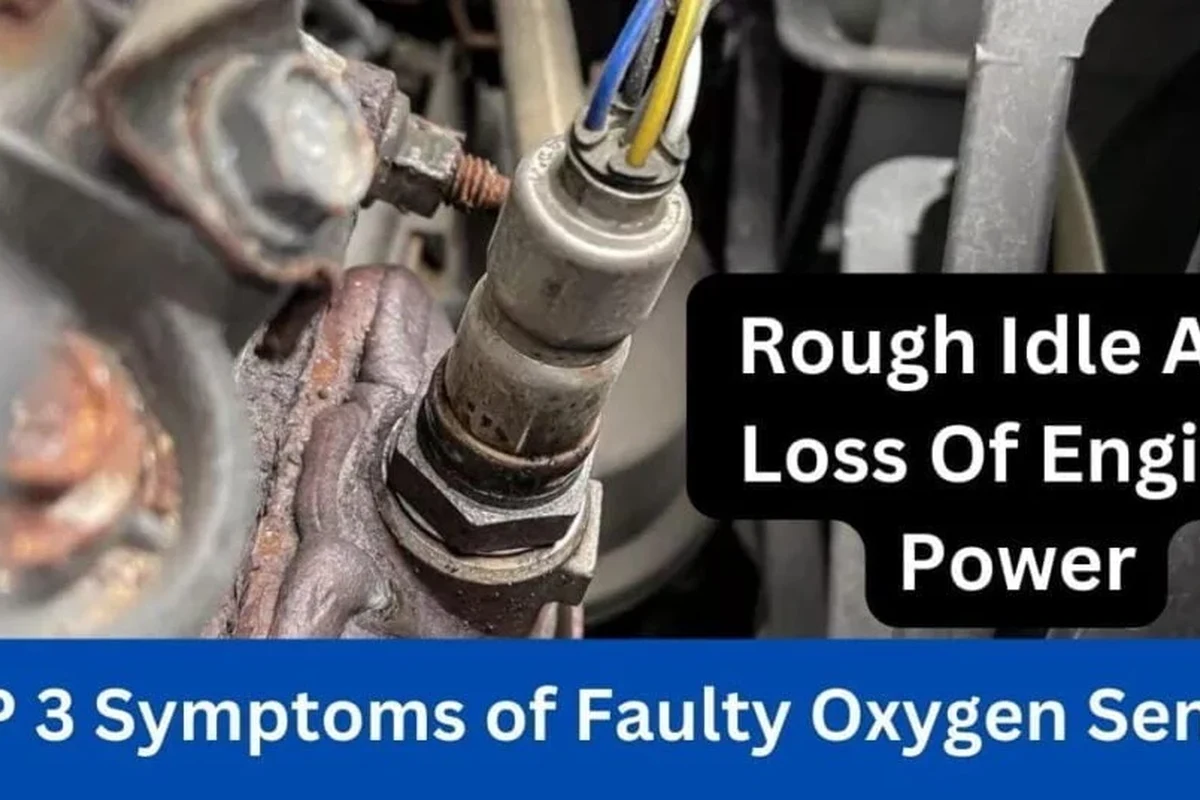
An oxygen sensor can absolutely be part of a rough-idle complaint, especially when the engine is running in closed loop and the ECU is relying on sensor feedback to fine-tune the air-fuel mixture. If the sensor is slow, biased, contaminated, or sending unstable readings, the engine computer may overcorrect and create a hunt, surge, stumble, or shake at idle.
That said, the O2 sensor is usually a clue, not the only explanation. A rough idle that appears only at stoplights, only when cold, or only with the air conditioning on often points to another issue that is changing airflow, ignition quality, or fuel delivery.
How an O2 Sensor Works in 2026 Fuel-Injected Engines
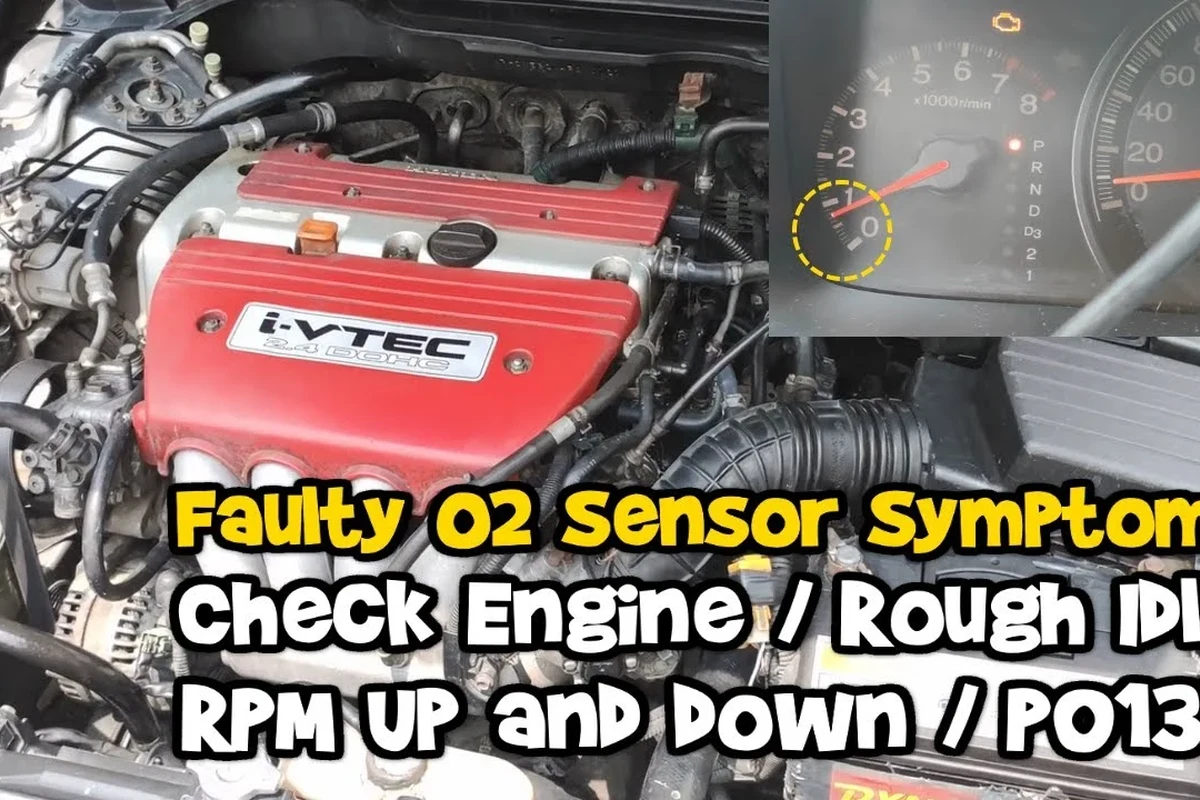
Modern fuel-injected engines use oxygen sensors to help the ECU balance fuel delivery. The sensor measures oxygen content in the exhaust stream so the computer can infer whether the engine is running rich, lean, or near the ideal mixture.
Upstream vs. downstream sensors and why the difference matters
The upstream sensor, usually located before the catalytic converter, is the one that most directly influences fuel trim. If it is inaccurate, the ECU may alter injector pulse width in ways that affect idle quality.
The downstream sensor is mainly used to monitor catalytic converter efficiency. A downstream sensor problem can trigger a check engine light, but it is less likely to cause a rough idle by itself unless the vehicle has a broader exhaust or engine-management issue.
How the ECU uses O2 data to adjust fuel trim at idle
At idle, the engine has less airflow and less margin for error. Small sensor errors can therefore create noticeable drivability changes, because the ECU is constantly making tiny corrections to maintain stable combustion.
If the ECU sees a lean signal, it may add fuel. If it sees a rich signal, it may reduce fuel. When the sensor response is erratic, those corrections can become unstable and show up as a shaky idle, slight misfire feel, or repeated RPM fluctuation.
Many rough-idle complaints are tied to fuel trims that look normal at cruise but swing more dramatically at idle, where vacuum leaks and sensor errors have a bigger effect.
Signs a Bad O2 Sensor Can Trigger Rough Idle Symptoms
O2-related idle issues rarely look like one perfect symptom. More often, they show up as a pattern that includes unstable RPM, hesitation, and fuel-trim behavior that does not make sense for the engine’s actual condition.
Common drivability clues: surging, hesitation, misfire-like shaking, and poor fuel economy
A faulty sensor may cause the engine to surge slightly, stumble when coming to a stop, or feel like it is misfiring even when spark plugs and coils are still functioning. Some drivers also notice poorer fuel economy because the ECU is compensating for bad feedback.
In other cases, the idle may be rough only after the engine warms up and enters closed loop. That timing matters because a sensor problem often becomes more obvious once the ECU starts trusting the O2 signal.
Check Engine Light codes that often appear with O2-related idle issues
Common codes include O2 sensor heater faults, slow-response codes, and mixture-related codes such as lean or rich conditions. You may also see misfire codes, which do not automatically mean the O2 sensor is the root cause, but do show the ECU is detecting unstable combustion.
If the code points to one bank or one sensor, note whether the complaint matches that location. A single upstream sensor code on a V6 or V8 can affect one side of the engine more than the other, which may create a rougher idle than a downstream fault would.
Code interpretation varies by vehicle, engine layout, and scan tool. Always confirm the exact code definition in the factory service information or owner’s manual before replacing parts.
When Rough Idle Is Not the O2 Sensor: The Most Common Lookalikes
This is where many repairs go wrong. A rough idle can look like an oxygen-sensor issue even when the sensor is only reacting to another problem upstream in the engine.
Vacuum leaks, dirty throttle body, failing MAF sensor, ignition problems, and weak fuel delivery
Vacuum leaks are one of the biggest lookalikes because extra unmetered air makes the engine run lean, which can trick the O2 sensor into reporting a problem that started elsewhere. A dirty throttle body can also disturb idle control, especially on electronically controlled throttle systems.
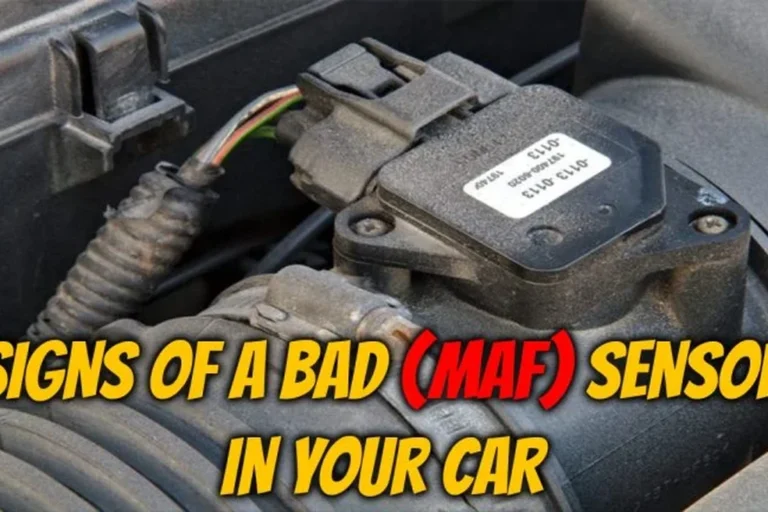
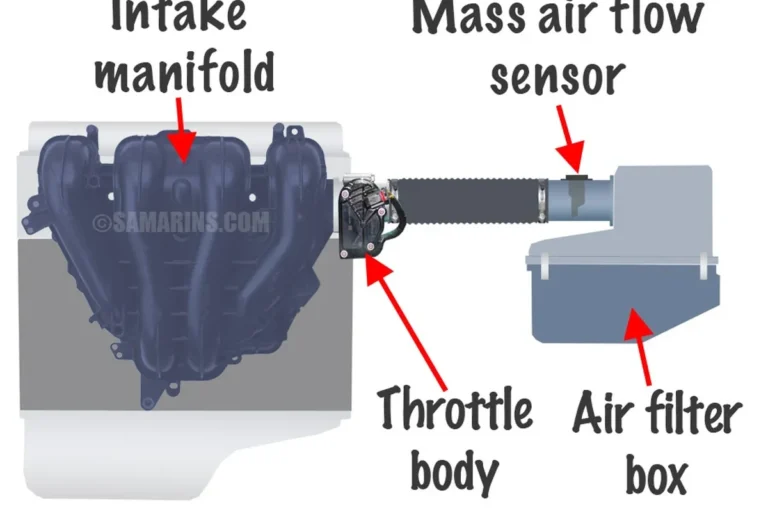
A failing mass airflow sensor can skew the air calculation, while worn spark plugs, weak coils, clogged injectors, or low fuel pressure can all create rough idle symptoms that overlap with O2-related behavior. In these cases, replacing the sensor may not change anything.
Why cold-start behavior and warm-idle behavior can point to different causes
If the rough idle happens only on cold start, the issue may involve startup enrichment, coolant temperature input, fuel pressure bleed-down, or ignition wear. If it appears mostly after warmup, the ECU is likely in closed loop, which makes O2 sensor data more relevant.
That distinction helps narrow the diagnosis. A sensor fault often becomes more noticeable once the engine is warm, while a mechanical air leak or ignition issue may show up in both cold and hot conditions.
- Look for symptoms that happen only at idle, only under load, or only after warmup.
- Check whether the problem affects one bank or the whole engine.
- Do not replace the O2 sensor until you know whether the engine is running lean, rich, or misfiring for another reason.
How to Diagnose the Problem Safely and Accurately
The safest approach is to start with simple checks and move toward scan data only if needed. That keeps you from replacing an expensive sensor when a hose clamp, dirty throttle plate, or weak ignition part is the real issue.
Basic inspection steps anyone can do before replacing parts
Begin with a visual inspection of vacuum hoses, intake tubing, electrical connectors, and the exhaust area near the sensor. Look for cracked hoses, loose clamps, damaged wiring, corrosion in connectors, or obvious exhaust leaks that could distort sensor readings.
Also check the air filter, throttle body condition, and whether the engine has any obvious maintenance gaps. On many vehicles, a simple intake leak or dirty idle-control area can mimic a sensor problem closely enough to mislead a quick diagnosis.
Check hoses, intake boots, PCV connections, and any loose fittings before touching the O2 sensor.
Record the conditions when the fault appeared so you know whether the issue happened at idle, cruise, or startup.
Look at fuel trims, O2 sensor switching, and misfire counters to see whether the engine is actually running lean or rich.
What to look for in live data, fuel trims, and sensor response
Short-term and long-term fuel trims are especially useful. Large positive trims can suggest the engine is adding fuel to compensate for unmetered air or a weak fuel supply, while large negative trims can point toward excess fuel or a sensor that is reading too rich.
For the sensor itself, watch whether it responds quickly and consistently. A healthy upstream sensor generally changes as the mixture changes, while a lazy or stuck sensor may move slowly, stay fixed, or jump around without matching engine behavior.
Stop and let a professional test the system if you see severe misfires, fuel smell, overheating, flashing warning lights, or repeated stalling. Those symptoms can damage the catalytic converter or create a safety risk.
When to stop diagnosing and let a professional test the system
If the rough idle is intermittent, multiple codes are present, or the engine has already had parts replaced without improvement, professional testing is usually the better next step. A technician can check exhaust leaks, fuel pressure, smoke-test the intake, and verify sensor operation with equipment that goes beyond basic code reading.
This is especially important on newer vehicles with complex emissions strategies, because a single O2 code may be the result of another fault that only appears under specific load or temperature conditions.
Replacement Guide: Choosing the Right O2 Sensor for Your Vehicle
If testing points to the sensor, the next step is making sure the replacement matches the vehicle exactly. Oxygen sensors are not universal, and the wrong part can create new drivability or fitment problems.
Compatibility, sensor location, connector type, and vehicle-specific fit
Check the exact engine, model year, bank, sensor position, and connector style before buying. Upstream and downstream sensors may look similar but serve different functions and may have different wire lengths, plug shapes, or heater requirements.
Vehicle-specific fit matters because even a sensor with the right thread size may not work correctly if the connector, calibration, or wiring configuration is wrong. The official parts catalog or manufacturer compatibility list is the safest reference.
Key decision criteria: OEM-equivalent quality, wiring length, heated sensor design, and warranty
For most owners, OEM-equivalent quality is the safest target because it reduces the chance of slow response or compatibility issues. Also verify that the sensor has the correct heated design if your vehicle requires one, since many modern engines depend on fast sensor warmup for accurate idle control.
Wiring length and connector routing matter more than many buyers expect. A sensor that fits physically but needs awkward wire routing can create strain, heat exposure, or connector issues over time.
- Check compatibility by VIN, engine code, bank, and sensor position.
- Confirm connector type, harness length, and heated-sensor requirement.
- Review warranty terms, return policy, and any vehicle-specific installation notes.
Common buying mistakes that lead to repeat idle problems
One common mistake is replacing only the sensor without fixing the leak, misfire, or fuel issue that caused the bad reading. Another is buying a universal part when the vehicle really needs a specific connector or calibration.
It also helps to avoid assuming that a code automatically identifies the failed part. In many cases, the sensor is reporting a real mixture problem rather than causing it.
Real-World Benefits, Limitations, and Value of Replacing a Faulty O2 Sensor
Replacing a truly faulty O2 sensor can improve idle stability, restore more accurate fuel control, and reduce emissions-related warning lights. It may also help fuel economy if the engine had been running rich or lean because of bad feedback.
Expected improvements in idle quality, fuel economy, emissions, and drivability
When the sensor is the real problem, the change is often noticeable in smoother idle behavior and more consistent throttle response. You may also see the check engine light clear after the underlying fault is fixed and the ECU completes its relearn or monitor cycle.
However, improvement is not always instant, and some vehicles need drive cycles before the system fully relearns. If the idle stays rough after replacement, that is a strong sign the original diagnosis was incomplete.
When replacement will not solve the rough idle issue
If the engine has a vacuum leak, ignition fault, clogged injector, low fuel pressure, or dirty throttle body, a new sensor may only hide the symptoms briefly or not help at all. Likewise, if the exhaust has a leak ahead of the sensor, the ECU may still receive false readings.
That is why the sensor should be treated as one possible cause, not the default answer. The best repair is the one that matches the data.
Cost vs. value: repair budget, labor access, and long-term reliability
The value of replacement depends on access, parts quality, and how confident you are in the diagnosis. On some vehicles, labor is simple and a verified sensor replacement is a reasonable DIY job; on others, access is tight enough that a wrong guess becomes expensive fast.
For long-term reliability, it is usually better to buy the correct sensor once than to cycle through multiple low-quality parts. Confirm the fit, verify the code path, and make sure the underlying engine condition is not being ignored.
Final Recommendation: When to Replace the O2 Sensor and When to Keep Diagnosing
If the code, live data, and symptom pattern all point to an upstream sensor that is slow, biased, or unresponsive, replacement is a sensible next step. If the data instead suggests a lean condition, random misfire, or airflow problem, keep diagnosing before buying parts.
Best next step for DIY owners
Start with a scan tool, a visual inspection, and a careful check for vacuum leaks or ignition wear. If those basics are clean and the upstream O2 sensor shows poor response or a matching fault code, replacing it with the correct vehicle-specific part is reasonable.
Best next step if the vehicle has multiple symptoms or recurring codes
If the rough idle comes with multiple codes, stalling, flashing warning lights, or repeated repairs that have not fixed the issue, professional diagnosis is the smarter move. That approach is more likely to find the real cause and prevent unnecessary parts replacement.
Frequently Asked Questions
Yes. A faulty upstream O2 sensor can confuse fuel-trim corrections and create surging, hesitation, or a shaky idle.
Look for unstable RPM, poor fuel economy, hesitation, misfire-like shaking, and check engine light codes related to mixture or sensor response.
Vacuum leaks, a dirty throttle body, a failing MAF sensor, ignition problems, and weak fuel delivery often cause the same symptoms.
Not always. Confirm the sensor location, code definition, and live data first so you do not replace a part that is only reporting another engine problem.
Usually less often than an upstream sensor. Downstream sensors mainly monitor catalytic converter performance and are less likely to affect fuel trim at idle.
If the engine stalls, misfires badly, has multiple codes, or keeps returning to the same problem after repairs, professional testing is the safest next step.